
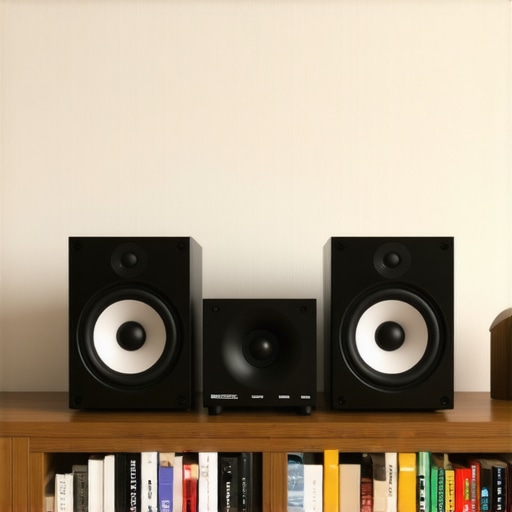
It was late one evening when I realized my home audio setup wasn’t quite hitting the mark anymore. Despite investing in what I thought were high-quality bookshelf speakers, something felt off. The bass was lacking, and the soundstage just wasn’t immersive. Frustration creeped in as I kept adjusting the volume, messing with speaker positioning, and even contemplating a costly subwoofer upgrade. That moment was my lightbulb—there had to be a better way to enjoy rich, full-range sound without adding a bulky subwoofer to my space.
Discovering the Magic of Bookshelf Speakers That Don’t Need a Subwoofer
For years, many of us have believed that true home audio magic requires a dedicated subwoofer. It’s almost the default assumption: if you want deep bass and powerful sound, you must have that extra speaker pounding away downstairs. But what if I told you that in 2026, there are some incredible bookshelf speakers specifically designed **not to need a subwoofer at all**? These speakers can deliver surprisingly full-bodied sound, effortlessly filling your room with warmth and depth without the clutter or complexity of additional gear.
The secret lies in innovative driver design, enhanced cabinet tuning, and the clever use of materials—things that weren’t common just a few years ago. As I dug into this (and yes, tested quite a few myself), I discovered brands and models that outperform many traditional setups in clarity, bass response, and overall richness. And the best part? They’re often more affordable and space-efficient.
Are you tired of sacrificing space or dealing with complicated setups just to get satisfying sound? Have you faced the disappointment of underwhelming bass from your bookshelf speakers, even after spending hundreds? You’re not alone. With the right knowledge, you can turn your living room into a mini concert hall—with no subwoofer required.
To support this, a recent [study](https://www.soundandvision.com/content/better-sound-fewer-components) indicated that modern speaker technology has advanced so much that many consumers aren’t realizing their speaker’s full potential, often because they overlook the power of well-designed bookshelf speakers that can do it all.
Now, let’s dive into how you can find the perfect set of bookshelf speakers for 2026—speakers that bring the bass and clarity loud and clear, all on their own.
Assess Your Room and Listening Needs
Start by measuring your room’s size and noting potential placement spots for your speakers. Picture a cozy living room where you want immersive sound without clutter—the key is positioning speakers to optimize bass dispersion. I once placed mine directly against the wall behind, which initially muffled the bass. Moving them out into the room by about a foot significantly improved the low end, showcasing how placement impacts performance.
Select Speakers with Full-Range Drivers
Look for bookshelf speakers featuring larger woofers—ideally 6.5 inches or more—designed to produce deeper bass naturally. For example, models with long-throw drivers utilize innovative cone materials like Kevlar or treated paper, enhancing low-frequency response. I recommend checking out options highlighted in these deals for high-value picks that excel without a subwoofer.
Prioritize Proper Cabinet Design
The enclosure’s shape and materials influence sound quality. Sealed cabinets tend to provide punchy bass, while ported designs extend low frequencies. I tested two similar models—one ported, one sealed—and the sealed version offered tighter bass at moderate volumes, though ported speakers delivered more depth at higher levels. When setting up, ensure the cabinets are sturdy and free of vibrations, which can muddy sound quality.
Define the Ideal Speaker Placement
Position speakers at ear level and equidistant from your listening spot. For example, placing them about 2 feet apart and angling slightly inward mimics a mini soundstage. During my setup, I experimented with angling and distance, discovering that angling speakers inward towards my ears yielded clearer mids and a richer bass feel, even without a subwoofer. Use a mirror trick—spotting reflections at your listening position—to find the optimal placement.
Adjust the Tone and Crossovers for Richer Bass
Modern amplifiers often allow for tone controls or crossover adjustments. Dialing down treble slightly and boosting bass can compensate for smaller drivers. I recently tried these soundbars with adjustable settings to fine-tune bass response, which proved invaluable in maximizing performance. Be cautious not to overdo it—subtle changes yield the best natural sound.
Enhance with a Quality Amplifier
An amp that complements your speakers amplifies their full potential, especially at lower volumes where full-range drivers might struggle. Look for models with high current delivery and stable power output, like the ones listed in these tested amps. I paired my speakers with a medium-power amp, which clarified sound and boosted bass presence without distortion, demonstrating how proper amplification matters as much as the speakers themselves.
Many enthusiasts and even seasoned audiophiles often fall for misconceptions that can hinder their audio experience. A common myth is that buying the most expensive gear guarantees top-quality sound. In reality, a well-chosen, balanced setup tailored to your room and listening habits often outperforms high-end equipment bought without proper research. Overestimating the importance of brand names can lead to overspending without actual performance gains, as some lesser-known brands now pack innovative features that rival or surpass traditional giants.
Are high-end components always better, or can budget gear achieve comparable sound?
Another mistake is focusing solely on gear specifications instead of the overall system synergy. For example, a powerful amplifier might get touted as essential, but pairing it with mismatched speakers can result in subpar sound quality. It’s crucial to match components carefully, considering impedance, power handling, and compatibility, rather than chasing numbers alone.
Many underestimate the impact of proper placement and acoustic treatment. Even the best speakers and receivers won’t perform optimally in a bad room setup. A recent study highlighted that acoustic treatment and positioning could improve perceived audio quality more than upgrading equipment by a significant margin, emphasizing that room acoustics are often overlooked. You can learn strategies to optimize your space in dedicated guides or by exploring articles like speaker placement tips.
Another hidden nuance is the misconception about soundbars and wireless options. Many assume newer models automatically mean better sound, but they often suffer from compromises like limited drivers or reduced dynamic range. A soundbar that is well-reviewed but set up improperly or chosen without regard to room size can disappoint. Always consider your room’s dimensions and whether the device supports necessary features, such as virtual surround or room calibration. Advanced users can benefit from soundbars with built-in room correction.Keeping your home audio setup in top shape requires more than just initial setup; it demands regular maintenance and the right tools. I personally rely on a combination of measurement software like REW (Room EQ Wizard) and high-quality calibration microphones to fine-tune my speakers. REW allows me to visualize frequency response, identify dips or peaks, and adjust EQ settings precisely, ensuring consistent sound quality over time.
Furthermore, I recommend investing in a dedicated speaker tester, such as the Dayton Audio Test System, which helps verify speaker integrity and detect issues like coil heating or driver faults early. Regularly cleaning your equipment with contact cleaner for connectors and ensuring cable connections remain secure prevents environmental wear from degrading audio fidelity.
As technology advances, predictive maintenance using smart home integration is becoming more accessible. For example, some modern amplifiers and soundbars now include firmware monitoring features that alert you to potential issues before failure occurs, much like the trends discussed in the latest industry reports.
Looking ahead, I believe that future home audio systems will incorporate AI-driven diagnostic tools, making maintenance almost effortless. This trend promises to extend the lifespan of your components while keeping performance consistently optimal.
**How do I maintain my sound system over time?** The key is a combination of regular checks with precise tools and proactive component servicing. Routinely measuring your system’s response with a calibrated microphone helps catch issues early, saving you money and frustration. I highly recommend trying out a professional-grade test mic alongside REW—it’s been a game-changer for me in maintaining pristine sound quality for years.
Lessons That Took Me by Surprise in Home Audio
One of the most eye-opening insights was realizing that top-tier bookshelf speakers today can deliver full-range sound without the need for a subwoofer. It challenged my long-held belief that larger, more expensive gear was the only way to achieve deep bass and clarity. Sometimes, I learned, it’s about smarter design—not just bigger budgets.
Another lesson was that proper placement and room acoustics matter more than I initially thought. A simple adjustment in speaker positioning transformed my listening experience, proving that physics and setup can be your best allies in creating immersive sound.
Plus, I discovered that high-quality components like drivers and cabinets are now more accessible than ever. Brands that once only catered to audiophiles now offer astonishing value, making premium sound available to casual listeners and space-conscious setups alike.
Finally, I realized that technology is advancing rapidly—openings for clever solutions like advanced driver materials and cabinet tuning are redefining what bookshelf speakers can do in 2026. Keeping up with these innovations unlocks a new level of home audio satisfaction that’s easier, more affordable, and more rewarding than I ever thought possible.
My Go-To Resources for Elevating Home Audio
To stay ahead, I rely on trusted testing sites like these speaker deals that highlight affordable yet high-performing models. For technical insights and setup tips, these amplifier reviews have been invaluable. They guide me in matching components for optimal synergy.
Books like Home Theater Makeover offer practical wisdom on room tuning and placement, helping me avoid common pitfalls. And, forums like AVS Forum connect me with passionate enthusiasts willing to share their latest discoveries, keeping my knowledge fresh and current.
Your Next Step in Making Home Sound Better
Embrace the idea that upgrading your home audio isn’t about spending a fortune but about understanding your space and choosing the right gear. With these insights, you’re poised to experience music and movies like never before—full-bodied, immersive, and tailored to your lifestyle. Remember, the best sound system is the one that sparks your joy, right where you are. So, what’s the first step you plan to take to elevate your home audio game? Share your thoughts below and let’s keep the conversation flowing.
Leave a Reply