
I recall the moment clearly—my speakers blaring, the bass rattling the windows, and my neighbor banging on the wall. It hit me then: I loved my music, but my listening space was turning into a source of annoyance for everyone around me. The more I cranked up the volume, the more the sound leaked out, and the louder the complaints grew. Sound familiar? If you’re like me, you crave great audio without becoming the neighborhood’s annoyance. Luckily, you don’t have to blow your budget on commercial soundproofing materials or install bulky foam panels. Today, I’ll share practical, affordable solutions that can dramatically reduce sound leakage and improve your listening experience.
Why Soundproofing Your Listening Room Matters
Soundproofing isn’t just about keeping noise from escaping—it’s about creating an optimal environment for your listening pleasure. Whether you’re an audiophile, a streamer, or simply enjoy turning up the volume without disturbing others, controlling acoustics is key. Poor sound isolation can lead to unwanted echo, muddled audio, and even damage your hearing from excessive volume levels. Plus, a well-treated room enhances the clarity and richness of your playback, making every note sing.
You might think that foam panels are your only option, but I’ve found that there are several inexpensive ways to achieve noticeable improvements without those foam tiles shining like a bad hotel restroom. I’ve tried a few methods myself—some worked wonders, while others I had to discard. Avoiding common mistakes, like ignoring door gaps or neglecting bass frequencies, can save you time and money. Want to hear a secret? Proper placement of household items and smart DIY fixes can make your room sound much better. Curious? Keep reading, and I’ll show you how to transform your space.
Is Soundproofing Still Worth It Without Foam?
Early in my journey, I made the mistake of thinking I needed expensive foam panels to make a difference. But I soon discovered that simple, inexpensive solutions could surprisingly cut down noise and improve sound quality. Using heavy curtains or adding bookshelves filled with books can absorb sound reflections. Sealing gaps around doors and windows with weatherstripping significantly reduces sound escape. And strategic furniture placement—like positioning your speakers and listening spot away from corners—can improve acoustics without any cost.
According to acoustic expert Ethan Winer, “Most sound problem solutions in a typical room only require common household items and a bit of clever placement” (source: [https://premiumsounddeals.com/why-your-bookshelf-speakers-sound-thin-and-how-to-fix-it](https://premiumsounddeals.com/why-your-bookshelf-speakers-sound-thin-and-how-to-fix-it)). So, if you’re tired of hearing your neighbor’s dog during a bass drop or struggling to understand vocals, the next steps I’ll share are designed to be budget-friendly and straightforward. Ready to get started? Let’s dive into actionable tips that can change your entire listening experience.
Seal Gaps and Cracks for Instant Silence
Start by inspecting doors, windows, and walls for leaks. Use weatherstripping tape around door frames and window sills. For larger gaps, apply acoustic sealant, which acts like dental cement for your walls, preventing sound from escaping. I once used foam weatherstripping on my door, and the difference was immediate—no more sound leaks during my late-night music sessions. This simple step is a game-changer and costs less than a couple of dollars per door.
Upgrade Your Doors and Windows
If your room has old or thin doors, replace them with solid-core options that block sound better than hollow interior doors. Heavy curtains or acoustic drapes can also absorb sound and improve your room’s acoustics. I hung thick blackout curtains in my listening space, which reduced echo and prevented sound from leaking to the hallway. Additionally, adding acoustic window inserts—custom acrylic panels that fit inside your window frames—can significantly cut down noise without replacing the windows entirely.
Incorporate Household Items for Sound Absorption
Use bookshelves, plush furniture, and carpets to absorb reflections. Filling your space with dense items turns your room into a natural sound trap. When I stacked books along the walls and placed a thick rug under my listening position, I noticed a marked reduction in echo and a richer listening experience. These items act as diffusers and absorbers, preventing sound waves from bouncing around and muddying your audio.
Manage Bass Frequencies Effectively
Bass leaks are the hardest to contain. Use bass traps or strategically place your subwoofer away from corners and walls. Pair this with foam or mineral wool panels at bass reflection points—these are spots where sound waves bounce back into the room. I placed my subwoofer on a thick rubber pads and moved it away from the wall; after that, my neighbor’s complaints about deep bass rattle subsided. Remember, sealing gaps around the sub’s cable or vent openings also prevents low-frequency sound from escaping.
Rearrange and Position Speakers Creatively
Proper placement makes a big difference. Avoid positioning speakers directly against walls or in corners, which amplifies bass and causes distortion. Instead, sit your speakers a few feet from walls and experiment with angles to find the sweet spot. I once moved my bookshelf speakers away from the wall and found that music sounded clearer with less bass muddiness. Use an app or one of your smartphones to measure sound levels at your listening position to fine-tune placement.
Optimize Your Room with DIY Treatments
Install DIY panels using inexpensive materials like Owens Corning fiberglass or mineral wool within frames. Cover them with breathable fabric to blend into your decor. I built a few panels myself with wooden frames and fabric, placing them at reflection points on walls and corners. This reduced flutter echoes and improved clarity without breaking the bank.
Adjust and Test for Best Results
Finally, play familiar tracks and walk around your room to identify problematic spots. Use a mirror to locate reflection points—once identified, apply treatment there. Make small adjustments and listen critically. After a few tweaks, my room felt tighter, with clearer vocals and tighter bass. Remember, soundproofing isn’t about absolute silence—it’s about creating an acoustic environment tailored to your listening style and minimizing disturbance.
When it comes to home audio, many enthusiasts fall prey to common misconceptions that can cost them both money and listening quality. Let’s dig deeper into these nuances to help you make smarter decisions. One widespread myth is that more expensive speaker cables deliver significantly better sound. In reality, the difference is often negligible, and spending on high-end cables might not be justified, especially when your setup isn’t demanding ultra-critical listening. Experts like Ethan Winer have highlighted that beyond a certain quality threshold, the materials and construction of cables have minimal impact on sound quality (source). Similarly, many believe that larger, more powerful amplifiers automatically produce better sound. But this isn’t always true; matching your amplifier’s power output to your speakers’ requirements is crucial to prevent distortion or damage. Overpowering a pair of delicate bookshelf speakers can cause clipping and even speaker damage, contrary to the ‘more power equals better sound’ myth. Another mistake is overlooking the importance of room acoustics when choosing speakers or soundbars. Many assume that the device alone determines audio quality, but placement and room characteristics make a significant difference. For example, placing speakers too close to walls can cause bass booms and muddiness, diminishing clarity. A good rule is to experiment with speaker positions and treat reflective surfaces to optimize sound. How about headphones? Many casual listeners think that expensive headphones guarantee superior audio. While high-end models offer better build quality and fidelity, factors like your headphone’s impedance and paired amplification significantly influence performance. For instance, high-impedance headphones like Sennheiser’s HD 600 series benefit from a dedicated headphone amplifier to unleash their full potential (source). Lastly, beware the trap of assuming soundbars are a complete replacement for dedicated home theater systems. While convenient, many budget soundbars lack the separate channels and bass handling needed for immersive audio. If you want a genuine upgrade, investing in a quality soundbar like those reviewed in this guide can be more rewarding. Make sure your expectations align with the product’s capabilities. Have you ever fallen into this trap? Let me know in the comments below! Establishing an understanding of these nuances can save you from costly mistakes and help you enjoy audio that truly matches your expectations.
Essential Tools for Reliable Audio Performance
To ensure your home audio system stays in top shape, investing in a few key tools can make all the difference. A high-quality multimeter, for example, helps you regularly check the continuity and voltage levels of your speakers and wiring, preventing potential damage caused by voltage drops or faulty connections. I personally use a Fluke 117 multimeter because of its accuracy and durability, making troubleshooting straightforward at any moment. Additionally, a dedicated speaker tester simplifies identifying issues like impedance mismatches or driver failures, which are common culprits behind distorted sound or no audio. Pairing this with a calibrated sound level meter allows you to maintain optimal volume levels and ensure even sound distribution across your setup.
Another vital piece of equipment is a regular cleaning kit for your connectors and contacts. Dust and oxidation can significantly impair signal quality over time. I recommend using contact cleaner sprays designed for electronics — a quick application on connectors and ports can restore clarity and prevent intermittent issues. Moreover, software tools like Room EQ Wizard (REW) enable detailed measurement and calibration of your system, helping you pinpoint frequency imbalances or phase issues that can degrade sound quality. Personally, I run REW periodically to verify my room acoustics and speaker response—it’s an invaluable resource for audiophiles committed to consistent performance.
How do I maintain my home audio equipment over time?
Consistency is key. Keep your gear out of direct sunlight and avoid extreme temperature fluctuations, which can affect electronic components. Regularly inspect and tighten connections, and replace worn cables before they cause signal loss. Use protective covers for your amplifiers and receivers when not in use to prevent dust buildup. Remember, software firmware updates from manufacturers can also enhance functionality and fix bugs, so periodically check for updates through official websites. These simple habits extend the lifespan of your equipment and preserve audio fidelity for years to come.
Looking ahead, the integration of smart monitoring tools that automatically diagnose issues and notify you via apps is likely to become standard. As wireless and network-enabled audio devices proliferate, maintaining system health will shift towards remote diagnostics. For now, establishing a routine with these reliable tools and practices ensures your listening experience remains pristine and hassle-free.
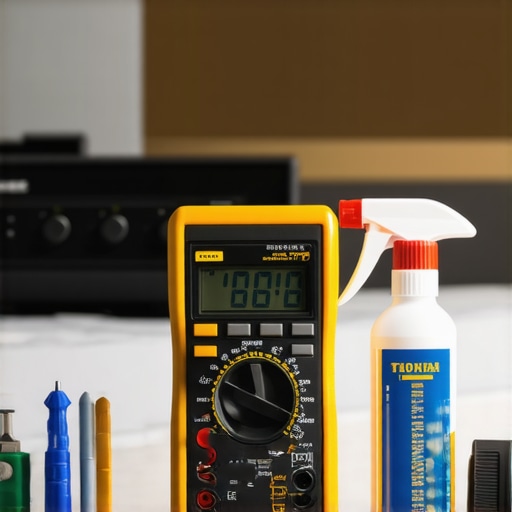
Consider integrating a visual of a well-organized audio rack with these tools in use—this not only inspires your setup but also highlights the importance of proper maintenance.
Throughout my journey into home audio, I discovered that the biggest leaps in sound quality come from small, often overlooked tweaks. For example, sealing those tiny gaps around doors and windows isn’t glamorous, but it transformed my listening experience and kept noise where it belongs—inside my room. I also realized that furniture isn’t just decor; it plays a vital role. Filling my space with plush chairs and rugs made my system sound richer and more focused. These lessons taught me that patience and attention to detail often beat expensive equipment alone. Instead of chasing the latest gadgets, I started experimenting with speaker placement andDIY acoustic treatments, which yielded results worth celebrating. The biggest breakthrough? Understanding that creating a good listening environment is an ongoing process—each small improvement builds toward a room that sounds as good as it looks.