
Ever set up your home theater or sound system and felt that familiar nagging disappointment? You know, that moment when you finally get everything plugged in, crank up the volume, and… the bass just feels off. Maybe it rumbles too much, or perhaps it doesn’t hit hard enough. I’ve been there, tangled in speaker wires, wondering why my bass wasn’t living up to its potential.
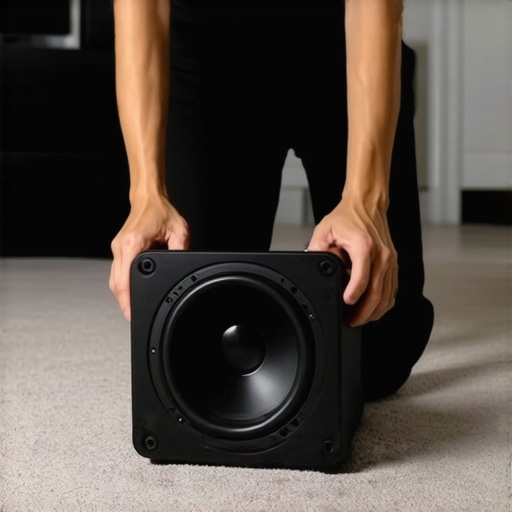
One lightbulb moment changed everything for me: the secret isn’t just in choosing the right subwoofer or its specs. It’s about **where and how you place it in your room**. That realization led me down the rabbit hole of positioning techniques, and I discovered the powerful simplicity of the crawl method. This technique involves moving the subwoofer around your room—literally crawling around with it in hand—to find the sweet spot where bass sounds richest and most balanced.
Why Proper Subwoofer Placement Is a Game Changer
It turns out, the way a subwoofer interacts with your room’s architecture greatly influences sound quality. Many folks think they need the most expensive equipment or fancy room treatments to get killer bass, but that’s a myth. Proper placement can make a massive difference, often more than upgrading to a pricier model.
For example, a study by the Acoustic Society found that reflective surfaces and room corners can amplify bass sounds, sometimes making them boomy or muddy if not positioned correctly. That’s where the crawl method shines—by allowing you to identify the optimal spot that maximizes clarity and depth without adding unwanted resonance.
So, have you faced difficulty getting your subwoofer to sit just right? If your bass feels inconsistent or overwhelming, this might be the missing link. Today, I’ll walk you through how to use the crawl method to transform your listening experience—no fancy tools needed.
Is the Crawl Method Really Worth the Hype?
Early on, I made the mistake of placing my sub in the corner because I heard it boosts bass. Turns out, that only amplified the muddy, boomy sound, making my room intolerable. Trust me, I wasted weeks before I realized that a little experimentation with the crawl technique saved me from expensive guesswork. Wondering if this approach is just another gimmick? Well, it’s backed by sound physics and countless audiophiles who swear by it.
If you want to avoid common pitfalls like over-boosting or creating uneven bass, understanding how to position your sub is crucial. Ready to dive into the practical steps? Let’s get that bass sounding just right.
Start With a Clear Space and Prepare to Move
Clear your furniture around the listening area, creating an unobstructed space to move your subwoofer comfortably. Visualize the room as a grid; this makes tracking your movements easier. Grab your subwoofer and a helper if possible — but you can do it solo. I once used a step ladder and my kid’s toy car to simulate the crawl, which surprisingly helped identify the sweet spot more effectively.
Identify the Listening Position and Mark It
Decide where you’ll be sitting during most listening sessions. Mark this spot with painter’s tape or a small piece of tape on the floor. This is your reference point. I learned this the hard way when I kept moving around and never really settled on the best position. Consistency here is key to judge the sound accurately.
Place the Subwoofer Near Your Listening Spot
Put the subwoofer on the floor at your marked spot, then play your favorite bass-rich track. Walk around the room gradually, holding the sub in your hands or using a dolly. Pay attention to where the bass sounds fullest and clearest. I spent a messy afternoon crawling on all fours, but that effort paid off when I found a corner that boosted bass without mudding the sound.
Experiment With Different Spots
Relocate the sub to different positions—near walls, corners, or central spots—and repeat the process. Each move changes how sound waves reflect and amplify within your room. Use your ears as guides, focusing on clarity and punch, not just loudness. I remember shifting my sub just a foot to the side improved the overall sound dramatically, illustrating the importance of patience and incremental testing.
Finalize Your Placement and Fine-Tune Settings
Once you’ve found the ideal spot, mark it for future reference. Adjust your subwoofer’s phase and crossover settings to optimize integration with your main speakers. Small tweaks here can make a ginormous difference—think of it as fine-tuning an instrument. If you’re unsure about these settings, check out https://premiumsounddeals.com/how-to-tell-if-your-speaker-driver-is-actually-blown-or-just-loose to understand better calibration techniques.
Confirm With Listening Tests
Sit at your marked position, play familiar tracks, and compare before-and-after sounds. Lean on your ears more than your eyes; what feels right is often what sounds best. I once thought I had it perfect until a friend pointed out that my bass was boomy at certain volumes. Adjusted my sub’s placement slightly, and everything snapped into place.
Repeat this process as needed until you reach a bass that is deep, tight, and harmonious—no boom, no muddiness. Remember, patience pays, and the crawl method turns a guessing game into a scientific experiment, saving you cash and frustration.
 When it comes to home audio, many believe that shelling out more money guarantees better sound. However, this isn’t always the case. A frequent misconception is that expensive gear automatically provides superior audio, but often, the real issues lie in setup and understanding the equipment’s nuances. For instance, many assume that high-end headphones don’t need an external amp, but as explained in [this guide](https://premiumsounddeals.com/how-to-tell-if-your-expensive-headphones-actually-need-an-external-amp), even premium headphones can benefit significantly from proper amplification and source quality. Additionally, a common mistake is overlooking room acoustics—adding costly speakers won’t help if your room’s reflections and resonances aren’t managed. This is where understanding the importance of speaker placement and room treatment becomes critical. Moreover, a lurking trap is the belief that all cables are created equal; many spend unnecessarily on premium cables expecting better sound, yet as discussed in [this article](https://premiumsounddeals.com/why-active-speakers-might-be-better-than-your-separates-setup), the difference is often negligible unless combined with proper system matching. Finally, advanced users often fall into the trap of complex settings adjustments, like excessive equalization or crossover tuning, which can distort the sound rather than improve it. Remember, sometimes less is more, and mastering the basics—such as correct placement, aware calibration, and understanding your gear—yields the most noticeable improvements. Have you ever fallen into this trap? Let me know in the comments.
Keeping Your Equipment in Top Shape
Your home audio setup isn’t a set-it-and-forget-it affair. Regular maintenance ensures consistent sound quality and extends the lifespan of your gear. Start by inspecting connections; loose or corroded cables can cause crackles and dropouts. Using a reliable contact cleaner like DeoxIT can prevent corrosion on connectors and ensure optimal conductivity. I personally apply it annually on all critical connections, including your speaker terminals and headphone jacks, to keep signals pristine.
Next, keep your equipment dust-free. Dust accumulation can cause overheating and degrade components over time. A soft, anti-static brush combined with compressed air (used cautiously) is my go-to. For example, gently blowing out your receiver’s vents prevents dust buildup that hampers cooling and performance. Remember to power down and unplug devices before cleaning.
Tools like a digital multimeter are invaluable for troubleshooting. They help verify impedance, continuity, and power levels, ensuring your amp and speakers are functioning correctly. I regularly check speaker impedance to match with my amplifier’s ratings, reducing the risk of clipping or damage. For detailed testing procedures, I consult expert guides like this resource.
Why Regular Calibration Matters
Over time, your system’s sound profile can drift due to component shifts or environmental changes. Recalibrating your setup, whether through software or manual adjustments, ensures you continue experiencing optimal audio. For example, I use a measurement microphone like the Dayton iMM-6 and software such as Room EQ Wizard (REW) to fine-tune speaker placement and EQ settings. This process uncovers subtle issues like phase mismatches or frequency dips, which, if ignored, can muddy your soundscape.
Staying Ahead with Essential Maintenance Tools
Invest in a quality surge protector to prevent voltage spikes from damaging your gear. I prefer models with multi-layered protection and a clamping voltage below 400V. Additionally, acoustic treatment like bass traps and diffusers helps maintain balanced sound and reduces the need for constant tweaks. In the future, smart home integrations might automatically calibrate audio based on room acoustics, reducing manual adjustments.
How do I maintain my audio gear over time?
The key is consistent checkups and using the right tools. Regular cleaning, calibration, and proper connection management prevent many common issues that degrade sound. Setting a quarterly maintenance routine—like inspecting cables, cleaning dust, and recalibrating—keeps your system at peak performance. For example, a simple step like replacing old speaker cables with high-quality, properly rated wires, and avoiding unnecessary upgrades, often yields a more significant improvement. If you want to enhance your setup further, try using a dedicated DAC to improve digital-to-analog conversion, as discussed in this article. Regular maintenance may seem tedious, but it’s the secret to long-term listening satisfaction and hearteningly clear sound that feels as fresh as day one.
Achieving that deep, punchy bass in your home audio system is both an art and a science—one that often gets overlooked in the quest for better equipment. The secret sauce? Precise placement of your subwoofer, derived from hands-on experimentation. The crawl method isn’t just a quirky technique; it’s a game-changer that can transform your listening experience, making your sound system perform at its full potential.
Lessons That Only Experience Can Teach
- Position matters more than you think: I once believed that a higher-end sub would automatically deliver better bass, only to realize proper placement made all the difference. Learning to identify the sweet spot through crawling taught me that physics, not price tags, dictates sound quality.
- Room acoustics are your friend: My initial instinct was to place the sub in a corner for extra oomph. Instead, I discovered that the crawl method helped me find a spot where bass was tight and resonant without muddiness, revealing how reflective surfaces can either amplify or muddy sound.
- Patience pays off: It took time, but moving the sub around physically and trusting my ears replaced guesswork with confidence. This process solidified my understanding that good sound is rooted in experimentation, not just technical specs.
- Small shifts lead to big gains: Adjusting the sub just a few inches changed the entire room’s soundscape. The crawl method highlights how subtle positional tweaks can elevate your setup from mediocre to immersive.
- Calibrate after placement: Once the optimal spot was found, fine-tuning phase and crossover settings created harmony between sub and mains—a step I previously overlooked but now swear by.
Tools and Resources That Made a Difference
While the crawl method is simple, having reliable tools enhances the process. I trust a good measurement microphone and room calibration software to fine-tune my entire system. Additionally, books like Home Theater for Dummies have deepened my understanding. For DIY enthusiasts, visiting this guide on speaker cables clarified what truly impacts sound quality. These resources save me from costly upgrades by optimizing the essentials first.
Embrace Your Audio Journey Today
Remember, mastering your home audio isn’t just about gear—it’s about precision, patience, and understanding your space. The crawl method is an accessible, effective way to unlock richer, more balanced bass, making your music and movies truly come alive. Don’t hesitate to start experimenting today; every small adjustment brings you closer to audio bliss. Are you ready to find your perfect subwoofer spot and elevate your listening experience? Share your progress or questions below—I’d love to hear your stories!