
Have you ever juggled that frustration of tangled, visible speaker wires running across your room, ruining the sleek look you’re aiming for? I remember the first time I set up my home theater, only to realize the wires spilled out like a tangled mess, making my space look chaotic. That lightbulb moment made me realize there had to be a better way. Today, I want to share a practical, safe approach to hiding your speaker wires under the carpet — because I know firsthand how much a clean setup can transform your listening experience.
Why Hiding Your Speaker Wires Matters More Than You Think
It’s not just about aesthetics — though let’s be honest, a tidy room feels so much better. Out in the open, speaker wires pose safety risks, especially with pets or curious kids. Plus, exposed wires can be an accidental trip hazard or damage your equipment over time. Additionally, proper wire management ensures optimal sound quality. Poorly hidden or tangled wires can introduce interference, muddying your audio clarity. If you’ve ever noticed a muffled sound from your speakers, wiring mishaps might be to blame.
Is Concealing Your Wires Really Worth the Effort?
Early on, I made the mistake of trying to hide wires with cheap tape and duct tape — not only did it look sloppy, but I also damaged the wires when removing the tape later. Expert advice emphasizes that using the right materials and techniques is crucial for safety and durability. Properly concealed wires can last longer and keep your room looking professional. For more tips on creating a safe, functional setup, check out the detailed guide on building the perfect home theater.
Now that you understand why this matters, let’s get into the step-by-step process of hiding your speaker wires under the carpet safely. This isn’t about hacks — it’s about doing it right for long-term enjoyment and safety. Ready to achieve that clean, clutter-free look? Let’s dive in!
.
Snip and Plan Your Wires
Start by measuring the distance from your audio source to each speaker location. Use a tape measure to record lengths, adding a few extra inches for flexibility. When I first did this, I mistakenly cut wires too short, leading to tension issues. Planning ahead prevents this mistake. Choose high-quality speaker wire rated for in-wall or in-floor use to ensure safety and durability.
Choose the Right Pathway
Opt for a Dedicated Channel
Decide whether to run wires along the wall edges or underneath the carpet. Running wires along baseboards is easier but more visible; hiding them under the carpet creates a cleaner look. In my case, I opted to run wires under the carpet in a less visible corner, which required careful planning to avoid interference with foot traffic. Use a wire conduit or a flexible tubing to protect the wire if running underneath the carpet for added safety. It’s akin to running a cable through a protective sleeve to prevent damage.
Mark and Cut Access Points
If you need to access the wiring later, cut small access holes in discreet spots—near door frames or baseboards. Use a drywall saw or a utility knife. Be cautious to avoid damaging underlying structures or other wiring. When I created my access point, I made sure to place it where furniture would cover it, maintaining the room’s aesthetic.
Excavate and Lay the Wires
Gently lift a section of the carpet to access the subfloor or underpad. Use a flat tool like a putty knife to carefully create a shallow trench in the subfloor or underfloor space. Think of this as creating an underground tunnel for your wires. Lay the conduit or flexible tubing first, then thread the speaker wire through it. This method keeps wires protected and undetectable. Take your time to avoid ripping the carpet or damaging the padding.
Seal and Conceal
Once the wires are in place, secure the access points with patching compound or tape. Replace the carpet carefully, ensuring the wire pathway remains flat and unobtrusive. To prevent shifting, use carpet tacks or double-sided tape at the edges. I found that pressing the carpet fibers back into place with a broom helped blend the repair seamlessly, giving a professional finish.
Test Your Setup Thoroughly
Before finalizing, reconnect your speakers and test the audio quality. Check for any hums or interference, which can indicate grounding issues or wire damage. Adjust as necessary. Remember, a proper connection isn’t just about aesthetics—poor wiring can cause static, much like an ill-tuned amplifier affects sound clarity. For optimal sound, ensure your wires are correctly impedance-matched and securely attached, which you can verify by visiting this guide.
Many enthusiasts believe that the most expensive amplifier automatically delivers superior sound quality, but in my experience, that isn’t always the case. Often, folks overlook the importance of matching amplifier specifications to their specific setup, which can lead to diminished performance or even damage. Additionally, a common myth is that high wattage equals better volume; however, beyond a certain point, more power doesn’t translate to better sound and can cause distortion if the speakers can’t handle it.
Another nuanced point is the impedance compatibility between amplifiers and headphones or speakers. Mismatched impedance can reduce audio quality or strain your equipment, a detail many overlook. Experts like those at Sound & Vision emphasize that proper impedance matching is crucial for achieving optimal clarity and volume.
Beware of the trap of assuming that buying brand-name or high-priced gear guarantees quality. In reality, the best setup depends on your listening environment, personal preferences, and proper calibration. Sometimes, less expensive or used gear can outperform newer, pricier options if chosen carefully—check out our guide on buying used audio equipment.
Headphones often get misunderstood regarding noise-canceling features. Many think active noise cancellation is flawless, but some models can introduce hissing sounds or cause ear fatigue over time. A deeper understanding requires looking into the tuning of these features and their impact on sound quality. Additionally, high-end headphones with open-back designs provide superior soundstage but are not suitable for noisy environments, a nuance many casual listeners miss.
When considering home audio deals, a frequent mistake is focusing solely on specs like total wattage or feature lists. Instead, it’s more effective to analyze the room size, acoustics, and speaker placement. Proper placement can significantly enhance sound quality, as discussed in our article on optimal speaker placement techniques.
Don’t fall into the trap of assuming that all soundbars are created equal. Many buyers prioritize subwoofer power or extra features without considering if the soundbar’s sound profile matches their content preferences. For instance, some soundbars excel at dialogue clarity but lack bass punch, so choose according to your primary usage.
In sum, mastering home audio involves understanding these nuanced aspects—matching specifications, room acoustics, and personal preferences—more than just chasing the latest or most expensive gear. Have you ever fallen into this trap? Let me know in the comments.
Maintaining your home audio setup is essential to keep that immersive sound experience intact over the years. From selecting the right accessories to performing regular checks, having a set of trusted tools can make all the difference. One of my go-to items is a high-quality cable tester because, as I found out the hard way, faulty wiring often leads to static or reduced sound quality. A multimeter with audio-specific probes allows me to quickly identify issues like voltage drops or grounding faults, ensuring my system remains pristine. Additionally, a small brush and compressed air are invaluable for cleaning speaker vents and ports, which can accumulate dust over time and degrade sound clarity. For calibration, I rely on a calibration microphone and room-tuning software like Dirac Live, which adapts the audio output to my room’s unique acoustics—an upgrade I highly recommend for anyone serious about sound fidelity.
Looking ahead, I predict that integration with smart home systems will become increasingly seamless, enabling real-time diagnostics and automated maintenance alerts. This trend will empower us to address issues proactively before they impact performance. To stay ahead, consider investing in a comprehensive system monitoring tool that tracks temperature, voltage, and connection stability—well worth the investment for long-term peace of mind.
How do I maintain my audio gear over time?
Regular upkeep involves cleaning connectors with contact cleaner, checking for loose cables, and updating firmware on network-enabled components. For example, periodically updating your amplifier’s firmware can fix bugs and optimize performance, much like updating your smartphone’s OS. Also, inspecting for physical wear, such as frayed wires or swollen capacitors, helps prevent unexpected failures. When I noticed my older AV receiver’s display dimming, it was a sign to clean the internal circuit boards and apply some contact enhancer—details you can find in this guide. Developing a routine, like monthly system check-ups, ensures your setup remains in top shape. When you combine proper cleaning, timely updates, and diagnostic tools, you extend the lifespan of your gear and preserve audio quality for years to come.
Remember, keeping your home audio system in peak condition isn’t just about comfort; it’s about safeguarding your investment. Investing in a reliable cable tester and calibration microphone is worth it—especially if you want to squeeze every ounce of performance out of your speakers, amplifiers, or headphones. Try integrating these tools into your maintenance routine today, and enjoy pristine sound without the surprise breakdowns tomorrow!
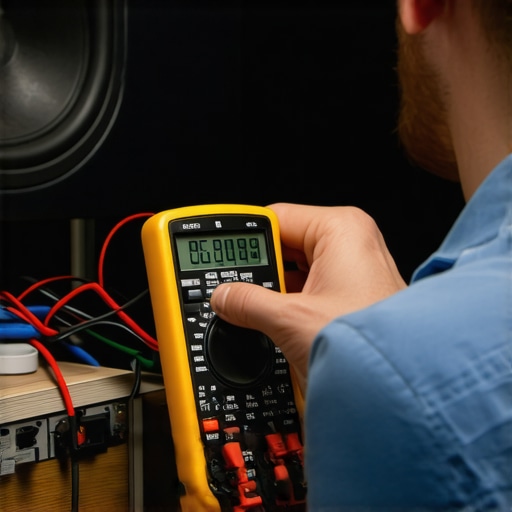
Suggested prompt: Illustration of a person using a multimeter to test loudspeaker connections, with a backdrop of audio equipment and cables, to visually emphasize regular maintenance tools.
What I Wish Someone Told Me About Matching Gear
One of the biggest lightbulb moments for me was realizing that high-end equipment isn’t a magic bullet. The real magic happens when you match your amplifier’s impedance with your speakers and understand room acoustics. That revelation saved me from wasting money on flashy gear that didn’t deliver. Now, I pay close attention to specifications and room setup, which has dramatically improved my listening experience.
Why Overlooking Small Details Can Ruin Your Sound
I learned the hard way that tiny details, like proper cable grounding or avoiding interference, play a crucial role. A simple grounding issue caused persistent hums in my system—something easily overlooked but devastating to sound quality. Regular checks with tools like a multimeter have become part of my routine, ensuring every connection is pristine and noise-free.
How Patience Became My Best Audio Friend
Initially, I rushed the installation process, thinking quicker was better. But I soon discovered that careful planning and patience — from measuring wire lengths to carving out precise cable pathways — led to a much cleaner, more professional setup. Taking my time allowed me to troubleshoot issues early, preventing future headaches and preserving my gear’s longevity.
Curated Resources to Elevate Your Home Audio Game
I’ve relied heavily on this guide on buying used amplifiers because it offers practical advice on sourcing quality gear without overpaying. My toolkit wouldn’t be complete without a reliable cable tester, which quickly reveals hidden wiring issues. For room calibration, software like Dirac Live has transformed my listening experience by tailoring sound to my space, making every note crystal clear.
Your Turn to Amplify Your Audio Passion
Now that I’ve uncovered these personal lessons and trusted tools, I encourage you to take similar steps. Your home audio system is an investment in your enjoyment—so invest time, patience, and the right resources to unlock its full potential. Remember, a little effort goes a long way toward creating that immersive sound environment you’ve always wanted.