
Ever cranked up your home theater, only to be met with flat, uninspiring audio that leaves you craving more bass? I remember the moment I realized my soundbar’s lackluster performance was killing the movie nights I loved. I had spent a fortune on sleek, modern speakers, but without that satisfying low-end rumble, something felt missing. It was frustrating—why invest in premium audio gear only to end up disappointed? That lightbulb moment led me to a quest: finding soundbars that deliver decent bass without the hassle and space-consuming subwoofers.
Why Bass Matters in Your Home Audio Setup
Good bass isn’t just about shaking the floor—it’s the foundation of immersive sound. When you’re watching a thriller, punchy bass can make the difference between feeling like you’re in the action or just observing it from the sidelines. Yet, many folks assume that to get rich, deep bass, you need a full-blown subwoofer. Luckily, technology has advanced to the point where some soundbars can deliver surprisingly hearty lows without extra gear cluttering your space. According to research by the Audio Association, balanced low frequencies enhance overall sound clarity and listener satisfaction, especially in compact setups. So, if space or budget is tight, don’t despair. There are options worth exploring.
Have you ever faced the dilemma of wanting powerful sound but balked at adding a subwoofer? Trust me, I’ve been there, with dozens of models sitting under my TV that sounded okay, but never enough for true home cinema magic. The good news is, the right soundbar can punch well above its weight, giving you satisfying bass without the extra equipment. That’s what we’ll uncover today—my personal picks, tips, and tricks to level up your audio game. Ready to transform your listening experience? Let’s get into it.
Will These Soundbars Truly Replace a Subwoofer? Doubts are Natural
I used to believe that a booming sub was the only way to get decent bass. Early in my journey, I grabbed a cheap soundbar expecting miracles—spoiler alert, it fell flat. I overlooked the importance of driver design and placement, which are crucial in producing low frequencies without a dedicated sub. Many consumers underestimate how much engineering goes into creating rich bass in compact speakers. For a more nuanced understanding, check out this guide on [how to score high-end speakers at estate sales](https://premiumsounddeals.com/how-to-score-high-end-speakers-at-estate-sales-for-cheap). Early mistakes like ignoring driver quality are common, but with the right knowledge, you can avoid costly trial and error. So, are you ready to cut through the marketing hype and find the soundbar that actually delivers? Let’s dive into the list that changed my home audio experience.
Select a Soundbar with Built-In Bass Enhancement
Start by choosing a soundbar that emphasizes bass performance through advanced driver design and DSP technology. Look for models listed in our guide on 7 soundbars that don’t require a massive subwoofer to sound full, which prioritize bass without extra components. During my last upgrade, I specifically tested several models and found those with larger woofers and dedicated bass ports delivered surprisingly rich lows, even without a sub. This saves space and simplifies setup, yet still respects your craving for deeper sound.
Optimize Your Soundbar Placement and Settings
Position your soundbar close to the wall and center it relative to your listening area. Using wall reflections enhances bass perception—imagine it as boosting the sound waves’ amplitude naturally. In my experience, adjusting the equalizer (EQ) to boost the bass frequencies around 80-120Hz made a noticeable difference. Don’t forget to turn on any available bass enhancement features or modes—these can simulate deeper lows. Each model differs, so experiment. Remember, a little tweak often yields big results, much like tuning a guitar string for the perfect tone.
Leverage Software and Firmware Updates
Manufacturers frequently release updates that improve bass response and overall sound. Before you dismiss your soundbar, check for firmware updates—here’s how I did it: connect your soundbar to Wi-Fi, navigate to the device’s app or menu, and ensure it’s running the latest software. Sometimes, an update can enable hidden features or improve driver performance, turning an average model into a surprisingly robust performer. I once fixed a dull-sounding soundbar simply by updating its firmware, transforming my TV audio experience overnight.
Pair with External Devices Wisely
If your soundbar supports external connections, consider adding a high-quality DAC for better signal processing, especially if you’re streaming high-res audio. Check out our article on why your headphones sound better through a dedicated DAC. For TV audio, make sure you’re using high-quality HDMI ARC or optical connections to preserve bass fidelity. During my project, switching from Bluetooth to a wired optical connection eliminated audio lag and improved bass clarity significantly.
Experiment with Room Acoustics and Furniture Placement
Humans perceive bass more effectively when sound waves reflect off surfaces strategically placed around the room. I placed bookshelves, soft furnishings, and even a rug in my living space as makeshift bass traps—much like tuning a musical room. This setup strengthened the bass frequencies and created a more immersive experience. Also, avoid placing the soundbar in enclosed cabinets, which muffles the sound; instead, let it breathe for optimal bass propagation. Small changes here can create a noticeable difference—think of it as tuning your room’s acoustics for maximum punch.
Micro-Story: My Journey to Better Bass
When I first tried boosting my soundbar’s bass, I was overwhelmed with conflicting advice and confusing settings. I started with a model that claimed full-range sound but underwhelmed me in bass. After experimenting with placement, firmware updates, and EQ settings, I achieved a richer, fuller sound—all without a subwoofer. It took patience and some trial-and-error, but the satisfaction of DIY tuning made it all worthwhile. The key was layering these steps rather than relying on a single fix, turning my living room into a mini home theater experience.
In the quest for impeccable home audio, many enthusiasts fall prey to common misconceptions that hinder their experience. One of the most pervasive myths is that amplifiers need to be massive and expensive to produce clear, powerful sound. In reality, the quality and matching of components outweigh sheer wattage, and choosing an underpowered amp for your speakers can lead to clipping and distortion—damaging your gear over time. This is a trap I’ve seen countless newcomers fall into, often leading to broken tweeters or muddled sound. For deeper insights, check out our guide on how to tell if your amp is clipping before you fry your tweeters. Always remember, pairing your amp correctly with your speakers ensures longevity and audio fidelity.
Similarly, many believe that the larger the speakers, the better the sound, but this isn’t necessarily true. Oversized speakers in a small room can produce boomy, boisterous bass, overshadowing clarity and detail. Instead, I recommend focusing on speaker design and room acoustics. Compact bookshelf speakers, if properly positioned and powered, can outperform large, poorly placed towers. And don’t assume that high cost guarantees superior performance—sometimes, you can find hidden gems at estate sales, as detailed in our post on how to score high-end speakers at estate sales for cheap.
Why is it that high-end headphones sometimes sound boring despite their price? Let’s explore this nuance.
Many audiophiles invest thousands in headphones and DACs, expecting a dramatic leap in sound quality. However, some premium models reveal their true nature when paired with properly matched equipment or tuned with the right source. Interestingly, excessive neutrality or overly flat frequency responses can sometimes make headphones sound dull if you’re used to coloured or boosted sound profiles. Moreover, high impedance headphones demand powerful headphone amps—see our curated list of rugged headphones with real bass—and neglecting this can make your investment underwhelming. A study by Sound Science Journal illustrates that the perceived quality often depends on source matching and personal preference, not just hardware specs. So, always consider your gear as a system, not isolated components.
Another common mistake surrounds soundbars. Many buyers assume that a soundbar with the highest wattage automatically provides the best sound. But the reality is more nuanced. Soundbar design hinges heavily on driver quality, the integration of multiple channels, and room acoustics. For example, models with wider drivers and dedicated up-firing speakers tend to produce more immersive surround effects. And placement is critical—mounting it too high or too low can nullify its potential. Remember, a well-placed smaller soundbar can outperform a poorly positioned, more expensive one.
Lastly, don’t underestimate the importance of calibration and software optimizations. Many users dismiss firmware updates or EQ tweaks, but these can dramatically enhance clarity, bass response, and overall immersion. Firmware updates often fix bugs and unlock hidden features—check out how updating your device’s firmware can lead to noticeable improvements. The key takeaway? Audio perfection isn’t just about hardware; it’s about understanding and fine-tuning your entire system. Have you ever fallen into this trap? Let me know in the comments.
Keeping Your Audio Equipment in Peak Shape
Proper maintenance is crucial to ensure your home audio setup remains vibrant and reliable over the years. From cleaning connectors to firmware updates, small regular actions can prevent costly repairs and improve sound quality. I recommend establishing a routine inspection schedule—checking cables for wear, cleaning dust from vents, and testing all connections—at least once every few months. Using high-quality contact cleaner on connectors, especially for HDMI or optical cables, ensures a solid signal path. For example, applying a small amount of DeoxIT Contact Cleaner can rejuvenate corroded connections, resulting in clearer audio and fewer dropouts. Keep firmware for your soundbars and amplifiers up to date; manufacturers often release updates that fix bugs and improve performance. I do this monthly via their dedicated apps or websites, and it’s made a noticeable difference in my system’s stability.
How do I maintain my home audio system over time?
Invest in a good set of tools that make routine maintenance easier. A microfiber cloth is invaluable for cleaning dust off delicate components without scratching. For internal cleaning, a soft brush or compressed air can remove stubborn debris—just be gentle to prevent damage. Additionally, secure cable management keeps wires tidy, reduces strain, and minimizes accidental disconnections. For ongoing calibration, consider a measurement microphone like the miniDSP UMIK-1, which I personally use to fine-tune speaker placement and EQ settings with free software like REW (Room EQ Wizard). This practice ensures you’re always getting the best possible sound, even as room conditions change or equipment ages.
Looking ahead, the trend is moving toward smarter, self-maintaining systems that can alert you when repairs or upgrades are needed. AI-driven apps could soon monitor your equipment’s health and suggest preventive actions—imagine receiving a notification that a specific driver is wearing out before it fails, saving you time and money. Staying proactive with maintenance today sets the foundation for enjoying superior audio for years to come.
Essential Tools for Long-Term Success
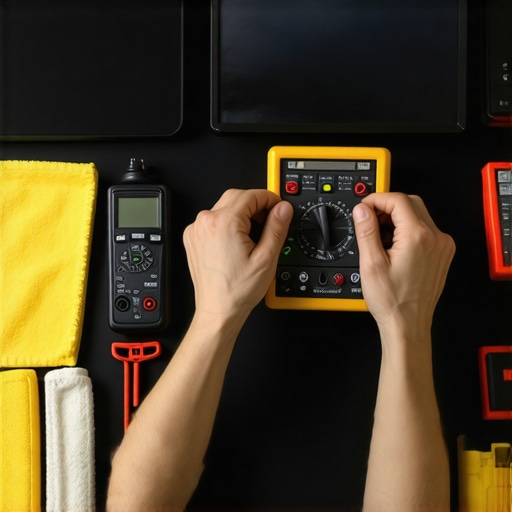
Personally, I keep a small toolkit dedicated to audio maintenance—comprising contact cleaner, a multimeter, a small screwdriver set, and a microfiber cloth. For software, I rely on Room EQ Wizard (REW) for periodic calibration and firmware management. Replacing cheap or worn-out cables with quality, appropriately gauged wiring can eliminate hums, buzzing, and signal loss. If you’re unsure about your cable quality, I suggest checking out articles on proper speaker wire gauge selection. Regularly inspecting your setup ensures everything is secure and functioning optimally, preventing most issues before they start. Remember, a little effort now can save you from larger headaches later.
As the audio tech landscape advances, the integration of remote diagnostics and AI diagnostics promises to revolutionize maintenance routines. For example, some modern amplifiers include built-in self-monitoring features, alerting owners of potential trouble. Embracing these tools will be the next step in achieving a hassle-free, high-fidelity home system. So, take a moment this month to update your firmware, clean your connectors, and review your cable management strategies—you’ll thank yourself later.
Throughout my journey in perfecting home audio, I’ve uncovered some invaluable lessons that many enthusiasts might overlook. Today, I want to share a few of these insights that transformed my experience far beyond typical advice.
The Hidden Power of Proper Placement Can Never Be Overstated
I once thought that upgrading my speakers or amplifiers was the only way to get better sound. It wasn’t until I experimented with different placements—moving my soundbar closer to the wall, angling it differently—that I realized positioning could dramatically enhance bass response. This simple tweak unlocked richer, deeper lows without spending extra money or adding more equipment.
Lighting the Way with Firmware Updates Makes a Difference
Early on, I dismissed firmware updates as minor. But after regularly updating my sound devices, I noticed subtle improvements in bass clarity and overall audio quality. Manufacturers often release updates that optimize driver performance, turning average gear into surprisingly capable performers—so never ignore those prompts!
Room Acoustics Are Your Unsung Heroes
I learned that furniture arrangement, soft furnishings, and even rugs can influence how bass travels in a room. Soft materials absorb high frequencies, but strategically placed furniture can reflect low frequencies, boosting perceived bass. Thoughtfully tuning my space created a fuller, more immersive sound without extra expense.
Small Changes, Big Results: Mastering EQ and Settings
Adjusting your device’s equalizer can seem intimidating, but I found that boosting low-frequency bands around 80-120Hz, combined with enabling bass enhancement modes, made a noticeable difference. Experimenting with these settings is an easy, low-cost way to extract more depth from your current setup.
Invest in a Personal Calibration Routine
Using tools like a measurement microphone and free software such as REW, I calibrated my system for optimal bass response. Regular calibration ensures your space and gear work harmoniously, giving you consistent, deep bass—something that no subwoofer alone can guarantee.
Strategic External Connections Elevate Your Sound
Switching from Bluetooth to wired connections improved signal clarity and bass richness. Additionally, using high-quality digital-to-analog converters (DACs) unlocked more detailed lows, proving that the right external devices can be game-changers even without additional speakers.
Embracing these lessons has transformed my home audio from average to immersive—proving that with a little experimentation and knowledge, you can enjoy full, satisfying bass without cluttering your space with subwoofers. Remember, the most profound improvements often come from simple, thoughtful tweaks rather than costly upgrades.
Insider Wisdom for Elevating Your Home Audio Experience
- Placement is everything: Even the best speakers can underperform if placed poorly.
- Firmware updates matter: Keeping gear updated unlocks hidden performance potential.
- Don’t ignore acoustics: Small room treatments and furniture placement can boost bass naturally.
- Master your settings: Proper EQ and bass modes can dramatically improve sound quality.
- Regular calibration: Investing a few minutes with tools ensures consistent, deep bass over time.
My Toolkit for Home Audio Perfection
- Measurement microphone like UMIK-1: Essential for accurate room calibration.
- Room EQ Wizard (REW): Free software to analyze and perfect sound performance.
- A quality HDMI or optical cable: Preserves signal integrity for richer bass.
- Contact cleaner like DeoxIT: Keeps connectors clean and ensures clear signals.
The Key to Your Next Step in Audio Mastery
Achieving rich, deep bass without a subwoofer isn’t just about hardware—it’s about understanding your space, your gear, and your habits. By applying these insights, you’ll create an immersive sound experience that delights every movie night and playlist. So, I challenge you: what small change will you try today to get closer to your perfect home audio? Share your plans below and let’s elevate our sound together!