
I still remember the first time I set up my dedicated listening corner; I’d finally scored a vintage Technics and was ready to lose myself in some classic jazz. Then, my dog walked into the room—not running, just a casual trot—and the needle skipped across the groove like a stone on a pond. It was soul-crushing. I realized then that my record player wasn’t just a music machine; it was a sensitive vibration sensor that hated my hardwood floors. If you are tired of freezing in place every time a side is playing, I have been in your shoes and I have got you covered. Today, we are going to stop those skips for good without needing to remodel your house or spend a fortune on specialized furniture.
Stop Walking on Eggshells Around Your Turntable
When I first started out, I made the classic rookie mistake of thinking a heavier table would solve everything. I actually went out and bought a massive, leaden side table, convinced that sheer mass would anchor the stylus. Spoiler alert: it did not help one bit. In fact, it seemed to pick up the low-frequency thumps from the floor even better because the heavy furniture was coupled so tightly to the joists. The real culprit is usually mechanical feedback, and understanding why your vinyl records skip when you walk near the turntable often comes down to how vibrations travel through your furniture rather than the weight of the record player itself. I have spent years tinkering with isolation pads and wall mounts to find the sweet spot where the music stays steady. Sometimes, even something as simple as the simple rug trick that instantly improves your room acoustics can provide a tiny bit of dampening, though usually, we need to address the physical connection to the floor. Have you ever felt like you have to hold your breath and tiptoe just to get through a single track? It takes the joy right out of the hobby.
Is it possible my floor is just too springy for vinyl?
It is a valid fear, especially if you live in an older home where the floor joists act like giant diving boards. Many people worry they need to move their entire setup to a basement with a concrete slab. Interestingly, even a microscopic vibration can be disastrous for your playback quality; according to the Audio Engineering Research, a turntable stylus can detect movements as small as a few millionths of an inch. That means your heavy footsteps are basically a localized earthquake to that tiny diamond tip. Before you go out and buy a whole new setup, you need to make sure your stylus is actually clean and hasn’t been damaged by all those previous jumps. Learning the best way to clean a turntable stylus without breaking it is an essential first step because a dirty or worn needle is significantly more prone to jumping out of the groove at the slightest provocation. We are going to look at isolation, leveling, and placement strategies that actually work in the real world to keep your records spinning smoothly.To fix skipping, we need to think like an engineer designing a skyscraper in an earthquake zone. The goal is decoupling—creating a break in the physical path that vibrations take from your feet, through the floor, up the table legs, and into the stylus. Imagine your turntable is a boat; the floor is a choppy sea. If you tie the boat tightly to the dock, every wave hits it hard. If you let it float on a buffer, it stays still while the water moves.
Decouple Your Setup from the Shaking Floor
The most effective way to do this without spending a fortune is by using isolation pads or a dedicated platform. I remember my first attempt at this: I took a heavy maple cutting board and placed it on top of four halved tennis balls. It looked absolutely ridiculous—like a science project gone wrong—but the difference was night and day. Suddenly, I could actually walk to the kitchen without the record screaming in protest. While you can buy professional isolation feet, the principle is the same: you want a material that absorbs energy rather than transmitting it. This is similar to why we suggest you stop placing your speakers directly on the floor for better bass; it is all about controlling how energy interacts with your room surfaces. 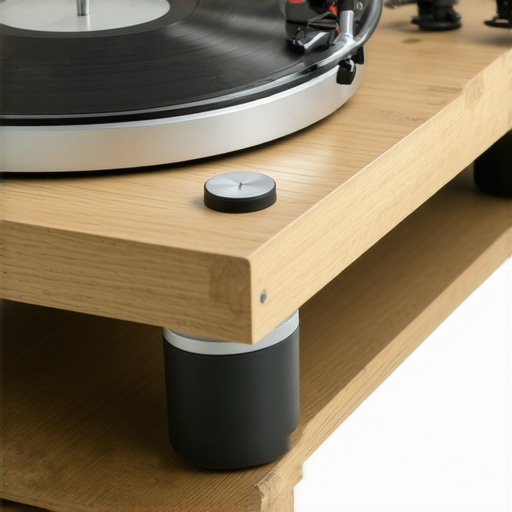
Build a Dedicated Isolation Platform
If the tennis ball trick is too ugly for your living room, you can build a sleek platform using high-density MDF or thick butcher block. Place this on top of Sorbothane hemispheres or even industrial anti-vibration pads used for washing machines. The goal is to create a sandwich of different densities to kill off the mechanical waves before they reach the platter. This DIY mindset is very similar to learning how to build your own speaker stands for under twenty dollars, where the focus is on stability and mass.
Dial in Your Tracking Force and Anti-Skate
If your tonearm is set too light, the stylus is basically a feather waiting for a breeze to blow it away. Check your cartridge manual for the recommended tracking force. When I first adjusted my counterweight, I was terrified I would snap the cantilever. I used a cheap plastic gauge that gave me different readings every time; switching to a digital scale showed me I was a full half-gram off, which was why even a heavy cat walking by caused a skip. Increasing the weight to the upper end of the recommended range can provide the extra stick needed to stay in the groove. While you are back there, it is a great time to learn how to properly ground your turntable to stop that buzzing noise, as a clean signal is just as vital as a steady one.
Level Everything with Scientific Precision
A turntable that is not perfectly level is fighting gravity. Use a small bubble level on the plinth and then on the actual platter. If the surface is slanted, the stylus is effectively trying to climb a hill, making it incredibly unstable. I have used everything from specialized spikes to folded-up playing cards to get things level. Think of your platter like a spinning top; if the surface is not flat, the force is not distributed evenly.
Stop the Vibrations at the Source
Sometimes the problem is not the floor, but the shelf itself. If your record player is on a flimsy bookshelf, it will wobble. You can use techniques similar to how to stop your portable speaker from vibrating off the shelf to add mass or dampening. However, if you have a truly bouncy floor, the ultimate solution is a wall-mounted shelf. By bolting the turntable directly to the wall studs, you bypass the floor joists entirely. It is the nuclear option, but it is the only way I have seen to play vinyl in a room where kids are literally jumping around.
A lot of people think that simply buying a heavier table will solve their skipping problems, but this is one of the biggest myths in the vinyl world. In my experience, a massive, rigid piece of furniture often acts as a perfect conduit for low-frequency energy. If your floor is bouncy and your stand is heavy and stiff, you are essentially creating a high-bandwidth highway for vibrations to reach your needle. I once spent a fortune on a marble-topped console only to find out it vibrated more than my cheap IKEA shelf because the marble had a high resonant frequency that matched my heavy footsteps. This is where the concept of ‘critical damping’ comes in—you don’t just want mass, you want to dissipate energy as heat. If you are struggling with a similar issue in your car, you might already know that why your car door vibration is ruining your mid-bass performance is often due to the same lack of damping material. The ‘oops’ factor for many enthusiasts is over-tightening everything; if you bolt your turntable too tightly to a heavy shelf, you lose the benefit of the unit’s internal suspension.
Does adding mass to the platter actually improve stability?
This is a sophisticated question often debated in audiophile circles. While a heavier platter can improve speed stability (wow and flutter) through inertia, it doesn’t necessarily protect against floor-borne vibrations. In fact, adding too much weight can put unnecessary strain on the motor and bearing. I have seen people buy expensive weights only to realize that is gold plated hardware really worth the extra cash is a question that applies here too—sometimes the ‘premium’ fix is just a shiny distraction. According to research published in the Journal of the Audio Engineering Society (AES), the resonant frequency of a turntable’s support system must be tuned significantly lower than the cartridge’s resonant frequency to avoid intermodulation distortion. If these frequencies overlap, your music will sound muddy even if the needle doesn’t jump. 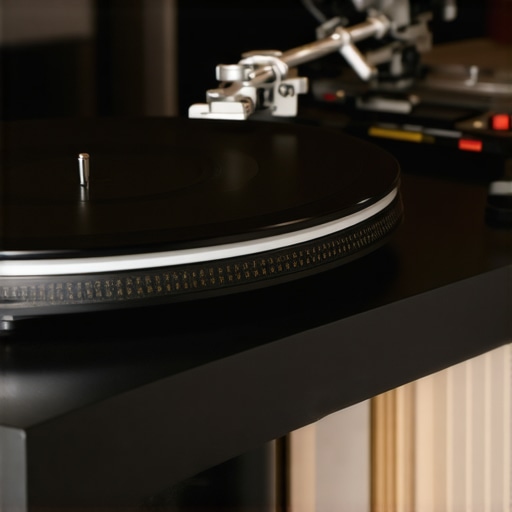 Another nuance people miss is signal interference. While you are busy fixing physical vibrations, you might be ignoring electronic ones. I’ve learned the hard way that why your phono preamp needs to be far away from the power amp is a rule you ignore at your own peril, as electromagnetic hum can be just as annoying as a skipping groove. Also, don’t get sucked into the trap of thinking gold-plated everything is a cure-all; why gold plated connectors arent always better comes down to the fact that unless the entire signal path is consistent, a single gold plug won’t stop the interference. Have you ever fallen into the ‘heavier is better’ trap? Let me know in the comments. We need to move beyond basic weight and start thinking about the science of decoupling if we want that perfect, uninterrupted sound.
Once you have solved the immediate skipping issues, the real work of an audiophile begins: maintenance. I have learned the hard way that a high-end setup is only as good as its weakest, dirtiest connection. I used to think that once a system was plugged in, it was set for life, but atmospheric changes and simple dust are constant enemies. Every six months, I do a full sweep of my cable runs. If you are noticing a slight fuzz or static, you might need to learn how to fix the crackling noise when you turn your amp volume rather than shopping for a new receiver. This usually isn’t a mechanical failure but just a buildup of oxidation on the internal contacts of the potentiometer.
Don’t Let Dust and Grime Kill Your Connection
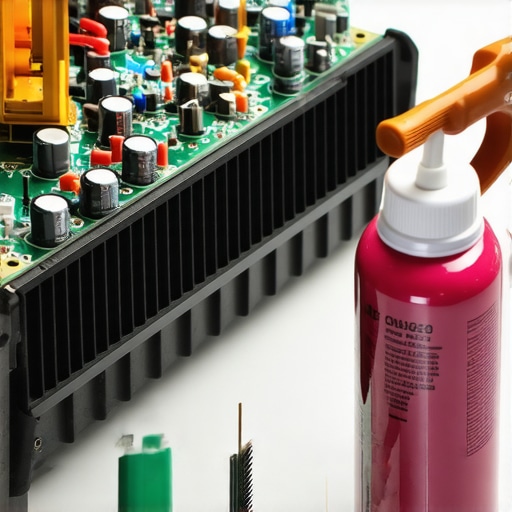
For my personal toolkit, I never go without a can of specialized contact cleaner and a pack of microfiber cloths. As the technical experts at CAIG Laboratories (makers of DeoxIT) explain in their technical documentation, even a thin layer of oxidation can significantly increase contact resistance, leading to signal loss and distortion long before you can actually see the corrosion. This is particularly true for older gear. If you’ve spent any time finding legitimate high-end gear at local thrift stores, your first move should always be a deep clean of the terminals. It is amazing how a five-dollar can of cleaner can make a thirty-year-old amp sound like it just rolled off the assembly line. I also pay close attention to the physical health of my peripherals. If you use your cans every day, you will eventually see why your headphone pads are peeling and how to replace them to maintain both comfort and the acoustic seal that is vital for bass response.
How do I keep my high-end gear performing like new?
Consistency is the secret sauce. Beyond just cleaning, you need to be proactive about small repairs before they become catastrophic. I always keep a soldering iron ready because knowing how to repair a loose speaker terminal in under five minutes can save you a trip to a repair shop that might charge a hundred dollars just for the bench fee. Long-term results also come from understanding the limits of your hardware. For instance, if you are an IEM user, learning the best way to store your iems to prevent driver damage—like avoiding moisture and using a hard shell case—will double their lifespan. I have seen friends ruin thousand-dollar sets just by tossing them into a gym bag. Also, keep an eye on your connectors; while some swear by expensive metals, I often point people toward the truth about gold-plated audio connectors for home stereos to help them realize that cleanliness matters more than the price of the plating.
Digital Room Correction is the Next Frontier
Looking ahead, the trend is moving away from purely physical fixes and toward sophisticated Digital Signal Processing (DSP). In the next five years, I predict that almost every mid-range amplifier will include AI-driven room correction that adjusts your frequency response in real-time based on the humidity and temperature of the room. We are already seeing this with why your smart speaker is actually listening to your room acoustics to tune its output. While the purist in me loves a manual setup, the precision these tools offer is undeniable. If you want to stay ahead of the curve, I highly recommend downloading a basic RTA (Real Time Analyzer) app on your phone today. Use it to visualize how the sound bounces around your room when you walk; it’s a free way to see exactly where your acoustic dead zones are. Go ahead and grab a bottle of contact cleaner this weekend and give your main amp’s terminals a quick spray—you will be shocked at the clarity you’ve been missing.
Lessons Learned from a Decade of Bouncy Floors
After years of troubleshooting, I’ve realized that the most expensive audiophile solutions are often overkill. The biggest breakthrough for me was realizing that less is more when it comes to tension. If you over-tighten your turntable’s feet or its internal suspension, you are essentially turning the entire chassis into a tuning fork that rings with every footstep. Also, remember that the environment matters; a drafty room with fluctuating humidity can actually make belts slip or subtly warp a record during play, which mimics a physical skip. My biggest lightbulb moment was finding out that a simple five-dollar thrift store find, like a heavy rubber mat, could occasionally outperform a hundred-dollar isolation slab if the frequency was right. Don’t be afraid to experiment with materials; sometimes the solution to why your vinyl records skip when you walk near the turntable is found in the most unlikely household items.
The Three Tools I Keep in My Vinyl Setup Kit
I don’t leave my setup to chance anymore, and I recommend you don’t either. I always have a digital stylus pressure gauge on hand because even a 0.1g deviation from the manufacturer’s spec can cause a jump on a dynamic jazz record. I also swear by Sorbothane hemispheres; these little rubbery blobs are magic for absorbing the energy of your footsteps before it reaches the plinth. Finally, a circular bubble level is non-negotiable. If you are hunting for new music, knowing the secret to finding high-quality vinyl records at thrift shops is a great skill, but those finds won’t sound their best if your player is sitting at a five-degree tilt. These tools take the guesswork out of the hobby and let you focus on the music.
The Peace of Mind That Comes from a Stable Stylus
You shouldn’t have to live in fear of your own floors. Vinyl is meant to be a relaxing, tactile experience, not a high-stress balancing act where you have to freeze in place every time a needle drops. By decoupling your gear and dialing in your tracking settings with scientific precision, you can finally enjoy your collection without holding your breath. Whether you are rocking a vintage tube amp or learning how to connect your old record player to a new soundbar, mechanical stability remains the foundation of great sound. Now that you have the blueprint to fix the vibrations in your home, it is time to reclaim your listening room and let the music flow uninterrupted. Have you ever tried the tennis ball trick for isolation, or did you go straight for the nuclear option with a wall-mounted shelf? Let me know in the comments below!