
I remember standing in the middle of a big-box electronics aisle about a decade ago, clutching a pair of RCA cables that cost more than my actual week’s groceries. The packaging was flashing words like ’24k Gold’ and ‘Reference Quality’ as if they were a holy grail. I was convinced that these shiny tips were the only thing standing between my current setup and sonic perfection. I got home, swapped my old ‘cheap’ wires out, and sat back for the revelation. The result? Silence—well, not literal silence, but the sound didn’t change a bit. My speakers still sounded exactly like they did five minutes prior. It was my first real ‘lightbulb moment’ in the world of high-end audio: just because it glitters doesn’t mean it’s going to make your music sound better. I had fallen for a classic marketing trap that many of us face when building our dream home theater or listening room. Today, I want to help you avoid that same buyer’s remorse by digging into the actual science behind your gear. [image_placeholder_1]
The Shiny Marketing Trap That Costs You Money
When you are browsing for new gear, it is easy to get distracted by the aesthetics. We often assume that premium-looking gold connectors are a requirement for high-fidelity sound, but in reality, expensive speaker cables are mostly a marketing trick designed to pad the margins of retail stores. My early mistake was thinking that the connector was the most important part of the signal chain. I ignored the fact that my source files were low-quality and my placement was off. We are going to solve that confusion today by identifying exactly when gold is a benefit and when it is just a ‘shiny tax’ on your wallet. Whether you are setting up 7 bookshelf speakers that don’t need a subwoofer or just plugging in a turntable, understanding the metal-to-metal contact is vital.
Is gold actually the best conductor for your gear?
You might be surprised to learn that gold is not the king of conductivity. According to technical data from the Engineering ToolBox, silver is actually the most conductive metal, followed closely by copper. Gold actually ranks third, providing only about 70% of the conductivity of copper. The only reason manufacturers use gold is that it does not oxidize (rust) like copper or silver does. If you are constantly plugging and unplugging your gear in a humid basement, gold might save you some cleaning time. But for a permanent setup in a dry living room, a high-quality copper connection is technically superior for signal flow. I once spent a fortune on gold-plated connectors for a vintage amp, only to find out that a simple cleaning of the internal pots was the real solution; you’d be better off learning how to fix the crackling noise when you turn your amp volume than buying fancy jewelry for your wires.
When Mixing Metals Causes More Harm Than Good
One thing the salesman won’t tell you is that mixing different metals can actually lead to a physical reaction called galvanic corrosion. If your amplifier has tin or nickel terminals and you force a gold plug onto them, you might eventually deal with a flaky connection that sounds worse than the cheap cable you replaced. This is why I always tell my neighbors to focus on the basics first—like how to properly ground your turntable to stop that annoying buzz. These fundamental steps impact your audio quality far more than the plating on your jacks. Have you ever felt that pressure at the checkout counter to buy the ‘premium’ cable just to be safe? I’d love to hear your stories about the most expensive audio ‘upgrade’ that did absolutely nothing for your sound. Let’s talk about it in the comments before we move on to the actual cable specs that matter.
Clean Your Connections to Restore Lost Detail
Cleaning your connection points is the single most effective way to restore signal clarity without buying a new kit. Over time, even in a clean room, a microscopic layer of oil and dust settles on your jacks. I once spent two hours troubleshooting a ‘dead’ left channel on a pair of vintage speakers, only to realize a bit of oxidation had formed on the spring clips. A quick wipe with 90% isopropyl alcohol on a lint-free cloth saved me a $100 repair bill. If you are into vinyl, you know that physical contact is everything, so you must learn the best way to clean a turntable stylus without breaking it to keep that needle reading the grooves properly. Friction and grime are the true enemies of high-fidelity sound, not the lack of gold plating. 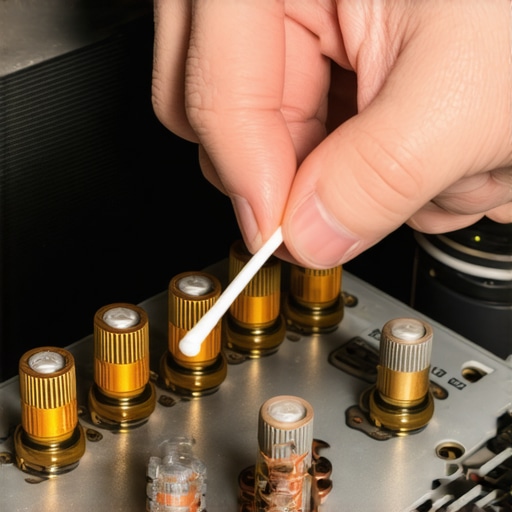
Why Wire Thickness Outperforms Shiny Connectors
When it comes to speaker cables, physics is much more important than marketing. The thickness, or gauge, of the wire determines how much resistance the signal faces as it travels to your speakers. Use your money on thickness, not plating. For runs under 50 feet, 16-gauge copper is usually plenty for most home setups. However, if you are running wire across a large room or through a wall, you should jump to 14 or 12-gauge to prevent power loss and maintain a tight bass response. If you are worried about how it looks, look into the best way to run speaker wire under your rug rather than buying ‘premium’ branded cables that promise the moon but deliver the same copper.
Fix Your Room Sound Without a New Amp
One of the biggest ‘free’ upgrades I ever found was simply lifting my bookshelf speakers. For years, I kept mine on the floor, wondering why the vocals sounded muddy and the instruments lacked definition. Then I learned why you should never put your speakers directly on the floor and realized the bass was just bouncing off the hardwood and canceling out the mids. I did not even have to buy retail stands; I figured out how to build your own speaker stands for under twenty dollars using some PVC and wood from a hardware store. The difference was immediate and far more noticeable than any gold-plated plug could ever provide.
The 10-Second Test for Perfect Soundstage
I have seen people buy brand-new amplifiers because their system lacked bass, only to find out they had one speaker wired backward. If the positive and negative wires are swapped on just one side, the speakers work against each other, literally sucking the life out of the music. You can learn how to tell if your speakers are out of phase in ten seconds just by listening to a mono track. If the sound seems like it is coming from ‘everywhere’ instead of the center, swap your wires. Finally, if your room still sounds like an echo chamber, try the simple rug trick that instantly improves your room acoustics. It kills the ‘slap back’ echo that makes high-end gear sound cheap and hollow.I’ve spent years debunking the idea that you need a dedicated $500 DAP (Digital Audio Player) to enjoy high-fidelity music on the go. In reality, the truth about using your phone to power high-end headphones is that most modern smartphones have surprisingly clean DAC chips; what they actually lack is the ‘swing’ or voltage to move heavy, high-impedance drivers. I often see enthusiasts blame their headphones for sounding ‘thin’ or ‘lifeless’ when they are simply underpowered. Interestingly, you can save a lot of cash by learning how to use an old smartphone as a high-res music streamer and bypassing its internal amp with a dedicated desktop unit. This setup frequently outperforms mid-range dedicated streamers that cost ten times as much. Have you ever fallen into this trap of buying a brand-new device when you already had the hardware? Let me know in the comments.
Does your amplifier actually need to ‘warm up’ before it sounds good?
There is a persistent myth that you need to let your solid-state gear bake for an hour before it hits its sonic peak. While some purists insist on this, electrical engineering data suggests that most circuits reach thermal stability within 15 to 20 minutes. If you find that your new amplifier gets hot after only twenty minutes, it isn’t necessarily ‘finding its groove’—it might be struggling with a low-impedance load or poor ventilation. As Dr. Floyd Toole points out in his extensive research on sound reproduction, the room’s influence on the frequency response is so massive that the ‘micro-changes’ in a warming amplifier are virtually undetectable by the human ear. If your sound feels ‘off’ until the amp is roasting, you might be dealing with psychological bias or a component that needs service. 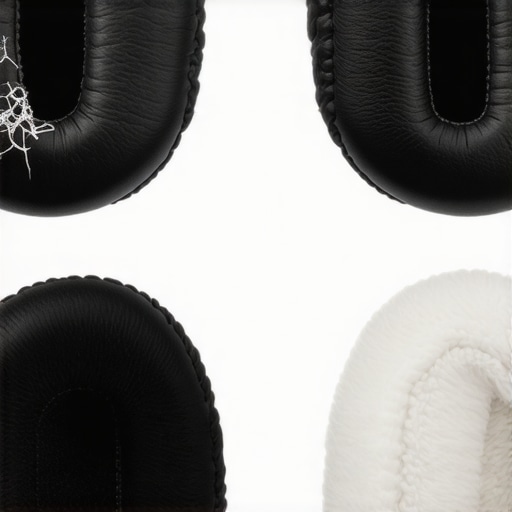
The Hidden Reason Your High-End Headphones Sound Bad
Many people worry that their gear is failing, asking how to tell if their headphones have a blown driver, when the culprit is actually the ear pads. We forget that the pad is a critical acoustic component. It creates the seal that traps air for low-frequency extension. Understanding why your headphone pads are peeling and how to replace them isn’t just about aesthetics; it is about restoring the original tuning. When that foam compresses over months of use, the distance between the driver and your ear changes, resulting in a muddy, recessed sound. Before you drop $300 on a new pair of cans, try a $20 set of replacement pads. To keep them in shape longer, make sure you are using the best ways to store your headphones to avoid crushing the foam. Finally, if you are moving from headphones to a home theater setup, don’t forget that height matters as much as quality. If you find yourself cranking the volume just to understand speech, look into why your center channel should always be at ear level. It’s often the lack of direct line-of-sight—and not a ‘cheap’ speaker—that causes why your soundbar dialogue is muffled.
I have learned the hard way that high-end audio isn’t a ‘set it and forget it’ hobby. If you want your gear to last through the next decade, you need to treat it like a classic car—regular maintenance is non-negotiable. My go-to tool that I never leave behind at a thrift store haul is a can of DeoxIT D5. It is essentially magic in a can for oxidized electronics. When you hear that irritating static, you can use the easy way to fix a scratchy volume slider on your radio by applying a tiny spritz and working the knob back and forth. It is far better than spraying generic lubricants which can actually gum up the delicate internal wipers. If your system feels physically flimsy, you should learn how to repair a loose speaker terminal in under five minutes to prevent accidental shorts that could fry your output stage. 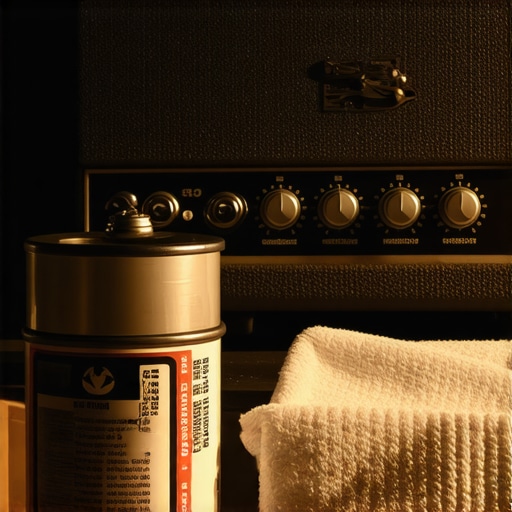
How do I keep my vintage audio gear alive for the long haul?
The biggest threat to older amplifiers isn’t time itself, but the chemical breakdown of capacitors. According to technical documentation from Vishay Intertechnology, electrolytic capacitors have a ‘load life’ that decreases by approximately half for every 10-degree Celsius increase in operating temperature. This is why heat management is so critical for your equipment’s longevity. If you notice why your amplifier gets hot enough to burn your hand, you are likely accelerating the death of these vital components. You really need to know how to tell if your vintage amplifier needs new capacitors before a leak causes permanent board damage. In the coming years, I predict we will see more ‘smart’ monitoring circuits built into consumer amps to alert us to these failures before they happen, much like a check engine light for your sound system.
When it comes to portable gear, hygiene is actually an acoustic requirement. I have seen people throw away perfectly good earphones because the sound became ‘dim’ or muffled. Most of the time, it is just a build-up of skin oils and debris blocking the mesh. You should regularly use the best way to clean your ear tips for better noise isolation and learn how to clean earwax out of your iems without pushing it deeper into the nozzle. Proper storage is the final piece of the puzzle. Moisture is the enemy of balanced armature drivers, so using the best way to store your iems to prevent driver damage—like using a small silica packet in your carrying case—can double the life of your gear. If you have an old setup you aren’t ready to retire, you can easily modernize it; finding out how to add an optical input to your old home stereo can give it a second life in a digital world. Tonight, I want you to grab a dry microfiber cloth and just wipe down your amp’s vents—you’d be surprised how much heat a little dust can trap.
The Hardest Lesson I Learned While Chasing Sonic Perfection
Looking back at my “gold phase,” I realize I was looking for a shortcut to quality that simply doesn’t exist. One of my biggest lightbulb moments was realizing that room acoustics and speaker placement matter infinitely more than the metal on your RCA jacks. You can have a $5,000 amplifier, but if your speakers are out of phase or shoved into a corner, it will sound worse than a budget system set up correctly. I also learned that the truth about gold plated audio connectors is that they are for durability and corrosion resistance, not for magic sound quality. If you ever find one headphone side being louder than the other, it is usually a physical connection issue or a failing driver, not a lack of gold. Finally, don’t be afraid of “cheap” gear; sometimes the simple trick to making your cheap earbuds feel like premium gear is just finding the right fit and ensuring a clean signal path.
My Essential Toolkit for Rescuing Old Gear
If you want to move beyond the marketing hype and actually improve your sound, you need a few reliable resources. First, I always keep a digital multimeter and a bottle of DeoxIT D5 nearby; these have saved more “broken” surround sound receivers clicking into protect mode than I can count. For those who want to dive into the science, I highly recommend reading Sound Reproduction by Dr. Floyd Toole. It is essentially the bible of audio engineering and will save you thousands of dollars in unnecessary upgrades. I also frequently check out 3 budget upgrades that make cheap speakers sound expensive whenever I am looking to spice up a secondary listening room without breaking the bank.
Don’t Let the Gear Get in the Way of the Music
At the end of the day, the goal of all these headphones, amplifiers, and speakers is to bring us closer to the music we love. It is easy to get caught up in the technical specifications and the shiny marketing, but if you are spending more time worrying about your cable plating than you are enjoying your favorite album, something is wrong. Audio should be a joy, not a source of stress. Take what you have learned today, clean those terminals, check your speaker phase, and then put on a record. You have already done the hard work of optimizing your signal path—now it is time to let the music speak for itself. Have you ever bought a “premium” audio accessory only to find out it did not change the sound at all? Let me know your experiences in the comments below!