
I still remember the crisp autumn afternoon I finished installing a premium set of component speakers in my sedan. I turned the key, booted up my favorite acoustic track, and… felt my stomach drop. The highs were harsh enough to chip teeth, and the midbass sounded like someone tapping on a dry cardboard box. I panicked. I immediately assumed I had wired them out of phase, or worse, that I bought defective gear. It was a classic rookie mistake. In my early days, I did not realize that brand-new speaker drivers are mechanically stiff right out of the box. Today, we are going to dive into the physical reality of speaker suspension and explore why a solid 20 hours of play time completely transforms your mobile audio experience. Once you understand this transition, you will stop worrying about defective hardware and start enjoying the rich, warm tones your system was actually built to deliver.
The Day My Brand-New Audio Upgrade Sounded Like Trash
It is a frustrating rite of passage for any car audio enthusiast. You spend hard-earned cash, scrape your knuckles pulling off door panels, and expect instant acoustic heaven. Instead, you get a sterile, tight soundstage that makes you wonder if you should have just kept the factory paper cones. Years ago, after a frustrating afternoon of troubleshooting, I almost returned a gorgeous set of drivers because they lacked warmth. I even double-checked my wiring using the easy way to test if your speakers are out of phase, only to find my installation was technically flawless. The real culprit was simply physics. Brand-new spiders and surrounds are incredibly stiff. According to speaker design transducer physics, a driver’s suspension compliance (Cms) increases significantly as the mechanical parts flex during the initial hours of use, which naturally lowers the resonant frequency (Fs) and smooths out the overall response. Forcing a brand-new speaker to sing beautifully right away is like asking an Olympic sprinter to run a 100-meter dash without stretching first.
Is Speaker Break-In Actually a Real Thing?
Many skeptics claim that ‘speaker break-in’ is a myth cooked up by manufacturers to prevent customers from returning gear they dislike. However, the mechanical transformation is very real and easily measurable with the right tools. When you first play music, the cone’s suspension materials—specifically the rubber or foam surround and the fabric spider—begin to stretch and loosen. This physical softening allows the cone to move more freely, which directly results in deeper bass extension, smoother midrange transitions, and a much warmer sound profile. If your new setup currently sounds a bit hollow or thin, do not despair. It is very similar to how why your car speakers sound like they are underwater when something is physically restricting their movement; stiffness behaves the exact same way. Have you ever installed a new audio system and felt completely underwhelmed by the initial sound quality? Let me know in the comments below. Let us look closer at what is happening behind your door panels during those first critical 20 hours of playtime.
How to Stretch those Stiff Suspension Joints Without Damaging Your Speakers
The secret to softening a driver’s suspension is not blasting high-frequency test tones at maximum volume; it is consistent, moderate mechanical excursion. Think of a new speaker cone like a stiff leather boot. If you try to run a marathon in those boots on day one, you will end up with blistered feet and ruined leather. Instead, you wear them around the house, slowly letting the material flex and conform to your movements. For your car audio system, this means playing dynamic music at a volume that causes visible but controlled cone movement. You want the voice coil to move smoothly within the magnetic gap, gradually warming up and flexing the spider. This mechanical stretching is even more crucial when dealing with complex multi-driver setups, much like how to properly break in a new set of high-end floor speakers in a home environment where precision alignment is everything.
The 20-Hour Playback Formula
To get your drivers sounding their best, you do not need to sit in your car for hours on end. Simply use your daily commutes to build up to that magic 20-hour mark. During this phase, keep your source signal clean and free of distortion. I recommend keeping the head unit volume below 60% and avoiding heavy bass boosts. Play music with rich, organic instruments—like acoustic guitars, cello, and live drums—which force the cone to reproduce a wide variety of frequencies. Avoid continuous synthetic sine waves or static noise, which can overheat the voice coil before the suspension has loosened enough to help dissipate heat. 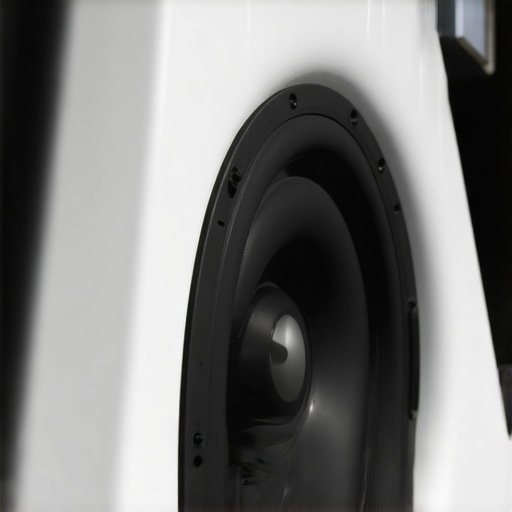
A Messy Lesson in Too Much Volume Too Soon
I learned this lesson the hard way years ago when I installed a fresh pair of midbass drivers in my front doors. Impatient and eager to show off, I cranked up a heavy electronic track with the gain on my amplifier set way too high. I did not realize that because the suspension was still incredibly stiff, the motor had to work twice as hard to push the cone. Within ten minutes, I smelled hot adhesive. The voice coil had overheated because the stiff suspension prevented the speaker from moving enough to pump cool air through the motor structure. Luckily, I turned it down before burning the coil completely, but it was a stark reminder that patience yields better acoustic results than brute force.
Why You Must Dial Back the Amplifier Gain Initially
Because stiff speakers do not move as freely, they will naturally produce slightly less output and lower bass extension during their first few hours. It is incredibly tempting to turn up the gain on your amplifier to compensate for this temporary lack of low-end punch. Resist this temptation. Adjusting your gain too high will introduce clipping, sending a square wave of distortion to your brand-new drivers. If you want to understand the limits of your amplifier controls during this setup phase, take a look at the difference between gain and volume on your amplifier. Keep your settings conservative. Once you pass that 20-hour break-in milestone, the suspension will loosen up naturally, the bass response will drop deeper, and you can then safely fine-tune your amplifier gains for maximum performance without risking thermal damage.
The Great Suspension Myth Most Audio Guys Still Believe
In my decades of playing with car and home audio systems, I have encountered a stubborn school of thought: the belief that speaker break-in is entirely a psychological trick. Some engineers argue that because the change in resonant frequency is only a few Hertz, it is audibly indistinguishable. I strongly disagree. This academic view completely ignores how mechanical stiffness affects real-world amplifier dynamics. When a driver is brand new, its suspension is highly resistive. This resistance forces your amplifier to work harder to control the cone, especially at the outer limits of excursion. If you do not account for this temporary physical state, you might find yourself wondering why your car speakers sound like they are underwater or lacking any real dynamic punch.
The trap here is over-compensating. Many enthusiasts hook up high-end component speakers, notice a lack of low-end warmth, and immediately crank up the low-frequency EQ or boost their amplifier gains. This is a massive mistake. You are essentially forcing an unyielding mechanical system to perform extreme excursions. It is the audio equivalent of cold-cranking an engine and immediately redlining it on the highway. Instead of getting better sound, you risk clipping your signal and sending destructive heat directly into a voice coil that cannot yet dissipate it efficiently through natural movement.

Why Does Initial Stiffness Mess With Your Amplifier’s Thermal Limits?
To understand the advanced mechanics of this process, we have to look at how a speaker cools itself. According to research by the Audio Engineering Society (AES) on loudspeaker thermal dynamics, a significant portion of voice coil cooling relies on the physical movement of the cone, which pumps air through the magnetic gap. When a brand-new speaker’s suspension is overly tight, its physical excursion is restricted. If you push heavy power into the speaker during this initial phase, the driver cannot move enough air to cool the voice coil. The coil temperature spikes, which increases electrical resistance (a phenomenon known as power compression) and temporarily degrades your sound quality even further. If you push it past this limit, you might end up needing to learn how to tell if your speaker is blown or just loose before you even get to enjoy its true potential.
Instead of forcing the issue with raw power, let physics work for you. Give the spider and surround those initial 20 hours to settle. Once they do, the mechanical resistance drops, the resonant frequency stabilizes, and your amplifier will run cooler while delivering much tighter, more effortless bass. Have you ever fallen into this trap of cranking up the bass on brand-new speakers because they sounded too thin? Let me know in the comments below.
Once you survive the initial mechanical break-in phase, the game shifts from patience to long-term performance optimization. To protect your investment and maintain that newly unlocked acoustic warmth, you must ensure your electrical system and physical mounting environment remain highly stable. Many enthusiasts assume that once the drivers loosen up, the job is done. In reality, the increased cone excursion puts additional physical stress on your vehicle’s door panels. This is why I always recommend treating your doors with dedicated butyl-based sound deadener and checking for physical wear after the first month of heavy play. Without this step, you will likely find yourself searching for how to fix a rattling plastic door panel after a speaker upgrade because the freshly loosened woofer is now vibrating the plastic frame with far more kinetic energy than it did on day one.
How do I maintain my mobile audio performance over time?
To keep your system running at peak performance, you need to transition from passive listening to active, structured maintenance. I personally use a handheld digital multimeter once every six months to check the voice coil impedance directly at the amplifier terminals. This quick test reveals if heat or vibration has degraded the connection or if a coil is beginning to fatigue. Additionally, I use a physical DD-1 distortion detector from Steve Meade Designs to calibrate my gains accurately, rather than relying on my ears. If you notice your midbass losing its punch over time, it is rarely the speaker failing; instead, check the physical environment. Make sure your door seals are intact, because moisture is the ultimate enemy of speaker surrounds. Furthermore, dynamic shifts in temperature can loosen mounting screws, which causes subtle air leaks that mimic a blown cone. If you suspect your driver is struggling, verify the physical mounting before assuming the worst by learning how to tell if your speaker is blown or just loose.

Looking ahead, the future of speaker break-in is moving rapidly toward active digital management. Niche car audio manufacturers are beginning to experiment with smart amplifier DSPs that automatically track driver impedance and temperature in real-time. Soon, you won’t have to manually baby your system for 20 hours; the amplifier’s microprocessor will automatically restrict extreme low frequencies and high gains based on real-time mechanical feedback, gradually opening up the performance envelope as the speaker’s internal suspension reaches its optimal physical compliance. For now, take control of your setup today: grab your favorite reference track, set your head unit volume to a safe 50%, and commit to completing those first 20 hours of clean playback before you make any final adjustments to your amplifier’s equalizer settings.
The Hardest Lessons I Learned Blowing Up Stiff Voice Coils
In my early days of designing mobile systems, I assumed the physical stiffness of a new speaker was a structural feature, not a temporary state. I used to immediately crank my setups to find the mechanical limits, only to burn voice coils and ruin premium surrounds. The hardest lesson I learned was that patience is actually an audio spec. When you rush a brand-new driver, you bypass the critical physical relaxation of the spider fabric. This restriction forces the speaker to sound incredibly dry and metallic, which often leads to the mistaken assumption that something is broken. Today, I treat the first 20 hours of any mobile audio install with the same respect as a new car engine’s break-in period. If you notice things sounding thin early on, keep in mind that even high-quality home equipment undergoes this exact transformation; you can learn more about this by studying how to properly break in a new set of high-end floor speakers to understand the physical transition of premium suspension materials.
My Essential Toolkit for Tuning Fresh Installs
To safely navigate those first critical hours of speaker break-in without damaging your investment, you need a few reliable diagnostic tools. I never configure a new build by ear alone. Here are the tools I trust to monitor my hardware:
- Steve Meade Designs DD-1 Distortion Detector: This tool is essential for setting your gains precisely below the clipping threshold before your speakers soften up.
- True RMS Digital Multimeter: I use this to measure the real-time AC voltage at the amplifier terminals, ensuring I do not push too much power into a highly resistive, unbroken driver.
- High-Quality Test Tracks: I prefer organic acoustic recordings rather than synthetic bass sweeps, which allows the voice coil to move dynamically and dissipate heat naturally.
Using these tools protects your equipment during its most vulnerable state. If you are using a powerful external amplifier and want to make sure your electronics are running optimally, you should also learn how to tell if your amplifier is running too hot during these prolonged initial tuning sessions.
Patience Unlocks the True Acoustic Warmth of Your Setup
Do not let the initial sterile sound of brand-new drivers discourage you. Physics is on your side, and that tight, harsh signature will naturally transform into a deep, warm, and highly satisfying soundstage as the suspension softens. By giving your speakers the 20 hours of moderate playback they deserve, you protect your voice coils from thermal damage and allow the motor structure to perform exactly as the engineers intended. Once the mechanical compliance of your speaker settles, you will finally experience the rich audio quality you paid for. Have you ever felt disappointed by how thin your car speakers sounded right after installation? Let me know your experiences in the comments below!