
I’ll never forget the day I finally hauled two massive, 80-pound crates into my living room. I had saved for six months to buy these high-end towers, imagining the moment the first note would hit and the heavens would open. Instead, I sat there in my favorite chair and felt my heart sink. They sounded brittle. The bass was almost nonexistent, and the high-end was sharp enough to shave with. I felt that immediate, cold pit in my stomach—the ‘I just wasted three paychecks’ feeling. I actually reached for my phone to call the dealer and demand a refund before I remembered something a gray-haired audio tech told me years ago. Like a new pair of stiff leather boots, these machines needed to stretch their legs. Today, I am going to show you how to shepherd your new speakers through those awkward first hours so you can actually enjoy the performance you paid for. Have you ever plugged in a new piece of gear only to wonder if your ears were broken? Seriously, let me know, because I’ve been there.
Is this whole break-in thing just audiophile voodoo?
There is a lot of debate in the forums about whether this is a real phenomenon or just our ears ‘getting used’ to a new sound profile. However, there is a very real mechanical reality at play here. When you first unbox a speaker, the surrounds and the spiders—the parts that allow the driver to move back and forth—are at their most rigid. Early in my journey, I made the amateur mistake of trying to ‘force’ the process by cranking the volume to 11 immediately. I nearly blew a tweeter before the suspension had any give. It is the same principle as why your new speakers sound better after 20 hours of use; it is about the physical relaxation of materials. Even the engineering team at KEF notes that the suspension’s compliance changes during the initial hours of use, only reaching its intended performance state after a period of movement.
Give those stiff cones a proper workout
The goal of a proper break-in isn’t just to make noise; it is to exercise the mechanical components of the driver. If you have noticed the reason your floorstanding speakers sound hollow, it might simply be that the woofer isn’t moving freely enough yet to fill the room with those rich lower frequencies. You also want to make sure your environment isn’t playing tricks on you while you evaluate the sound. I once spent three days ‘breaking in’ a pair only to realize they sounded harsh because of my bare hardwood floor, which is why I now use a rug to fix the echo before I even start the listening process. Even if your floorstanding speakers sound boomy in the corner right now, do not panic just yet. The sonic signature is going to shift significantly over the next few days. We are going to set up a controlled process that lets them settle in safely while you go about your life, ensuring that by next weekend, you are actually hearing the music the way the artist intended.
Select music that works every part of the driver
The biggest mistake I see people make is playing ‘thin’ music during the first few days. If you only listen to acoustic folk or podcasts, you aren’t giving the woofer’s surround enough physical movement to loosen up. You need frequency variety. I’ve found that a mix of orchestral pieces—which provide complex highs and mids—and some heavy electronic or bass-heavy jazz works best. I remember when I first set up my KEF towers; I was so paranoid about damaging them that I played classical music at a whisper for three days. It did absolutely nothing. I finally switched to some heavy-bass synthwave, and within four hours, the soundstage opened up like a flower. This is exactly why your new speakers sound better after 20 hours of use; they’ve finally had the chance to move across their entire physical range.
Stick to a moderate volume level
You don’t need to shake the windows to break in a speaker. In fact, doing so can be dangerous for a brand-new driver. Think of it like a cold engine in a car; you wouldn’t redline it the second you pull out of the driveway. You want to aim for a volume that is slightly louder than a normal conversation—loud enough that you can see the woofer moving if you look closely, but not so loud that it’s distorting. If you notice the reason your passive speakers sound quiet with a digital amp is because you’re playing them at low levels, resist the urge to crank the gain to the max immediately. Give them about 10 to 15 hours at this moderate ‘cruising speed’ before you start testing the limits of your amplifier.
Check for phase issues before you settle in
Before you spend forty hours breaking them in, you must ensure they are actually working together. I once spent two days thinking my new floorstanders were ‘defective’ because the center image felt hollow and the bass was virtually non-existent. I felt like an idiot when I realized I had the wires swapped on the left cabinet. Learning the easy way to test if your speakers are out of phase is vital here. If one speaker is pushing while the other is pulling, they will cancel each other out, and no amount of ‘break-in’ time will fix that thin, ghostly sound. Switch your receiver to mono or play a dedicated phase-test track. If the voice sounds like it’s coming from a specific point between the speakers, you’re good. If it sounds like it’s coming from everywhere and nowhere at once, swap the red and black wires on one side.
Prep the room to hear the changes
Your room is the final component of your speaker system. As the speakers begin to ‘warm up’ and the treble loses that initial ‘bite,’ you might find that your room’s reflections become more obvious. This is the stage where I usually start tweaking the placement. If the high-end still feels a bit too sharp even after a few hours, you might want to learn how to use a rug to stop your speakers from sounding harsh. Hard surfaces will reflect those early, stiff high frequencies and make the break-in process feel like it’s taking forever. By softening the floor, you’re better able to hear the actual mechanical changes happening in the tweeter and mid-range drivers.But here is where I usually part ways with the traditional audiophile crowd. While those mechanical changes in the spider and surround are absolutely real, the most significant shift during the first 40 hours is actually happening inside your head. We call this psychoacoustic adaptation. Most hobbyists obsess over the physical relaxation of the materials, but they forget that the human hearing system is incredibly plastic. When you switch from an old, familiar sound signature to something new and high-end, your brain initially interprets the increased detail as ‘harshness’ or the flatter response as ‘thin.’ Dr. Floyd Toole, a pioneer in acoustic research at Harman International, has demonstrated in numerous studies that listener preference often stabilizes only after the brain has calibrated itself to the new frequency response.
Your brain needs a break-in period too
I have seen so many people return perfectly good gear because they didn’t give their own ears time to adjust. They mistake their own cognitive dissonance for a hardware defect. This is the moment where you must resist the urge to start ‘fixing’ the sound with more purchases.  If you find yourself thinking the sound is too clinical, you might be tempted to stop wasting money on expensive optical cables or other ‘magic’ fixes that won’t actually change the mechanical reality of the speaker. Have you ever fallen into this trap of buying more gear to fix a problem that just needed time? Let me know in the comments, because I’ve spent thousands chasing ghosts that eventually vanished on their own.
Can we actually measure these changes in a lab?
This is the question that separates the enthusiasts from the engineers. The answer is yes, but the results might surprise you. While the Thiele/Small parameters (the technical specs that define how a driver moves) do shift as the suspension loosens, the change in the actual frequency response is often less than 1dB. To the average listener, that is almost imperceptible. What you are actually hearing is the ‘settling’ of the system as a whole. If you are using digital components, you should focus on the difference between cheap and expensive dacs that actually matters rather than worrying about whether your copper wire has ‘settled.’
Stop throwing money at ‘voodoo’ solutions during the first week
The ‘Oops’ factor here is the classic cable-swap panic. When a new system sounds brittle, the industry is more than happy to sell you ‘warmed up’ silver-plated interconnects. Before you go down that road, remember the real difference between gold and silver plated connectors is mostly about durability and corrosion, not fixing a stiff woofer. If the sound is truly off, it’s more likely a placement issue or a hardware fault. For instance, if you’re using older gear to drive new speakers, it’s worth learning how to tell if your amps capacitors are failing before you blame the new towers. A failing capacitor will cause audible distortion that no amount of break-in will ever cure. Give the gear—and your mind—at least two weeks of regular listening before you make a final judgment. Usually, by day ten, that ‘brittle’ sound has transformed into the ‘clarity’ you originally paid for.
Keep that fresh out of the box performance for years
Once you’ve survived the first two weeks and your ears have finally made peace with your new investment, the real work begins—and no, I don’t mean more listening, though that is the best part. I’m talking about the quiet degradation that happens when we ignore our gear. Dust is the silent killer of high-end audio. It doesn’t just look bad; it can actually weigh down delicate driver materials or cause thermal issues in your amp by clogging the heatsinks. I personally keep a dedicated soft-bristled makeup brush—the kind with natural fibers—just for my tweeters and mid-range cones. I’ve seen people use compressed air on silk dome tweeters, which is a recipe for disaster; that high-pressure blast can easily dent the dome or blow debris deeper into the voice coil gap. If you’re dealing with older tech or paper drivers, you have to be even more careful, which is why I always recommend learning how to clean your speaker cones without ruining the paper before you go at them with a damp cloth and end up with a soggy mess.
How do I keep my audio gear in peak condition long-term?
Maintenance isn’t just about aesthetics; it’s about electrical integrity. Every six months, I make a habit of crawling behind my rack to tighten everything down. The constant vibration from heavy bass can actually wiggle your wires loose over time, especially if you use bare-wire connections instead of banana plugs. If you start noticing that your receiver shuts off when you turn the volume up, it’s often because a tiny stray strand of copper is touching the metal chassis, creating a short. This is where I rely on my Fluke multimeter. Seriously, learning how to use a multimeter to find a short in your speaker wires has saved me from thousands of dollars in potential repair bills for blown output transistors. While you are back there, check your binding posts; you might need to know how to fix a loose speaker terminal on your cabinet if the constant weight of heavy cables has loosened the internal mounting hardware.
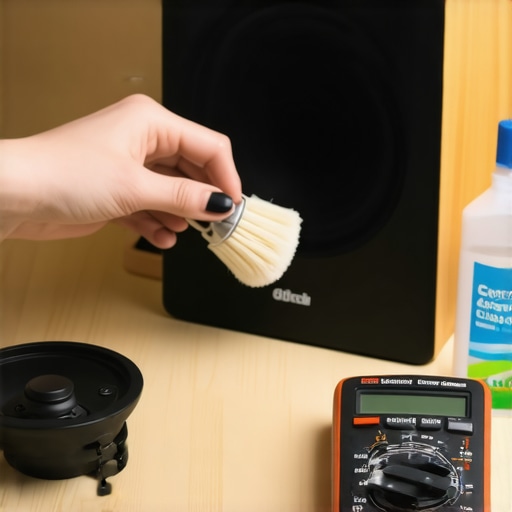
Beyond the wires, keep a constant eye on your heat levels. I’ve seen too many beautiful Class A amplifiers bake themselves to death in poorly ventilated cabinets or tucked-away closets. You should regularly check how to tell if your amp is running too hot, especially during the summer months when ambient temperatures rise. According to the technical service manuals from McIntosh Laboratory, even high-quality gold-plated connections benefit from an annual cleaning with a specialized deoxidizer to maintain signal integrity and prevent micro-arcing that can subtly distort your soundstage. It’s a small, ten-minute step that separates the casual listeners from the true audiophiles. And don’t forget your personal audio gear either; headphones take a beating from skin oils. If you use them daily, watch for these 7 signs your headphone pads need replacing today, because flattened pads change the distance between the driver and your ear, effectively ruining the factory tuning. Looking ahead, I suspect we’ll see more ‘smart’ speakers that include internal diagnostic sensors to alert you via app when a capacitor is drifting out of spec. Until then, we’re the ones on the front lines. My challenge to you: Go to your system today, unplug one speaker wire, and check for any signs of dullness or fraying. You might be surprised at the instant clarity you get from a simple five-minute refresh.
Three Hard Truths About Living with High-End Drivers
I’ve learned that the ‘buyer’s remorse’ phase is almost mandatory for anyone investing in serious equipment. If your setup sounds too perfect on minute one, it often means it is boosted in a way that will eventually fatigue your ears. One major realization I had is that while you are waiting for those towers to settle, you might discover the mistake you’re making when positioning your subwoofer is actually what is muddying the waters, not the new drivers themselves. Also, measurements rarely capture the ‘feeling’ of a system; that only comes once the materials relax. Finally, never judge a system while you are exhausted; your brain’s ability to process high frequencies drops significantly after a long day, making even the best gear sound ‘off.’
My Secret Weapons for Dialing in the Details
For those of you wanting to go deeper into the technical side, I swear by a few specific resources. First, I always recommend the book ‘Sound Reproduction’ by Dr. Floyd Toole—it is the absolute bible for understanding how speakers interact with our rooms. Second, I keep a high-quality digital copy of Daft Punk’s ‘Random Access Memories’ as my reference; the production is so clinical that it is the perfect benchmark for testing if the high-end is still too sharp. If you are also a headphone enthusiast, you should pay attention to why leather pads sound different than velour ones as you compare your desktop setup to your private listening sessions. For those of you using a workstation, always double-check the best height for your desktop speakers on a small desk to ensure your ears are in the sweet spot during the evaluation period.
Your Musical Journey Starts After the Settling Ends
Breaking in your new speakers isn’t a mechanical chore; it is the bridge between a piece of hardware and an emotional experience. Once the initial stiffness fades and your brain adapts to the new signature, the gear should ‘disappear,’ leaving only the music. Don’t rush it, and don’t overthink every tiny detail during the first week. If you are still hearing strange anomalies that don’t go away, you might need to look at other components in the chain, such as learning how to fix a scratching noise in your turntable rather than blaming the speaker’s break-in phase. Enjoy the process of hearing your favorite albums ‘for the first time’ all over again. Did your speakers sound ‘right’ the moment you plugged them in, or did you have to suffer through a few days of brittle highs? Let me know your experience in the comments!