
I stood there, remote in hand, staring at three thousand dollars worth of polished wood and silk-dome tweeters, and I wanted to cry. In the showroom, these floorstanders had enough kick to rattle my ribs. In my new open-concept living room? They sounded like a smartphone speaker playing from inside a Pringles can. It wasn’t just quiet; it was hollow, ghostly, and completely devoid of that ‘soul’ we pay the big bucks for. If you’ve ever felt that sinking feeling in your gut after a major upgrade, you aren’t alone. We’re going to stop the bleeding today and get that weight back into your music.
Your Big Room is a Bass-Hungry Monster
The truth is, your speakers are probably fine. The culprit is the several thousand cubic feet of air they’re trying to move. When you have a large space, sound waves—especially those precious lower-midrange frequencies—don’t just travel; they dissipate. It’s a common issue, similar to why your soundbar sounds thin in a room with high ceilings. In a smaller den, the walls help reinforce the sound by reflecting energy back to you quickly. In a great room, those walls are too far away to provide that ‘room gain’ we take for granted. I made the rookie mistake of thinking I just needed more power. I swapped amps three times and even considered the hidden cost of buying a cheap tube amplifier just to see if it would add some ‘warmth’ before realizing the room was the true enemy. I even questioned if I needed to wait for ‘burn-in,’ and while why your new speakers sound better after 20 hours of use is a real phenomenon, it won’t fix a room that is acoustically cavernous. According to the Audio Engineering Society, the Schroeder frequency—the point where your room transitions from a resonant environment to a reflective one—is significantly higher in large rooms, causing that detached, hollow sensation.
Do I really need to hire an acoustic consultant?
The short answer is no. You don’t need to turn your home into a recording studio with ugly grey foam everywhere to get your oomph back. Most of the time, the fix involves simple physics and strategic placement. Have you ever felt like your speakers were performing at only 50% capacity because the room just felt too empty? Let me know in the comments if you’ve faced this specific frustration. Before you go buying new gear, you should check the basics, like the easy way to test if your speakers are out of phase, because a simple wiring flip during setup can mimic that hollow sound perfectly.
The Reflection Trap and How to Escape It
Large rooms often come with hardwood floors or massive windows. These are the enemies of warmth. High-frequency reflections bounce around like pinballs, masking the delicate midrange and making everything feel sharp but empty. One of my favorite neighborly tips is how to use a rug to stop your speakers from sounding harsh. It sounds too simple to work, but a thick wool rug is often more effective than a massive equipment upgrade. We’re going to dive into how to position these towers so they actually load the room correctly, rather than fighting against it.To get that weight back, you have to treat your room like a container you’re trying to pressurize. If the speakers are sitting in the middle of a vast sea of carpet with no nearby boundaries, they have nothing to push against. Think of it like trying to do a push-up on a plush mattress versus a concrete floor. You need that resistance to generate force.
Use the Walls to Your Advantage
I used to think ‘audiophile’ placement strictly meant keeping speakers three feet away from every surface to avoid distortion. In a small room, that is great for clarity. In a 20×30 foot living room, it is a recipe for thin, anemic sound. By moving my towers closer to the front wall—the one behind the speakers—I used ‘boundary reinforcement’ to artificially boost the low-end. You have to be careful, though, because why your floorstanding speakers sound boomy in the corner is a real risk if you tuck them too deep. It is a game of inches. I spent an entire Saturday moving my 80-pound speakers two inches at a time until the kick drum finally felt like a physical punch rather than a tap on a paper cup.
The Tape Measure is Your Best Friend
Don’t eyeball this. Use a tape measure to ensure symmetry. If one speaker is six inches further from the side wall than the other, your soundstage will tilt and one side will feel ‘thinner’ than the other. I once spent an hour diagnosing what I thought was a hardware failure, looking up how to fix channel imbalance on a vintage stereo amplifier, only to realize my left speaker was simply soaking up more bass reinforcement from a nearby bookshelf while the right one was ‘lost’ in an open hallway. 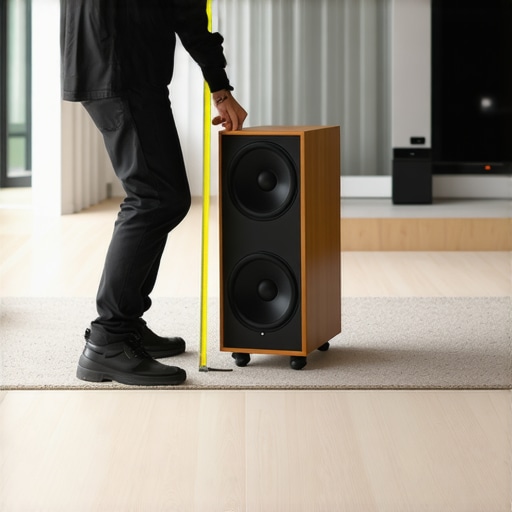
Force the Bass to Stay Put
In a cavernous space, bass frequencies are like toddlers—they want to run away and hide in the corners where you can’t hear them at the listening position. This is where many people give up and buy a bigger amp, but even the best amp won’t fix a ‘null,’ which is a dead spot where sound waves cancel each other out.
The Subwoofer is Not Just for Movies
Even if you have massive towers, a dedicated subwoofer helps ‘pressurize’ a large room more efficiently than small woofers can. If you are running an older setup, you might need to know how to wire a subwoofer to a receiver with no sub-out port. Adding a sub allows your main speakers to focus on the midrange—the ‘soul’ of the music—while the dedicated driver handles the heavy lifting of moving that massive volume of air.
Kill the Echo Without Modern Art
You do not need ugly foam panels to fix a hollow room. I fixed a nasty high-frequency ‘zing’ in my room by adding a tall, fabric-covered bookshelf behind my couch. It acted as a natural diffuser. If you are using smaller equipment, the same physics apply; for instance, the secret to getting deep bass from tiny desktop speakers often involves using the surface they sit on to your advantage. In a large room, every hard surface is a mirror. If you cannot see a rug or a curtain between you and the speakers, you are hearing the room’s echo, not the actual recording.Let’s dig deeper into the science of what actually moves the needle. A common myth in the audiophile world is the pursuit of a dead flat frequency response. On paper, it looks professional; in reality, it often sounds clinical and lifeless in a large room. Research by Dr. Sean Olive at Harman International suggests that the most pleasing sound signature for the human ear actually involves a house curve—a gentle slope that boosts the low end and slightly rolls off the piercing highs. If you try to force a perfectly flat response in a cavernous space, you will end up wondering the reason your passive speakers sound quiet with a digital amp even when the volume knob is cranked. It is not just about volume; it is about the spectral balance that the brain expects from a large environment.
How much of your budget belongs in the digital chain?
Many enthusiasts fall into the trap of spending thousands on a streamer while using a mediocre phono stage or an integrated DAC. While the difference between cheap and expensive DACs that actually matters is largely about the analog output stage rather than the chip itself, your biggest gains in a large room usually come from the preamp. If you are a vinyl lover, why you should use a phono preamp instead of the built-in one becomes apparent the moment you need to fill a 500-square-foot space with a low-output moving coil cartridge. The oops factor here is impedance mismatching; a high-gain amp paired with high-sensitivity speakers in a large room can actually introduce more floor noise, making your quiet passages sound like a running faucet rather than a silent void. 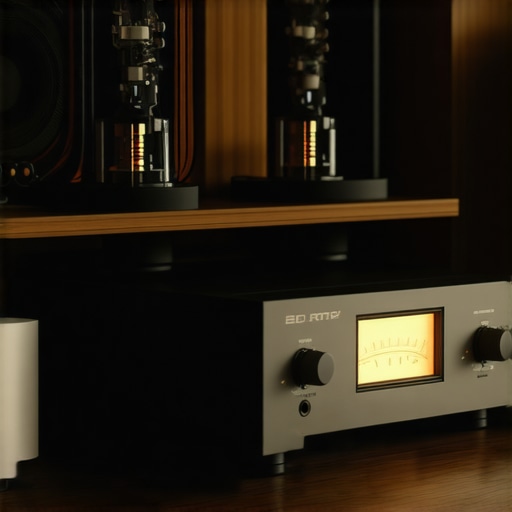 Another expensive mistake is over-investing in peripheral aesthetics. You might be tempted by fancy marketing, but you should stop wasting money on expensive optical cables and focus instead on clean power and thermal management. If you have decided to go the glowing route, understanding why your tube amp glows blue and if it is safe is a sign you are looking at the health of your gear, not just the brand name. Remember, the hidden cost of buying a cheap tube amplifier is not just the price tag; it is the potential for mismatched output transformers that cannot handle the current needed for big floorstanders. Have you ever fallen into this trap? Let me know in the comments. Lastly, do not get distracted by jewelry for your cables; the real difference between gold and silver plated connectors is mostly about corrosion resistance, not some magical expansion of the soundstage in your living room. Watts are the most lied-about metric in audio. People see a 1000W sticker on a cheap receiver and think it will outperform a 50W high-current boutique amp. In a large room, you do not need just loud—you need authority. A high-current amplifier can grip the woofers and stop them exactly when the music does, preventing that muddy, bloated bass that ruins the experience in an open-concept home.Maintaining a high-end system in a large room isn’t just about the occasional dusting; it is about managing the thermal and electrical stress that high-volume listening puts on your components. I have seen beautiful systems go silent because owners did not realize how to tell if your amp is running too hot, especially when pushed to fill a large space. Heat is the number one killer of electrolytic capacitors. If you are running a vintage setup to get that classic warmth, you really need to be vigilant and learn how to tell if your amp’s capacitors are failing before they leak and take out your transformers. I keep a can of DeoxIT D5 and a precision multimeter on my workbench at all times.
How do I keep my audio gear running for decades?
The secret is consistency and the right tools. I personally use a Fluke multimeter every few months just to check for drift in my speaker leads. It is the only way to be sure you have not developed a subtle problem, and knowing how to use a multimeter to find a short in your speaker wires has saved me from blowing an output stage more than once. For the physical bits, you have to be gentle. I use a soft goat-hair brush for my drivers, but you should definitely read up on how to clean your speaker cones without ruining the paper because one wrong move with a damp cloth can permanently change the mass—and thus the sound—of the cone. Even small mechanical issues, like learning how to fix a loose speaker terminal on your cabinet, can prevent the kind of intermittent signal loss that drives audiophiles crazy. 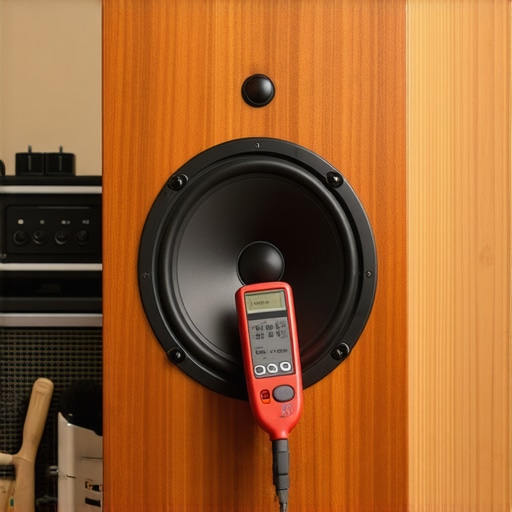 One niche expert I always follow is Nelson Pass, who often points out in his technical notes that the best amplifier is the one that is built to last with simple, robust architecture. This philosophy applies to your entire chain. We are moving toward a future where smart amplifiers will likely have built-in AI diagnostics to monitor rail voltage and bias in real-time, alerting your phone before a component fails. Until then, we are the stewards of our own sound. Don’t let your investment wither. Go grab a screwdriver today and check the torque on your speaker terminals—you would be surprised how much a slightly loose connection can degrade your mid-bass punch.
Why My Most Expensive Mistake Had Nothing To Do With Gear
I spent years chasing transparency only to realize that in a huge room, transparency often sounds like a cold hospital hallway. The biggest shift for me was accepting that a perfect system doesn’t exist—only a system that works with your specific air volume. I learned that the mistake you’re making when positioning your subwoofer is often the same one you are making with your towers: neglecting the room’s boundaries. I also realized that chasing a flat frequency response is a trap in a great room; you need that low-end boost to compensate for the massive air dissipation. Finally, remember that the reason your passive speakers sound quiet with a digital amp in these spaces is often a lack of dynamic headroom, not just low volume.
The Reference Library Every Room Designer Needs
If you want to move beyond guesswork, I highly recommend Floyd Toole’s Sound Reproduction. It is the gold standard for understanding how loudspeakers and rooms interact. I also suggest downloading REW (Room EQ Wizard) to measure your space; it is a free tool that provides more value than a thousand-dollar cable. Even if you have mastered how to get better bass from a bookshelf speaker without a sub, the physics of room modes still apply to your floorstanders. I also trust specialized hardware for the signal chain; for instance, understanding why you should use a phono preamp instead of the built-in one becomes crucial when you need a clean, powerful signal to drive your amp in a large environment. #IMAGE_PLACE_HOLDER_E#
Take Back Your Soundstage One Inch At A Time
Building a system that fills a cavernous room with life is a marathon, not a sprint. Your floorstanding speakers are capable of incredible things, but they need your help to fight the laws of physics. Don’t be afraid to break the rules of conventional placement to find the warmth your music deserves. Stop looking at the sales brochures and start listening to how the air in your room responds to every adjustment. Which corner of your room is stealing your bass? Let me know in the comments below.