
I still remember the day I finally unboxed my dream subwoofer, a beast that promised to rattle the windows and make my neighbors reconsider our friendship. I plugged it in, tucked it neatly beside my TV stand, and hit play on Inception. Nothing. Well, not nothing, but it was a pathetic, hollow thud that sounded more like a distant heartbeat than a cinematic explosion. I felt that sinking feeling in my gut—the one where you realize you might have just wasted a paycheck on a paperweight. I spent weeks tweaking settings and even checked to see if I had out of phase speakers, but the real culprit was much dumber than that. I was falling for the classic trap of placing the sub where it looked right instead of where physics actually wanted it to be.
Stop Placing Your Subwoofer Based on Aesthetics
In my early days, I assumed symmetry was the golden rule of audio. If the left speaker was there, the sub should be right next to it, right? Wrong. Rooms have these nasty things called standing waves where bass frequencies literally cancel each other out depending on where you stand. I had accidentally placed my sub in a null point. It is a common mistake that makes even the best gear sound like garbage. Today, we are going to stop the madness and find your room sweet spot so you can finally get that chest-thumping impact you paid for.
Is a high-end subwoofer actually worth the hype?
You might be sitting there thinking your gear is just underpowered or that you need to upgrade to two smaller subwoofers to get real results. While more hardware can help, most of the time the problem is purely environmental. According to research by the Audio Engineering Society, room acoustics and placement can alter the frequency response of a subwoofer by as much as 20 decibels. That is the difference between a roar and a whisper. Have you ever felt like your bass disappears the moment you sit down on the couch? You are definitely not alone.
The Myth of the Corner Placement
A lot of guys will tell you to just shove the sub in a corner and call it a day. While that can boost the volume, it often leads to one-note bass—that boomy, uncontrolled mess that masks all the detail in your music. I used to do this constantly until I realized my floorstanding speakers sounded boomy because they were fighting with the sub for the same acoustic real estate. We need to learn how to match your subwoofer phase and find the one spot where the room actually works with you, not against you. Trust me, your ears will thank you.
Let Your Ears Lead the Way with the Subwoofer Crawl
The single most effective way to find the perfect spot for your bass isn’t a complex equation; it is a weirdly physical process called the subwoofer crawl. It sounds ridiculous, and your family will definitely laugh at you, but it works because it flips the physics of the room in your favor. Instead of moving a heavy box around the room while you sit comfortably, you put the box in your seat and move yourself.
Put the Subwoofer Where Your Head Usually Is
I remember helping a buddy set up his first real theater in a cramped basement. We tried every corner, but the bass felt like it was happening in the next room. Finally, we hauled his 60-pound sub onto his favorite recliner. This is the first step: place the subwoofer exactly where your head is when you are watching a movie. By doing this, you are essentially treating the subwoofer like the listener. If you are struggling with aesthetics, you might want to learn how to hide a massive subwoofer in a minimalist living room later, but for now, focus only on the sound. 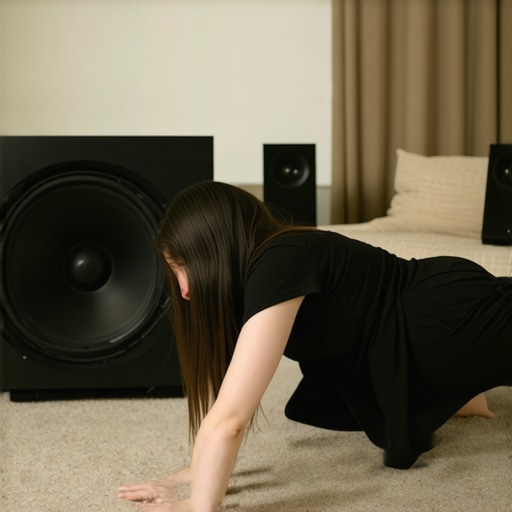
Crawl Like Your Home Theater Depends on It
Once the sub is on the couch, play a track with a repetitive, heavy bass line. Now, get on your hands and knees and crawl around the perimeter of the room. Keep your head at the same height the subwoofer would normally be. You will notice that in some spots, the bass completely disappears, and in others, it sounds like a muddy mess. But eventually, you will hit a spot where the bass is tight, punchy, and clear. That is your winner. This is much more effective than guessing, and it helps you identify if the speaker is actually blown or just rattling against a loose floorboard.
Fix the Tiny Details That Ruin Great Bass
Finding the spot is only half the battle. Once you have moved the sub to that magic location, you have to make sure it is playing nice with the rest of your gear. If your floorstanding speakers need more breathing room from the wall, they might still be creating their own low-end interference that muddies the sub’s output.
Match the Phase to Avoid Sound Waves Fighting
One of the biggest mistakes people make after the crawl is ignoring the phase switch. If your subwoofer is pushing out air while your main speakers are pulling it in, they cancel each other out. You need to match your subwoofer phase with your main speakers to ensure they are working in harmony. I once thought my new amp was defective because the bass was so weak, only to realize the phase was 180 degrees off. Flip the switch and listen for which setting sounds ‘louder’ and ‘fuller’ at the crossover point.
Add Soft Surfaces to Stop the Echo
If your room has hardwood floors or high ceilings, the bass can bounce around and become bloated. You might find that your soundbar sounds thin in a room with high ceilings because the reflections are killing the impact. In these cases, you should use a rug to fix a bright sounding room. A thick rug between the sub and your seating area absorbs high-frequency reflections and helps the low-end feel more grounded and intentional.
Why More Watts Don’t Always Mean More Impact
I see it constantly in the forums: someone drops three months’ rent on a massive 15-inch driver with a 2,000-watt plate amp, only to complain that their old 10-inch unit ‘hit harder.’ The common industry trap is believing that raw power overcomes poor physics. In reality, you are likely fighting your room’s natural resonance. Dr. Floyd Toole, a former AES president and a titan of acoustic research, has demonstrated that at low frequencies, the room can contribute more to what you hear than the subwoofer itself. Instead of buying more power, you need to understand ‘room gain.’ If your room is small, a lower-powered sub might actually sound tighter and more musical because it isn’t overloading the space with energy it can’t dissipate. Before you blame the hardware, make sure you aren’t just hearing the truth about speaker break-in periods and expecting a miracle from a brand-new stiff surround.
Is Your Receiver’s Auto-EQ Actually Dulling the Bass?
This is the sophisticated user’s biggest headache. Tools like Audyssey or Dirac are fantastic, but they have a fatal flaw: they often try to ‘fix’ a massive acoustic null by boosting that frequency. This is a recipe for disaster. If your room is naturally canceling out 40Hz, your receiver might try to push 10x the power into that frequency to compensate, which just leads to distortion or a blown driver. I always recommend running your calibration and then manually checking the results. If you see a massive +9dB boost in the low end, your placement is still wrong. Digital correction should be a surgical scalpel, not a sledgehammer.
Don’t Let a Five-Dollar Problem Ruin Your Five-Thousand-Dollar System
One of the most frustrating ‘expert’ mistakes involves ignoring the noise floor. I once visited a client who was ready to return a flagship SVS sub because of a constant, low-frequency ‘thrum.’ He thought the amp was dying, but we actually had to find the source of a ground loop in home theater components that was leaking into the signal path. If you hear a buzz even when no music is playing, don’t buy a new sub. Usually, the 5-fix for humming speakers and ground loops is as simple as a better-shielded cable or a ground isolator. 
Stop Using Cheap Interconnects for Long Runs
If your sub is across the room, you are probably using a 15-to-20-foot RCA cable. This is where you run into interference issues. In high-end setups, we often look at the difference between balanced and unbalanced cables for home studios because balanced (XLR) connections can reject that nasty electromagnetic hum. If your sub supports it, use it. Also, if you are working with vintage gear, keep an eye on your hardware’s health; you might need to learn how to tell if your speaker capacitors are starting to leak if you notice the bass becoming flabby or inconsistent over time. Have you ever fallen into the ‘more power is better’ trap only to be disappointed by the results? Let me know in the comments.
Measuring is Better Than Guessing
I eventually graduated from just ‘crawling’ on the floor to using actual data. If you really want to dial in your low end, you need a USB measurement microphone like the MiniDSP UMIK-1. I use it with a free software called Room EQ Wizard (REW), and it changed my entire perspective on audio. Instead of wondering why my bass felt thin, I could see the exact frequency dip on my laptop screen. It is the only way to verify if your tweaks are actually working. For example, Dr. Sean Olive’s research at Harman International has shown that most listeners actually prefer a slight bass boost—often called the ‘Harman Curve’—over a perfectly flat response, but that boost needs to be clean, not bloated. If you are getting weird readings or no sound at all, you might need to how to use a multimeter to find a short in your speaker wires before you spend hours on software.
Keep the Rattles Out of Your System
High-performance bass has a way of finding every loose screw in your house. I spent two days thinking my driver was failing, only to realize a picture frame in the hallway was vibrating against the wall. This is even worse in mobile setups. If you take your love for bass on the road, you really need to know how to stop your car’s rear deck from rattling when the sub hits. In the home, I use SVS SoundPath isolation feet to decouple the sub from the floor. It stops the energy from transferring into the floorboards, which makes the bass sound tighter and prevents your neighbors from calling the cops. 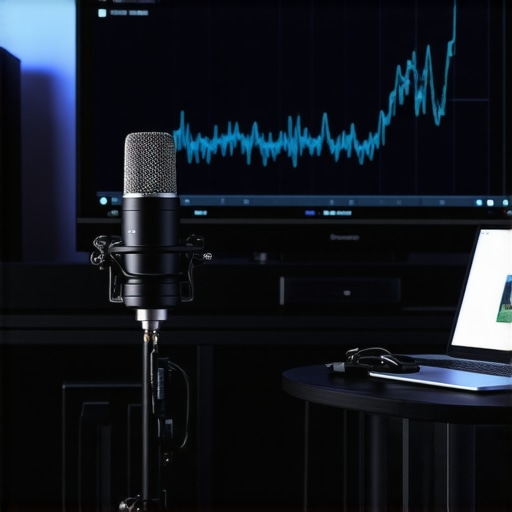
How do I keep my subwoofer performing like new for years?
Maintenance for a subwoofer is mostly about the environment and the electronics. First, keep it away from direct sunlight, which can dry out the surrounds. If you are dealing with older gear, you should learn how to revive a vintage speaker cone with simple rubber treatment to keep the material supple. Also, check your amp periodically. If you notice the volume behaving strangely, you might just need to how to fix a scratchy volume knob on an old amp with some contact cleaner rather than replacing the whole unit. For those with vintage setups, you might even need to how to revive old speakers with new foam surrounds if the original material has literally crumbled away.
The Future of Bass is Smarter Not Just Bigger
We are moving away from the era of ‘the bigger the box, the better the bass.’ The future is all about active room correction and AI integration. Modern subwoofers are starting to ship with built-in DSP that you control via an app on your phone, allowing for real-time adjustments from your seat. However, this technology isn’t perfect yet. Many users still find that why your wireless sub keeps disconnecting from the soundbar is a common headache in crowded Wi-Fi environments. I predict we will see more ‘distributed bass’ systems—three or four tiny, smart subwoofers hidden throughout a room that work together to create a perfectly even sound field. My challenge to you: don’t just take my word for it. Spend thirty minutes this weekend doing the ‘subwoofer crawl’ I mentioned earlier. It costs zero dollars and will likely do more for your sound quality than a five-hundred-dollar cable ever could.
Hard-Earned Truths from My Bass-Chasing Journey
Over the years, I have learned that the perfect low-end is a marathon, not a sprint. One of the most important ‘aha’ moments I had was realizing that silence is just as important as the thuds. If you hear a persistent buzz when your system is idle, you need to learn how to get rid of ground loop hum in your audio setup before you do anything else. It clears the stage for the real performance and allows the nuances of your subwoofer to shine.
Another hard lesson was learning to differentiate between hardware failure and environmental issues. Before you panic and think your driver is shot, check how to tell if your speaker is actually blown or just rattling against something in the room. I once spent a small fortune on a replacement driver only to realize a loose HVAC vent in the ceiling was the real culprit. Also, never underestimate a simple physical inspection; I still use the simple paper towel trick for finding speaker air leaks to ensure my enclosure is airtight. If your cabinet is leaking, no amount of power or digital EQ will fix the muddy response.
Tools That Saved My Sanity and My Sound
If you are ready to stop guessing and start knowing, I highly recommend investing in a measurement mic like the MiniDSP UMIK-1. It is the single most important tool in my kit because it removes the subjectivity of my own ears. I combine this with Room EQ Wizard (REW), which is free software that visualizes your room’s acoustic problems with surgical precision.
For those of you working with older gear, don’t give up on a classic just because the bass feels weak or the material looks brittle. You can often learn how to revive old speakers with new foam surrounds to bring back that factory-fresh punch without buying new hardware. Finally, I always keep a set of SVS SoundPath Isolation Feet on hand; they decouple the sub from the floorboards, which is a total game-changer for clarity and keeping your neighbors happy. #IMAGE_PLACEHOLDER_E#
Your New Cinematic Experience Starts Now
You have done the crawl, you have checked the phase, and you have tamed the rattles. Now comes the best part: sitting back and actually feeling the impact of your favorite films. Properly setting up your subwoofer is more about patience and physics than just raw spending power. Once you find that sweet spot where the room and the driver work in harmony, your entire home theater will transform from a collection of speakers into a cohesive, immersive world. What is the one movie scene you always use to test your bass limits? Let me know in the comments below.