
I’ll never forget the day I hauled my first truly massive subwoofer into our new, sleekly designed living room. I felt like a hero until I saw it sitting there—a giant black cube of MDF that looked like it had been dropped by a disgruntled mover. It stuck out like a sore thumb against our white oak floors. I quickly realized that if I wanted to keep both my high-fidelity audio and my interior design sanity, I needed a plan. We all want that visceral, low-end punch, but nobody wants their home to look like a warehouse. Today, I am going to show you exactly how to tuck that massive driver out of sight without turning your audio experience into a muddy mess.
Stop Letting Your Gear Overpower Your Decor
If you’ve ever tried to shove a sub behind a couch only to find it vibrating your furniture to the point of distraction, you know it isn’t as simple as ‘hide and seek.’ My first attempt at stealth was a total failure. I tucked it away so tightly into a corner cabinet that the bass became boomy and disconnected. Research by the Audio Engineering Society suggests that room placement is often more critical for subwoofers than for any other speaker because of how low frequencies interact with physical boundaries. You have to be smart about it or you’ll lose the very sound quality you paid for.
Will hiding it actually ruin the bass?
This is the biggest fear people have, and frankly, it’s a valid one. If you block the driver or stifle the air movement, yes, you’ll ruin the sound. I once made the mistake of thinking I could just throw a heavy decorative cloth over the whole unit. It looked better, sure, but the sound was muffled and the amplifier started getting dangerously hot. I eventually learned why your speakers bass port should never be pushed against a wall, which changed everything for my hidden setups. We’re going to look at furniture hacks and clever positioning that actually enhances the sound rather than choking it. Have you ever had to choose between a better-looking room and better-sounding music?
The Secret of Creative Furniture Integration
One of the best ways to keep the minimalist vibe is to stop thinking of the subwoofer as a speaker and start thinking of it as ‘hidden mass.’ Sometimes the best move isn’t one giant box, but realizing why two small subwoofers are better than one massive driver for blending into a room. You can hide two smaller units much easier than one monolith. If you’re sticking with the big guy, consider using an open-bottomed console or a custom-built ‘vented’ ottoman. It keeps the driver protected but allows the sound waves to move freely. I’ve even seen people find success when they realize why your subwoofer sounds better in the corner of the room, where it can often be masked by a large indoor plant or a specific piece of corner furniture.Now that we’ve established that physical placement is key, let’s get into the mechanics of the ‘ghost’ setup. The first thing you have to master is timing. Sound travels at a fixed speed, and when you move your subwoofer further away or tuck it behind a sofa, those low-frequency waves might arrive at your ears a fraction of a second later than the sound from your main speakers. This creates a ‘hollow’ sound where the bass feels like it’s lagging behind the rest of the music. I remember setting up a hidden sub in my den and thinking the driver was defective because the impact was gone, only to realize I was a victim of phase cancellation. You need to learn how to match your subwoofer phase with your main speakers to ensure the drivers are pushing air in sync. It’s like two people rowing a boat; if they aren’t timed perfectly, you’re just spinning in circles. If you suspect things are off, you can usually how to tell if your speakers are out of phase in 30-seconds-2 by listening for a sudden ‘bloom’ in bass when you flip the phase switch on the back of the unit.
Stop the Rattles Before They Start
When you hide a sub, you are essentially placing a high-vibration engine inside your furniture. This is where most stealth projects die. If you’re putting a sub inside a cabinet, you’re essentially building a second speaker box around the first one. This is a recipe for distracting buzzes. When I first tried this with a wooden sideboard, the doors rattled so loudly they drowned out the actual bass. I had to go back and reinforce the joints with wood glue and add rubber gaskets to the doors. A great way to check for structural weaknesses is the simple paper towel trick for finding speaker air leaks or cabinet vibrations. If the paper dances, your cabinet isn’t stable enough to house a sub. You should also decouple the sub from the floor or the furniture it’s sitting on. Just like why floorstanding speakers need spikes when used on carpet to stay grounded and clear, your subwoofer needs isolation feet to keep energy from transferring into your floorboards and causing a muddy mess. 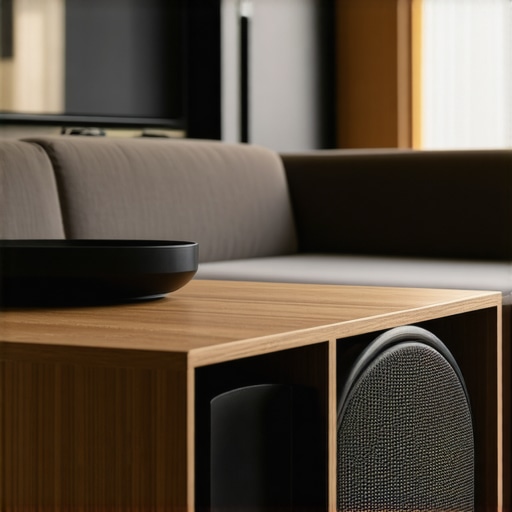
Give the Port Room to Breathe
Don’t ignore the physical requirements of air displacement. Even a hidden sub needs an exit path for the sound waves. If you’ve got a ported sub, that hole is literally its lung. Blocking it makes the motor work harder and can actually lead to hardware failure. I’ve seen setups where people wondered how to fix a subwoofer that is vibrating your furniture, and the answer was simply giving the port three inches of clearance from the back wall of the cabinet. Use acoustically transparent fabric—the kind used on professional speaker grilles—instead of solid wooden doors. This allows the sound to pass through effortlessly without the ‘muffled’ quality that ruins the high-end fidelity of your 2.1 system. Focus on the airflow, and the bass will find its way out.It’s easy to get caught up in the more is better philosophy of home audio. We’re told that better specs always mean better sound, but after years of testing, I’ve found that the most expensive equipment often hides the simplest flaws. For example, a common industry myth is that every speaker needs a hundred-hour break-in before it sounds good. While there is some mechanical movement involved, the truth about speaker break-in periods is that the change is often too subtle for the human ear to detect without scientific measurement tools. Most of what you’re hearing is actually your brain breaking in to the new sound signature. Another trap is the Source Supremacy myth. You might spend a fortune on a dedicated converter, only to realize why your high-end DAC sounds exactly like your laptops headphone jack because the bottleneck is elsewhere—likely your room’s acoustics or the file quality itself. According to research published by the Audio Engineering Society (AES), listener preference is overwhelmingly dictated by a speaker’s off-axis response and room interaction rather than the minute differences between modern digital-to-analog converters.
Why does your expensive gear still sound flat?
Often, it comes down to a mismatch in electrical specs rather than the price tag of the box. If you don’t understand the secret to choosing the right ohm rating for your amp, you could be starving your speakers of the current they need to actually move air, making even a five-thousand-dollar system sound thin and lifeless. 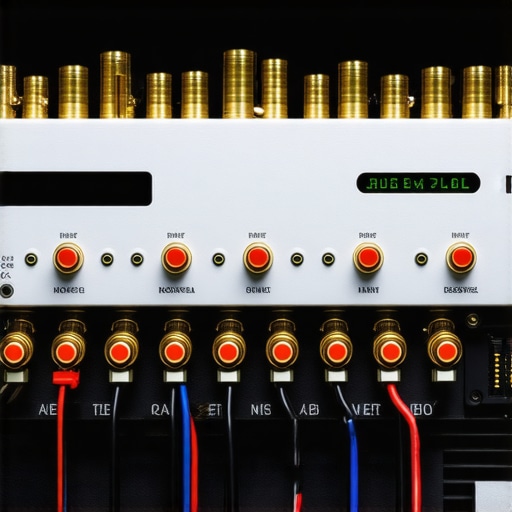 This is the ‘Oops’ factor that bites most enthusiasts: they buy the shiny new thing but ignore the basic physics of the signal chain. I’ve seen people buy incredible vintage gear only to get home and realize they fell for the classic error: why you should never buy a used receiver without the remote—good luck navigating those hidden sub-menus for phase and crossover settings without it. If you’re dealing with older equipment, don’t assume a crackle means the unit is dying. I’ve saved hundreds of dollars by learning how to fix a scratchy volume dial with electrical contact cleaner instead of replacing a perfectly good amplifier. It’s these small, technical nuances that separate the hobbyists from the experts. Have you ever fallen into this trap of buying gear to solve a problem that was actually just a setting or a dirty knob? Let me know in the comments below.If you’re serious about high-fidelity sound, you eventually have to stop relying on your ears alone. Your brain is a master at ‘equalizing’ reality, making you ignore acoustic flaws until they become unbearable, but a calibrated microphone never lies. I’ve become a huge advocate for using specialized software like Room EQ Wizard (REW), but if you aren’t ready to dive into the deep end of professional measurement, you should at least learn how to use your phone to measure your rooms frequency response. This was a massive turning point for me. I discovered that my ‘perfectly placed’ hidden subwoofer was actually creating a 12dB spike at 45Hz, which was masking all my mid-bass detail and making my floorboards rattle. Dr. Floyd Toole, a legend in the field and author of Sound Reproduction: The Acoustics and Psychoacoustics of Loudspeakers and Rooms, has spent decades proving that the room itself is often the most influential component of your sound system. Without actual data, you’re just shooting in the dark and hoping for the best.
How do I keep my gear sounding fresh for a decade?
The biggest enemy of high-end audio isn’t time; it’s heat and dust. If you have tucked your amplifier away inside a cabinet to maintain that minimalist look, you might eventually notice why your vintage amp gets hot even when you arent playing music. High-bias Class AB amps need constant airflow to keep their internal components from cooking themselves. Over time, that heat causes electrolytic capacitors to dry out, which leads to a loss of punch and clarity. You need to know how to tell if your speakers capacitor is starting to fail before it takes a tweeter or a crossover with it. I make it a habit to open my vintage receivers once a year for a quick blast of compressed air and a check-up. If you hear a crackle when adjusting the volume, don’t panic; usually, it’s just oxidation on the internal contacts. You can easily learn how to fix a scratchy volume knob on an old amp with a few targeted sprays of electrical contact cleaner rather than paying a repair shop hundreds of dollars for a five-minute job. 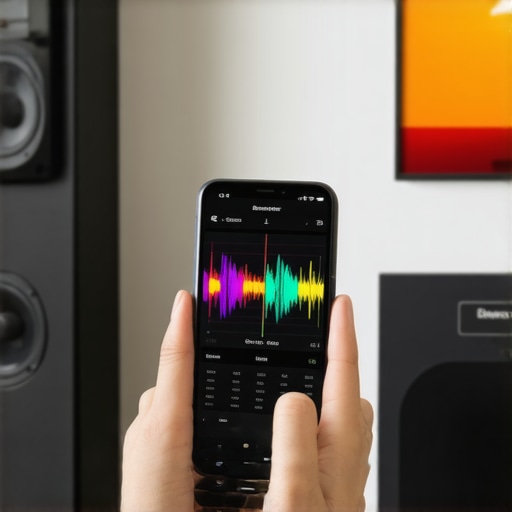
Kill the Hum Before It Kills Your Vibe
One of the most frustrating things about scaling a system is the dreaded ground loop. As soon as you add that second subwoofer or a dedicated power amp to your rig, you might hear a low-frequency buzz that makes you want to throw the whole setup out the window. Learning how to get rid of ground loop hum in your audio setup is a rite of passage for every audiophile. It is usually a simple electrical mismatch, but it makes a world of difference in the noise floor of your system. And if your old-school drivers are starting to look a bit ragged around the edges, don’t ditch them. Most of the time, you can learn how to revive old speakers with new foam surrounds for less than the cost of a pizza. I predict that within the next five years, manual room measurement will be a thing of the past, as AI-driven DSP integrated into every speaker will map your room in real-time. But for those of us who love the tactile feel of traditional gear, the maintenance is part of the joy. My challenge to you: download a measurement app tonight and find your room’s biggest acoustic flaw. You might be surprised to find that a simple furniture shift does more for your bass than a thousand-dollar cable ever could.
What I Finally Realized About Stealthy Bass
Looking back at my journey with integrated home audio, the biggest ‘lightbulb moment’ wasn’t about the raw power of the driver, but the subtle physics of the room. First, you have to accept that concealment is a compromise that requires active compensation. If you hide a sub, you must learn how to match your subwoofer phase with your main speakers or the bass will always feel like it is ‘tripping’ over itself in the soundstage. Secondly, physical mass is your best friend in a stealth build. Just like the reason your speaker stands need to be filled with sand to prevent unwanted resonance, any cabinet you use for concealment must be heavy, braced, and isolated. Finally, never ignore the electronics; knowing why your vintage receiver makes a loud hum with no music playing can save you from tearing apart a perfectly good hidden installation just because of a simple $10 ground loop issue. Success isn’t just about making the box vanish; it is about making the sound feel like it is coming from the air itself.
The Toolkit I Use to Tame Unruly Bass
If you are moving beyond basic setup and want to hunt for the best home audio deals, you need the right diagnostic tools. I cannot recommend the Room EQ Wizard (REW) software enough—it is free and professional-grade. Pair it with a calibrated microphone, and you will see exactly where your room is eating your low-end detail. For those who want a simpler start, learning how to use your phone to measure your rooms frequency response is a fantastic gateway into acoustic science that costs nothing. I also highly recommend reading Sound Reproduction by Dr. Floyd Toole; it is essentially the bible for anyone trying to understand how speakers actually behave in real-world living rooms. These resources turned my guesswork into a predictable science. #IMAGE_PLACEHOLDER_E#
Go Create Your Perfect Acoustic Space
You don’t have to choose between a beautiful home and a system that makes your chest thump. By using these strategies and keeping an eye out for quality home audio deals, you can create a ‘ghost’ system that leaves guests wondering where that incredible, immersive sound is coming from. Start small, move one piece of furniture at a time, and always keep your ears (and your measurement apps) open. The best-sounding room is the one you actually enjoy living in, not just listening in. Have you ever tried to hide a piece of gear only to have it rattle the dishes in the next room? Let me know your biggest ‘oops’ moment in the comments below!