
I’ll never forget the day I thought I’d outsmarted the local thrift store. Sitting there on a dusty shelf was a beast of a Pioneer Elite receiver, heavy as a cinder block and priced at a mere forty bucks. I checked the back—clean terminals. I checked the front—no scratches. I didn’t even care that the remote was missing because, hey, I’ve got a phone with an IR blaster and a box of universal remotes at home, right? Wrong. I spent three days trying to calibrate the surround sound, only to realize that the Speaker B and Subwoofer Crossover settings were buried in a proprietary menu accessible only by the original Menu button on the factory remote. That bargain ended up costing me twice as much just to source a replacement clicker on eBay.
That Killer Deal Is Often a Hidden Trap
When you’re scouring Facebook Marketplace or Craigslist for home audio deals, it is incredibly easy to overlook that little plastic wand. We focus on the watts per channel, the HDMI version, or whether the expensive receiver makes a clicking sound when it starts. But in the world of modern home theater, the remote isn’t just a convenience; it is the key to the castle. Without it, you are often locked out of the Advanced Setup Menu, the EQ settings, and the room correction software like Audyssey or YPAO. I made this mistake early on with a high-end Denon unit. I thought I could just use the front panel buttons. I quickly learned that manufacturers stopped putting Enter or Return buttons on the chassis years ago to save on production costs. According to the Audio Engineering Society, proprietary IR codes for menu navigation are rarely fully shared with third-party manufacturers, leaving standard universal remotes unable to access critical calibration sub-menus. If you can’t tell the receiver that you’ve moved your bookshelf speakers off the desk and onto stands, you simply aren’t getting the audio performance you paid for.
Can a Cheap Universal Remote Actually Save You?
You might be thinking that you can just buy a $15 Logitech or a generic replacement. Here is the cold, hard truth: they rarely work for deep-level configuration. Sure, they will change the volume and switch inputs, but try navigating a 2012-era Marantz setup screen with a generic remote. It is a nightmare of button-mapping that often leads to a dead end. I’ve seen enthusiasts get so frustrated they end up selling the unit again, perpetuating the cycle of remote-less despair. Have you ever found yourself stuck in a setup menu with no way to hit OK? Let me know in the comments, because I am pretty sure I am not the only one who has yelled at a piece of inanimate aluminum. If you aren’t careful, you will end up with a system where your surround sound system sounds like it is in mono simply because you can’t toggle the processing mode. We need to look at why these remotes are so specific and what you should check before handing over your cash.
Hunt for a Physical Navigation Pad
Before you even touch your wallet, look at the receiver’s front panel like a seasoned detective. If the unit only features a power button, a volume knob, and an input selector, you are entering a world of frustration without the factory remote. I once picked up a beautiful Onkyo unit that looked absolutely pristine. I figured I could just navigate the internal menus using the “Tone Control” buttons or some other clever combination. Big mistake. I spent an hour pressing every toggle like I was entering a cheat code in an old arcade game, only to find out that the “Setup” command was physically impossible to trigger from the chassis. This is why I always suggest checking the unit for scratchy volume knobs or other signs of wear first, because a seller who lost the remote usually didn’t take great care of the internals either. When the core interface is missing, you aren’t just losing a remote; you are losing access to the brains of the machine.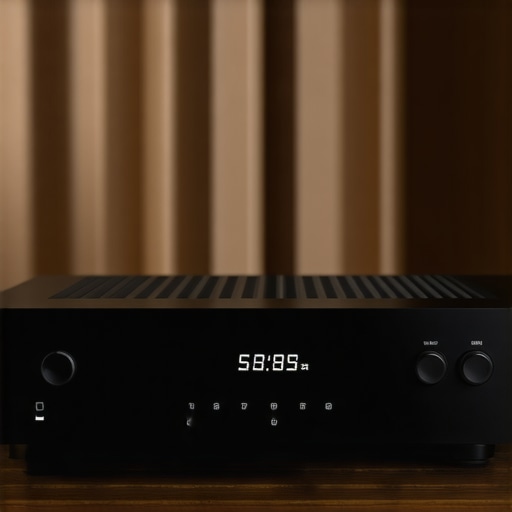
Read the PDF Manual Before You Meet the Seller
One of the smartest moves you can make is to Google the model number plus “manual” while you’re still sitting in your car in the seller’s driveway. Flip straight to the “Remote Control” section and see if there are specific “shift” or “mode” functions. Many older Sony and Yamaha units require you to hold a button on the remote to access secondary features like speaker impedance or zone controls. If those features include your crossover settings or speaker levels, and you don’t have that plastic wand, the unit is effectively a paperweight for high-performance use. You might think you’re getting a steal, but if you can’t tell the difference between a blown speaker or just a rattling cabinet because you can’t access the internal test tones, you’re flying blind. I’ve started carrying a small kit and learning how to fix a scratchy volume dial just to negotiate prices down, but I won’t budge if the remote is gone and the PDF says “Remote Only” for the setup menu. Manufacturers offload these controls to keep the front panel aesthetic clean, but it creates a massive hurdle for the second-hand market.
Turn an Old Phone into a High-Res Remote
If you’ve already made the mistake and brought home a remote-less beast, don’t panic yet. You can actually use an old phone as a dedicated music player and, if it has a built-in IR blaster, a temporary setup savior. Old Samsung or LG phones often have infrared emitters that can mimic the proprietary codes your $10 universal remote simply cannot find. This saved me when I was trying to figure out how to get clear movie dialogue without a dedicated center speaker on an old Harman Kardon unit. I couldn’t turn on the “Phantom Center” mode without the “OSD” button. I downloaded a specific manufacturer-profile app to my old Galaxy S5, and boom—I was in the menu. It isn’t a permanent solution, but it gets the calibration done so you can finally enjoy the audio performance you expected.Once you have solved the remote mystery, you will likely face the next big hurdle that trips up even seasoned audiophiles: the ‘Power Myth.’ Everyone tells you that higher wattage is the holy grail of sound quality, but that is a dangerous oversimplification. In my years of swapping gear, I have seen more people blow their tweeters with a ‘high-power’ amp than a modest one. The nuance lies in headroom and impedance stability, not just the raw numbers on the sticker. If you are trying to learn the secret to choosing the right ohm rating for your amp, you quickly realize that a 100-watt amp that can’t handle a 4-ohm dip is actually less powerful in practice than a high-current 50-watt unit.
Don’t Waste Your Time on the Speaker Break-In Myth
One of the most persistent myths in the community is the idea of a mandatory forty-hour break-in period for new or used speakers. You’ll hear people swear that the sound ‘opened up’ only after three days of continuous pink noise. Let’s look at the facts: while the physical spider and surround of a driver do loosen slightly during the first few minutes of use, the change is almost never audible to the human ear. Dr. Floyd Toole, a former president of the Audio Engineering Society and a pioneer in psychoacoustics, has noted in his research that these mechanical shifts are minimal compared to the way our brains simply ‘get used’ to a new sound signature. When people discuss the truth about speaker break-in periods, they are often describing their own ears adapting, not the equipment. If a speaker sounds harsh on day one, it’s probably just a harsh speaker.
Is Your Amplifier Actually Compatible With Your New Speakers?
This is the ‘oops’ factor that ruins many high-end setups. I recently saw a fellow enthusiast pair a vintage tube amp with a set of modern, low-sensitivity towers. He was frustrated because the mid-range sounded muddy and the bass was non-existent. He assumed the speakers were the problem, but the reality was an impedance mismatch. If you don’t understand how to wire a 4-ohm car speaker to an 8-ohm home receiver or how home speakers fluctuate in resistance across the frequency spectrum, you are going to heat up your output transistors for nothing. In his case, the amp was clipping long before the speakers hit their potential. 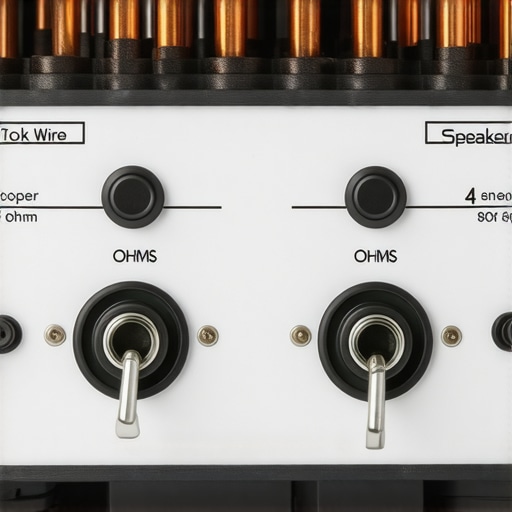
The Hidden Danger of Aging Components
When buying used, we often look at the outside, but the real traps are the electrolytic capacitors inside. These little cans act like batteries for your audio signal, and they dry out over time. If you notice a loss of punch or a fuzzy texture to the high frequencies, you should check how to tell if your speakers’ capacitor is starting to fail. A ‘great deal’ on a 1990s receiver can quickly turn into a repair project if the power supply caps are leaking. Another nuance people miss is room placement; you can have the most expensive setup in the world, but if you don’t know why your speakers’ bass port should never be pushed against a wall, you are going to deal with bloated, boomy low-end that masks all the detail you paid for. Have you ever fallen into this trap where you blamed the gear when it was actually the physics of the room? Let me know in the comments, because we have all been there. It is easy to get caught up in the specs, but the real expertise comes from knowing how these components interact with your environment and each other.To really get the most out of your audio journey, you have to stop thinking of your gear as static boxes and start treating them like the precision machines they are. Once you have sorted out the room acoustics and the remote control puzzles, you enter the long-game phase: maintenance. I have seen guys spend five figures on a system only to let it degrade because they didn’t spend ten dollars on a can of contact cleaner. If you want to keep that vintage warmth or that modern punch, you need a proactive toolkit.
The Three Tools You Actually Need to Save Your Setup
You don’t need a degree in electrical engineering, but you do need a can of DeoxIT D5. If your controls are jumpy or crackling, you must learn how to fix a scratchy volume dial with electrical contact cleaner before you assume the unit is dying. Oxidation is the silent killer of all home audio deals. Secondly, get a decent digital multimeter. It is the only way to verify if you are actually getting the power you think you are, or if you need to match your subwoofer phase with your main speakers properly by checking voltage alignment. Finally, never underestimate a good set of precision screwdrivers. Whether you are opening a chassis to see why your vintage receiver’s lights are flickering with the music or tightening a loose binding post, having the right fit prevents stripped screws that ruin resale value. 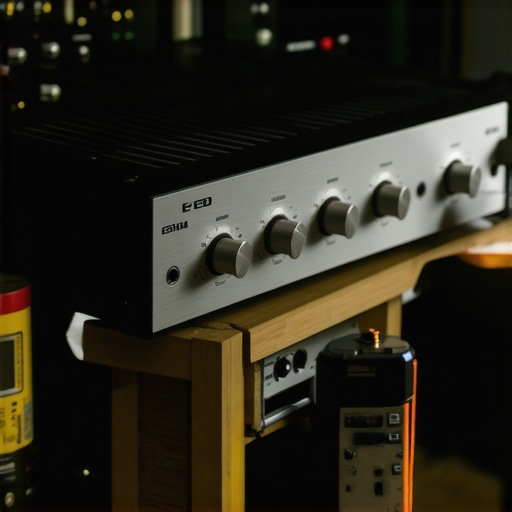
How can I maintain my home audio equipment over the long haul?
Maintenance is about heat and hygiene. Keep your amplifiers in well-ventilated areas because heat is the enemy of longevity. Legendary amplifier designer Nelson Pass famously noted in various technical papers that heat is the primary factor in capacitor degradation; essentially, keeping your gear cool can double its lifespan. For your speakers, check the rubber or foam surrounds every few months. If they feel brittle, you should look into how to revive old speakers with new foam surrounds before the woofer detaches and causes voice coil rub. On the headphone side, sweat and skin oils are the culprits. Learning how to clean your headphone ear pads without ruining the leather is a monthly chore that prevents the dreaded ‘flaking’ that happens to synthetic materials. If you ignore this, you’ll eventually find why your headphone pads are flaking the hard way—usually all over your ears right before a big meeting or listening session.
The Future of Sound is Software-Defined
Looking ahead, I predict that physical maintenance will become easier as AI-driven diagnostics become standard in receivers. We are already seeing units that can ‘self-report’ internal temperature spikes or impedance mismatches. However, the soul of the hobby will always remain in the physical connection. Whether you are trying to use your phone to measure your room’s frequency response or building a simple DIY headphone stand to keep your cans off the desk, the effort you put in translates directly to the clarity you get out. I strongly recommend you take ten minutes tonight to download a free RTA (Real Time Analyzer) app and finally see the frequency peaks your room is hiding from you—it is the single fastest way to level up your expertise without spending a dime.
The Truth About High-End Sound I Learned the Hard Way
After years of swapping gear, I’ve realized that the most expensive system can sound like trash if you ignore the basics. First, never underestimate the power of physics; matching your subwoofer phase with your main speakers is more important than the brand name on the box. If they are fighting each other, your bass will simply disappear into thin air. Second, always trust your ears over the marketing hype. While companies want you to spend hundreds on cables, you can often find the trick to making cheap bookshelf speakers sound expensive just by focusing on proper isolation and toe-in. Lastly, keep your signals clean. A tiny bit of interference can ruin everything, so knowing how to get rid of ground loop hum in your audio setup is a skill that will save your sanity during late-night listening sessions. I once spent an entire weekend re-wiring a room only to realize a single ungrounded plug was the culprit.
My Personal Audio Survival Kit
To avoid the pitfalls of the used market and keep your gear running like new, I recommend keeping these tools on hand. DeoxIT D5 is my absolute holy grail; it is the only reliable way to fix a scratchy volume fader on a professional mixer or a vintage receiver without causing long-term damage to the tracks. I also swear by a Digital Multimeter. It’s not just for electricians; you need it to match your car subs impedance to your amplifiers output or to check if a vintage amp is leaking DC voltage into your precious speakers. #IMAGE_PLACEHOLDER_E# For software, I use Room EQ Wizard (REW). It’s free, and when paired with a cheap measurement mic, it tells you exactly what your room is doing to the sound, which is far more valuable than any ‘high-res’ file. Finally, I always keep a copy of The Master Handbook of Acoustics by F. Alton Everest on my shelf. It’s the definitive guide to why sound behaves the way it does in small rooms.
Your Audio Journey Only Gets Better From Here
The world of high-fidelity sound is a marathon, not a sprint. Don’t feel pressured to have the ‘perfect’ system by next week. The real joy comes from those little incremental improvements—the moment you finally get the speaker placement right or find those rare home audio deals that punch way above their weight class. Every piece of gear has a story, and even the frustrating ones (like that remote-less receiver) teach you something valuable about how this technology works. Keep experimenting, keep listening, and most importantly, keep enjoying the music. What’s the one piece of gear you bought that turned out to be a nightmare because you didn’t have the remote or the manual? Let me know in the comments.