
I will never forget the day I unboxed my first set of budget bookshelf speakers. I had spent weeks reading reviews, convinced I had found a hidden gem for fifty bucks. I hooked them up, hit play on my favorite track, and my heart sank. It sounded like the singer was trapped inside a heavy wool sock. I was crushed. I almost drove back to the store that same hour. But before I gave up, I started tinkering. I realized that the price tag on the box does not dictate the final result nearly as much as the physics of your living room does. Today, I am going to show you how to take those thin, muddy-sounding boxes and turn them into a soundstage that actually makes you want to close your eyes and listen.
Your Room is Doing 80% of the Heavy Lifting
Most of us just plop our speakers down wherever there is a flat surface and call it a day. I used to be the king of this. I would shove them right against the wall or leave them sitting directly on a resonant wooden desk. Huge mistake. When you do that, you are not just hearing the speaker; you are hearing the vibrations of your furniture and the bloated bass reflecting off the drywall. This is exactly why your bookshelf speakers sound better when you move them off the desk and onto some dedicated stands. I once spent way too much money on premium speaker cables thinking they would fix my muddy mid-range, only to realize the real culprit was the desk reflecting the sound right back into my ears. Have you ever felt like your setup should sound better than it actually does?
Can a few simple tweaks really compete with a pair of high-end monitors?
I know what you are thinking. You can not make a budget driver perform like a luxury one. If the parts are cheap, the sound is cheap, right? Not necessarily. According to acoustics researchers like Dr. Floyd Toole, the room interaction with the speaker accounts for a massive portion of what we actually perceive as audio quality. By managing reflections and decoupling the speaker from its surface, you eliminate the mechanical noise that masks fine details. Sometimes the issue is not the woofer, but air escaping where it should not. You can even use the simple paper towel trick for finding speaker air leaks to ensure the cabinet is performing as it should. If your speaker has a hole in the back, remember that your speakers bass port should never be pushed against a wall unless you want the bass to sound like a disorganized thud. We are going to dive into the practical steps to fix these issues right now.
Kill the Desktop Vibration Once and For All
To fix muddy sound, you have to stop your speakers from turning your desk into a giant musical instrument. Think of your desk like a drumhead; every time the speaker cone moves, it sends energy into the wood, which then vibrates and smears the clarity of your music. The cheapest way to fix this is to get those boxes off the flat surface. If you are using dedicated stands, you should know that the reason your speaker stands need to be filled with sand is to add mass that kills these unwanted resonances. I remember my first setup had this annoying hum every time a bass line hit. I thought the amp was dying, but it turned out the speaker was literally dancing across the laminate. I bought some cheap isolation pads, and suddenly the ‘ghost’ in my system disappeared, leaving only the punchy kick drum I was actually supposed to hear. 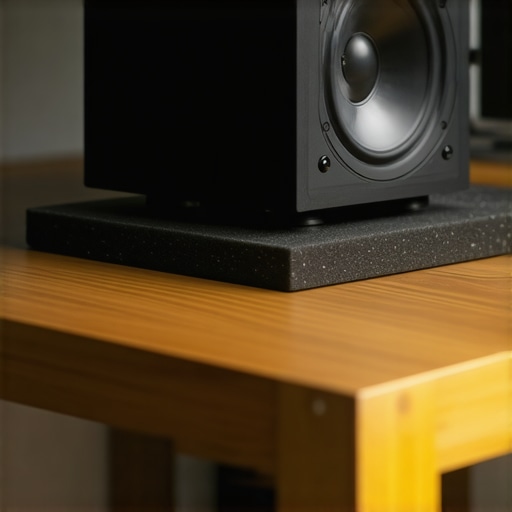
Stop Chasing the Ghost of Better Bass
Once your speakers are stable, you need to verify they are working together, not against each other. If you have ever felt like the bass completely disappears when you sit right in the middle of your speakers, they are likely fighting one another. You can learn how to tell if your speakers are out of phase in 30 seconds by simply checking your wire connections. One swapped wire means one speaker is pushing while the other is pulling, effectively canceling out the sound. It is an easy mistake that makes a thousand-dollar system sound like a tinny radio.
Is it Broken or Just Annoying?
Before you start shopping for replacements, you need to identify the source of any distortion. I once spent an entire afternoon ripping apart a bookshelf speaker because I was convinced the driver was toast. It had this nasty, metallic buzz during acoustic tracks. After an hour of frustration, I realized the ‘blown speaker’ was actually just a loose screw on a nearby picture frame vibrating against the wall. To avoid my mistake, you should learn how to tell if your speaker is actually blown or just rattling. Often, a bit of electrical contact cleaner or tightening a few cabinet screws is all it takes to restore that ‘new’ sound. How to fix a scratchy volume dial with electrical contact cleaner is a skill every budget audiophile needs, as grime in the knob can often mimic the sound of a failing component.
Use Your Phone as a High-Tech Lab
You do not need a degree in acoustics to find the ‘sweet spot’ in your room. Your smartphone is actually a powerful diagnostic tool. By using a basic RTA (Real Time Analyzer) app, you can see exactly where your room is eating your bass or exaggerating the treble. Knowing how to use your phone to measure your rooms frequency response gives you the data to move your speakers six inches to the left or right to fix a massive dip in the sound.
Tame Harsh Reflections Without Buying New Gear
If your speakers sound ‘bright’ or hurt your ears after twenty minutes, your room is likely too reflective. Sound waves bounce off hard floors like a rubber ball in a hallway. One of the most effective ‘acoustic treatments’ is probably already in your house. You can use a rug to fix a bright sounding room by placing it between you and the speakers. This simple addition absorbs the ‘first reflection’ and instantly makes the dialogue in movies or the vocals in music sound more centered and less like they are echoing off the walls.Once you have the physical layout of your room sorted, it is easy to fall into the next trap: the ‘upgrade spiral.’ Most people believe that once their room is set, they need to drop a thousand dollars on a fancy external DAC or a high-resolution streaming subscription to hear a real difference. In my experience, this is the biggest waste of money in the hobby. If you are listening on decent gear, you might be surprised at why your high-end DAC sounds exactly like your laptops headphone jack. The bottleneck is rarely the digital-to-analog conversion anymore; it is almost always the speaker’s internal crossover or your own hearing threshold. Furthermore, why your speakers sound harsh when you play high-res files is often due to the recording’s master rather than the file format itself. We chase 192kHz samples, but those extreme frequencies can sometimes introduce ultrasonic noise that stresses poorly designed tweeters, making the music feel fatiguing rather than detailed. 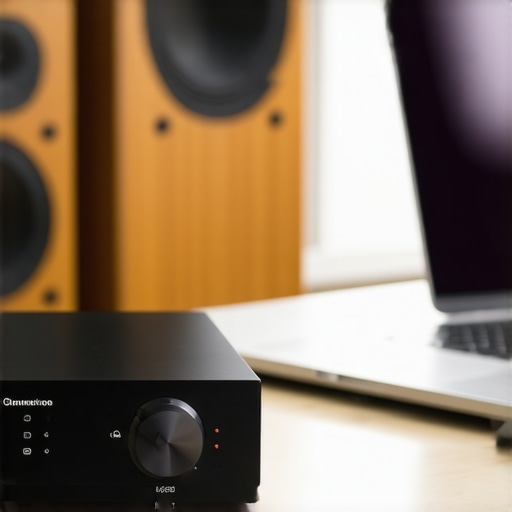
Your Ears are Smarter Than You Think
Another common myth that drives me crazy is the mandatory ‘100-hour break-in period.’ I have seen people leave their speakers playing pink noise in a closet for three days before they even sit down to listen. While there is a tiny grain of truth—mechanical parts like the spider do loosen up slightly—the change in frequency response is usually less than 1dB. According to acoustics expert Dr. Floyd Toole in his research on sound reproduction, the vast majority of ‘break-in’ is actually your brain performing ‘perceptual normalization.’ Your ears are literally EQing the sound for you as you get used to the new signature. If you want to skip the wait and the electricity bill, you can learn the truth about speaker break-in periods and spend that time actually enjoying your music instead.
Does the ‘Break-in’ Period Actually Exist or Is It All Marketing?
While the mechanical changes are minimal, the psychological shift is massive. However, if you are looking for a real technical upgrade that does not cost a fortune, look at your impedance matching. If you are using a vintage receiver with modern speakers, understanding the secret to choosing the right ohm rating for your amp is the difference between a warm, rich tone and a blown fuse. Even if you prefer portable audio, there is a technical trick to making cheap IEMs sound like high-end monitors just by swapping the nozzle filters or finding the perfect seal with specific foam tips. It is about the physics of the ear canal, not the price of the driver. One huge mistake I see is people buying $200 ‘audiophile’ power cables to fix a hum. If your system is buzzing, it is almost certainly a ground loop, and no amount of silver-plated copper will fix a bad electrical path. Have you ever fallen into this trap and bought a ‘magic’ accessory that did absolutely nothing for your sound? Let me know in the comments below.Instead of chasing ‘magic’ cables, I keep a can of DeoxIT D5 in my tool drawer at all times. It is the single most effective tool I own for maintaining vintage gear. If you have a receiver from the 70s or 80s that crackles every time you adjust the volume, you can learn how to fix a scratchy volume knob on an old amp just by cleaning the oxidation off the internal metal contacts. It is not voodoo—it is basic chemistry. Many enthusiasts assume their equipment is destined for the landfill when why your vintage speakers are losing their punch over time is actually just the electrolytic capacitors drying out or the foam surrounds disintegrating. You can often how to tell if your speakers capacitor is starting to fail by inspecting the circuit board for bulging tops or leaked fluid. If the rubber or foam around the woofer is crumbling, do not panic; I have saved dozens of pairs by learning how to revive old speakers with new foam surrounds for less than the cost of a pizza.
Your Old Amp Needs a Bath in Contact Cleaner
Beyond the electronics, mechanical wear is your biggest enemy. If you are running wires through the backyard for a summer BBQ, you need to know how to choose the right gauge of wire for long outdoor speaker runs to prevent signal loss from turning your music into a muffled mess. For your portable gear, the mistake that kills your portable speaker battery life is usually leaving it plugged into the charger 24/7 or letting it sit in a hot car. Lithium batteries hate heat and extreme voltage states. Similarly, if you are a headphone user, knowing how to clean your headphone ear pads without ruining the leather will save you from that annoying ‘flaking’ that happens when skin oils eat through the synthetic coatings. 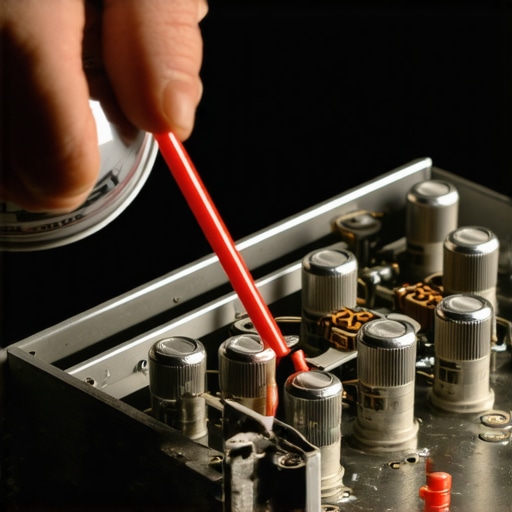
How do I maintain my audio gear’s performance over many years?
The secret is a mix of climate control and regular ‘exercise.’ Equipment that sits unused for years is actually more prone to failure than gear played daily at moderate volumes. Capacitors need a charge to stay formed, and rubber surrounds need movement to stay supple. As noted in technical documentation from the Audio Engineering Society (AES), humidity and temperature fluctuations are the primary drivers of mechanical fatigue in loudspeaker drivers. Looking ahead, I predict we will see AI-integrated Digital Signal Processing (DSP) become standard in even the cheapest soundbars. We are entering an era where your speakers will use internal microphones to map your room and automatically compensate for hard floors or glass tables in real-time. If you want to improve your current setup right now, I highly recommend you try the simple paper test for finding air leaks in your speaker cabinet. You might be surprised at how much bass you are losing through a tiny gap in a seal or a loose screw. If your range is the issue, you can even learn how to add an external antenna to a bluetooth receiver for better range to stop those annoying dropouts when you walk to the next room.
Lessons from the Listening Room Floor
Over the years, I have realized that the most frustrating audio issues usually have the simplest solutions. I have seen enthusiasts spend thousands on new gear only to be defeated by a simple electrical hum. Before you give up on your current setup, I highly recommend checking out the 5 dollar fix for humming speakers and ground loops, as it is often just a matter of isolating your power sources. Furthermore, if you finally get that deep bass you have been craving but find that your house is shaking in all the wrong ways, you should look into how to fix a subwoofer that is vibrating your furniture. It is not about the power of the sub; it is about controlling the energy. For those who prefer a more personal listening experience, never forget how much your physical comfort impacts the sound. I spent months thinking my drivers were failing before I realized why your headphones sound thin when you wear glasses—the broken seal on the ear pad is a bass killer. And if you are transitioning to an open-office environment, be mindful of why your open-back headphones leak sound to everyone nearby to avoid becoming the least popular person in the room.
The Kit I Use to Save Every Setup
I do not go into any audio project without a few specific tools that have saved me hundreds of dollars in unnecessary upgrades. First, I always keep a digital SPL meter or a reliable RTA app like Spectroid on my phone. These tools take the guesswork out of room acoustics and let you see the invisible peaks and valleys in your soundstage. Second, I cannot recommend the book Sound Reproduction by Dr. Floyd Toole enough; it is the ultimate guide to understanding how we actually hear sound in small rooms. Finally, keep a simple laser tape measure in your drawer. Precise toe-in and symmetrical distance from your listening chair will do more for your imaging than any high-end cable ever could. I trust these resources because they rely on physics and measurable data rather than marketing jargon.
Your Music Deserves Better Than Just Good Gear
At the end of the day, your audio journey should be about the connection you feel with the music, not the specifications on a box. It is easy to get lost in the search for the perfect frequency response, but the real magic happens when you stop analyzing the gear and start feeling the performance. Whether you are hunting for the latest home audio deals or reviving a pair of vintage towers, remember that the most important component in the entire chain is the person sitting in the chair. Use these tips to clear the technical hurdles so you can get back to what really matters: the joy of the sound. What is the one ‘free’ tweak you have made to your setup that actually made it sound twice as expensive? Let me know in the comments below!