
I’ll never forget the day I finally brought home those tower speakers I’d been eyeing for six months. I carefully unboxed them, hooked up the silver-plated wires, and sat back in my modern, minimalist living room—lots of glass, polished wood, and not a single curtain in sight. I hit play on a high-res track, expecting to be transported to a jazz club. Instead, I felt like someone was poking a needle into my eardrums every time the drummer hit a cymbal. It was shrill, thin, and honestly, a massive disappointment. I actually felt embarrassed to show it off to my friends. For a while, I even wondered why my speakers sound harsh when I play high-res files, thinking it was the digital file’s fault. I spent way too much money on different cables and even a fancy new preamp, thinking the ‘source’ was the problem. That was my first big mistake in this hobby. It wasn’t the gear. It was my beautiful, echoey, ‘bright’ room that was ruining the party. Today, I’m going to show you how a simple area rug can do more for your sound quality than a thousand-dollar amplifier upgrade.
The First Reflection Point Nightmare
When we talk about a ‘bright’ room, we’re really talking about a space where high frequencies bounce around like caffeinated pinballs. Hardwood floors are the biggest culprits. When sound leaves your speakers, it doesn’t just travel to your ears; it hits the floor first. This ‘first reflection’ arrives at your ears just a fraction of a second after the direct sound, causing a smearing effect that makes everything sound harsh. According to experts at the Acoustic Sciences Corporation, untreated hard surfaces can reflect up to 95% of sound energy back into the room. This is why why your floorstanding speakers sound unbalanced in an L-shaped room or any open space—the reflections are chaotic.
Can a Simple Rug Actually Outperform Pro Acoustic Panels?
You might be skeptical. I was too. I thought I needed those ugly gray foam wedges glued to my walls to get real results. But here’s the secret: a thick, plush rug placed right between you and your speakers acts as a giant sponge for those nasty floor reflections. It tames the ‘shimmer’ and lets the midrange actually breathe. If you’ve ever struggled with finding the sweet spot for your speakers in a rectangular room, you know how frustrating it is when the image just feels ‘off.’ A rug helps anchor that soundstage.
Stop Chasing Gear and Start Treating Your Space
Most of us are guilty of ‘gear-itis.’ We think the next DAC or the next set of floorstanding speakers with spikes will magically fix everything. But if your room is a giant echo chamber, you’re just hearing your room, not your music. Have you ever walked into your listening area, clapped your hands, and heard that metallic ‘ping’ ringing back at you? If so, you’ve got a brightness problem that no amount of money can fix—except maybe a trip to the local carpet store. Have you ever felt like your expensive setup just sounded ‘cheaper’ than it should because of the room?To fix a room that sounds like a tin shed, you need to stop thinking about electronics and start thinking about geometry. The most effective way to kill those harsh reflections is to find the ‘first reflection point’ on your floor. I remember when I first tried this; I was skeptical that a piece of fabric could do more than my high-end preamp. I grabbed a hand mirror and a friend. While I sat in my listening chair, my friend slid the mirror along the hardwood floor between me and the speakers. The moment I could see the reflection of the speaker’s tweeter in the mirror, I knew exactly where the sonic ‘leak’ was. This is where the sound bounces directly off the hard floor and hits your ears, creating that piercing harshness.
Locate Your Sonic Leak with the Mirror Trick
This isn’t just about throwing a rug anywhere; it’s about strategic placement. If you don’t cover that specific spot identified by the mirror, the high-frequency energy will continue to ricochet around the room. This process is just as vital as knowing how to find the sweet spot for your speakers in a rectangular room. Think of your sound waves like a garden hose hitting a concrete path; the water splashes everywhere. A thick rug is like a patch of grass that absorbs the impact. 
Choose the Right Material for Acoustic Absorption
Not all rugs are created equal. A thin, cheap synthetic rug might look good, but it won’t do much for your audio. You need mass and texture. I once made the mistake of buying a stylish, thin ‘flatweave’ rug. It looked great in photos, but my system still sounded thin and brittle. It was only when I swapped it for a heavy, high-pile wool rug that the magic happened. The dense fibers trapped the high-frequency energy instead of reflecting it. If your speakers still sound a bit off, you might want to check how to tell if your speakers are out of phase in 30 seconds, as a rug can’t fix a wiring error.
Manage Secondary Vibrations Beyond the Floor
Once the floor is treated, you might notice other annoying noises you couldn’t hear before because the room was so loud. For instance, if you have a turntable, the rug helps decouple the speakers from the floor, but it might not be enough. You should also look into how to stop your turntable from picking up vibrations from your floor to ensure your vinyl sounds as clean as possible. Similarly, if your setup includes a home theater, a well-placed rug can drastically improve dialogue. It prevents the floor from muddying up the voices, which is a common reason people struggle with how to get clear movie dialogue without a dedicated center speaker.
Optimize Placement for Vertical Clarity
If you are using bookshelf speakers on a stand or a desk, the floor isn’t your only enemy. Desktop reflections are just as bad as floor reflections. This is why your bookshelf speakers sound better when you move them off the desk or at least use some form of padding. In my own office, adding a thick felt desk mat had the same effect as the area rug in my living room—it instantly tightened the stereo image and made the highs feel silky rather than sharp. If you find your speakers are still rattling despite these changes, it’s worth investigating how to tell if your speaker is actually blown or just rattling to rule out hardware failure.
It’s easy to get obsessed with the physical space once you see the mirror trick in action, but there’s a trap most audiophiles fall into right after they buy their first rug. We start thinking that if the room is ‘fixed,’ every other piece of gear should be a top-tier investment to match. This is where most people get it wrong. I’ve seen enthusiasts spend thousands on digital-to-analog converters only to realize why your high-end DAC sounds exactly like your laptops headphone jack when the room treatment is still subpar. The truth is, your room is the most influential ‘component’ in your signal chain, often contributing more to the final sound than the difference between a $100 and a $1,000 DAC.
Stop Spending Thousands on New DACs Until You Fix This
The common myth in audio circles is that ‘more resolution equals better sound.’ But as Dr. Floyd Toole, a former researcher at the National Research Council of Canada and author of Sound Reproduction, has demonstrated in numerous studies, the off-axis response of your speakers—how they interact with your walls—is the dominant factor in how we perceive sound quality. If you haven’t managed your reflections, that high-resolution file just gives you ‘high-resolution echoes.’ I used to think I needed to ‘break in’ my gear for hundreds of hours, but the truth about speaker break-in periods is that the change in your ears (and your room’s temperature) often matters more than the physical spider of the woofer loosening up.
Can I actually measure my room without buying professional gear?
Yes, and you should. One of the biggest mistakes is ‘guessing’ where the problem lies. You don’t need a $500 calibrated microphone to start. You can learn how to use your phone to measure your rooms frequency response using free apps. This will show you exactly which frequencies are booming or disappearing. 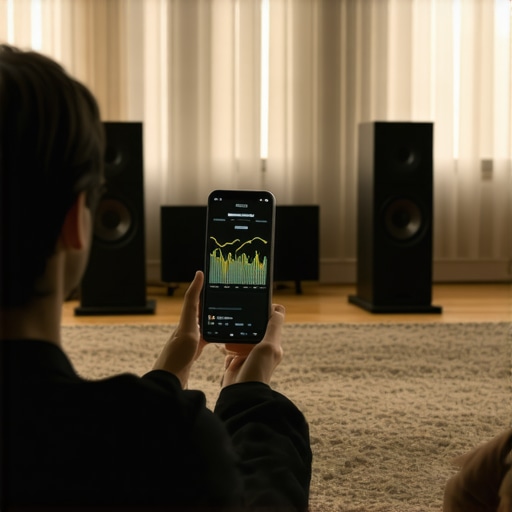
Don’t Let a Bad Capacitor Masquerade as Poor Room Acoustics
Here is the ‘oops’ factor I promised: sometimes we blame the room when the gear is actually dying. If you’ve treated your floors and the sound is still thin or lacks ‘punch,’ you might be dealing with aging components. In older gear, it’s vital to know how to tell if your speakers capacitor is starting to fail. A dried-out capacitor in a crossover will shift the crossover point, making your tweeter scream or your woofer sound muddy, and no amount of wool rugs will fix a hardware malfunction. Have you ever fallen into this trap—blaming your room for a hardware issue, or vice versa? Let me know in the comments. I’ve definitely been there, chasing ghosts in the floorboards when the problem was actually inside the cabinet.
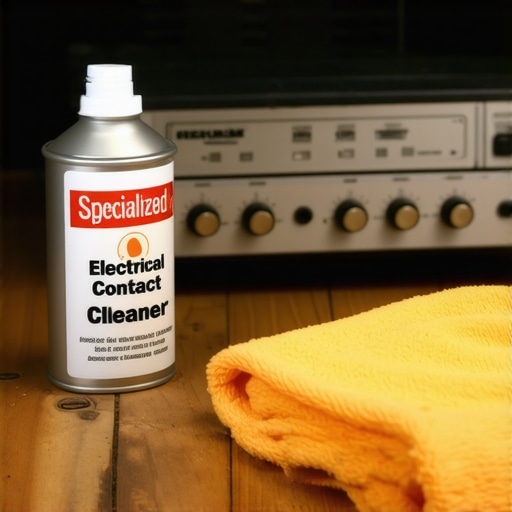
Once you have ruled out the room and the rug has tamed those nasty reflections, you might notice your vintage receiver starts acting up. I cannot tell you how many times I have seen people throw away a perfectly good Marantz or Pioneer because the volume made a ‘crackle’ sound. I keep a can of DeoxIT D5 on my workbench at all times for exactly this reason. It is a chemical deoxidizer that dissolves the gunk inside your pots and switches. I personally use it because it doesn’t just clean; it leaves a microscopic layer of protection. If you are dealing with a noisy interface, you need to know how to fix a scratchy volume knob on an old amp before you go spending hundreds on a replacement. It is the single most satisfying ten-minute fix in the hobby.
Clean Your Knobs Before You Buy a New Amp
Beyond the knobs, we need to talk about the physical integrity of your drivers. Over time, the foam that holds your woofer in place—the ‘surround’—will literally turn to dust. This is especially true in humid environments. If you notice your bass sounds floppy or distorted, don’t panic. You can learn how to revive old speakers with new foam surrounds for about $30 and an afternoon of patience. I’ve saved three pairs of high-end Advent speakers this way. If you suspect the cabinet itself is the problem, I always recommend the simple paper test for finding air leaks in your speaker cabinet. It’s a low-tech way to ensure you aren’t losing pressure where you shouldn’t be.
How do I keep my audio gear running for decades?
Consistency is key. For amplifiers, the biggest killer is heat. I always check the DC offset of my vintage gear every six months. For instance, the Marantz 2270 Service Manual specifically mandates a DC offset check to ensure you aren’t sending direct current to your speakers, which can fry your voice coils. If you notice why your vintage amp gets hot even when you arent playing music, you likely have a bias issue that needs a technician’s touch. On the headphone side, skin oils are your enemy. I make it a habit to wipe down my gear, and I’ve written about how to clean your headphone ear pads without ruining the leather to prevent that dreaded flaking. This simple maintenance keeps your resale value high and your listening experience hygienic.
The Next Wave of Room Correction Technology
Looking ahead, I predict that ‘passive’ room treatment like my beloved rugs will soon be joined by aggressive, AI-driven active correction in even the cheapest gear. We are already seeing DSP (Digital Signal Processing) that can ‘map’ a room and invert the phase of problematic reflections in real-time. It’s essentially noise-canceling for your entire living room. While I’ll always prefer a thick wool rug and a heavy stand, the future of audio is about software fixing what hardware cannot. Until that tech is perfect, though, you should stick to the basics. Go grab a hand mirror, find those reflection points, and then check your amp for scratchy pots. My challenge to you: pick up a can of contact cleaner this weekend and revive one piece of gear you’ve been ignoring. You’ll be shocked at how much detail has been hiding under a layer of dust.
Audio Lessons My Wallet Still Regrets
Over two decades of tinkering with sound systems, I’ve realized that the ‘gear-first’ mentality is a trap designed to drain your bank account. Here are the hard-won truths I keep taped to my workshop door: First, the most expensive speakers in the world will sound like garbage in a room with two parallel glass walls and a tile floor. I’ve seen people spend ten thousand dollars on towers only to realize why your vintage speakers are losing their punch over time—and it is often just the room’s ‘suck-out’ effect. Second, a heavy rug isn’t just decor; it’s a high-frequency filter that performs better than most digital EQs. Finally, before you give up on a piece of gear, try the cheap fixes. I’ve rescued countless amps simply by learning how to fix a scratchy volume dial with electrical contact cleaner rather than trading them in for a loss.
My Go-To Toolkit for Sonic Perfection
If you want to move beyond guessing and start actually improving your audio, these are the three resources I personally rely on every month. 1. DeoxIT D5: It is the only chemical cleaner I trust to touch my vintage Marantz gear; it’s the gold standard for a reason. 2. Dr. Floyd Toole’s Research: Reading his work on psychoacoustics was my ‘Matrix’ moment. It taught me that our brains are incredibly good at compensating for some flaws but very sensitive to the first reflections we’ve been discussing. 3. A Proper Grounding Strategy: Noise isn’t just in the air; it’s in the wires. Even in a home setup, knowing how to properly ground a car amplifier to eliminate engine hum provides fundamental logic that applies to keeping your home theater hiss-free.
Your Journey to Better Sound Starts Today
Improving your home audio does not have to be a race to the bottom of your savings account. By focusing on the physical interaction between your speakers and your floor, you are addressing the single biggest variable in the signal chain. When you finally tame those reflections, your high-res files will finally sound the way the artist intended—clear, airy, and free from that grating harshness. Go grab that hand mirror and a friend this weekend. The difference won’t just be audible; it will be transformative. Have you ever tried the mirror trick to find your first reflection points? Let me know in the comments if you found any surprising ‘sonic leaks’ in your room!