
I’ll never forget the night my living room smelled like a campfire, and no, it wasn’t because I’d lit the fireplace. I was hosting a small gathering, showing off my new high-current power amplifier. To get it positioned exactly where I wanted, I grabbed a leftover extension cord from the garage. It seemed fine—until the first big bass drop. The lights flickered, the music died, and a thin wisp of smoke curled up from behind the cabinet. I’d made the classic rookie mistake of thinking a wire is just a wire.
My living room smelled like a burning circuit board
I learned the hard way that power amplifiers aren’t like lamps or phone chargers. They are hungry beasts that demand massive amounts of instantaneous current. When you put a skinny, cheap extension cord between your wall outlet and your gear, you’re basically trying to feed a fire hose through a straw. This doesn’t just hurt your audio quality; it’s a genuine fire hazard. I’ve spent years helping friends troubleshoot issues like why your surround sound receiver keeps clicking into protect mode, and more often than not, it’s a power delivery problem. If your system is struggling, you might even notice the real reason your amp is getting hot to the touch is because it’s starving for voltage.
Is this just audiophile paranoia?
You might be thinking, “It’s just electricity, does it really matter that much?” The short answer is yes. According to the Electrical Safety Foundation International, roughly 3,300 home fires are started by extension cords each year, often due to overloading or using the wrong gauge for the appliance. When an amp tries to pull 10 or 15 amps through a cord rated for 5, the cord becomes a heating element.
Why a thin cord is a death sentence for your bass
When your amp hits a heavy musical passage, it needs a sudden surge of power. A long, thin extension cord creates a “voltage drop.” This means your amp isn’t getting the full 120V it expects. The result? Wimpy bass, a compressed soundstage, and a lot of unnecessary heat. It’s a similar frustration to why your amplifier gets hot enough to burn your hand when it’s pushed too hard. Today, I’m going to show you how to power your system safely so you can actually hear what you paid for. Have you ever noticed your power cables getting warm after a long listening session? Let me know—I’d love to help you fix it before something melts.
Pick a Gauge That Won’t Strangle Your Sound
In the world of electricity, the American Wire Gauge (AWG) is your best friend. The lower the number, the thicker the wire. If you are running a high-current amplifier, you should never settle for anything higher than 14-gauge, and honestly, 12-gauge is the sweet spot for anything pushing over 100 watts per channel. Think of current like water flowing through a pipe. If you try to force a gallon of water through a straw every second, the pressure builds up, friction creates heat, and very little water actually makes it to the other end. I remember swapping out a standard 18-gauge cord for a thick, shielded 12-gauge cable on my old tube amp. Suddenly, the muddy low end cleared up, much like the best way to position your subwoofer for clearer lows changes the way you perceive depth. 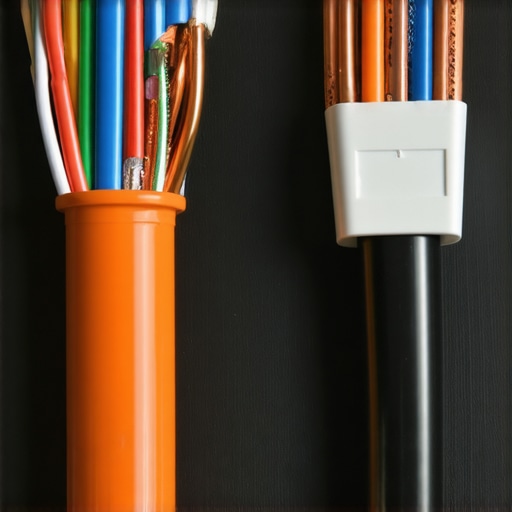
Stop Sharing Power With Your Fridge
Most people don’t realize their living room outlets are usually all on the same 15-amp circuit. If your amplifier is fighting for juice while the refrigerator compressor kicks on or the vacuum is running, you’re going to get “dirty” power. This often manifests as a nasty hum. If you’ve ever had to learn how to properly ground your turntable to stop that buzzing noise, you know how annoying electrical interference can be. For the best performance, try to keep your amp on its own dedicated outlet. If you can’t run a new line, at least ensure you aren’t using a cheap power strip. Those strips have tiny internal bus bars that act as a bottleneck for current.
The Math Behind Your Power Draw
Don’t just guess. Flip your amplifier over and look at the “Power Consumption” rating, usually listed in Watts. This is not the output power; it’s what the unit draws from the wall. Take that number and divide it by your local voltage (usually 120 in the US). If your amp says 600W, it’s drawing 5 Amps. That might sound low, but music is dynamic. When a drum hit occurs, that 5 Amps can momentarily spike much higher. If your cable is too long, you hit the “50-foot rule.” This is why cheap speaker wire causes signal loss over 50 feet, and the same physics apply to your power cord. The longer the run, the thicker the gauge needs to be to prevent voltage sag.
Kill the Noise at the Source
Sometimes the flicker in your lights isn’t just about the thickness of the wire, but the quality of the contact. I once spent three days chasing a phantom popping sound in my speakers, only to realize the prongs on my power cord were slightly oxidized. A quick hit with some contact cleaner fixed it instantly. It’s a similar maintenance habit to how to fix the crackling noise when you turn your amp volume. If the connection at the wall is loose, it creates arcing—tiny sparks you can’t see but your speakers definitely hear. If your plug doesn’t feel snug in the outlet, replace the outlet. It’s a cheap fix that could save your expensive amplifier. If you’re into car audio, you’ve likely seen the reason your car radio dims when the bass hits; it’s the exact same principle of a system outrunning its power supply.Let’s dig deeper into why the ‘jewelry’ on your cables might be lying to you. Many enthusiasts swear by those shiny yellow tips, but if you look at the physics, is gold-plated hardware really worth the extra cash? Not always. Gold is actually less conductive than copper or silver; its primary benefit is resisting corrosion. If you’re plugging and unplugging gear in a humid basement, it’s great. If your system sits in a climate-controlled room, you’re often paying a premium for a bottleneck. In fact, why expensive speaker cables are mostly a marketing trick applies doubly to power cords. You don’t need a thousand-dollar cable to get clean juice; you need a solid connection and a heavy enough gauge to prevent voltage sag. 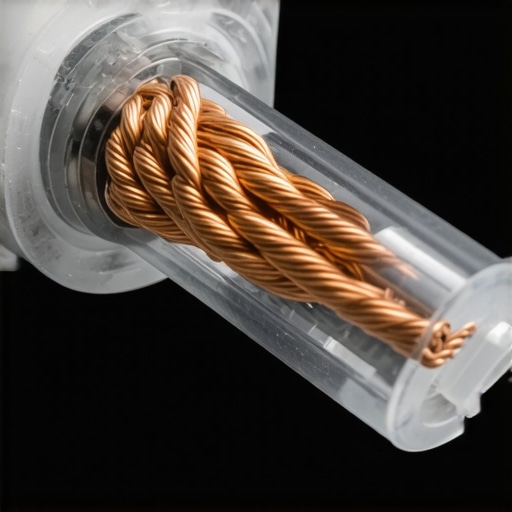
Stop Thinking a Power Conditioner Fixes Everything
I see people drop thousands on power conditioners while their amp is still plugged into a circuit shared with a noisy air conditioner. A power conditioner isn’t a magic wand. If your home has a weak neutral wire or poor grounding, that expensive box is just a glorified surge protector. This is often the reason your subwoofer makes a humming sound when nothing is playing. According to the Audio Engineering Society (AES), the most significant improvements in audio performance come from lowering the noise floor through proper circuit isolation, not from filtering the electricity itself.
Can a Poorly Grounded Amp Actually Damage My Speakers?
The short answer is yes, but not in the way you might think. A floating ground or a “ground loop” can introduce a high-frequency oscillation that is sometimes inaudible to humans but can cause your amplifier to work overtime. This is a common trap: people assume if they can’t hear the hum, there’s no problem. However, this parasitic oscillation can lead to clipping earlier than expected, which is why your amplifier gets hot enough to burn your hand even at moderate volumes. If you’ve ever had to learn how to properly ground your turntable to stop that buzzing noise, you know how sensitive audio signals are to electrical interference.
The Dangerous Hidden Daisy Chain
One specific trap I always warn my clients about is the “hidden daisy chain.” You might have a high-quality wall outlet, but what’s behind the wall? If that outlet is the last in a long line of cheap, push-pin style outlets, every heavy bass hit is struggling against the resistance of five other loose connections. If you really want to unlock your system, look into the real performance benefit of using balanced XLR cables to reject noise before it even hits your amp. Have you ever noticed a sudden change in your sound quality when a specific appliance in your house turns on? I’d love to hear about your electrical I didn’t truly understand the ‘health’ of my electrical system until I invested in a dedicated digital multimeter. If you’re serious about high-current gear, you need to stop guessing and start measuring. I use a Fluke 115 because it gives me a true RMS reading, which is vital when you’re checking for voltage sag during heavy transients. If your voltage at the wall drops by more than 3% when the bass hits, your wiring is the bottleneck. The National Electrical Code (NEC) actually recommends that the maximum combined voltage drop for both the feeder and branch circuit should not exceed 5% for efficiency, but for high-end audio, I aim for even less.
Stop Guessing and Start Measuring with a Multimeter
Having the right tools isn’t just for professionals; it’s how you prevent your expensive equipment from underperforming. I’ve seen systems where simply knowing how to repair a loose speaker terminal in under five minutes saved a thousand-dollar amplifier from a short circuit. If you’re dealing with mobile audio, the stakes are even higher, often requiring you to learn how to get rid of the engine whine in your car speakers before the noise floor ruins your experience.
Keep Your Connections Tight to Prevent Heat Spikes
Heat is the silent killer of audio components. While we often worry about the amp itself, the physical connection points are where most failures start. Over time, the constant heating and cooling of your gear causes metal to expand and contract, which can loosen your connections. This creates resistance, and resistance creates—you guessed it—more heat. I make it a habit to check every screw terminal and banana plug twice a year. If you find your speakers are making noise when you adjust things, you might need to know how to fix the crackling noise when you turn your amp volume to ensure the internal pots aren’t just as dirty as your external plugs. 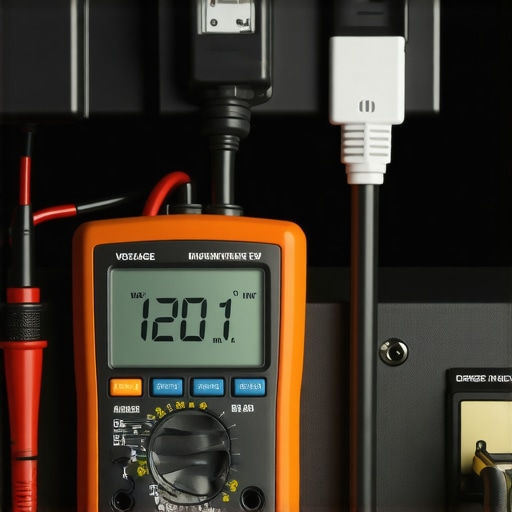
How do I maintain my power integrity over time?
Maintaining a high-performance system is about consistency. Beyond the electrical side, don’t forget the ‘wear parts.’ Just as why your headphone pads are peeling and how to replace them is a standard part of headphone ownership, keeping your power contacts oxidation-free is standard for home audio. I use DeoxIT D5 on every power prong and RCA jack. This isn’t snake oil; it’s a chemical deoxidizer that improves conductivity. If you’re pushing the limits with a massive car system, you might even need to look into how to add a second battery for your high power car audio to keep the voltage stable for the long haul.
Why AI-Driven Power Monitoring is the Next Big Thing
I predict that within the next five years, we won’t need to manually check our outlets with multimeters. We’re already seeing ‘smart’ power conditioners that log voltage fluctuations and harmonic distortion in real-time, sending an alert to your phone when the grid is unstable. This trend toward active monitoring will help us catch issues before they lead to a blown fuse or a melted board. For now, take control of your own setup. My challenge to you this weekend: grab a multimeter and check your voltage at the wall while your system is playing a bass-heavy track at your usual listening level. If that number jumps around wildly, you’ve found your next project.
Hard Truths I Learned the Day My Amp Let Out the Magic Smoke
Audio systems are only as strong as their weakest electrical point. I used to think the speaker wire was the priority, but the power delivery to the amplifier is what actually defines your headroom. Many people ignore the physical health of their wall outlets; if a plug falls out easily, you have a high-resistance connection that generates heat. Knowing how to repair a loose speaker terminal in under five minutes is a great skill, but replacing a worn-out wall outlet is even more vital for system safety. I also realized through trial and error that why gold-plated connectors aren’t always better comes down to the fact that surface area and mechanical tightness matter far more than a microscopic layer of gold plating. Finally, never underestimate the power of a dedicated circuit; sharing a line with a vacuum or a fridge is the fastest way to kill your soundstage.
The Essential Toolkit for Consistent Current
If you want to maintain your system like a pro, you need a few non-negotiable items in your gear bag. I personally rely on a Fluke 115 Digital Multimeter to check for voltage sag during heavy musical transients. I also keep a bottle of DeoxIT D5 Contact Cleaner handy; it is the most effective way to remove oxidation from power prongs, which is far more useful than buying ‘audiophile’ snake oil. For cables, I recommend 12-AWG Shielded Power Cords from no-nonsense brands like Monoprice, which provide the thick gauge necessary for a high-current power amplifier without the unnecessary luxury markup. If you want the deep science behind these connections, I highly recommend reading The Complete Guide to High-End Audio by Robert Harley. It dives into the truth about gold-plated audio connectors for home stereos and helps you understand why grounding is your best defense against interference.
Don’t Let Poor Electricity Silence Your Passion
Your system deserves to breathe. When you provide your amplifier with the unrestricted current it craves, you aren’t just protecting your investment; you’re finally hearing the full dynamic range of your music. Don’t let a cheap extension cord be the reason your high-current power amplifier sounds compressed or, worse, becomes a safety hazard. If you have ever wondered why your subwoofer makes a humming sound even when off, it is a clear sign that your power environment needs professional attention. Take the time this weekend to tighten your connections and verify your wall voltage. Have you ever felt your power cables getting warm to the touch after a long listening session? Let me know in the comments below—I would love to help you troubleshoot your setup!