
I remember sitting in my old sedan on a rainy Tuesday, just trying to enjoy a bit of low-key jazz while waiting for my coffee. The volume was only at a four, yet every time the bassist hit a low note, my passenger door buzzed like a trapped hornet. It drove me absolutely nuts. You expect rattles when you’re cranking the bass to show off, but at a whisper? That feels like a personal insult to your ears. Most of us assume that if it isn’t loud, it shouldn’t be vibrating, but car doors are essentially echo chambers filled with loose plastic and metal rods just waiting for a reason to move. Today, I am going to help you pinpoint exactly which component is betraying you and how to silence it without spending a fortune at a custom shop.
The Low Volume Vibration That Ruined My Commute
If you are hearing noises when the dial is barely turned, you are likely dealing with mechanical resonance rather than a blown speaker. Years ago, I made the expensive mistake of replacing a pair of high-end drivers because I was convinced the voice coils were shot. It turned out to be a three-cent plastic clip that had lost its tension. I felt like a total amateur, but it taught me that why your car door panels buzz with every bass hit often has nothing to do with the speaker’s health and everything to do with how it is mounted. When a speaker moves, it creates energy that travels through the door frame. If something is loose, even a tiny bit of movement can cause a sympathetic vibration. Have you ever felt like you were playing whack-a-mole trying to find a noise in your car?
Is my expensive sound system actually falling apart?
It is easy to spiral into the fear that your gear is garbage or that you have reached the end of your speaker’s lifespan. However, most low-volume rattles are caused by interior trim pieces, loose wiring harnesses, or even debris like a stray coin dropped in the door pocket. According to a study on automotive NVH (Noise, Vibration, and Harshness) published by SAE International, even small energy inputs can cause significant cabin noise if they hit the resonant frequency of a loose plastic panel. This means your car is basically a giant musical instrument, and right now, it is out of tune. To get things back on track, you might need the easiest way to fix a rattling speaker grill for good before you start tearing into the actual electronics. We need to look at why your car door vibration is ruining your mid-bass performance so we can stop the noise at the source. This isn’t just about annoyance; it is about reclaiming the clarity you paid for. Let’s look at the first few things you should check before you reach for your wallet.
Stop Guessing and Start Feeling for the Noise
Before you reach for a screwdriver, you need to be a bit of a detective. Most people make the mistake of just listening, but sound in a car is deceptive. Reflection and cabin gain can make a rattle in the passenger door sound like it is coming from the driver’s side. You need to use your sense of touch. Play a track with a consistent, low-frequency rhythm—not a bass-heavy club banger, but something steady. While it is playing, press your palm firmly against different sections of the door panel. If the buzzing stops when you apply pressure to a specific spot, you have found your culprit.
Use Your Hands as a Human Diagnostic Tool
I remember working on a friend’s old hatchback where a ‘blown speaker’ turned out to be a loose window switch. Every time the mid-bass hit, the plastic housing for the switch would dance against the metal frame. I did not find it by listening; I found it by running my fingers over the trim until the noise vanished. This is the simplest way to differentiate between a mechanical rattle and an electrical issue. If you find that the vibration is coming from the speaker itself, you might need to check if the wiring is out of phase. Learning how to use a 9v battery to check your speaker polarity is a quick way to ensure your speakers are moving in the right direction and not fighting each other. 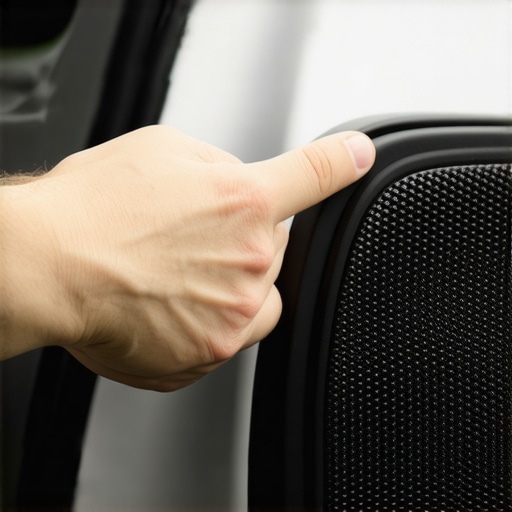
Tighten the Mounting Hardware First
Once you have located the general area, it is time to look at the mounting. Think of your speaker as a piston in an engine. If that piston isn’t bolted down tight, the whole engine shakes. In a car door, the speaker is usually held in by four or more screws. Over years of driving over potholes and enduring temperature swings, these screws can back out. I have seen installations where only two screws were left, causing the speaker to tilt and vibrate against the plastic adapter bracket. This can lead to a hollow sound where you lose all your punch. If you want to know how to add more bass to your factory car speakers for free, the answer is often as simple as ensuring a perfect, airtight seal between the speaker and the door. If air escapes around the edges, your bass response disappears and is replaced by a wheezing rattle.
Secure Those Wayward Wiring Harnesses
If the panel and the speaker are tight but the noise persists, look behind the curtain. Modern car doors are a mess of wires, lock rods, and window cables. These are often held in place by plastic clips that go brittle over time. When those clips snap, the wire just hangs there, tapping against the outer metal skin of the door like a tiny hammer. When I was upgrading my own system, I found that wrapping these harnesses in Tesa tape or inexpensive foam strips silenced the ‘ghost in the machine’ instantly. This prevents the high-frequency clicking that might be the reason why your car speakers sound thin when you turn up the treble because the parasitic interference is gone. You might even find similar issues in other parts of the car, so knowing how to stop your cars rear deck from rattling with heavy bass can help you apply the same logic to the back of the cabin.Once you have silenced the physical vibrations in your door, you are only halfway to audio nirvana. I have seen countless enthusiasts spend a fortune on sound deadening only to realize their system still sounds ‘thin’ or ‘harsh.’ This is where we need to separate the marketing fluff from the actual physics of sound. For instance, the audio industry loves to sell you on the idea that every connector needs to be shiny. While gold has its place, [why gold plated connectors arent always better](https://premiumsounddeals.com/why-gold-plated-connectors-arent-always-better) is a nuance most beginners miss. If you are plugging gold-plated cables into cheap nickel terminals, you are actually risking galvanic corrosion, which creates a layer of resistance that ruins your signal faster than a loose wire ever could. Have you ever fallen into this trap of buying the shiniest gear thinking it would solve a fundamental setup issue? Let me know in the comments.
Why More Power Often Leads to More Problems
A common myth in the car audio world is that adding a more powerful amplifier will automatically clean up your sound. In reality, if your gain structure is wrong, you are just amplifying the noise floor. I once watched a guy blow a pair of boutique mid-range drivers because he thought he knew [how to properly bridge a car amplifier for more power](https://premiumsounddeals.com/how-to-properly-bridge-a-car-amplifier-for-more-power) without checking his ohm loads. He ended up with an unstable 1-ohm load on an amp designed for 4-ohm bridging. The result? A thermal shutdown and a very expensive smell of burnt voice coils. According to research by the Audio Engineering Society (AES) on amplifier-speaker interface, the damping factor—the ability of the amp to control the speaker’s movement—drops significantly when you push an amplifier beyond its intended impedance range. This makes your bass sound ‘muddy’ and uncontrolled, regardless of how much you spent on the sub.
Why do my expensive headphones sound thin on a basic smartphone?
This same principle applies outside the car. If you have moved your obsession from the driveway to your desk, you might find that [why your expensive headphones sound thin on a basic smartphone](https://premiumsounddeals.com/why-your-expensive-headphones-sound-thin-on-a-basic-smartphone) comes down to a lack of voltage swing. High-impedance gear requires more ‘push’ than a standard phone jack can provide. If you are struggling with a system that feels like it has no life, you need to learn [how to tell if your amplifier has enough headroom for your speakers](https://premiumsounddeals.com/how-to-tell-if-your-amplifier-has-enough-headroom-for-your-speakers). 
The Trap of Misaligned Impedance
One of the biggest ‘oops’ factors I see is people ignoring the relationship between their subwoofer and their amp’s output stage. They buy a dual-voice-coil sub and wire it up based on a YouTube video without understanding the math. If you don’t know [how to match your car subs impedance to your amplifiers output](https://premiumsounddeals.com/how-to-match-your-car-subs-impedance-to-your-amplifiers-output), you are either leaving half your power on the table or cooking your equipment. This is the difference between a system that lasts ten years and one that dies in a single summer afternoon. Stop looking at ‘peak’ power numbers on the box—those are purely for marketing. Focus on the RMS ratings and the stable impedance levels to ensure your system actually performs when the heat is on.It is one thing to get your system sounding perfect for a week, but keeping it that way through heatwaves and humidity is where most people fail. I have seen massive setups fail just because of poor ventilation. If you are pushing your gear, you need to know the real reason your amp is getting hot to the touch before you fry a capacitor. In my own garage build, I eventually had to install a dedicated cooling rack. This is especially true in vehicles where how to fix a car amplifier that keeps shutting off in summer usually involves moving the unit to a spot with better airflow or adding a 12V computer fan.
The Maintenance Toolkit You Actually Need
If you want to move beyond the amateur phase, buy a can of DeoxIT D5. This isn’t just generic contact cleaner; it is the industry standard for restoring conductivity without leaving a residue. I use it every six months to how to clean green oxidization off your copper speaker terminals because even a microscopic layer of oxidation can mess with your signal-to-noise ratio. You also need a soft-bristled brush—the kind used for detailing—to learn the trick to removing dog hair from speaker grilles safely. Pet dander and dust are silent killers that clog up the cooling vents of your receiver. 
How do I maintain my speaker surrounds and pads over time?
The rubber and foam on your drivers are the most vulnerable parts. I have seen vintage gear literally crumble because the owner didn’t know how to clean sticky speaker surrounds without damaging the rubber. Humidity is the enemy here. For headphone users, the story is the same: why your headphone pads are flaking and how to prevent it is almost always down to sweat and oils. Wipe them down with a damp (not wet) microfiber cloth after every session. It sounds tedious, but it doubles the life of expensive ear pads. I expect that the future of audio maintenance will move toward ‘smart diagnostics’ where your DSP (Digital Signal Processing) chips will actually alert your phone when it detects a change in the impedance of a voice coil—indicating it is about to fail. Until then, you are the diagnostic tool. As noted in the Genelec Active Design White Paper, managing thermal compression is the single most important factor for long-term acoustic consistency. If your drivers get too hot, the magnets temporarily lose strength and your soundstage collapses. Try this today: Get a multimeter and check the DC offset of your home receiver; if it is over 50mV, your amp is ‘leaking’ power and slowly cooking your speaker coils even when no music is playing.
Hard Lessons from the Backseat of a Stripped-Down Hatchback
Over the years, I’ve realized that the difference between a good car audio setup and a professional-grade experience is often just ten minutes of patience. One major lesson I learned is that shiny hardware doesn’t fix a vibrating frame. You might wonder is gold plated hardware really worth the extra cash when your door is literally shaking apart? The answer is usually no; focus on the structural integrity first. Another lightbulb moment came when I realized temperature is a silent variable; plastic door clips expand and contract with the seasons, meaning a rattle that disappears in July will likely haunt you again in January. Finally, never underestimate the power of a simple foam gasket. Even the most expensive driver will sound thin if air is leaking from the mounting baffle, ruining your pressure seal.
The Essential Toolkit for Eliminating Unwanted Noise
You do not need a professional shop’s inventory to get professional results, but you do need the right specific items. My personal kit always includes a roll of Tesa tape for bundling loose wiring harnesses and a set of nylon trim removal tools to avoid scarring your door panels. If you are looking to expand your audio hobby beyond the driveway, you should check out the 50 amp that drives high impedance cans without a struggle to bring that same clarity to your desk. I also highly recommend looking into 3 budget upgrades that make cheap speakers sound expensive, as these principles of decoupling and mass-loading apply to both the car and the home. These resources ensure you are solving the actual physics of the problem rather than just throwing money at new speakers.
Take Back Your Audio Experience Today
Solving the mystery of why why your car door panels buzz with every bass hit is a rite of passage for any true audio enthusiast. When you finally silence that one nagging vibration, the music stops being a source of frustration and returns to being an escape. Don’t let a tiny plastic clip or a loose window rod steal the clarity you deserve. Just like learning how to fix the annoying echo in your minimalist home theater, it takes a little trial and error, but the reward is a cabin that feels premium and sounds flawless. Have you ever spent hours hunting down a rattle only to find it was something completely unexpected, like a loose coin or a forgotten pen in the door pocket? Let me know your craziest rattle stories in the comments below!