
I remember one specific July afternoon in Phoenix. I was cruising, windows down, blasting some old-school funk, when my subwoofers just quit. Silence. The sudden lack of bass felt like a physical punch to the gut. I pulled over, popped the trunk, and when I touched the amp, I nearly left skin behind. It was scorching. I had made the classic rookie mistake of mounting it in a tight corner with zero ventilation, essentially slow-roasting my expensive gear. If you have ever felt that sudden silence right at the climax of your favorite track, you know exactly how maddening it is. Today, I am going to help you stop that thermal protection light from ruining your summer road trips.
Why the Summer Heat Is Your Amplifiers Worst Enemy
Most people do not realize that car amplifiers are essentially small ovens. They generate a massive amount of internal heat while working to boost your signal, and they rely on their aluminum heat sinks to bleed that heat off into the surrounding air. When the ambient temperature inside your car hits 100 degrees or more, those heat sinks cannot do their job anymore. It is a simple matter of physics; if the air around the amp is already hot, the heat inside has nowhere to go. According to thermal dynamics data from The Engineering Toolbox, the efficiency of heat dissipation drops significantly as the temperature gradient between the device and the air narrows. This is often the real reason your amp is getting hot to the touch and eventually clicking into a forced slumber. I used to think I could just ‘power through’ it by turning the volume down, but once those internal components reach a certain threshold—usually around 175 degrees Fahrenheit—the protection circuit kicks in to save the amp from a total meltdown. It is frustrating, but it is actually your amp’s way of staying alive. Have you ever had your music cut out right in the middle of a drive?
Is your gear actually broken or just suffocating?
It is easy to panic and assume you have a blown component when the sound dies, but more often than not, your amp is just gasping for air. Early in my DIY days, I wasted a whole weekend rewiring my entire trunk because I thought I had a short, only to realize my amp was just mounted upside down, trapping all the rising heat inside the casing. Before you start ripping out wires, you need to understand the difference between peak and rms power, because pushing an amp to its absolute limits in the summer heat is a recipe for disaster. If your receiver keeps clicking into protect mode, or your car amp is doing the same, we need to look at your mounting position and your electrical health before we blame the hardware itself. Let’s look at how we can give your system some much-needed breathing room.
Stop Choking Your Gear in Tight Corners
Most people mount their amps flat against a carpeted floor, which is like trying to run a marathon in a winter parka. I learned this the hard way back in my first Honda Civic. I had bolted a beefy mono-block directly to the floorboard and covered it with a heavy floor mat to hide it from thieves. Ten minutes into a heavy bass session, the cabin smelled like burning rubber. The amp was so hot it was actually melting the synthetic fibers of the carpet. To fix it, I used four half-inch nylon spacers to lift the amp off the floor. This tiny gap allowed air to circulate under the chassis, effectively turning the entire bottom plate into a functional heat sink. If your amp is tucked into a side cubby, you need to ensure there is at least two inches of clearance on every side. 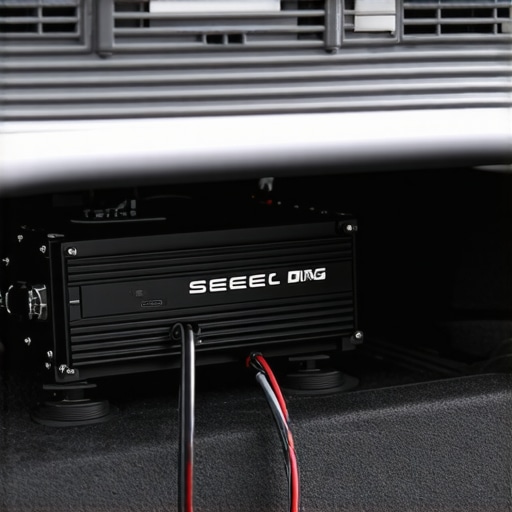
Flip it right side up for better airflow
Heat rises. It sounds like basic science, but many DIYers mount their amps upside down on the underside of the rear deck. When you do this, the heat rising from the internal components gets trapped against the circuit board rather than escaping through the aluminum fins. If you must mount it vertically, keep the heat sink fins running vertically so the air can chimney through them. You should also check for physical obstructions; even a loose gym bag leaning against the amp can cause a thermal shutdown in minutes. While you are back there, take a second to learn how to repair a loose speaker terminal in under five minutes because a loose connection creates resistance, and resistance creates—you guessed it—more heat.
Why Gain Settings Are Not Volume Knobs
If you treat your gain knob like a volume dial, you are forcing your amp to clip. Clipping is essentially the amp trying to produce a signal it does not have the power to create, resulting in a squared-off wave that generates massive amounts of heat in the output transistors. You need to know how to tell if your amplifier has enough headroom for your speakers before you start cranking that dial. Pushing a small amp to drive hungry subwoofers is the fastest way to trigger that red protection light. Think of the gain like a garden hose nozzle; if you try to force too much water through a tiny opening, the pressure builds until something bursts. Keep the signal clean, and the transistors will stay significantly cooler even at high volumes.
Fix Your Electrical Foundation First
Heat is not always about airflow; sometimes it is about starving for juice. When your car’s electrical system cannot keep up with the amp’s demand, the voltage drops. As voltage drops, the amp has to pull more current to maintain its output, which spikes the internal temperature. If you notice the reason your car radio dims when the bass hits, your amp is likely struggling and generating excess heat as a byproduct of inefficiency. In high-power setups, you might even need to investigate how to add a second battery for your high power car audio to stabilize the load. Maintaining a steady voltage is the best way to keep those internal components running efficiently.Let’s dig deeper because there is a massive misconception that bigger amplifiers generate more heat. In reality, it is usually the opposite. Everyone says you should buy the smallest amp possible to save on electrical draw, but in my experience, a larger amp with significant headroom runs significantly cooler than a small one being pushed to its limits. When you use an amp that is barely powerful enough, it has to work at its maximum duty cycle constantly. I have seen budget setups reach thermal runaway in minutes, while high-end systems barely get lukewarm. You need to know how to tell if your amplifier has enough headroom for your speakers before you commit to a purchase. If you are constantly clipping a small amp, you are essentially feeding your speakers DC current, which is the fastest way to kill both the amp and the drivers.
How much impedance can your gear actually handle?
Many advanced DIYers try to squeeze every last drop of power out of their amps by wiring subwoofers in parallel to drop the impedance to 1 ohm. While many modern Class D amps claim to be ‘1-ohm stable,’ they are often only stable under perfect conditions. According to research published by the Audio Engineering Society (AES), as impedance drops, current flow increases exponentially, which can lead to rapid thermal saturation even in high-efficiency designs. If you are noticing that your expensive headphones sound thin on a basic smartphone or your car speakers lack punch, you might be dealing with an impedance mismatch. For home setups, finding the 50 amp that drives high impedance cans without a struggle is a better move than trying to force a low-quality unit to do heavy lifting.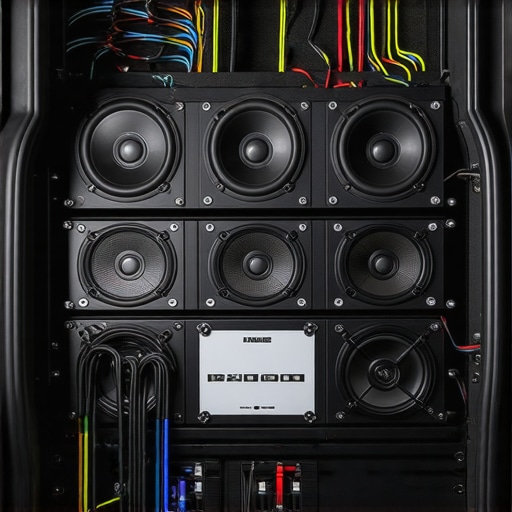
The Expensive Cable Trap You Need to Avoid
One of the biggest ‘traps’ I see enthusiasts fall into is spending hundreds on fancy wiring while ignoring the actual connections. You will hear people swear that gold is the only way to go, but the truth about gold-plated audio connectors for home stereos is that they are more about preventing corrosion than improving conductivity. If your connections are already dirty, the gold will not save you. I have seen people replace perfectly good cables when all they really needed to do was learn how to clean green oxidization off your copper speaker terminals. A clean, tight copper-to-copper connection will beat a loose, oxidized ‘premium’ gold plug every single time. Have you ever fallen into this trap of buying ‘magic’ cables to fix a heat or sound issue? Let me know in the comments.Maintenance is the part of the hobby most people ignore until their speakers start sounding like a bag of potato chips being crushed. I have seen thousand-dollar setups reduced to scrap because the owner didn’t spend ten minutes a year on basic upkeep. For me, the most essential tool in my kit isn’t a fancy screwdriver or a branded cable—it’s a basic digital multimeter. I use it to check the DC offset on my home receivers and the voltage drop at my car amp terminals. If you are shopping for second-hand gear, knowing the best way to test a used receiver before you buy it will save you from inheriting someone else’s thermal nightmare. I personally won’t even plug in a ‘thrift store find’ until I’ve verified the internal rails aren’t leaking voltage.
Stop guessing and start measuring with a multimeter
One of the most effective ‘pro moves’ you can make is checking your phase consistency. If your bass feels weak despite having plenty of power, you might have one speaker pushing while the other pulls. I always use a 9v battery to check your speaker polarity; it is a foolproof, analog way to ensure your drivers are moving in the same direction. Beyond electrical checks, you need to combat the silent killer: oxidation. In my workshop, a can of DeoxIT D5 is a permanent fixture. It is the only reliable way to fix the crackling noise when you turn your amp volume without actually replacing the potentiometer. According to the Texas Instruments Application Report SLAA701A, thermal management in modern Class-D amplifiers is heavily dependent on maintaining the integrity of the thermal interface between the chipset and the heat sink. Over time, that thermal paste can dry out, causing your amp to shut down even when the outer casing feels cool.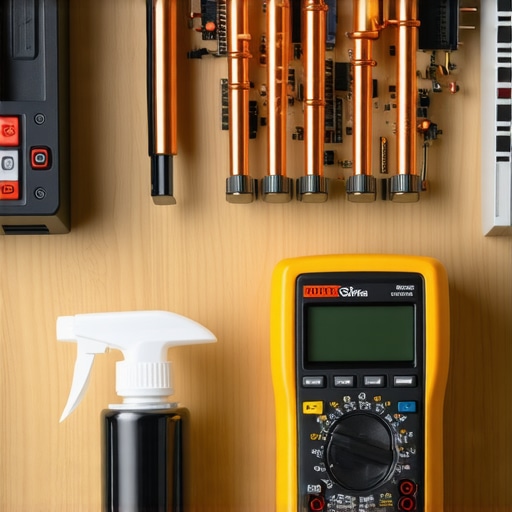
How do I keep my car and home audio gear running for a decade?
The secret to longevity is a clean environment. Dust is essentially an insulator; when it blankets your circuit boards, it traps heat and can even become conductive in high-humidity areas. For my mobile setups, I use compressed air once a month to blow out the amp cooling fans. For portable gear, I make it a habit to clean dust out of your headphone jack without damaging pins every few weeks. This prevents poor connections that force the internal DAC to work harder, generating unnecessary heat in such a small enclosure.
Smart monitors are the future of audio reliability
Looking ahead, I see a trend where ‘dumb’ amplifiers are becoming a thing of the past. We are already seeing the integration of smart thermal sensors that don’t just shut the amp off, but actually communicate with your phone to tell you exactly which speaker is causing the impedance spike. I predict that in the next five years, most high-end amps will feature built-in Wi-Fi diagnostics that alert you to potential clipping before you even hear it. It is a massive leap for reliability. For now, though, the best thing you can do is be proactive. My challenge to you: go out to your car or your home theater rack right now and check the clearance around your amp. If you can’t fit two fingers between the top of the amp and the shelf above it, move it. This one small change could literally double the lifespan of your electronics.
Lessons Bought with Melted Carpet and Blown Fuses
Over the years, I have realized that the spec sheet is only half the story. Just because a manual says your amp is ‘stable’ does not mean it is comfortable. I have learned that physical space is the best insurance policy you can buy; even a mid-range unit will outlast a high-end model if it has room to breathe. I also discovered that wiring quality matters more for cooling than most people think—undersized power wire acts like a heating element for your trunk. Finally, always trust your nose before your ears; that faint, sharp ‘electrical’ smell is the final warning before your gear enters a permanent coma. High-performance audio is a balance of power and temperature.
The Gear That Keeps My Audio Stress-Free
If you want to move beyond guessing, there are a few items I never travel without. First, a reliable digital multimeter is non-negotiable for checking voltage drops at the terminals. I also keep a stash of simple nylon spacers to lift amps off carpeted floors—it is the most cost-effective cooling upgrade you will ever find. For cleaning connections, I only trust specialized electronic cleaners to prevent the resistance that leads to heat. If you are still hearing issues after cooling things down, you might need to learn how to get rid of the engine whine in your car speakers, which often points to a grounding problem that contributes to electrical inefficiency. Also, checking for phantom draws can help if your car audio system drains your battery overnight, ensuring your electrical foundation is solid for the long haul.
#IMAGE_PLACE_HOLDER_E#
Don’t Let the Heat Steal Your Summer Soundtrack
Your audio system is more than just hardware; it is the heartbeat of every road trip and daily commute. Taking twenty minutes today to adjust a mounting bracket or clean a terminal can save you hundreds of dollars in repair bills tomorrow. Don’t wait for the music to stop to start caring for your car amplifiers. You have put the work into choosing the right gear, so give it the environment it needs to thrive. Whether you are looking for ways to how to add more bass to your factory car speakers for free or building a competition-grade wall, heat management is the silent partner of great sound. Enjoy the drive, keep the air moving, and your speakers will thank you for it. Have you ever had an amp shut down in the middle of a great song? Let me know in the comments below how you handled it!