
I remember standing in the middle of a big-box electronics store, clutching a car amplifier box that screamed “2000 WATTS PEAK POWER” in neon letters. I was nineteen, and I thought I had found the holy grail of sound. I spent every cent I had, spent the afternoon wiring it up, and hit the volume. Ten minutes later, my car smelled like an electrical fire. I did not just lose my money; I learned a painful lesson about how manufacturers manipulate numbers to catch our eye. If you have ever wondered why your gear is not performing like the box promised, you are in the right place.
Those Big Numbers on the Box are Lying to You
If you have been shopping for home audio deals or a new set of speakers, you have seen it. One box says 50 watts, the other says 500 watts, and they are the same price. It feels like a no-brainer, right? But here is the reality: those peak ratings are the equivalent of a sprinter top speed during a lightning strike—it is a momentary burst that the equipment can barely survive, let alone maintain. I once made the mistake of pairing a high peak amp with delicate speakers, and let me tell you, learning how to tell if your headphones have a blown driver is a heartbreaking experience you want to avoid. Today, I am going to break down the difference between the marketing fluff and the actual continuous power you need to look for. We will talk about why your new amplifier gets hot after only twenty minutes when you push it too hard and why those big numbers are often the reason your car radio dims when the bass hits. Have you ever bought a piece of gear because of the wattage, only to find it sounded thinner than a piece of paper?
Is Peak Power Just a Clever Marketing Scam?
To be fair, it is not strictly a lie, but it is close. In the world of physics, Peak Power represents the absolute maximum wattage an amplifier can handle for a fraction of a second without immediately exploding. It is useless for actual music listening. On the other hand, RMS (Root Mean Square) is the real-world measurement of what that gear can do all day long. According to the Consumer Technology Association (CTA), standardized power ratings like CEA-2006 were created specifically because manufacturers were being so creative with their numbers that consumers could not compare products fairly. If you do not pay attention to the RMS, you might end up wondering why your car speakers crackle when you turn the volume up. It is not just about loudness; it is about the health of your equipment. Let us get into the nitty-gritty of why RMS is the only number that actually matters for your ears and your wallet.
Why the RMS Rating is the Only Number That Matters
When you are looking at gear, whether it is a high-end soundbar or a desktop DAC, search for the term RMS. Think of RMS as the cruising speed of your car. You would not drive your vehicle at 140mph for three hours straight just because the speedometer says it can do it, right? The same logic applies here. I once helped a buddy set up a home theater system where he insisted on using his phone’s output for everything. He quickly realized the truth about using your phone to power high end headphones and large speakers—it just does not have the gas to move the drivers properly. If you cannot find the RMS rating on the box or in the manual, that is a huge red flag. Legitimate brands are proud of their continuous power ratings. If you find a bargain that claims massive power but lacks RMS specs, you are likely looking at a unit that will distort the second you turn the knob past 11 o’clock.
Feed Your Amp the Current It Actually Needs
An amplifier is essentially a valve that controls the flow of electricity to your speakers. If the electricity is not there to begin with, the amp starts to strain, which is exactly why your new amplifier gets hot after only twenty minutes. I learned this the hard way when I tried to run a massive sub amp in my trunk using thin 8-gauge wire I found in a junk drawer. The lights dimmed so badly I thought I was going to stall at every stoplight. To fix this, you need to ensure your power path is solid. This means learning how to add a second battery for your high power car audio if you are pushing serious bass, or simply making sure you avoid using an extension cord for your power amp in a home theater setup. Thin wires and long extensions act like a kink in a garden hose; the pressure builds up, the heat rises, and your sound quality takes a nosedive.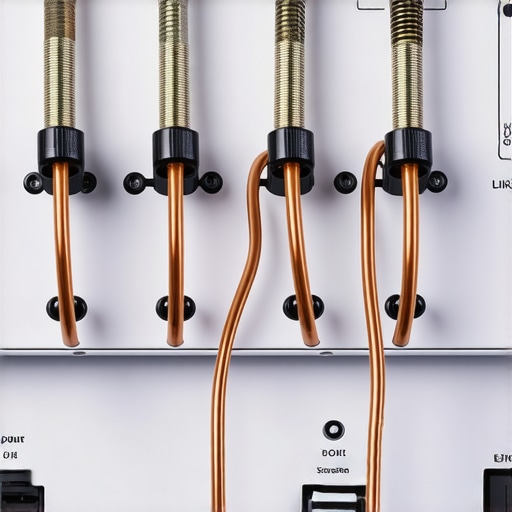
Protect Your Sound from Cheap Wiring Mistakes
Once you have the power, you have to keep it clean. You would be surprised how many people buy home audio deals that include great speakers, only to connect them with wire that looks like dental floss. If your run is long, cheap speaker wire causes signal loss over 50 feet, making your expensive towers sound like a tin can. I remember a specific install where the client complained about a fuzzy sound. It turned out they had used old, oxidized wire they found in the attic. We swapped it for high-purity copper and the difference was night and day. If you are dealing with a surround setup, you also need to watch out for why your surround sound receiver keeps clicking into protect mode. Usually, it is a tiny stray strand of wire touching the chassis, causing a short. Precision matters more than the raw number of watts you are pushing.
Avoid the Mismatch That Kills Your Components
This is where most beginners blow their gear. If your amp is rated for 8 ohms and you hook up 2-ohm speakers, you are asking that amp to work four times harder than it was designed to. It is like trying to pull a boat with a bicycle. I once saw a guy fry a legendary vintage receiver because he tried to bridge it into a load it could not handle. For headphone users, finding the 50 amp that drives high impedance cans without a struggle is a game-changer. It is not about the loudness but about the control the amp has over the speaker’s movement. When the impedance is mismatched, the amp loses that control, leading to heat and eventually the real reason your amp is getting hot to the touch—internal component failure.Most people believe that if an amplifier is labeled with 100 watts, it must be inherently superior to a 50 watt model. This is perhaps the biggest trap in the entire audio world. In my professional experience, a high-current 50-watt amplifier with a massive, heavy transformer will outperform a lightweight 100-watt digital amp every single time. This is because it has the current to handle the impedance dips of a real speaker driver. If you find your audio lacks impact despite what the box says, stop looking at the amp and check your speaker sensitivity rating. A speaker with 90dB sensitivity requires only 10 watts to achieve the same volume that an 80dB speaker needs 100 watts to reach. The most common mistake I see is pairing low-sensitivity speakers with a budget, high-wattage amp. This leads to clipping, where the amp runs out of headroom and sends a distorted square wave to your speakers. This clipping is what actually kills drivers, not too much clean power. I have also seen enthusiasts spend a fortune on cables because they were told gold was the only way to go. However, the reality of why gold-plated connectors aren’t always better comes down to the fact that silver and copper are actually superior conductors; gold is only used because it does not oxidize over time.
Can a High-Resolution DAC Actually Fix Your Sound Problems?
Many advanced listeners wonder if adding a separate Digital-to-Analog Converter (DAC) is the silver bullet for their system. While a good DAC can lower the noise floor, it will not fix a bad source. If you are hearing artifacts, it might be why your digital to analog converter is making a clicking sound due to clocking errors, or perhaps why your high-res audio stream keeps buffering on wi-fi because your home network cannot handle the massive data rate. Another hidden nuance involves equipment placement. I have solved dozens of noisy systems simply by moving things around. For instance, knowing why your phono preamp needs to be far away from the power amp is crucial; the transformer in your amp radiates an electromagnetic field that a sensitive preamp will pick up as a loud, annoying hum. As Dr. Floyd Toole proved through extensive research at the National Research Council, the room itself is often the most distorting element in the chain. If you shove your speakers into a corner, you will quickly learn why your studio monitors sound boxy against a wall. Before buying new gear, try the simple rug trick that instantly improves your room acoustics to kill floor reflections.  If you are dealing with professional setups, consider the real performance benefit of using balanced xlr cables to finally stop the hissing sound in your studio monitors. If you are hunting for deals, knowing how to find high-end audio gear at thrift stores before anyone else is great, but you must know how to test it. A common trap is buying a high-end receiver that keeps clicking into protection mode because of a dried-out capacitor, not because of your wiring. Have you ever fallen into this trap? Let me know in the comments.Maintaining your system is about more than just dusting the cabinets; it is about preventing the slow degradation of signal paths. I have seen thousand-dollar amplifiers rendered useless because of a simple ten-cent capacitor drying out or a bit of oxidation on a connector. One of the most common issues you will face as your gear ages is physical wear and tear on the soft goods. If you use your cans every day, you will eventually notice why your headphone pads are peeling and how to replace them is a skill you need to master to keep that seal and soundstage intact. Similarly, if you are rocking a vintage setup, you have likely heard that annoying static when adjusting the volume. I always keep a can of DeoxIT D5 on my workbench because it is the industry standard for how to fix the crackling noise when you turn your amp volume without damaging the delicate resistive strips inside the potentiometer.
The Essential Toolkit Every Audio Nerd Needs
Beyond specialized cleaners, your toolkit should include a few low-tech lifesavers. I never start a car audio install or a home theater overhaul without a simple 9V battery. It is the fastest way to learn how to use a 9v battery to check your speaker polarity; a quick tap to the wires tells you if the woofer is moving out (correct) or in (reversed), ensuring your speakers aren’t fighting each other. You should also have a basic soldering iron handy. You do not need to be an electrical engineer to learn how to repair a loose speaker terminal in under five minutes. According to the Audio Engineering Society (AES), mechanical connections are the most frequent point of failure in high-power systems, so knowing how to reflow a joint can save you a trip to the repair shop. 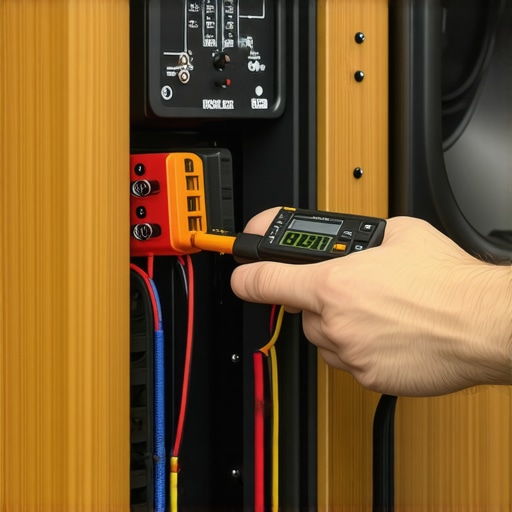
How Do I Keep My Audio Rig in Peak Condition?
Longevity comes down to heat management and cleanliness. If you are pushing an amp hard, you must ensure it has at least three inches of clearance on all sides. Heat is the natural enemy of electrolytic capacitors. Most high-end caps are rated for about 5,000 to 10,000 hours of use at their maximum temperature, but if you keep them cool, they can last thirty years. If you notice the real reason your amp is getting hot to the touch is a lack of airflow, move it immediately. Also, periodically check your connections for the easy way to fix a scratchy volume slider on your radio or receiver by simply rotating the dials through their full range twenty times while the power is off to sweep away dust.
Where the Future of Home Audio is Heading
We are currently seeing a massive shift toward high-performance active systems. While the purist in me loves a separate amp and speaker, the difference between active and passive speakers explained simply is becoming blurred by Digital Signal Processing (DSP). In the next five years, expect to see more “smart” speakers that use internal microphones to real-time calibrate their output based on your furniture placement. It is essentially the trick to making vintage speakers sound modern again but built directly into the silicon. My advice? Start by auditing your current setup with the 9V battery polarity test tonight; you might find your ‘lack of bass’ was just a simple wiring flip all along.
The Hardest Lesson I Learned About Chasing High Wattage
Looking back at my years of swapping out gear, the most expensive mistake I made wasn’t buying the wrong brand—it was buying for the wrong reason. I used to chase those massive peak numbers, thinking more watts equaled more ‘soul’ in the music. I eventually realized that a high-quality 20-watt tube amp could provide a richer, more immersive experience than a 1000-watt budget receiver that clips the moment the chorus hits. Another lightbulb moment came when I realized that most audio issues aren’t caused by the gear itself, but by how we treat it. I spent weeks troubleshooting a ‘bad’ subwoofer only to find I was dealing with why your car audio system drains your battery overnights due to a parasitic draw from a poorly wired remote lead. Always prioritize the quality of your power and the integrity of your connections over the numbers printed on the box. If you are just starting out with portable gear, mastering how to stop your portable bluetooth speaker from distorting is your first step toward understanding the limits of clean audio.
My Essential Gear for System Maintenance
If you want your system to last as long as a vintage McIntosh, you need to be proactive. I never consider an install finished without a few key items in my drawer. First, a reliable multimeter is non-negotiable for checking voltage drops. Second, I always have a strategy for cable management; for example, learning the best way to run speaker wire under your rug can prevent physical damage to the jacket that causes shorts over time. Finally, I rely on the advice found in the Master Handbook of Acoustics by F. Alton Everest. It changed how I view room treatment. If you are on a budget, I highly recommend the process of finding legitimate high-end gear at local thrift stores. You would be shocked at what people give away simply because they didn’t know how to clean a scratchy volume pot.
Why You Should Stop Worrying and Start Listening
At the end of the day, all this talk about RMS, impedance, and gold-plated connectors is just a means to an end. The goal is to get lost in the music, not the manual. Don’t let the fear of a ‘sub-optimal’ setup keep you from enjoying your favorite tracks today. Whether you are running a million-dollar home theater or just trying to get the best out of a used car deck, the principles remain the same: keep it cool, keep it clean, and keep the power paths solid. Your ears will tell you more than any spec sheet ever could. Audio is a journey of discovery, and every mistake you make is just a lesson that brings you closer to sonic perfection. #IMAGE_PLACEHOLDER_E#
What is the most surprising piece of audio gear you have ever found?
Have you ever found a piece of gear that performed way better than its specs suggested? Let me know in the comments below.