
I will never forget the sheer embarrassment of my first week with a high-end pair of open-back headphones. I was sitting in a quiet, cozy local coffee shop, sipping a latte, and completely lost in a live concert recording of my favorite acoustic band. The instrument separation was breathtaking. I felt like I was standing right next to the lead guitarist. Then, the guy sitting at the table next to me cleared his throat, tapped my shoulder, and politely asked if I could please turn down the heavy metal. I looked around and realized half the room was staring at me. In my quest for audiophile bliss, I had accidentally turned my head into a pair of miniature, public-facing speakers.
The Open-Back Paradox: Why Great Sound Travels Both Ways
If you have recently invested in a serious pair of cans, you might be wondering why everyone else in your living room can hear your music clearer than they can hear the TV. We buy these headphones because they offer an incredibly wide, airy soundstage that makes closed-back options feel like you are listening to music inside a cardboard box. But that breathtaking, lifelike audio comes with a massive trade-off: there is literally nothing blocking the sound waves from escaping outward. I made the classic rookie mistake of assuming the sound leak would just be a gentle whisper, but the reality is much louder than most beginners ever expect.
Are Open-Back Headphones Actually Usable Around Other People?
Let’s be brutally honest here. If you plan to use your headphones on your daily train commute, in a quiet office cubicle, or next to a sleeping partner in bed, you are going to drive people absolutely crazy. Open-back earcups use a mesh, grill, or perforated backplate instead of a solid plastic or wooden shell. According to acoustic engineers, this design allows the speaker diaphragm to move freely without backpressure, which eliminates internal resonance. However, it also means about 50% of the acoustic energy is pushed directly out into your environment. You are essentially wearing two tiny, uninsulated speakers on the sides of your head.
If you are trying to squeeze every drop of performance out of your setup, even your choice of cushion material can alter the escaping sound signature. For instance, you might want to learn how to choose between leather and velour headphone pads for sound, as denser materials can slightly tame or redirect the acoustic leakage compared to porous fabrics. Have you ever suffered through an embarrassing public sound-leak moment like I did, or are you currently trying to figure out if your family can hear your late-night gaming sessions? Drop a comment below and let me know your story!
How to Audibly Tame Your Open-Back Gear Without Ruining the Sound
You do not have to lock yourself in a windowless basement just to enjoy your open-back cans. However, minimizing the annoyance to others requires a strategic approach to your environment and your audio chain. When I first tried to solve this issue, I set up my desktop DAC and amplifier rig right on our glass dining table. My family instantly complained about a weird, high-pitched ringing vibration. I quickly learned that why your desktop speakers need isolation pads to stop desk vibration applies to high-end headphone setups too; isolating your gear physically prevents micro-vibrations from singing through hard household surfaces.
Calculate the Distance to Your Closest Listener
The easiest way to control sound leakage is simple physics: the inverse-square law. Double your distance from a person, and the volume they hear drops significantly. If you are sitting on the same couch as someone watching TV, they will hear your music. If you move just eight feet away to an armchair, your acoustic bleed drops below the ambient room noise. I tested this with my spouse; when sitting side-by-side, my leakage ruined her show. By shifting to the opposite corner of the room, she could not hear a single note, even during quiet passages.
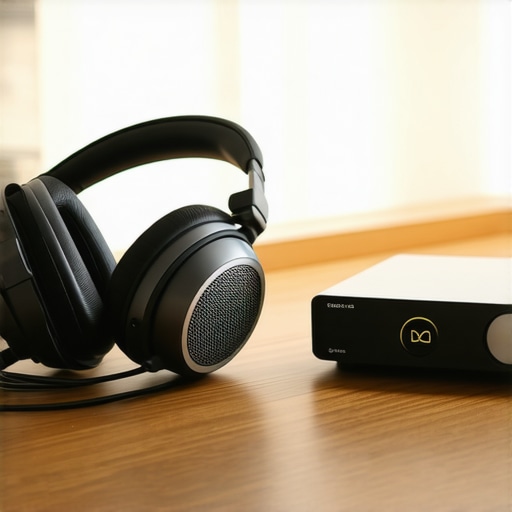
Match Your Listening Volume to the Ambient Noise Floor
Many listeners set their headphone volume in a quiet room and keep it there. Instead, try adjusting your volume relative to the room’s background noise. In a room with a running fan or air conditioning, you can safely turn your music up slightly because the background hum masks the escaping high frequencies. If you are using a portable setup or a smartphone to drive your cans, be aware of how power delivery affects your listening habits. For example, if you notice why your portable speaker sounds different when it is plugged in, a similar power dynamic occurs with portable headphone amps—cleaner, steady power lets you listen at lower, safer volumes while maintaining dynamic detail, saving your ears and your neighbors’ patience.
Swapping Cushion Materials to Redirect the Leakage
The materials touching your ears act as a final acoustic barrier. Velour pads are incredibly comfortable, but they act like a sieve, letting sound waves escape sideways with zero resistance. Denser leather or protein-leather pads offer a tighter seal against your skull. While they will not transform an open-back headphone into a closed-back one, they do direct more energy toward your ear canal and less out of the sides, slightly reducing the immediate lateral sound spray. If your current cushions are starting to flake or lose their shape, learning how to tell if your headphone pads need replacing can help you restore both comfort and acoustic performance.
When you start researching high-end personal audio, you will quickly encounter the prevailing internet consensus: open-back headphones are amazing for soundstage, but they leak sound like a sieve. While that is true on a basic physical level, the mainstream audiophile community often completely misrepresents how this acoustic energy actually behaves in the real world. Let’s dig deeper into the actual science and dispel a few myths that might be keeping you from getting the most out of your high-end cans.
The Huge Misconception About Open-Back Volume Levels
Everyone on the forums tells you that open-back headphones are exactly like placing two miniature desktop speakers on your head. In my experience, this is a massive exaggeration that scares off potential buyers. A standard dynamic headphone driver measures around 40mm to 50mm in diameter, and it operates with microscopic driver excursion. It does not have the surface area or the acoustic displacement capability of even a tiny desktop monitor. Unless you are listening at ear-bleeding, unsafe volumes, the outward leakage is highly directional and decays rapidly over short distances.
The real trap? People often buy high-impedance open-back headphones, plug them directly into a low-powered source like a console controller, and turn the volume up to 100% just to get a decent listening level. Because the source is struggling and clipping, they end up pushing distorted high-frequency energy out of the back of the cups. If you have ever wondered why your high-end headphones sound tiny when plugged into a controller, this lack of clean power amplification is the actual culprit. A weak source forces you to maximize the volume, which paradoxically increases external distortion and makes your sound leak far more annoying to those around you than a clean, amplified signal would.
Do Open-Back Headphones Sound Better with High-End DACs?
Many audiophiles assume that buying an incredibly expensive Digital-to-Analog Converter (DAC) will somehow magically tighten the transient response of an open-back driver, thereby reducing unwanted acoustic resonance and leakage. This is a classic industry myth. According to a landmark study on acoustic transducer behavior published by the Audio Engineering Society (AES), the mechanical design of the headphone enclosure and the physical dampening material behind the driver have a multi-magnitude greater impact on acoustic control than the micro-measurements of a DAC. While a good source is vital, understanding the difference between cheap and expensive DACs that actually matters will save you from spending thousands of dollars trying to solve physical acoustic problems with digital hardware.
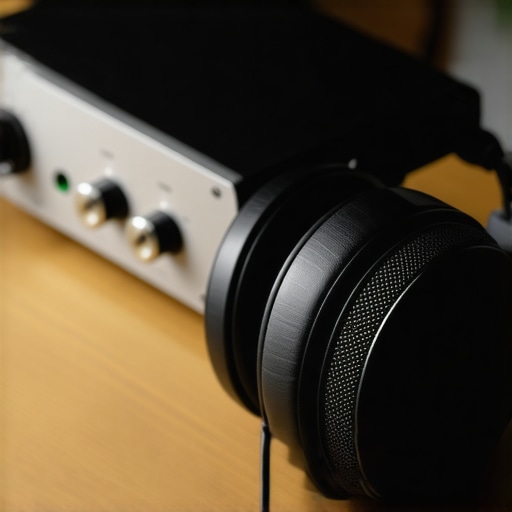
Another nuance that people completely overlook is pad wear. Over time, the internal foam of your headphone cushions degrades. As the pads compress, the driver sits closer to your ear, altering the internal acoustic chamber. This physical change can dramatically increase outward sound leakage while ruining your low-end frequency response. Knowing why leather pads sound different than velour ones is crucial here; leather naturally seals better and retains its structural shape longer, offering a more controlled acoustic barrier than porous, worn-out velour. Have you ever fallen into this trap of buying expensive upstream gear to fix a basic acoustic or pad-wear issue? Let me know in the comments below!
When you invest in high-end personal audio, you are not just buying temporary tech gadgetry; you are investing in precision acoustic hardware designed to last decades if treated with respect. Yet, many audio enthusiasts let their premium setups deteriorate silently because they overlook basic maintenance. Over the years, I have seen breathtaking planar magnetic open-backs ruined by nothing more than dust buildup and improper storage. To prevent your investment from turning into expensive desk junk, you need a proactive approach to physical upkeep and electrical maintenance.
How do I maintain my open-back audio setup over time?
The secret to longevity lies in keeping the physical components clean and preventing electrical oxidation. For my daily routine, I keep a dedicated soft-bristled camera lens brush at my desk to sweep dust away from the external mesh and grills of my headphones. Never use compressed air; the high-pressure blast can easily warp or rupture the ultra-thin driver diaphragms. Furthermore, you must protect your connections. If you start hearing scratchy static when adjusting your volume or plugging in, you might need to learn how to fix a loose headphone jack on your favorite pair before the internal solder joints fail completely.
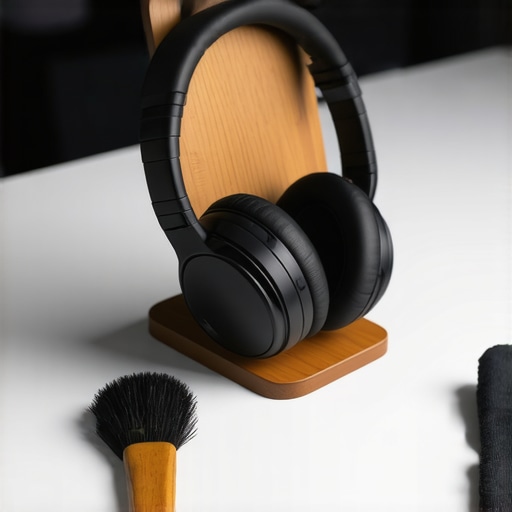
Beyond the connectors, pay attention to how you store your gear when it is not on your head. Hanging your headphones by the elastic suspension strap rather than the solid metal headband will quickly wear out the elasticity. To protect your investment from structural fatigue, you should learn how to properly store your headphones to avoid hinge failure. According to mechanical engineering whitepapers published by premium manufacturers like Sennheiser, constant structural tension on pivot joints is the leading cause of micro-fractures in high-end headphone chassis.
Looking toward the future, I predict we will see a major shift toward modular headphone designs, where consumers can easily swap out not just ear pads, but also internal driver capsules and connection blocks as wireless and analog standards evolve. For now, the best way to future-proof your setup is to master the basics of hardware care. I highly recommend trying this one advanced tip today: take a microfiber cloth lightly dampened with isopropyl alcohol and clean your headphone plug’s gold-plated contacts. You will be amazed at how much invisible oxidation you remove, immediately stabilizing your signal transfer. How do you keep your premium desktop audio gear safe from daily wear and tear?
What Nobody Tells You About the Realities of Open-Back Ownership
After years of listening to high-end open-back headphones, I have realized that the forums rarely capture the practical, day-to-day realities of living with these beautiful acoustic instruments. Here are the three most critical lightbulb moments I have had on my personal audio journey:
- Ambient noise works both ways: Everyone talks about sound leaking out, but the real shocker is how much outside ambient noise leaks in. A humming refrigerator or a passing car can destroy your quiet micro-details faster than any cheap DAC ever could.
- You do not need a nuclear reactor to drive them: While amplification is vital to prevent clipping and distortion, chasing multi-thousand-dollar amplification setups is a game of diminishing returns. Clean, stable, and appropriately matched power is all it takes to make your music shine at normal, non-leaking volumes.
- The secondary market is your best friend: Because many beginners buy open-back gear without understanding the leakage, they sell them off almost immediately. If you want to skip the retail markup, learning how to score open-box headphones for half-price is the smartest way to build a world-class headphone collection on a budget.
My Personal Audio Resource Toolkit
Navigating the vast sea of audio advice can be incredibly overwhelming. Over the years, I have narrowed down my trusted sources to a few key tools and references that help keep my system running in pristine condition:
- InnerFidelity & Head-Fi Archives: While the ownership has changed hands, the historic frequency response graphs and acoustic measurements on these platforms remain the absolute gold standard for understanding how specific headphone cups and cushions disperse energy.
- The Audio Engineering Society (AES) Whitepapers: Whenever I want to cut through the marketing hype regarding cable materials or high-end digital converters, I turn to the peer-reviewed, double-blind testing data published by real acoustic scientists.
- A Premium Contact Cleaner: I keep a small bottle of specialized electronics contact cleaner in my desk drawer. Regularly cleaning your headphone plug, adapter, and the source ports is a simple five-minute maintenance habit that prevents annoying static and keeps your audio signal entirely uninterrupted.
Step Into a Wider World of High-Fidelity Sound
Transitioning to open-back headphones is like hearing your favorite albums for the very first time. While they require a bit of extra physical care, spatial awareness, and a quiet room to truly sing, the breathtaking, natural soundstage they provide is worth every single ounce of effort. Do not let the fear of sound leakage keep you from enjoying an unparalleled personal audio experience. Set up your listening space, treat your equipment with the respect precision hardware deserves, and lose yourself in the music. Have you ever had an awkward or funny moment where someone overheard what you were listening to through your open-back headphones? Let me know in the comments below!