
I remember sitting in my old 1998 truck, finally finished with what I thought was a flawless amp installation. I turned the key, and instead of the sweet sound of bass, I heard a violent, heart-stopping *POP* that seemed to shake the very windows. My stomach dropped. I was certain I had just fried a month’s salary worth of equipment in a single second. It’s a sound every car audio enthusiast knows—that sudden, aggressive thump or crackle the moment the ignition engages. It’s startling, it feels expensive, and honestly, it’s a bit embarrassing when you have passengers. If you are dealing with this right now, I want you to take a deep breath. You probably haven’t killed your gear yet, but your car is definitely trying to tell you something is out of sync. Today, we are going to silence that noise for good and make sure your system turns on as smoothly as a luxury sedan. Have you ever jumped in your seat because your speakers barked at you the moment you started the car? Let me know in the comments, because I’ve definitely been there.
That Start-Up Sound Is More Than Just Annoying
When I was starting out, I made the classic rookie mistake of thinking a pop was just “character” for an older car. I ignored it until one of my drivers started smelling like burnt voice coils. The truth is, that pop is a transient voltage spike—a surge of electricity hitting your speakers before the amplifier has had a chance to stabilize its internal circuits. It’s like someone screaming into a megaphone before they’ve finished turning the volume knob down. Often, this happens because the head unit and the amplifier aren’t communicating their power-on sequence correctly. If your amp wakes up before the head unit has finished its initial boot-up, it’s going to amplify every bit of electrical garbage that happens during the engine crank. If you’ve already noticed other weird noises, you might be dealing with [the real reason your cars alternator makes your speakers whine](https://premiumsounddeals.com/the-real-reason-your-cars-alternator-makes-your-speakers-whine), which is often part of the same messy electrical family.
Is This Actually Going to Blow My Speakers?
It is the question that keeps us up at night. While a tiny tick might not do immediate damage, a heavy, cone-moving *thump* absolutely can. The Audio Engineering Society has documented that these DC offsets and power transients can physically push a speaker cone past its mechanical limits, leading to what we call “over-excursion.” Over time, this weakens the spider and the surround. You might find yourself searching for [how to tell if your speaker is actually blown or just rattling](https://premiumsounddeals.com/how-to-tell-if-your-speaker-is-actually-blown-or-just-rattling) much sooner than you’d like. Beyond the speakers, these spikes can stress the capacitors in your amp. If you’re also seeing your interior lights dim, you might want to check [why your car audio system drains the battery while the engine is off](https://premiumsounddeals.com/why-your-car-audio-system-drains-the-battery-while-the-engine-is-off) to ensure your overall electrical health is up to par. We want a clean, sequenced start-up, and getting there is simpler than you might think.
Fixing the Turn-On Pop Once and for All
The most effective way to kill that aggressive thump is to master the timing of your system’s power-on sequence. In a perfect world, your head unit (the source) should be fully powered and stable before your amplifier ever wakes up. When they turn on simultaneously, the amp catches the electrical ‘burp’ of the head unit’s internal processors and boosts it directly to your speakers. I once tried to bypass a proper remote lead by wiring my amp directly to a switched ignition fuse in a rush to finish a build before a road trip. Every time I turned the key, the amp would snap on instantly while the radio was still ‘thinking,’ resulting in a bang so loud I thought I’d snapped a mounting bracket. I had to go back and install a simple time-delay relay, which kept the amp off for just three seconds—long enough for the head unit to settle.
Install a Remote Turn-On Delay
If your head unit doesn’t have a dedicated remote output, or if that output is too fast, a 12V delay module is your best friend. These tiny, inexpensive circuits sit between your head unit and the amplifier’s ‘REM’ terminal. You can set them to wait a few seconds before passing the signal. This ensures the ‘pop’ happens silently inside the head unit’s circuitry before the amp is even live. If you find that adding components makes things more complex, you should also ensure you aren’t creating a mess behind the dash; learning the easiest way to hide power wires can help keep your installation clean and manageable.
Scrub Your Ground Connections
A weak ground is the primary culprit for almost every noise issue in car audio. If your amplifier’s ground has even a tiny bit of resistance, it can cause a DC offset—basically, the ‘zero’ point of your electricity is slightly tilted, causing a pop when the circuit closes. I’ve seen enthusiasts spend hundreds on new amps when the fix was actually a $5 wire brush and a tighter bolt. You should use a high-quality terminal and clear away every speck of paint from the chassis. If you’re unsure if your wiring is the problem, you can how to use a multimeter to find a short in your speaker wires to verify your connections are solid. 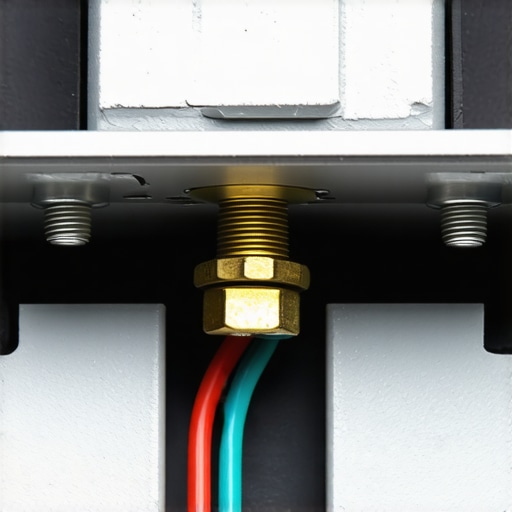
Balance Your Gains Properly
Many people treat the gain knob like a volume control, cranking it up to the max. This is a recipe for disaster. When the gain is set too high, it amplifies the floor noise of your system, making that start-up pop significantly more violent. By backing off the gain and letting the head unit provide a cleaner, stronger signal, you reduce the ‘sensitivity’ of the amp to those initial power spikes. This is also a good time to check the health of your equipment; if the pop persists despite perfect wiring, you might want to learn how to tell if your speaker capacitors are starting to leak, as failing internal components can also cause erratic electrical behavior. If you’ve done everything right and still hear a faint buzz, you might be looking at the 5 dollar fix for humming speakers and ground loops to finally achieve that dead-silent studio quality in your cabin.
Let’s dig a little deeper into why these issues persist even when you think you have followed the manual to the letter. Many enthusiasts fall into the trap of thinking a $200 set of “noise-rejecting” RCA cables will act as a magic wand for electrical pops. It sounds logical—better shielding should mean less noise, right? But here is the contrarian truth: in a car environment, those fancy cables are often just a band-aid on a gaping wound of poor impedance matching. If your head unit’s output impedance is wildly different from your amplifier’s input impedance, the system becomes a vacuum for electromagnetic interference regardless of how much silver is in your wire.
Why Does the Pop Persist on High-End Gear?
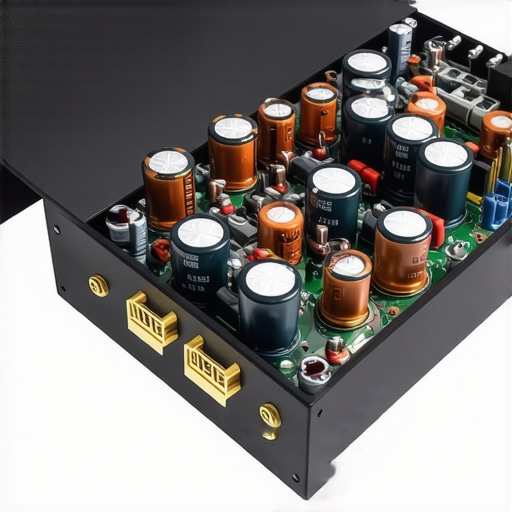
It’s incredibly frustrating when you’ve installed a delay relay and that sharp noise still sneaks through the speakers. This is where we look at the nuance of “DC Offset.” Technical papers from the Audio Engineering Society (AES) highlight that even a tiny amount of direct current (DC) leaking from the source can cause the output stage of an amplifier to “snap” to a voltage rail the moment it’s engaged. If your head unit has a failing internal output capacitor, the delay relay is just delaying the inevitable. You can have the best balanced cables for home studios, but in a car’s unbalanced 12V environment, that DC leak will win every time unless the hardware is repaired.
Don’t Fall Into the Power-Over-Precision Trap
The biggest “oops” factor I see in the field is when people try to “outpower” their noise issues. I have seen countless DIYers think that by bridging their channels, they will get a signal-to-noise ratio that somehow drowns out the pops. However, if you don’t know the secret to choosing the right ohm rating for your amp, you are just inviting excessive heat and potential failure. You might think you’re getting more “oomph,” but you’re actually decreasing the amp’s damping factor, which makes that startup thump even harder for the speaker cone to control. This is especially dangerous when the temperature climbs. Before you go bridging your car amp for more bass power to fix a “weak” sound, ensure your voltage is stable and your impedance matches the manufacturer’s spec. If you aren’t careful, you’ll find yourself wondering why your car amp is overheating during long summer drives instead of enjoying your playlist. Have you ever spent a fortune on “premium” cables only to find the noise didn’t move an inch? Let me know in the comments—I want to hear your stories about the gear that drove you crazy.
Why an Oscilloscope is My Secret Weapon for Perfect Sound
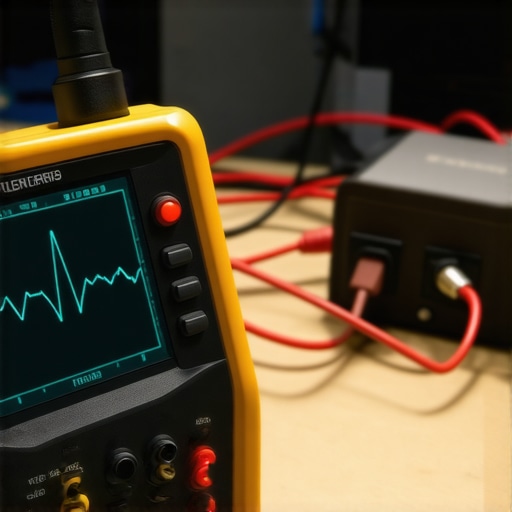
If you really want to graduate from ‘guessing’ to ‘knowing,’ you need to stop setting your gains by ear. I spent years thinking I had a golden ear until I bought my first handheld oscilloscope. That little screen showed me that what I thought was ‘loud and clear’ was actually a clipped signal that was slowly cooking my voice coils. When you use a scope, you can see the exact moment the sine wave flattens out—that is the danger zone. By dialing it back just a hair, you ensure your amp never sends that distorted ‘pop’ signal during high-demand moments. If you are pushing your gear to the limit, you also need to keep an eye on temperature; knowing why your car amp is overheating during long summer drives is the difference between a system that lasts a decade and one that dies in July.
How do I keep my sound system performing like day one?
Maintenance isn’t just about fixing things when they break; it’s about preventing the slow decay of electrical efficiency. Every six months, I do a ‘tighten and clean’ run. I go through every terminal block and every ground bolt. Vibrations from driving (and from your subwoofers) will naturally loosen these connections over time. A loose power wire doesn’t just cause noise—it creates resistance, which generates heat and can eventually lead to a fire. I also use a dedicated contact cleaner on every RCA jack. I’ve found that learning how to clean gold plated connectors without ruining the finish is essential for maintaining that crisp high-end detail. According to the Texas Instruments application report SLAA706A on Pop-and-Click Suppression, even microscopic levels of debris on a connection can interfere with the ramp-up voltage of modern Class-D amplifiers, leading to those annoying artifacts we are trying to kill.
The Future of Silent Power Management
We are moving toward a world where ‘smart’ amplifiers will handle all of this for us. I predict that within the next five years, built-in DSPs will use AI to analyze the startup transient in real-time, automatically adjusting the mute delay based on the specific health of the vehicle’s battery and alternator. We are already seeing high-end home theater units do this, and the tech is trickling down to car audio. Until then, we have to be diligent. If you’ve been putting off checking your electrical health, now is the time to see why your car audio system drains the battery while the engine is off, as parasitic draws are often the first sign that your amp’s internal switching power supply is starting to fail. Also, keep an eye on your internal components; knowing how to tell if your speaker capacitors are starting to leak can save your speakers from a catastrophic DC surge. My advanced tip for you today? Grab a multimeter and check the resistance between your amp’s ground terminal and the battery’s negative post. If it’s anything higher than 0.2 ohms, go move that ground. It’s the single most effective ‘free’ upgrade you can give your ears.
What Years of Blown Subs Taught Me About Power Sequences
After chasing ghosts in my wiring for years, I realized that the order of operations is more important than the brand of the amp itself. I used to think the remote wire was just a simple on-off switch, but in reality, it is the conductor of an electrical orchestra. If the instruments start playing before the conductor stands up, you get a chaotic mess. One major lesson I learned is that the ground is never ‘good enough’ just because it is bolted down; it needs to be chemically clean. I have seen a loose ground cause a pop so violent it actually cracked a plastic trim piece nearby. Additionally, if your system acts up differently depending on the weather, you should investigate why your car speakers rattle only when it is cold outside, as extreme temperatures can shrink connectors and create the very gaps that cause electrical arcing.
My Go-To Kit for Dead-Silent Audio
To move beyond trial and error, you need a specific set of tools that provide immediate feedback on your system’s health. For those ready to get serious, I always recommend keeping a few essentials in your installation bag. First, a dedicated 12V delay relay is a total lifesaver for older head units that lack internal timing controls. Second, I swear by DeoxIT D-Series contact cleaner; it is the industry standard for ensuring your RCA and power terminals have zero resistance. Finally, always keep a nose out for trouble. If you ever smell something sweet or acrid after a heavy bass session, stop immediately and learn how to fix a car subwoofer that smells like it is burning before you experience a permanent equipment failure. These aren’t just extra steps; they are the foundation of a professional-grade build.
Stop Cringing and Start Listening
Building a high-performance car audio system is a journey of both troubleshooting and triumph. You should never let a simple startup pop discourage you from refining your setup. With the right timing delays and a rock-solid electrical foundation, your vehicle will transform from a source of frustration into a rolling concert hall. If you have successfully silenced the startup pop but still hear a high-pitched engine noise while driving, you likely need to investigate why your car alternator is making your speakers whine to achieve total audio purity. Remember, a truly great system does not just sound impressive when the music is cranked; it should be perfectly silent and controlled the moment you turn the key. Once you have everything wired and quiet, take a moment to verify how to tell if your speakers are out of phase in 30 seconds to ensure your stereo imaging is as sharp as your new electrical work. Have you ever discovered a surprisingly simple fix for a noise issue that was driving you crazy? Share your stories in the comments below!