
I’ll never forget the sinking feeling I got when I realized I’d just ruined a fifty-dollar pair of interconnects because I was too impatient. There I was, crouched behind my media console on a Saturday afternoon, trying to figure out why my vintage receiver was humming like a beehive even though the music wasn’t playing. I pulled out the gold-plated RCA cables and noticed they looked a bit dull. In my infinite wisdom, I grabbed a rough green scouring pad from the kitchen and gave them a ‘quick polish.’ Two minutes later, I wasn’t looking at gold anymore; I was looking at the dull nickel underneath. I had literally scrubbed the conductivity right off. It was a heart-breaking lesson in the fragility of high-end audio gear. Today, I’m going to make sure you don’t make that same mistake. We’re going to talk about how to get those connectors gleaming and your signal crystal clear without ever touching a piece of sandpaper or a harsh chemical. [image_placeholder]
Stop Using Your Kitchen Cleaning Supplies on Your Gear
The truth is, gold-plating is incredibly thin. We’re talking about layers often measured in mere microns. According to the finishing experts at Sharretts Plating, most electronic connectors only have a gold thickness of about 0.03 to 0.5 microns. That is thinner than a strand of spider silk! If you use anything abrasive, you’re basically sanding down your investment. I’ve seen people try to fix a scratchy volume dial with WD-40 or scrub their gold tips with steel wool. Please, just don’t. You might feel like you’re being productive, but you’re actually introducing micro-scratches that will catch more dust and cause more oxidation in the long run. I once thought a little bit of vinegar would ‘eat’ the grime away, but the acidity just started a slow-motion disaster that eventually ate through the plating entirely.
Will This Actually Improve How My Music Sounds?
You might be skeptical. I get it. We’ve all heard the debates about whether expensive cables are just ‘snake oil.’ But here’s the thing: while the cable itself is one debate, the connection point is physics. A dirty connector introduces resistance and noise. If you’ve ever wondered why your high-end DAC sounds exactly like a cheap laptop jack, it might just be because the signal is fighting through a layer of finger oils and household grime at the plug. Cleaning them isn’t about magic; it’s about making sure the metal-to-metal contact is as perfect as possible. Have you ever noticed a sudden drop in clarity or a weird crackle when you bump your setup? Tell me in the comments if you’ve been living with a ‘mystery hum’ you can’t quite kill—chances are, a 30-second gentle clean is all you need to restore that lost sparkle.You don’t need a lab-grade clean room, but you do need 99.9% Isopropyl alcohol. If you use the 70% stuff from the grocery store, you are basically bathing your connectors in 30% water and impurities—a recipe for future corrosion. For the ultimate treatment, I swear by DeoxIT. It is an electrical contact cleaner specifically designed to dissolve oxides without attacking the base metal. Think of it like a specialized tonic for your cables; it lifts the gunk and leaves a protective layer behind. 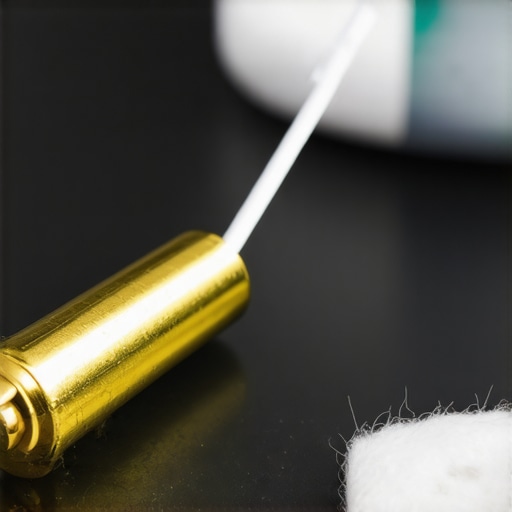
The Safe Way to Handle Gold Plating
Start by applying a tiny drop of your cleaner to a lint-free microfiber cloth or a high-quality cotton swab. I prefer the swabs with a pointed tip because they can get into the tight gaps of an RCA’s outer ring. Gently rotate the swab around the central pin and the outer petals of the connector. You will likely see the cotton turn a dark, nasty grey. That is the barrier that was standing between you and your music. I remember cleaning a set of old cables I bought at a garage sale; the cotton turned black immediately. When I plugged them back in, the soundstage opened up so much it felt like I had just upgraded my speakers. If you are also dealing with mechanical controls, you might want to learn how to fix a scratchy volume dial with electrical contact cleaner while you have the supplies out.
Apply Just Enough Pressure to Lift the Grime
The cable is only half the battle. Your amplifier or DAC has female RCA inputs that are just as prone to collecting dust. Since you cannot easily scrub the inside of a small hole, use a clean RCA plug as your tool. Apply a small amount of cleaner to the plug, then insert and remove it from the jack several times. This friction cleaning is a classic tech move. It is particularly important if you have noticed why your vintage receiver makes a loud hum with no music playing. Often, that hum is not a failing component; it is just a poor ground connection because the outer shell of the jack is covered in a layer of invisible film.
Clear Out the Dust Hiding Inside Your Jacks
If you are working with studio equipment, understanding the difference between balanced and unbalanced cables for home studios is vital, but the cleaning principle remains the same. Whether it is an XLR or a TS jack, 99% alcohol is your best friend. I once tried to rush this process on a vintage board and used a cheap drugstore alcohol that was too diluted. I did not dry it properly, and by the next day, a white crusty oxidation had formed. It took me hours with a tiny brush and how to fix a scratchy fader on a vintage audio mixer techniques to undo that five-minute mistake. Precision and patience are the only things that work here.It’s easy to get obsessive once you see how much dirt comes off a ‘clean’ cable. But here is the nuance most beginners miss: gold is a soft metal. Every time you wipe it, even with a soft cloth, you are performing a microscopic level of abrasion. I’ve met guys who clean their entire rack every Sunday morning like it’s a religious ritual. In reality, you are likely shortening the lifespan of your connectors. According to the research of Dr. Ragnar Holm, a legendary figure in contact physics and author of Electric Contacts, the physical wear from repeated insertion and cleaning can eventually bypass the protective layer of gold entirely. Once that happens, you’re left with base metals like nickel or copper that oxidize ten times faster than the gold ever would.
Why Cleaning Your Cables Every Week Is Actually a Mistake
The ‘Oops’ factor here is the saturation trap. I once saw a friend spray contact cleaner directly into the back of his amplifier. He thought he was being thorough, but the liquid seeped into the internal circuitry. Not only did it cause a short, but the residue actually started attracting household dust like a magnet. Within a month, he was wondering why his speakers were humming more than ever. The goal isn’t to leave the metal soaking wet; it’s to leave a molecularly thin film that protects the surface without creating a sticky trap for grime. 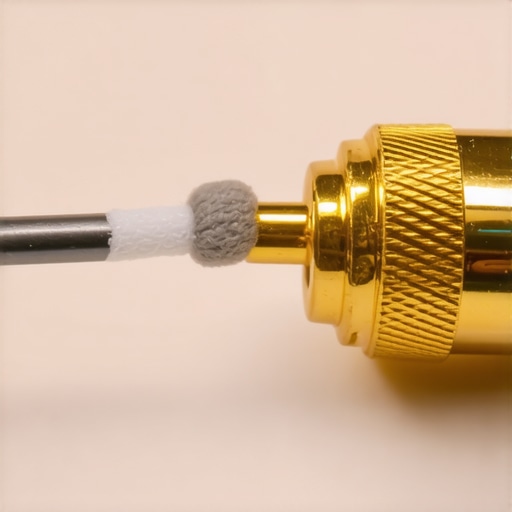
Is Your Contact Cleaner Helping or Just Hiding the Problem?
Many people use cleaner to mask a deeper issue. If your audio still sounds thin or ‘veiled’ after a proper cleaning, it might not be the connection at all. You might be blaming your RCA plugs for a situation where your speaker’s capacitor is starting to fail or your components simply aren’t matched well. I’ve seen enthusiasts spend hundreds on cleaning kits only to realize later that their high-end DAC sounds exactly like a laptop jack because of a ground loop elsewhere in the house. There is also a huge misconception about ‘contact enhancers.’ These are the oily liquids that claim to fill in the microscopic valleys of the metal to increase surface area. While they can work, if you apply them and then don’t touch your cables for two years, that liquid can polymerize. It turns into a sticky varnish that is nearly impossible to remove without the very abrasives I told you to avoid. If you use an enhancer, you’ve committed to a maintenance schedule. It is a trade-off: a tiny gain in conductivity for a massive increase in long-term maintenance needs. If you aren’t prepared to redo it every few months, stick to a dry, clean surface. Another common myth is that more gold means better sound. In truth, gold is used because it doesn’t corrode, not because it is the best conductor. Silver is actually more conductive, but it tarnishes. Most ‘audiophile’ cables use gold specifically for the set-it-and-forget-it nature of the metal. If you find yourself scrubbing gold until it shines like a mirror, you’ve already gone too far. High-quality plating has a soft, buttery luster. If you have vintage gear, you might also be looking at how to fix a scratchy volume fader on a professional mixer; just remember that the internal wipers in those faders are even more delicate than your RCA tips. Treat every surface like it’s irreplaceable, because on vintage gear, it usually is. Have you ever fallen into this trap of over-cleaning or misdiagnosing a dirty plug? Let me know in the comments below, because I’d love to hear how you handled it without losing your mind—or your gold plating.If you really want to graduate from the ‘weekend warrior’ phase of audio maintenance, you need to ditch the aerosol cans. I’ve switched almost exclusively to DeoxIT Gold pens for my connectors. Why? Because they allow for surgical precision that a spray simply can’t match. When you use a high-pressure spray, you’re basically shotgunning chemicals into internal gaps where they shouldn’t be, which is a leading reason why your vintage amp gets hot even when you aren’t playing music; those stray residues can create tiny conductive bridges on the circuit board that shouldn’t exist. A precision pen lets you target just the tip and the ring of the RCA plug, ensuring no excess liquid drips into your expensive chassis. 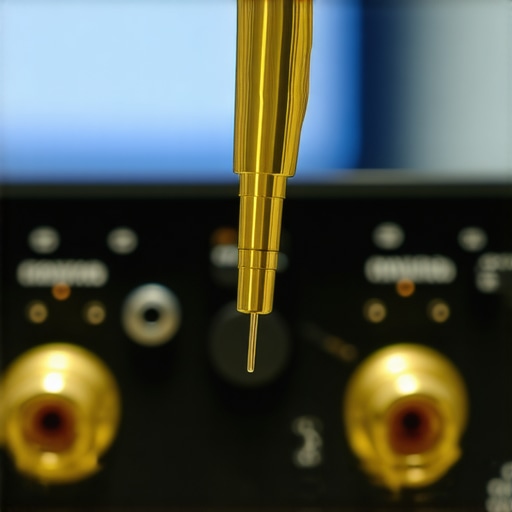
How Do I Maintain My Home Audio Over Time?
Beyond the external plugs, you have to look at the ‘biological’ health of your older gear. If you have speakers from the late 80s or 90s, you need to learn how to revive old speakers with new foam surrounds before they literally crumble into dust. Consistency is the real secret here. I do a ‘re-seat’ of all my connections twice a year—I simply unplug every cable and plug it back in. This physical motion wipes away minor oxidation buildup through friction without the need for any chemicals at all. While you are doing your seasonal checks, keep a close eye on your audio quality; if the bass starts sounding flabby or the high end loses its shimmer, it might be a sign your speaker’s capacitor is starting to fail.
Don’t Ignore the Physical Limits of Your Hardware
According to technical documentation from Neutrik, a global leader in professional connector manufacturing, a standard gold-plated contact is typically rated for only 1,000 to 2,000 mating cycles. If you’re a gear-swapper who changes cables every weekend, you’re hitting that physical wear limit much faster than you realize. Looking forward, I suspect we’ll see a shift toward self-healing molecular coatings and more robust wireless protocols that bypass the physical interface entirely. For now, however, we’re still stuck with metal-on-metal physics. If you want to see if your cleaning efforts actually made a tangible difference, I highly recommend learning how to use your phone to measure your room’s frequency response. Seeing a flatter response curve on a screen is the ultimate proof that your maintenance work isn’t just a placebo effect. If you’ve got an old receiver that feels stiff or noisy, take ten minutes to learn how to fix a scratchy volume knob on an old amp. You’ll be amazed at how much life is left in those old circuits once you clear the literal path for the signal. Go ahead and download a measurement app today—it’s the one tool that will tell you more about your system’s health than your ears ever could.[image_placeholder]
Hard Truths About Gold Plating I Learned the Expensive Way
After years of tinkering with everything from budget amps to high-end mono-blocks, I’ve realized that the small stuff really does matter. Here are the lightbulb moments that changed how I treat my gear:
- Humidity is the silent killer: Even if your gold is perfect, the air in your room can cause internal components to degrade. I’ve seen systems where the connectors were shiny but the owners didn’t realize their speaker’s capacitor was starting to fail because of moisture-related stress.
- Your fingers are acidic: Every time you touch a connector, you leave behind oils that slowly eat away at the plating. If you must touch them, wipe them down immediately.
- Cheap cables are once-and-done: Low-cost gold plating is often so thin that a single cleaning session can strip it. If you’re working with entry-level gear, sometimes the $20 upgrade that makes an old turntable sound like new is a better investment than a $50 cleaning kit.
- The clean sound myth: Cleaning won’t fix a bad circuit. If you still hear noise, you might actually need the $5 fix for humming speakers and ground loops instead of more chemicals.
The Maintenance Kit I Actually Use for My Setup
I’ve wasted a lot of money on generic electronics cleaners before finding what actually works. Here is my go-to toolkit for maintaining a pristine signal path:
First, I always keep a bottle of 99.9% Anhydrous Isopropyl Alcohol. It evaporates instantly and leaves zero residue, unlike the stuff from the pharmacy. Second, I rely on a Caig DeoxIT Gold Pen; it’s specifically formulated for plated metals and is much safer than the standard red version for high-end gear. Third, never underestimate the power of a simple high-end DAC to improve your desktop computer’s audio—sometimes the cleanest connector in the world can’t save a noisy motherboard output. Finally, a pack of industrial-grade pointed cotton swabs is essential for getting into those tiny RCA crevices where dust likes to hide.
Take the First Step Toward a Cleaner Signal
The most important thing I can tell you is not to let the fear of messing up stop you from maintaining your gear. Your amplifiers and speakers are designed to be used, but they also deserve a little respect. By spending just ten minutes twice a year to re-seat your cables and check for oxidation, you are ensuring that your investment lasts for decades rather than years. If you find that your controls are still acting up even after the plugs are clean, don’t panic—you can usually fix a scratchy volume knob on an old amp with the same basic supplies. Go ahead, pull your rack out this weekend and give those gold tips the gentle care they deserve. Your ears will thank you for the clarity. Have you ever noticed a specific hiss or hum disappear after a simple cleaning? Let me know in the comments below!