
I remember the first time I finally brought home a flagship Marantz. I had saved for months, trading in my old entry-level gear to finally step into the world of serious home theater. I hooked everything up, held my breath, and pressed the power button. *Click-clack.* My heart hit the floor. I was convinced I had just spent two months’ rent on a defective box that was short-circuiting right in front of me. I actually felt so defeated that I packed it back up and drove it to the shop, only to have the technician laugh—kindly, of course—and tell me that the click was the sound of the machine doing its job. I felt like a total amateur, but it was a massive lightbulb moment. Today, I’m going to settle your nerves and explain exactly why that expensive piece of equipment sounds like a mechanical stapler when you wake it up.
That Sharp Click is Actually Saving Your Speakers
The sound you are hearing is almost certainly an electromagnetic relay. Think of it as a physical gatekeeper sitting between your power supply and your precious speakers. When you first hit that power button, a huge rush of electricity—called inrush current—floods the system. If that current went straight to your drivers, you’d hear a massive, speaker-damaging ‘thump.’ By using a relay, the receiver waits a few seconds for the voltages to stabilize before physically snapping the connection shut to allow the audio through. Back when I was a novice, I didn’t even know how to tell if your amplifier has enough headroom for your speakers, let alone that it needed a physical gate to protect them. According to industry research from organizations like the Audio Engineering Society, these protection circuits are vital because even a small amount of DC leakage during startup can melt a voice coil in seconds. This isn’t just a quirk; it is a high-end safety feature that cheaper, all-in-one units often skip.
Is that mechanical sound a sign of a dying unit?
It is the most common fear I hear from new hobbyists. They think a ‘clean’ machine should be silent. But in the world of high-fidelity audio, mechanical sounds often indicate high-quality components. If your receiver suddenly *stops* clicking but the lights come on, you might be looking at a much bigger problem, like needing to know how to fix a receiver that wont turn on after a power surge. A silent startup in a high-current amp is usually a sign that the protection circuit has ‘tripped’ and refused to let power through to protect your gear. I once spent an entire afternoon troubleshooting a silent amp only to realize it was protecting itself from a stray wire strand. Have you ever had that heart-stopping moment where a new piece of gear made a noise you didn’t expect? If you’re hearing that click, take a deep breath. It means the internal brain of your system has run its diagnostic, found everything to be safe, and is giving you the green light to start the movie. If you notice your unit is making other noises, like a hum, you might want to investigate the real reason your amp is getting hot to the touch, as heat and noise often go hand-in-hand in a struggling system.If you hit that power button and the lights come on but that signature ‘click’ stays silent, your receiver is likely in protection mode. This is the machine’s way of going into lockdown to prevent a catastrophic failure. I once spent three hours trying to fix a ‘dead’ Denon for a friend, pulling my hair out and checking every menu setting, only to find a single, hair-thin strand of copper wire touching the back of the metal chassis. That tiny short circuit was enough for the internal brain to refuse to close the relay. If you’re hearing the click, you’re in the clear, but if you aren’t, you need to follow a systematic diagnostic to find the culprit before you assume the hardware is fried.
Why Silence is Actually Your Worst Enemy
When a high-end amplifier refuses to click, it usually means it has detected a ‘DC offset’ or a short circuit. Think of it like a surge protector that has tripped; it won’t let power flow until the danger is removed. The most common reason for this isn’t a broken internal part, but a mistake in your wiring. If you’re using thin, poor-quality cables, you’ll quickly realize why cheap speaker wire causes signal loss over 50 feet, which can force your amp to work harder and potentially trip that relay if the resistance gets too funky.
Look for Stray Copper Strands First
Unplug every single speaker wire from the back of the receiver. This is the ‘clean slate’ method. If the receiver clicks on while empty, you know the problem is in your cables or speakers. I cannot tell you how many times a ‘blown’ receiver was actually just a messy terminal job. Take the time to twist your wire ends tightly or, better yet, use banana plugs. This is especially true because why your bookshelf speakers need more power than you think often leads people to crank the volume too high, causing heat expansion that can push a loose wire into the neighboring terminal. 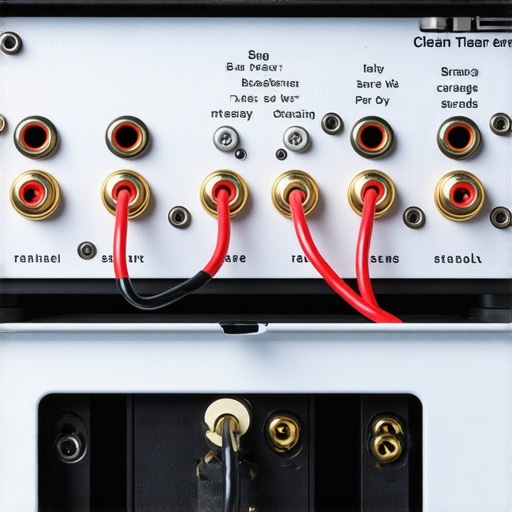
Test Your Drivers Without a Multimeter
If the receiver still won’t click even with the speakers disconnected, the issue might be internal, but if it clicks when empty and stops clicking once you add one specific speaker, that speaker has a short. Knowing how to use a 9v battery to check your speaker polarity is a life-saving trick here. By briefly touching the battery to the speaker wires, you can listen for a ‘pop’ from the driver. If you get no sound, or a grinding noise, that speaker is likely the reason your Marantz is refusing to wake up. I’ve seen people assume their receiver was dead when it was actually a hardware failure in the speaker itself; it’s vital to know how to spot a blown tweeter before it ruins your crossover.
Give Your Gear Some Breathing Room
Relays also act as a secondary defense against thermal meltdown. High-current amplifiers generate a massive amount of heat, and if they can’t breathe, the protection circuit will shut the ‘gate’ to prevent the capacitors from leaking. You can find out why your amplifier gets hot enough to burn your hand by checking the airflow around the top vents. I once tucked a flagship Marantz into a tight IKEA shelf with only an inch of clearance. Within twenty minutes, the clicking started—except this time it was the relay clicking *off* mid-movie. I had to install an external fan just to keep the protection circuit from panicking. If your gear is clicking off during use, it’s almost always a heat or impedance issue, not a defect in the machine itself.
I see it all the time in the audiophile community: people chasing a ‘pure’ signal by spending thousands on accessories that offer diminishing returns. One of the biggest myths I had to unlearn was the obsession with gold-plated everything. While it looks fancy, you should probably know why gold-plated connectors aren’t always better for your actual sound quality. Gold is great for preventing corrosion, but it is actually a less efficient conductor than silver or copper. If your connections are tight and clean, that shiny finish is more about aesthetics than acoustics. This leads into the ‘Oops’ factor that bites most beginners: the obsession with peak wattage. If you are shopping by the number on the box, you are likely being misled. It is far more important to understand the difference between peak and RMS power explained simply so you don’t accidentally pair a high-current receiver with speakers it can’t actually drive under load. I once blew a pair of vintage monitors because I assumed a ‘100W’ amp meant 100 clean watts; in reality, it was clipping at 40 watts and sending a squared-off wave of heat straight into my tweeters.
Does a higher damping factor actually improve your bass response?
This is a question that separates the casual listeners from the gearheads. Damping factor is essentially the amplifier’s ability to control the speaker cone after the signal stops. People assume a higher number means tighter bass, but according to research published in the Journal of the Audio Engineering Society, the impact of a high damping factor is significantly mitigated by the resistance of your speaker cables. This is exactly why cheap speaker wire causes signal loss over 50 feet—it’s not just about volume, it’s about the amp losing its grip on the driver’s movement. If you want that punchy, ‘dry’ bass, focus on shorter cable runs and better gauge rather than chasing an amp with a four-digit damping spec.
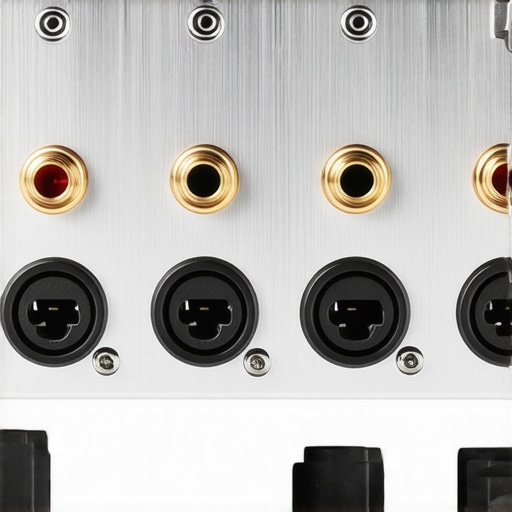
Another nuance most people miss is the jump to balanced connections. Many high-end Marantz or Denon units offer XLR inputs, and while they look professional, you need to understand the real performance benefit of using balanced XLR cables before you swap your whole loom. Unless you are running cables longer than 20 feet or living next to a radio tower, you likely won’t hear a difference. However, for those with high-impedance gear, finding the 50 amp that drives high impedance cans without a struggle can be a much bigger win for your budget than a fancy cable. We often get caught up in the ‘more is better’ trap—more watts, more gold, more expensive cables. But audio is a game of synergy. Have you ever fallen into this trap of buying gear based purely on the box’s wattage sticker or the price of the wires? Let me know in the comments. Real expertise comes from knowing where to spend your money to get the most headroom, not just the loudest click.
Once you’ve mastered the art of choosing the right power and cable synergy, the focus naturally shifts to longevity. I’ve seen beautiful, five-figure setups reduced to paperweights because of a simple lack of maintenance. My go-to weapon for keeping my gear in factory-fresh condition isn’t a fancy microfiber cloth, but a can of high-quality contact cleaner like DeoxIT. If you notice your speakers crackling when you turn the volume knob, or if you’ve spotted that dreaded ‘green gunk’ on your wires, you need to know how to clean green oxidization off your copper speaker terminals immediately. This isn’t just about looks; oxidation creates resistance, and resistance turns into heat, which can eventually trip the very protection relays we talked about earlier.
Don’t Let Your House’s Wiring Fry Your Amp
I learned the hard way that the power coming out of your wall isn’t always ‘clean.’ In my old apartment, every time the refrigerator compressor kicked on, I’d hear a tiny pop in my speakers. This kind of voltage fluctuation is a silent killer for the sensitive capacitors inside a Marantz or Denon unit. While a standard power strip is fine for a lamp, I always recommend a dedicated power conditioner or a voltage regulator for high-current gear. It’s a lot cheaper to buy a regulator than it is to learn how to fix a receiver that wont turn on after a power surge. If you’re serious about scaling your system, look at your power source first, not last.
How do I keep my vintage gear running like new for decades?
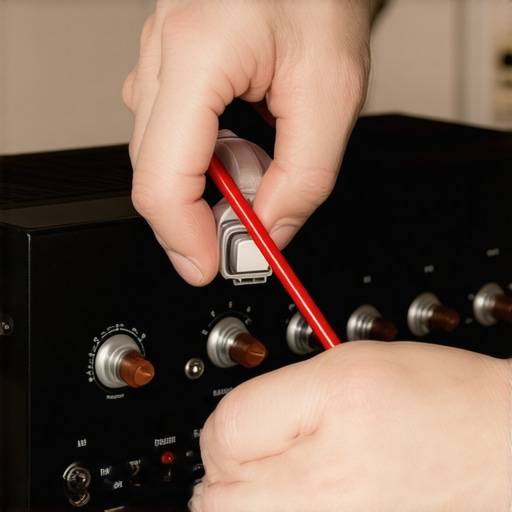
Maintenance is a different beast when you’re dealing with older equipment. For those of us who love the warmth of 70s and 80s silver-face receivers, the rubber components are usually the first to go. If you’ve scored a classic deck, you’ll likely need to learn how to revive a vintage turntable with a slipping belt before it will ever hold a steady RPM again. Likewise, speaker surrounds can become tacky or brittle over time. Knowing how to clean sticky speaker surrounds without damaging the rubber can save you from a full re-foaming job. As detailed in the Caig Laboratories D-Series application guide, the removal of surface oxides is crucial for preventing intermodulation distortion at the connection point; ignoring these tiny physical details is where most ‘blown’ gear stories actually begin.
The Future of Home Audio Protection
Looking ahead, I expect we will see more ‘smart’ protection circuits that don’t just click off, but actually send a notification to your phone explaining exactly which speaker is shorting out. We are already seeing this in pro-audio gear where internal DSP monitors real-time impedance. For now, however, we rely on those physical relays. If you want to avoid a service call, keep your phono preamp isolated—you should understand why your phono preamp needs to be far away from the power amp to avoid picking up electromagnetic hum that can stress your system at high volumes. I want you to go to your setup right now, unplug one speaker wire, and check for any stray hairs or oxidation. It’s a five-minute task that could save your amplifier’s life.
Over the years, I have come to realize that the ‘click’ of a protection relay is less of a mechanical noise and more of a conversation your equipment is having with you. It is the signature of a machine that cares about its own survival as much as it cares about your audio quality. When I first started, I panicked at every sound, but now I know that silence is usually the only noise that should actually keep you up at night.
Mistakes That Almost Cost Me a Flagship System
Reflecting on a decade of building home theaters, I have realized that most problems aren’t caused by the manufacturer, but by our own enthusiasm. Here are the hard truths I wish someone had told me when I bought my first amp:
- The ‘Clean Slate’ Test is King: If your receiver won’t turn on, always disconnect every single wire. If it clicks on while empty, your receiver is fine and your wiring is the culprit. This simple check saves hours of unnecessary stress.
- Oxidation is a Silent Killer: You might not see it, but a microscopic layer of ‘green gunk’ can increase resistance enough to trip a relay. Take the time to clean green oxidization off your copper speaker terminals at least once a year.
- Peak Wattage is a Distraction: I spent way too long chasing big numbers on the box. Real performance comes from stable current, and understanding the difference between peak and RMS power explained simply will stop you from over-driving your system into protection mode.
- Heat is Exponential: An amp that is ‘warm’ in an open rack can become ‘lethal’ in a closed cabinet. If you don’t give those relays room to breathe, they will eventually stay clicked off for good.
My Go-To Maintenance Kit for High-Fidelity Gear
Keeping a high-performance system running requires more than just a remote; it requires a few essential tools and resources that I never travel without. If you are serious about this hobby, these are the standards I trust:
First, always have a reliable way to check your hardware. If you’re hunting for used gear at a garage sale, knowing the best way to test a used receiver before you buy it will save you from bringing home a dead unit with a fused relay. Second, for those with older gear, there is a specific trick to making vintage speakers sound modern again that usually involves nothing more than cleaning the internal potentiometers and refreshing the solder joints on the output stage. #IMAGE_PLACEHOLDER_E# Third, I always keep a 9V battery in my drawer—it is the fastest way to check your speaker polarity and ensure your drivers are actually moving in the right direction. Finally, stop overspending on the wrong things; it is helpful to finally settle the debate on whether gold plated hardware is really worth the extra cash before you drop another hundred dollars on fancy binding posts.
Trust the Protection and Enjoy the Show
At the end of the day, your home audio deals and high-current amplifiers are designed to be enjoyed, not feared. That click is the sound of a carefully engineered safety net doing its job. Don’t be afraid to push your system, but do it with the knowledge of how to listen for the warning signs. When you treat your equipment with a bit of respect—keeping it cool, clean, and properly wired—it will reward you with decades of incredible sound. Now, go fire up your favorite record or movie, listen for that satisfying mechanical snap, and lose yourself in the music. Have you ever had a receiver that refused to click after a big storm or a move? Let me know in the comments below.