
I sat there in my driveway last February, breath visible in the air, feeling like my car was mocking me. Every time the kick drum hit, there was this sharp, plastic-on-plastic vibration coming from the passenger door. I was convinced I’d blown a driver. I even spent a miserable afternoon tearing the door panel off in 20-degree weather—a huge mistake, by the way, because I snapped two plastic clips that were as brittle as glass. If you’ve ever dealt with this, you know how frustrating it is when your gear behaves perfectly in July but sounds like a bucket of bolts in January. I’ve spent years chasing these ghosts, and today, I’m going to help you stop the noise without breaking your door panels like I did.
Why Winter Turns Your Car Audio Into a Rattle Box
The truth is, your car isn’t just a machine; it’s a collection of materials that react differently to the seasons. When the mercury drops, the plastics, adhesives, and rubber components in your doors and speakers contract and harden. That soft, flexible rubber surround on your woofer? It’s now stiff and resistant to movement. The plastic clips holding your door panel? They’ve shrunk just enough to create a tiny gap that allows for vibration. This is why you might be dealing with rattles even at low volume when the sun isn’t out to play. My biggest mistake early on was thinking I needed to replace everything immediately or, worse, cranking the volume to ‘warm up’ the speakers. In reality, most of these winter rattles are just physical parts complaining about the cold, not a sign of electronic failure. Cranking the volume when the components are stiff can actually cause permanent damage to the surround.
Is my speaker actually broken or is it just shivering?
It’s the question that keeps us up at night: do I need to spend three hundred dollars on a new set of components? Before you go shopping, you need to learn how to tell if your speaker is actually blown versus just reacting to the temperature. Cold-induced rattling is usually consistent with the beat and often disappears once the heater has been running for twenty minutes. According to research on thermal expansion coefficients, different materials in your car—metal, plastic, and rubber—shrink at different rates, which practically guarantees that things will loosen up in the winter. We’re going to look at how to identify these gaps and stop them for good. Have you noticed your sound quality changing the moment the first frost hits your windshield? It’s more common than you think. In the next section, we’ll dive into the specific trouble spots that love to buzz when the temperature dips, and I’ll show you how to dampen them without spending a fortune. If the noise is coming from the back of the car, you might also want to look into stopping your rear deck from rattling, as that’s a prime suspect for cold-weather vibration. Let’s get that cabin sounding like a concert hall again, regardless of what the thermometer says.
Identify the Rattles Before You Buy New Gear
To find the culprit, I use the ‘Pressure Test.’ While the music is playing at the volume where the rattle is most annoying, I start pressing my palm firmly against different parts of the door panel. Last winter, I found a buzz in my driver’s side door that sounded like a loose screw. I pressed the window switch housing—nothing. I pressed the map pocket—silence. It turned out the plastic trim around the handle had shrunk just enough to vibrate against the main panel. It’s like a loose tooth; once you find it, you can’t ignore it. If the rattle persists even when you press on the panels, the issue might be internal to the speaker or its mounting.
Use the Heater to Diagnose Component Stiffness
Before you start pulling things apart, let your car’s heater do the heavy lifting. Set it to the floor vents to warm up the bottom of the doors directly. If the rattle disappears after the cabin reaches a comfortable temperature, your speaker’s rubber surround was simply too stiff to move properly. If the sound remains muffled even after a long drive, you might be wondering why your car speakers sound like they are under a blanket. In cold climates, this is often caused by moisture behind the door card freezing into a thin crust on the speaker’s cone, which prevents it from vibrating freely.
Silence the Buzz with Cheap Foam Solutions
For most physical rattles, I swear by 1/8-inch closed-cell foam tape. I once spent a freezing Saturday afternoon lining the edges of my door clips with this stuff because the plastic-on-plastic contact was driving me insane. Foam tape acts as a microscopic shock absorber, preventing those hard surfaces from meeting. It’s the same acoustic logic behind why your speaker stands need to be filled with sand; you’re looking to kill resonance and add stability where there was once movement. Just a few strips around the mounting ring of the speaker can make a budget system sound like a professional install.
Secure Your Internal Wiring Harnesses
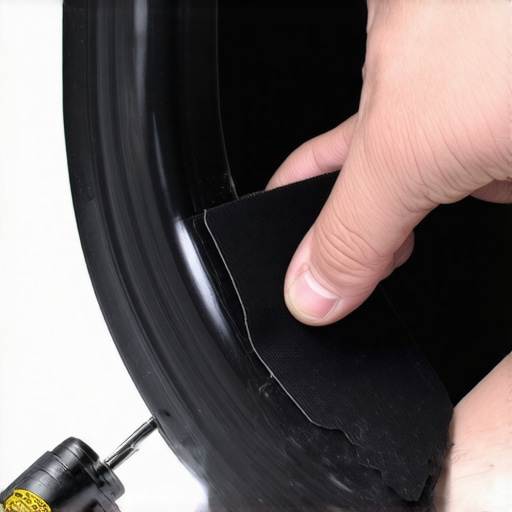
In the winter, the wiring inside your doors becomes as rigid as a dry twig. Every time your woofer moves, those stiff wires can slap against the metal door skin or the plastic panel. I’ve seen people use the same logic they use to hide power wires in your trunk to secure these internal cables. Use zip ties or Tesa tape to bundle them together and anchor them to the door’s frame. This prevents the cables from dancing around when the bass hits. If you still hear a rhythmic ticking or hum that changes with the engine speed, you might need to learn how to properly ground a car amplifier to eliminate engine hum, as cold can compromise old ground points by increasing electrical resistance.
Stop Mechanical Creaks and Squeaks
Sometimes the noise isn’t coming from the speaker at all, but from the moving parts around it. Cold weather is notorious for making plastic hinges and clips moan. Just like audiophiles often have to figure out how to stop your high-end headphones from creaking when you move, you can use a dry silicone spray on your door’s window tracks and trim clips. This provides just enough lubrication to let the materials expand and contract without the audible friction. If you’re hearing a lower-frequency vibration that feels like it’s coming from your seat or floor, you might be dealing with a ground loop; checking out the $5 fix for humming speakers and ground loops can save you hours of unnecessary troubleshooting.
One of the most frequent mistakes I see in the audio world is the ‘upgrade paradox.’ People often assume that because a speaker costs more, it must perform better in their specific environment. However, many high-end speakers are designed with the assumption that they will be paired with a powerful external amplifier. If you’re still running off the factory head unit, those ‘premium’ speakers might actually be less efficient than the paper-cone units they replaced. This is why your car’s factory speakers sound better than your new cheap ones in many entry-level installs. Factory units are often 2-ohm drivers designed to squeeze every bit of volume out of a 15-watt internal amp. Replacing them with 4-ohm aftermarket speakers effectively cuts your power in half before you’ve even started, leading to a thin and disappointing sound profile.
Beyond power issues, there is the silent killer of car audio quality: phase cancellation. When you’re fumbling with wires in a cramped door cavity, it is incredibly easy to accidentally flip the positive and negative terminals on just one side. You won’t hear a pop or a hiss, but your bass will simply vanish because the speakers are physically fighting each other—one pushing while the other pulls. I’ve seen people spend hundreds on sound deadening to fix a ‘lack of bass’ when the real issue was just two swapped wires. You absolutely must know how to tell if your speakers are out of phase in 30 seconds. It’s the difference between a system that thumps and one that sounds like a tinny cell phone speaker. 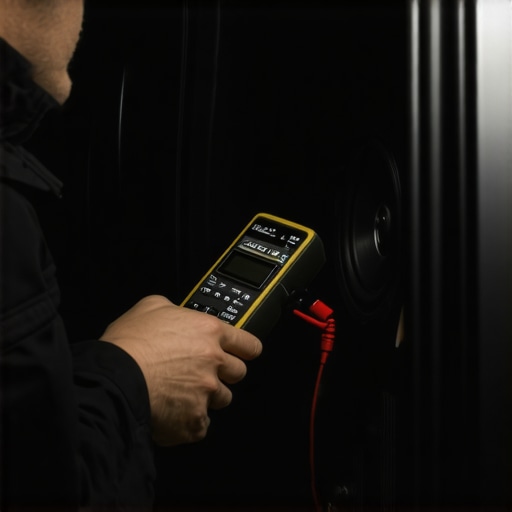
Does your amplifier have the headroom you actually need?
The concept of headroom is often misunderstood as just having ‘extra volume,’ but it is actually about maintaining signal integrity during dynamic peaks. When an amplifier reaches its limit, it ‘clips’ the peaks of the waveform, which produces significant heat and non-linear distortion. Research published by the Audio Engineering Society (AES) highlights how clipping is often the primary cause of tweeter failure, rather than ‘too much power’ as many enthusiasts believe. Understanding how to tell if your amplifier has enough headroom for your speakers is vital for long-term reliability and sonic clarity. If you find your amp is constantly hitting its ceiling, you might need to reconsider the secret to choosing the right ohm rating for your amp to optimize power delivery and prevent thermal shutdown.
Finally, we need to address the ‘break-in’ myth that claims you need 100 hours of pink noise to make gear sound right. While it is true that the spider and surround of a driver become slightly more compliant after initial use, the shift in resonant frequency is usually minor. Most of what you’re hearing is your brain’s psychoacoustic adaptation to a new frequency response. If you want to be safe, though, learn how to properly break in new headphones without using white noise to avoid unnecessary stress on the components. Have you ever fallen into the trap of buying ‘better’ gear only for it to sound worse? Let me know in the comments.
Speaking of things going wrong, the most important tool I own isn’t a screwdriver—it’s a can of electrical contact cleaner. I personally keep a bottle of DeoxIT D5 in my kit because I’ve seen too many people replace entire receivers when all they had was a dusty potentiometer. If your volume knob makes a ‘scrubbing’ noise through the speakers, you don’t need a new amp. You need to learn how to fix a scratchy volume dial with electrical contact cleaner. It’s a five-minute fix that saves hundreds of dollars. According to the technical service archives at Hifi Engine, sulfur-based oxidation is the silent killer of vintage and modern analog controls alike, and a quick spray is often the only ‘repair’ required to restore full signal integrity.
How do I maintain my audio gear over the long haul?
Maintenance isn’t just about cleaning; it’s about monitoring the health of your connections and components. Every six months, I grab my digital multimeter. I use it to verify that my speakers are still reading the correct resistance at the terminal. If a 4-ohm driver is suddenly reading 12 ohms, I know a connection is corroded or a voice coil is failing. This is especially vital when you need to match your car subs impedance to your amplifiers output to prevent the amp from overheating. 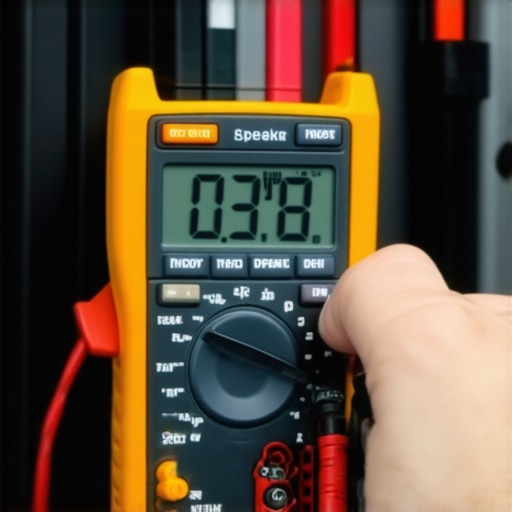 In the car, I also check my ground points. Salt and moisture from winter can creep into your chassis, increasing resistance and bringing back that dreaded noise. If you start hearing a whistle that follows your RPMs, you should probably revisit how to properly ground a car amplifier to eliminate engine hum before you blame the alternator.
Protecting your gear from the elements is the other half of the battle. If your car sits in the driveway, the sun is slowly cooking your speaker surrounds and fading your grilles. I’ve had success with specialized UV protectants, but if the damage is already done, you can actually learn how to restore a sun-faded speaker grille to look new again with a simple fabric dye or high-quality trim paint. For those with high-end home setups, watch out for the ‘sticky’ texture on older rubber surrounds. It’s a sign of polymer breakdown, but you can often save them if you know how to clean sticky speaker surrounds without damaging the rubber using non-petroleum-based cleaners.
Looking ahead, I suspect we are going to see a massive shift toward graphene-infused materials and self-calibrating DSPs that can detect hardware degradation and adjust the output to compensate. Until then, the best thing you can do is avoid the mistake that kills your portable speaker battery life by avoiding deep discharge cycles. I want you to try this: this weekend, take five minutes to tighten every speaker wire terminal in your setup. You’ll be surprised how many have vibrated loose over time. It’s a simple act of maintenance that keeps the ‘shivering’ and ‘rattling’ at bay for good.
Lessons from a Frozen Driveway: What I Wish I’d Known
After a decade of chasing buzzes, I’ve realized that car audio in winter is a game of patience rather than brute force. First, never—and I mean never—pry at a plastic panel when it’s below freezing without warming the cabin first; those clips will snap every time. Second, I learned that sometimes your car speakers sound better with the windows up not just because of the acoustics, but because the seals provide the necessary tension to keep panels from vibrating. Finally, if you smell something odd while testing your bass in the cold, you need to know how to fix a car subwoofer that smells like it is burning, as the stiff coils generate heat much faster when they can’t move freely. It’s better to let things thaw than to force a repair and double your workload.
The Gear I Keep in My Glovebox for Audio Emergencies
You don’t need a professional shop to maintain your system if you have the right basic toolkit. I personally rely on three simple things that have saved my gear more than once. First, a can of electrical contact cleaner is non-negotiable for fixing scratchy dials and cleaning grounds. Second, I always carry a roll of Tesa tape for bundling wires that have gone stiff in the cold. Third, keep a basic digital multimeter handy. If you’re getting electrical interference, it helps you determine why your car alternator is making your speakers whine by checking for voltage drops across your grounding points. These tools have saved me more money than any expensive ‘premium’ upgrade ever did.
Take Back Your Cabin This Winter
Don’t let a few rattles or a bit of shivering plastic ruin your morning commute. Your car audio system is a living, breathing thing that reacts to the world around it, and with a little bit of foam tape and some heater time, you can keep it sounding pristine all season long. There is something incredibly rewarding about finally silencing that one persistent buzz and hearing the music exactly as it was meant to be heard without the ‘plastic-on-plastic’ accompaniment. Grab your tools, warm up the car, and start hunting those winter ghosts today. Have you ever spent hours chasing a rattle only to find out it was something completely unexpected like a loose coin or a seatbelt clip? Let me know your funniest ‘mystery noise’ stories below!