
I remember the exact moment I realized my car’s audio was failing me. It was a humid Tuesday evening, and I had just spent a small fortune on what I thought was a top-tier system. I cranked the volume, expecting a concert-hall experience, but instead, I got a sound so dull it felt like I was listening to my favorite band through a thick, wet wool blanket. It is a frustrating, hollow feeling. You have paid for the car, or maybe even for the upgrades, and yet the vocals are trapped somewhere deep behind the dashboard, and the cymbals have absolutely zero sparkle. Today, I am going to help you peel that metaphorical blanket off. We are going to look at exactly why this happens and how you can get that crisp, airy sound back without necessarily tearing your whole interior apart. Have you ever sat in your driveway, fiddling with the equalizer for twenty minutes, only to feel like nothing changed?
Stop Blaming the Hardware and Look at the Environment
Early on in my DIY journey, I made the classic mistake of thinking more power solved everything. I actually ended up in a situation where my new cheap speakers sounded worse than the factory ones because I did not understand sensitivity ratings. Sometimes, the “blanket” is not the speaker itself; it is a simple mechanical blockage or a settings mismatch. For instance, did you know that even something as simple as moisture behind a door panel can kill your high-end response? I have seen cases where people thought their gear was toast, but they just needed a simple five-dollar fix after a car wash to restore the clarity.
Is Your Brain Just Playing Tricks on You?
According to research published by the Audio Engineering Society, high-frequency sound waves are incredibly delicate and directional, meaning even a slight obstruction from a floor mat or a poorly placed knee can absorb up to 10 decibels of treble. If you are also dealing with other weird noises, like trying to get rid of the hiss in a budget amp, you know how these small issues stack up until the music just is not fun anymore. We need to identify if the issue is a physical barrier or an electronic bottleneck before we start spending money on replacements.
Get Those Tweeters Out of the Shadows
High-frequency sound waves are the divas of the audio world; they refuse to perform if anything is in their way. While mid-bass can punch through a seat cushion, treble is easily swallowed by carpet, thick plastic, or even a poorly placed dashboard ornament. I once spent an entire Saturday morning recalibrating an Alpine setup because the vocals sounded like they were coming from the trunk. After three hours of frustration, I realized my passenger had stuffed a thick sunshade into the door pocket, completely blocking the tweeter. It was a humbling lesson in physics. If your high-end is missing, check your line of sight first. If you find your speakers are physically vibrating against the door card, you should look into the easiest way to fix a rattling speaker grill for good to ensure those vibrations aren’t muddying the delicate high frequencies.
Stop Fighting the Factory EQ Safety Settings
Modern factory head units are programmed with a ‘safety’ curve. As you turn up the volume, the internal processor automatically cuts the bass and treble to prevent the cheap paper cones from shredding. This is often why your car speakers sound thin when you turn up the treble—the car is literally protecting itself from you. To bypass this, you need to set your head unit to a flat EQ and do your boosting at the amplifier level if possible. If you are using a budget setup, be careful not to introduce noise; I’ve spent many nights figuring out how to get rid of the annoying hiss in a budget car amp because I pushed the gain too high trying to compensate for a muffled signal. 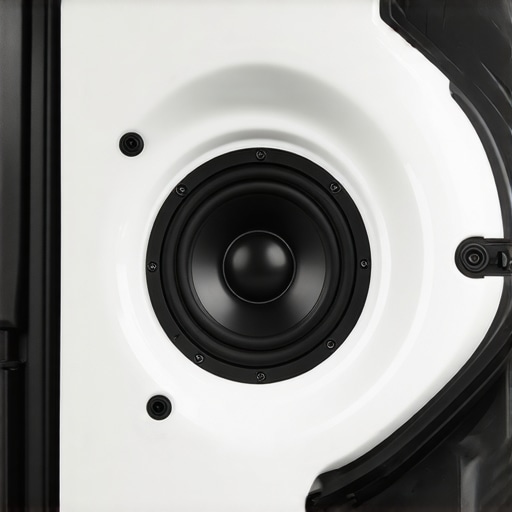
Use the Paper Test to Hunt Down Bass-Killing Air Leaks
A muffled sound isn’t always about the treble; sometimes, it’s a lack of ‘snap’ in the mid-bass caused by air leaks. Speakers work by creating pressure. If air is escaping through a hole in your door panel or a gap in the speaker mount, the wave cancels itself out. You can actually use the simple paper test for finding air leaks in your speaker cabinet or door mounting area to see if the seal is tight. Hold a thin strip of tissue near the speaker edge while it plays a low-frequency tone; if the paper flickers wildly, you’re losing your punch to a gap.
Check for Blown Tweeters and Signal Headroom
If the sound is consistently dull regardless of volume, you might be dealing with hardware failure rather than a settings issue. It is vital to learn how to spot a blown tweeter before it ruins your crossover, as a dead silk dome will leave you with nothing but muddy midrange. Finally, ensure your system isn’t just straining. Knowing how to tell if your amplifier has enough headroom for your speakers is the difference between a crisp, effortless performance and a compressed, muffled mess that feels like it’s struggling to breathe.Let’s dig deeper into the stuff the sales brochures won’t tell you. Everyone says you need a better source or a higher-resolution file, but I have found that spending money on a high-end DAC is often the last thing you should do. In fact, understanding why your high-end DAC sounds exactly like your laptop’s headphone jack is a reality many enthusiasts refuse to face until they have already wasted hundreds of dollars. The bottleneck is rarely the digital conversion in a modern car; it is the physical components and how they interact with the aging electronics in your signal chain.
The Invisible Component That Slowly Kills Your Clarity
If you are running gear that has seen a few summers, you might be fighting a losing battle against chemical degradation. Electrolytic capacitors in your crossovers and amplifiers have a finite lifespan. As they age and dry out, their capacitance values drift, causing your high-pass filters to shift their crossover points. Knowing how to tell if your speakers’ capacitor is starting to fail is essential for anyone maintaining a high-fidelity system. A failing cap won’t just stop the sound; it will slowly roll off the very frequencies that provide ‘air’ and ‘shimmer,’ leaving you with that frustratingly dull response.
Why Does My High-End Gear Sound Flat in a Perfect Room?
Even in a space you have treated for acoustics, the way your components handle interference matters. A common ‘trap’ is assuming that standard RCA cables are enough for complex, high-power builds. If you are dealing with a long run of cable and notice a faint buzz or a subtle loss of micro-detail, you should investigate the real performance benefit of using balanced XLR cables to ensure your signal stays shielded from the electromagnetic chaos under your dashboard. According to research published in the Journal of the Audio Engineering Society, electromagnetic interference (EMI) can significantly raise the noise floor, masking the delicate high-frequency harmonics that our brains perceive as ‘clarity.’ #IMAGE_PLACE_HOLDER_C#
Stop Starving Your Speakers of Current
The biggest ‘oops’ factor I see in DIY car audio is the ‘power mismatch’ myth. Most people believe they only need a few watts for normal listening, but why your bookshelf speakers need more power than you think—and the same applies to car components—is all about transient peaks. When a drummer hits a snare, the power demand spikes instantly. If your amp lacks the current to follow that wave, it clips or ’rounds off’ the peak. This soft-clipping is the primary culprit behind a muffled, ‘squashed’ sound. You must verify how to tell if your amplifier has enough headroom for your speakers to handle those dynamics without choking. If your amp is struggling, no amount of EQ will bring that sparkle back. Have you ever fallen into this trap of buying high-end speakers only to have them sound worse because of a weak amp? Let me know in the comments.If you have already solved the power issues and cleared the physical blockages, you are about halfway to audio nirvana. But here is the part most people ignore until it is too late: entropy. Electronic and mechanical components are constantly fighting a war against heat, dust, and time. I have seen magnificent setups turn into muffled paperweights simply because the owner didn’t spend ten minutes a year on basic maintenance. For example, if you have a vintage receiver or an older car amp, you might notice the volume knob starts to crackle when you turn it. Instead of tossing the unit, you can usually fix a scratchy volume dial with electrical contact cleaner in under five minutes. It is about preserving the signal path from the moment it leaves your source to the second it hits your ears.
How do I keep my audio system sounding like day one?
Maintaining long-term clarity starts with the connections. Over time, moisture in the air causes a thin layer of non-conductive material to build up on your plugs. I make it a habit to clean green oxidization off your copper speaker terminals every six months using a dedicated electronic cleaner or even a high-grit abrasive if things have gotten really bad. This ensures that the delicate high-frequency information we talked about earlier doesn’t get throttled by resistance at the cable tip. If you are a headphone enthusiast, you should also be proactive about why your headphone pads are flaking and how to prevent it, as crumbling pads don’t just look bad—they ruin the acoustic seal and kill your bass response. 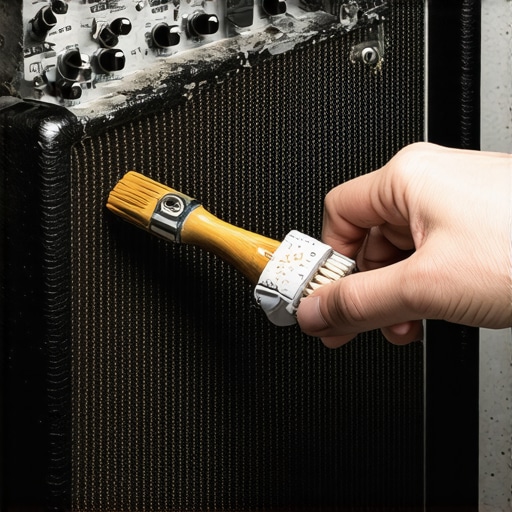
Rescue Your Speakers from Environmental Stress
Speakers are essentially living, breathing machines. The rubber or foam ‘surround’ that connects the cone to the basket is the most vulnerable part of the system. In dry climates, these can crack; in humid ones, they can become ‘tacky’ or sticky. I have found that learning how to clean sticky speaker surrounds without damaging the rubber can extend their life by a decade. If you catch a problem early, you can even learn how to fix a small rip in a speaker surround with glue, saving yourself from a costly reconing job or a full replacement. According to technical white papers from Mundorf EB GmbH, the Equivalent Series Resistance (ESR) in capacitors can double over ten years of heat exposure, which is why keeping your gear ventilated is the best ‘tool’ you have.
Small Tweaks for Massive Gains
Beyond just cleaning, there are mechanical ‘hacks’ that change the way sound moves through your room. For example, if your home theater feels a bit muddy, you would be shocked at how the reason your speaker stands need to be filled with sand relates to vibration damping and clarity. It is all about mass. Similarly, if your gear is looking a bit tired, knowing how to restore a sun-faded speaker grille to look new again can bring back that premium feel without spending a dime on new equipment. I suspect the future of home audio isn’t just bigger speakers, but the rise of GaN (Gallium Nitride) technology in amplifiers. These chips run cooler and handle power surges more efficiently than traditional silicon, meaning our future gear might actually outlast us for a change. My challenge to you: find that one old receiver or speaker you sidelined because of a ‘scratchy’ sound and try the contact cleaner trick today. You might just find your new favorite piece of gear was already in your closet.
My Hardest Lessons in the Pursuit of Crisp Highs
After years of trial and error, I’ve realized that the most expensive gear can’t fix a poor foundation. First, never underestimate the power of a clean signal path; I’ve seen enthusiasts replace entire amps when they just needed to clean green oxidization off your copper speaker terminals. Second, be wary of ‘vampire’ draws. I once blamed a head unit for poor performance only to find why your cars aftermarket radio is draining your battery overnight was the real reason my voltage—and clarity—was dropping. Finally, if you are working with older equipment, remember that the trick to making vintage speakers sound modern again often involves replacing those aging capacitors we talked about earlier.
#IMAGE_PLACEHOLDER_E#
The Essential Kit for Hunting Down Audio Gremlins
To keep your system in peak condition, you don’t need a workshop full of professional gear, but you do need these three items. First, a can of high-quality contact cleaner; it is the easiest way to fix a scratchy volume dial with electrical contact cleaner before you decide to throw away a perfectly good receiver. Second, keep some speaker-safe adhesive on hand; knowing how to fix a small rip in a speaker surround with glue can save you hundreds on replacements. Lastly, invest in some basic sound deadening; it is vital to learn how to stop your cars rear deck from rattling with heavy bass so that the low-end vibration doesn’t mask your delicate high-frequency information.
Your Journey to Better Sound Starts Today
The road to a perfect audio experience is paved with small, deliberate adjustments rather than big, impulsive purchases. Whether you are dealing with a complex home theater or a high-end car setup, the principles remain the same: clear the path, feed the power, and maintain the hardware. You now have the tools and knowledge to finally hear the music as it was meant to be heard. Don’t let a muffled sound ruin your favorite tracks any longer. Have you ever spent hours tuning your system only to realize the problem was a simple physical blockage like a floor mat? Let me know in the comments below!