
It was a humid Friday night, the kind where the air feels like a wet blanket, and I was finally headed home after a grueling twelve-hour shift. I cranked the volume on a live blues recording, expecting soulful grit, but instead, I got a whistle that sounded like a tea kettle hitting its boiling point. Every time I stepped on the gas, the whistle climbed in pitch, perfectly mimicking my engine’s RPMs. It was maddening. I remember pulling over into a dimly lit gas station, popping the hood, and staring at my engine as if the solution would just jump out at me. I’d just spent my weekend installing a new setup, and instead of audio bliss, I had a passenger-side tweeter that sounded like a disturbed mosquito. If you have ever felt that sinking feeling in your chest when your expensive gear sounds like a broken toy, you are in the right place. We are going to silence that screech today by tracking down the electrical ghosts in your dashboard.
That High-Pitched Screech Isn’t Part of the Song
When you hear that signature whining noise, your speakers aren’t actually broken; they are just being too honest. They are picking up and amplifying electrical ‘trash’ from your car’s charging system. Your alternator is a mini power plant, spinning at thousands of revolutions per minute to keep your battery topped off. According to the engineering team at Electronics Notes, even high-quality alternators produce a small amount of AC ‘ripple’ because the conversion from alternating current to direct current is never 100% perfect. In a healthy system, this ripple is filtered out, but when things go sideways, that ripple leaks into your signal path. I made the classic rookie mistake of thinking my amp was just cheap, so I tried to get rid of the annoying hiss in my budget car amp by cranking the gain, which only made the whine louder than the music itself. Usually, this happens because your power cables and your audio cables are acting like antennas for each other, or your ground connection is weak. Have you ever spent an entire afternoon tearing your door panels off only to realize the problem was a single loose bolt under the seat? Let me know in the comments if you’ve been there!
Is my car’s electrical system just too old to fix?
It is a common fear that a whining speaker means your car is falling apart or that you need a master’s degree in electrical engineering to solve it. I used to think I needed to replace my entire wiring harness just to get clean audio. The truth is much more encouraging. Most of the time, the fix is as simple as moving a wire a few inches or cleaning some paint off a grounding point. You don’t need a brand-new car; you just need to know how to properly ground a car amplifier to eliminate engine hum. Sometimes the noise is so bad it makes your car speakers sound like they are under a blanket, but once we isolate the interference, the clarity comes rushing back. We are going to look at the three most common culprits today, starting with the one that 90% of people overlook.
Kill the Interference at the Source
Think of your car’s electrical system like a noisy highway. Your RCA cables—the ones carrying the music—are like a sensitive microphone trying to pick up a whisper while standing right next to a semi-truck. If you run your power wire (the truck) directly alongside your signal cables (the whisper), that electrical noise leaks through. I once spent a whole Saturday tearing apart a 2005 Civic because of a persistent whistle that changed with the gas pedal. I finally realized I’d zip-tied my RCAs directly to the main wiring harness under the carpet. By simply rerouting the signal cables down the driver’s side and keeping the power on the passenger side, the ‘mosquito’ in my speakers died instantly.
Separate Your Cables Like Bitter Rivals
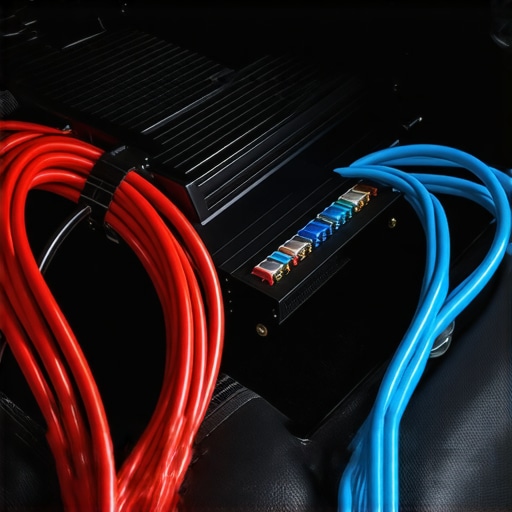
The first rule of car audio is physical distance. High-voltage power cables generate a magnetic field that wreaks havoc on low-voltage audio signals. If they must cross paths, make sure they do so at a 90-degree angle. Never let them run parallel for more than a few inches. This simple geometry trick prevents the alternator’s AC ripple from jumping ship into your music stream. This is especially important if you are already dealing with external factors; for example, if your car door speakers rattle even at low volume, adding electrical interference on top of physical vibrations will make your cabin feel like a construction site.
Sanding Down to Shiny Metal
Your amplifier needs a path back to the battery, and a weak ground is the number one cause of engine noise. Most people just screw the ground wire into the nearest piece of metal and call it a day. That doesn’t work because paint is an insulator. You need to grab some sandpaper and scrub that spot until it looks like a mirror. If you don’t know how to properly ground a car amplifier to eliminate engine hum, you are basically inviting the alternator to use your speakers as a dumping ground for excess electrical noise. A loose or painted ground point creates resistance, and that resistance is where the whine thrives.
Stop Using the Gain Knob as a Volume Dial
Another culprit is gain overlap. Many people treat the gain knob on the amp like a volume control, but it’s actually a sensitivity adjustment. When you crank it too high, you aren’t just making the music louder; you’re lowering the ‘noise floor,’ which makes that tiny bit of alternator whine sound like a jet engine. You need to ensure you how to tell if your amplifier has enough headroom for your speakers without forcing the gain into the red. Over-driving your amp doesn’t just cause noise; it’s a primary reason how to fix a car amplifier that keeps shutting off in summer becomes a necessity due to thermal protection kicks.
Isolate the Internal Ground Loop
If you’ve separated the wires and perfected the ground, but the whistle persists, you might have a ground loop within the head unit itself. This often happens with older aftermarket radios. A ground loop isolator is a small, inexpensive transformer that goes between your radio and your amp. It physically breaks the electrical connection while letting the audio signal pass through, effectively ‘bleeding off’ the noise. Before you buy one, check your connections; occasionally, a high-pitched distortion isn’t electrical at all, but a sign of hardware failure. Knowing how to spot a blown tweeter before it ruins your crossover can save you from chasing electrical ghosts when the problem is actually a shredded silk dome.
Why Expensive Cables Won’t Save a Bad Ground
Everyone tells you to buy the thickest, most expensive ‘oxygen-free’ RCA cables you can find to block out the noise. In my experience, that is often a waste of money. While shielding matters, even the best cables cannot stop a ground loop if your potential difference is off. It is a lot like why your high-end DAC sounds exactly like your laptops headphone jack when the electrical foundation is shaky. If the return path for the current is compromised, those ‘premium’ accessories are just an expensive band-aid on a broken bone. I once saw a guy spend five hundred dollars on silver-plated interconnects, only to find the noise vanished when we used a five-cent star washer on his ground bolt.
The Trap of the Secondary Ground Loop
The biggest ‘oops’ factor I see in DIY installs involves the engine-to-chassis ground. You can sand your amplifier ground until it is a mirror, but if the engine—where your alternator is mounted—has a corroded ground strap to the frame, you have a bottleneck. The engineering experts at the Society of Automotive Engineers (SAE) emphasize that electromagnetic compatibility (EMC) is as much about the integrity of the return circuit as it is about the supply. If that main strap is weak, your amplifier might actually try to pull its ground through your RCA cables, which is a fast track to frying your head unit’s internal fuses. Have you ever fallen into this trap? Let me know in the comments. 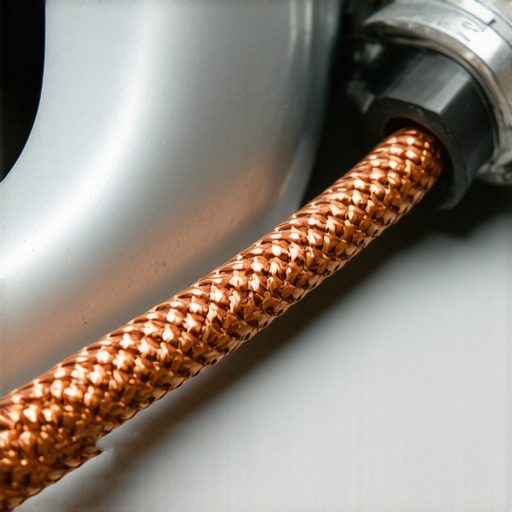
Can high-res files actually make electrical noise more noticeable?
It sounds like a paradox, but high-fidelity audio can sometimes make your system’s flaws more apparent. When you play a low-quality stream, the file itself has a limited dynamic range that often masks subtle hums. However, when you switch to lossless tracks, the increased sensitivity can expose hardware artifacts. This is often why your speakers sound harsh when you play high-res files; you are finally hearing the full frequency spectrum, including the high-frequency ‘jitter’ caused by your alternator. Before you blame the recording, double-check your phasing. It only takes a second to learn how to tell if your speakers are out of phase in 30 seconds, ensuring that your speakers are working with each other rather than fighting the electrical noise.
Once you have isolated the noise, the battle isn’t necessarily over; it is just shifting to a strategy of prevention. I’ve seen countless setups that sound like a dream in May but start clicking and popping by December. Most of the time, this happens because the owner forgot that a car is a harsh, vibrating environment that loves to loosen screws and oxidize metal. If you want to keep that silence between tracks, you need to get proactive about the physical health of your wiring. I personally make it a habit to check my main power lugs every time I change my oil. It sounds overkill, but heat cycles in the engine bay can cause terminal expansion, which leads to tiny gaps where moisture enters. If you don’t know how to clean green oxidization off your copper speaker terminals, you are eventually going to face a signal drop that no amount of gain can fix. Scrubbing those connections back to a bright copper shine ensures that the resistance stays low and the alternator noise stays out.
Don’t Let Your Connections Rot
Vibration is the silent killer of great audio. I remember a buddy of mine whose system would sporadically cut out only when he hit the freeway. We spent hours testing his amp until we realized a crimp connector had vibrated loose behind the dash. This is exactly why your car speakers cut out when you hit a bump; it is rarely the speaker itself and almost always a physical connection failure. I now use marine-grade heat shrink on every single connection I make. It creates a weather-tight seal that prevents the ‘green death’ of oxidation from creeping up into the wire strands. If you are using a head unit with physical knobs, a quick blast of specialized spray can prevent future headaches. Knowing how to fix a scratchy volume dial with electrical contact cleaner is a five-minute job that can save you from replacing an expensive receiver just because of a bit of dust buildup inside the potentiometer.
How can I keep my car audio system sounding crisp for years?
Maintenance isn’t just about cleaning; it’s about monitoring the load on your battery. High-power systems put an immense strain on the factory charging system. According to technical documentation from AudioControl, maintaining a high signal-to-noise ratio requires a stable voltage floor; if your voltage drops below 12.6V while the car is running, your amplifier’s power supply has to work harder, which often sucks in more electrical noise. Keep an eye on your battery terminals for white powdery buildup. If your electronics are acting strange, check why your cars aftermarket radio is draining your battery overnight, as a slow drain can weaken the battery’s ability to act as a giant capacitor for your audio system. Also, during the hotter months, be mindful of heat soak. If you’ve had to learn how to fix a car amplifier that keeps shutting off in summer, you already know that airflow is just as important as the wiring itself. I like to use a small 12V computer fan to pull air across my amp rack if I’m running it hard in a trunk.
The Essential Toolkit for Any Audiophile
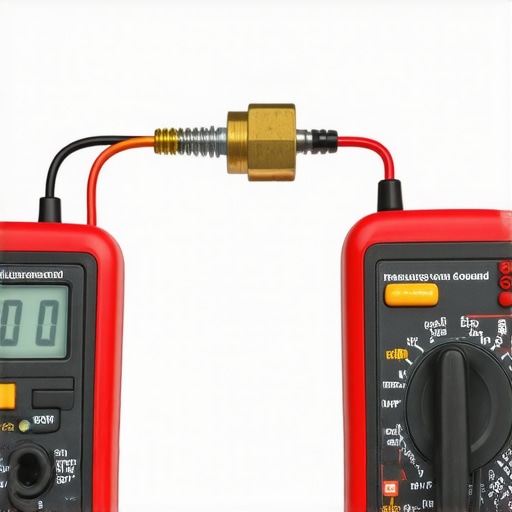
If you’re serious about this hobby, put down the test light and buy a decent digital multimeter. A multimeter allows you to measure ‘AC ripple’ directly at your amplifier’s power terminals. If you see more than 0.1 volts of AC, your alternator’s internal diodes are likely failing, and no amount of grounding will fix that. I also highly recommend keeping a dedicated ‘burn-in’ track on a USB stick to test for clipping. If you smell something sweet and acrid, you need to know how to fix a car subwoofer that smells like it is burning before the voice coil melts into a paperweight. Looking ahead, I predict that traditional analog RCA cables will eventually be phased out in high-end car builds in favor of Toslink or proprietary digital links like A2B (Automotive Audio Bus). This shift will virtually eliminate engine whine because digital signals are immune to the electromagnetic interference that plagues our current copper setups. For now, take my advice: go out to your car today, find your amp ground, and give it a firm tug. If it moves even a millimeter, sand it, tighten it, and seal it. Your ears will thank you when the only thing you hear is the music.
The Hardest Lesson I Learned While Rewiring My Dash
After twenty years of tearing apart doors and dashboards, I’ve realized that the ‘Big 3’ upgrade—beefing up your battery ground, engine block ground, and alternator charging wire—is the most underrated fix in the industry. It provides the heavy-duty foundation your system needs to breathe and effectively eliminates noise before it starts. Another hard truth? Most noise is human error. I used to blame my hardware for everything until I realized that failing to clean green oxidization off your copper speaker terminals was causing more signal loss and resistance-based hum than any budget amplifier ever could. Lastly, never underestimate the power of a simple phase check; you might be surprised at how to tell if your speakers are out of phase in 30 seconds, which can often resolve muddy sound that you might have mistaken for electrical interference.
The Essential Troubleshooting Kit for Your Car
I never start a diagnostic job without a high-quality digital multimeter; it is the only way to see the invisible electrical ‘ghosts’ in your power grid. For cleaning and preventative maintenance, I swear by specialized electrical contact cleaner. It is a miracle worker when you need to know how to fix a scratchy volume dial with electrical contact cleaner or restore a fuzzy connection in an older head unit. I also recommend keeping a roll of marine-grade heat shrink and a bag of star washers in your glovebox. These small pieces of hardware ensure that once you find a solid ground, it stays solid regardless of how much your car vibrates on the highway.
Your Music Deserves the Cleanest Signal Possible
Fixing that annoying whine isn’t just about the silence; it is about the reward of hearing your favorite tracks with the depth and clarity the artist intended. Whether you are frustrated because your speakers sound harsh when you play high-res files or you are just trying to get through a long commute without a headache, every small adjustment brings you closer to audio perfection. Don’t be afraid to pull that carpet back one more time to find the perfect grounding point. Have you ever spent hours troubleshooting only to find out it was a simple loose wire? Let me know your most frustrating engine noise story in the comments below!