
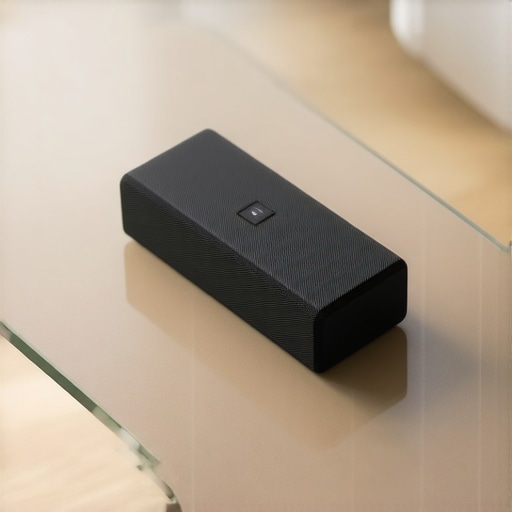
I remember setting up my brand-new portable speaker on my wife’s antique glass coffee table for its first real test. I was expecting a concert-quality experience; instead, I got a congested, rattling mess that sounded like the singer was trapped inside a fish tank. It was frustrating and honestly a bit embarrassing. I actually thought the speaker was defective and almost sent it back! That moment was a wake-up call for me: the surface you choose is just as important as the speaker itself.
Glass Surfaces Act Like Acoustic Mirrors
The problem is that glass is incredibly dense and reflective. When your speaker’s driver moves to create sound, it doesn’t just push air toward your ears; it also sends vibrations downward. On a glass surface, these waves bounce back instantly and interact with the primary sound coming from the speaker. This creates a messy overlap called ‘comb filtering’ that eats away at your clarity. It is a very similar physical reaction to why your desktop speakers need isolation pads to stop desk vibration, but because glass has zero damping properties, the muddiness is far more pronounced.
Does a Simple Table Really Ruin the Sound Quality?
You might be skeptical. After all, shouldn’t a high-end speaker be designed to handle any surface? Unfortunately, physics doesn’t care about the price tag. According to research cited by the Audio Engineering Society (AES), hard reflections from nearby boundaries can cause wild fluctuations in frequency response, specifically in the lower-midrange where most ‘muddiness’ occurs. Early in my audio hobby, I made the mistake of cranking the volume to try and ‘fix’ the clarity, which only made the glass vibrate more. I should have focused on decoupling. If you have ever wondered why your portable speaker loses all its bass when you move outdoors, it is because you have lost all boundary reinforcement; on a glass table, you have the opposite problem—too much reflected energy competing with your music.
Have you ever noticed your favorite tracks sounding ‘fuzzy’ or distorted the second you set your speaker down on a glass countertop or shelf? Today, I am going to show you how to break that cycle and get the crisp, punchy audio you actually paid for. Sometimes the answer is as simple as learning how to use a rug to stop your speakers from sounding harsh, but glass requires a few extra tricks to truly master.
To fix the acoustic nightmare of a glass surface, you have to tackle the physical energy transfer. Think of your speaker as a tiny, vibrating engine. When it sits directly on glass, that energy turns the entire tabletop into a secondary, low-quality speaker driver. You don’t want the table to play the music; you want it to stay silent. The most effective way to achieve this is through decoupling, which essentially means creating a ‘break’ in the physical connection so vibrations can’t travel.
Break the Physical Bond with Simple Household Items
You don’t need expensive audiophile equipment to fix this. The goal is to find a material that absorbs kinetic energy rather than reflecting it. I once stayed at a minimalist beach house that was nothing but glass and hard tile. My portable speaker sounded like a swarm of angry bees. In a pinch, I folded a thick cotton placemat into a square and set the speaker on top. The transformation was instant; the ‘smearing’ in the vocals disappeared because the vibrations were being trapped in the fabric fibers instead of rattling the glass. If you want a more permanent solution, silicone coasters or small Sorbothane hemispheric feet are life-changers. This is the same logic used when you learn why your desktop speakers need isolation pads to stop desk vibration, just applied to your living room furniture.
Why the Edge of the Table Sounds Better
Physics dictates that the center of a glass pane is its weakest and most flexible point. If you set your speaker right in the middle, you are hitting the ‘drumhead’ where it has the most room to flex and vibrate. If you must use a glass table, move the speaker as close to the legs or the frame as possible. Near the edges, the glass is supported and much stiffer, which reduces the amount of sympathetic resonance. If you’ve ever experimented with the best height for your desktop speakers on a small desk, you know that even a few inches of movement can drastically change how the bass frequencies load into the room. Moving the speaker toward the table’s structural supports mimics this effect by stabilizing the mounting surface.
Cut the High End Frequencies in Your EQ
Because glass is so reflective, it emphasizes high-mid and treble frequencies to a painful degree. This is why music often sounds ‘thin’ or ‘shouty’ on a glass countertop. Most modern portable speakers come with a companion app that includes a basic equalizer. I recommend dipping the 2kHz to 4kHz range by about 3 decibels. This range is where the human ear is most sensitive and where glass reflections are most annoying. It’s a digital band-aid for a physical problem, similar to how to use a rug to fix the echo in your home theater room. You are trying to manually soak up the excess energy that the room (or the table) is throwing back at you. If you find that the speaker still sounds flat after these changes, you might be dealing with a different issue entirely.
Make Sure Your Speaker Isn’t Actually Broken
Sometimes we blame the furniture when the hardware is the culprit. If you’ve decoupled the speaker and moved it to a stiff edge but still hear a weird ‘hollow’ sound, it’s worth checking your settings. In some rare cases, especially with dual-driver portable units, internal wiring can lead to issues. You can use the easy way to test if your speakers are out of phase to ensure the drivers are working together rather than canceling each other out. Also, keep in mind that many speakers are tuned for outdoor use with boosted treble; when placed on glass, this tuning becomes a liability. Just like why your gaming headset is bad for listening to music because of its specific frequency ‘humps,’ a speaker tuned for the backyard will struggle on a reflective glass surface without some manual intervention. If you want to get more out of a budget unit, applying these small tweaks is the trick to making 50 dollar headphones feel like 300 dollar monitors—it’s all about managing the environment.
Let’s dig deeper into why we often throw money at the wrong problems. I’ve seen enthusiasts drop thousands on silver-braided cables while their speakers sit on vibrating glass. One of the biggest ‘traps’ in the hobby is the obsession with ‘burn-in.’ While it is true that you might notice why your new speakers sound better after 20 hours of use, much of that is actually your brain performing ‘mental EQ.’ Studies published by the Journal of the Audio Engineering Society (JAES) suggest that while mechanical compliance of a speaker surround changes slightly during the first few hours of use, it is rarely enough to be audible to the human ear in controlled blind tests. We often ‘learn’ to like a sound profile rather than the speaker physically transforming into something else. Have you ever fallen into this trap? Let me know in the comments.
Stop Chasing the ‘Gold-Plated’ Cable Dream
We also need to talk about the ‘gold-plated’ myth that dominates many home audio deals. You will see cables marketed like high-end jewelry, but the real difference between gold and silver plated connectors is primarily about corrosion resistance and long-term durability, not some magical increase in ‘speed’ or ‘audio warmth.’ If your speaker sounds harsh because of glass reflections, a $100 silver-plated cable will not fix it—it might even make the high end feel more piercing. In fact, understanding why leather pads sound different than velour ones will show you that mechanical changes to the seal around your ear provide a much more dramatic acoustic shift than almost any cable swap you can make. The ‘oops’ factor here is simple: don’t let marketing jargon distract you from the basic physics of sound waves and surface interaction.
Can an Expensive External DAC Save a Budget-Tier Audio Setup?
Another nuance most people miss is what I call the ‘DAC trap.’ I get asked all the time if a high-end digital-to-analog converter can fix a muddy sound system. The short answer is almost always no. People buy high-end converters hoping for a miracle, but the difference between cheap and expensive DACs that actually matters is usually only apparent on extremely resolving, high-end systems. If you are plugging a $400 DAC into a system with poor room acoustics or vibrating glass tables, you are essentially putting racing tires on a lawnmower. 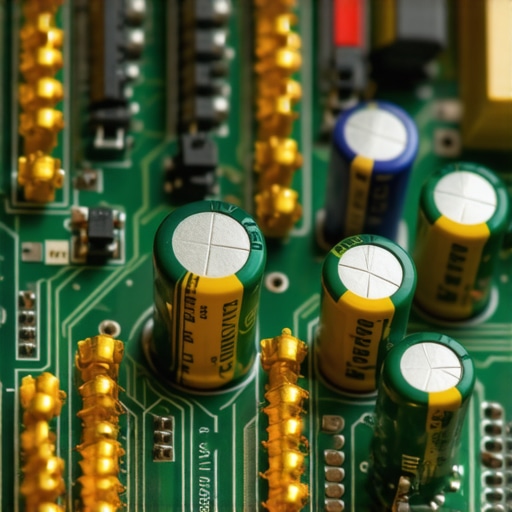 It is the same logic as why your high-end headphones sound tiny when plugged into a controller; the source power must match the capability of the output, but a source can’t fix fundamental mechanical flaws in the environment. Always prioritize the physical interaction of your speakers with the room—and specifically that glass coffee table—before you start chasing the digital ‘magic’ of high-end electronics.
Once you have tackled the physical placement of your speakers, the next battle is keeping that performance from degrading over time. I see it constantly in the audio community: someone buys a high-end setup and then lets dust, oxidation, and worn-out components slowly choke the life out of the music. Maintenance isn’t just about aesthetics; it is about protecting your investment and ensuring the signal path stays clean. For example, if you have ever noticed a slight rattle or a drop in clarity, it might be time to learn how to clean your speaker cones without ruining the paper. A build-up of grime on the driver surface can actually change its mass and compliance, subtly altering the frequency response over months of neglect.
Keep Your Setup Sounding Like Day One
If you are a headphone user, your biggest maintenance hurdle is the physical interface between the driver and your ear. I’ve found that many people assume their headphones are ‘breaking’ when the sound gets muddy, when in reality, the pads have just compressed too much. You should regularly check for 7 signs your headphone pads need replacing today because a worn-out seal will destroy your sub-bass extension. While you are at it, if the clamping force feels off, knowing how to stretch a tight headphone headband without snapping it can save you from literal headaches during long listening sessions. Professional documentation from Harman International’s research labs, led by experts like Dr. Sean Olive, consistently proves that the acoustic seal of a headphone is the single most important factor in achieving the intended frequency target. 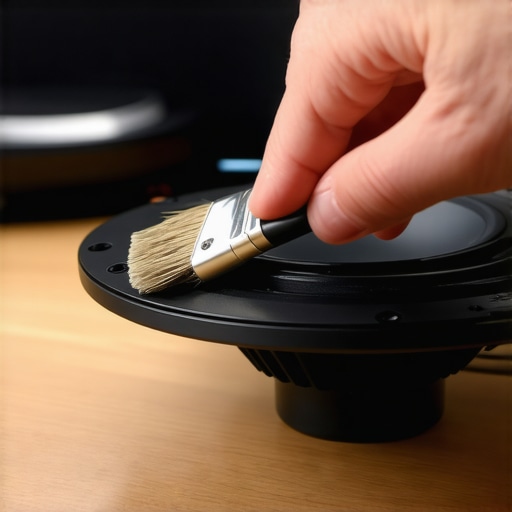
How do I maintain my audio gear over time?
Long-term maintenance involves more than just dusting. You need to inspect your connections. Every six months, I unplug and re-plug all my RCA and speaker cables. This simple act of ‘wiping’ the connectors helps break through any micro-oxidation that has formed. If you find a connection is wobbly, it is worth learning how to fix a loose speaker terminal on your cabinet before it shorts out and causes why your receiver shuts off when you turn the volume up. For my high-power setups, I also make sure I am using the best gauge wire for a 500 watt car subwoofer or home amp to prevent heat buildup and signal loss. Organization is part of maintenance, too; I highly recommend using the best way to label your messy home theater cables so you aren’t tugging on the wrong wire and damaging a port.
Ditch the Guesswork with a Measurement Microphone
If you want to move beyond ‘guessing’ why your room sounds bad, the most important tool you can own is a calibrated measurement microphone, like the MiniDSP UMIK-1. Pairing this with free software like Room EQ Wizard (REW) allows you to see exactly where your glass table or room corners are creating peaks and dips. It is the gold standard for enthusiasts. I predict that in the next five years, we will see this level of precision built into every entry-level soundbar and portable speaker via smartphone-integrated AI calibration. Instead of manual EQ, the speaker will use its own sensors to ‘see’ the glass table and compensate automatically. For now, I challenge you to try one thing this weekend: move your speaker three inches away from its current spot and listen to a track with heavy bass. You might be surprised at how much the room was hiding from you.
The Most Expensive Mistake I Ever Made in My Living Room
Looking back, the biggest ‘aha’ moment for me wasn’t when I bought my most expensive speakers; it was when I realized how much I was fighting against physics. I used to think a subtle rattle was a blown driver, when really it was just a loose piece of trim responding to a glass surface. If you’re hearing a buzz that isn’t coming from the music, knowing how to fix a rattling speaker grill without using messy glue can save you from replacing perfectly good hardware. Also, I’ve learned that ‘more power’ is rarely the fix for ‘bad sound.’ If the table is shaking, more power just makes the shake louder. Trust your ears over the marketing on the box.
Tools I Use to Hunt Down Sound Gremlins
Beyond the measurement microphone I mentioned earlier, I rely on a few specific resources to keep my gear optimized. I always keep a pair of high-quality replacement pads on hand. When I’m tweaking my personal audio, I focus on the interface; knowing how to choose between leather and velour headphone pads for sound has taught me more about frequency response than any textbook. I also frequent the Audio Science Review forums and Sound on Sound for technical deep-dives that cut through the ‘audiophile’ fluff. #IMAGE_PLACEHOLDER_E#
Go Save Your Soundstage
Your audio journey doesn’t have to involve a construction crew or a second mortgage. Most of the time, getting that ‘perfect’ sound is just a series of 1% improvements. Start by getting your speakers off that glass table, then experiment with placement to see how to get better bass from a bookshelf speaker without a sub just by using the room’s boundaries. You have the knowledge now—all that’s left is to go push some air. Have you ever tried a weird DIY trick to stop your speaker from vibrating on a table? Let me know in the comments below!