
I remember sitting at my desk late one Tuesday night, staring at a $300 pair of ‘pro’ gaming headphones that I’d just unboxed. I was convinced I had found the ultimate audio solution. For three hours, they were brilliant; I could hear every reloading click and distant footstep in my favorite shooter. But then, I decided to wind down with some classic jazz. As the first sax note hit, my heart sank. It sounded thin, nasal, and completely lifeless. It was like I had traded a vibrant, colorful world for a high-contrast black-and-white photo. I had made the classic mistake of assuming that high performance in gaming translates to high fidelity in music, and I want to help you avoid that same expensive disappointment. Today, we are going to dive into why that specialized gear is likely strangling your playlists and how you can finally hear what you’ve been missing. Have you ever noticed that your favorite songs somehow sound ‘smaller’ or more muffled when you switch from your car speakers to your headset?
Stop Expecting One Gadget to Rule Your Entire Desk
When I first started building my home setup, I fell for the marketing hook line and sinker. I thought ‘7.1 Surround Sound’ meant better audio for everything. I was wrong. The reality is that gaming headsets are engineered for utility, not beauty. They are tuned to boost the frequencies of footsteps and gunshots, which often means the middle frequencies—where the vocals and guitars live—get completely buried. It’s a bit like the common frustration of why your surround sound speakers should not be at ear level; if the orientation and tuning are off, the experience is ruined. I wasted years listening to hollow music because I didn’t want to admit my ‘premium’ gear had limitations. According to research by Dr. Sean Olive at Harman International, the vast majority of listeners prefer a ‘target curve’ that mimics the natural response of high-quality speakers, yet most gaming headsets deviate wildly from this to favor ‘competitive’ gaming sounds.
Is a separate pair of headphones really worth the extra money?
You might be worried about the cost or the clutter of having two sets of gear. I get it. But the difference is night and day. When you use a tool designed for music, you stop dealing with that annoying buzz or the feeling that the sound is stuck inside your skull. Many users find that why your noise-canceling headphones hiss in quiet rooms is a direct result of the aggressive processing built into gaming or travel gear.
Why Footstep Accuracy Kills Your Midrange Clarity
The technical reason your music sounds like it’s being played through a tin can is called ‘tuning bias.’ Gaming brands often crank the bass to make explosions feel visceral and spike the treble so you can hear grass rustling. While this helps you win matches, it creates a ‘V-shape’ sound profile that sucks the soul out of a vocal performance. If you find your music is too quiet despite the volume being up, you might even need to learn how to tell if your headphones need an external amp, because proper power delivery is the first step toward getting that punchy, musical response you crave. Once you understand that your headset is a specialized tool—like a pair of soccer cleats—you realize you wouldn’t wear them to run a marathon. The same logic applies to your ears.
Give Your Gear the Power It Actually Needs
If you’ve made the jump to high-quality headphones or speakers but they still sound thin or ‘small,’ the problem is likely your source. Most computers and consoles have cheap digital-to-analog converters (DACs) that act like a bottleneck in a high-speed lane. I spent months frustrated that my music sounded hollow until I realized I was starving my drivers of actual voltage. You need a dedicated DAC and amplifier to move those drivers with precision. When you start connecting this higher-end gear, you’ll quickly notice the difference between balanced and unbalanced cables for home studios; choosing the right one can eliminate the ground hum that usually hides behind your music.
Stop Letting Your Room Ruin the Sound
Even the most expensive speakers will sound like garbage if they are bouncing sound off of bare walls and hardwood floors. I once set up a beautiful pair of towers in a minimalist living room, only to realize the high notes were literally making my teeth ache. The solution wasn’t buying new gear; it was physics. You can often learn how to use a rug to stop your speakers from sounding harsh by absorbing the first reflections that bounce off the floor. Similarly, if your bass feels muddy or non-existent, you are likely falling for the mistake youre making when positioning your subwoofer by tucking it into a corner where the waves cancel each other out. Proper placement is free, yet it’s the most effective upgrade you can make.
Tiny Habits for Better Audio Longevity
High-fidelity audio is about the details, right down to the physical connections. Over time, skin oils and dust create a layer of resistance on your plugs. I’ve seen people throw away ‘broken’ cables that just needed a quick wipe. Learning how to clean gold-plated connectors without ruining the finish is a five-minute task that can instantly restore clarity to your signal. I learned this the hard way when I found a pair of dusty speakers at a garage sale. My friends laughed at me, but after a deep clean and some basic tuning, how we made a 20 thrift store speaker sound like a pro monitor became my favorite weekend project. It proved that maintenance is just as important as the initial purchase price. For portable listeners, this maintenance extends to your earbuds; using the best way to clean earwax out of mesh earbuds is essential to preventing the muffled, off-balance sound that most people mistake for a dying driver. These small mechanical adjustments ensure that when you finally sit down to listen, the only thing you hear is the artist’s intent.
I used to think that the ‘Watts’ number on the back of a receiver was the only metric that mattered. I’d walk into big-box stores and hunt for the 1000W sticker like it was a gold medal. But here’s the contrarian truth: chasing high wattage is often a fool’s errand. In my experience, a high-quality 20-watt Class A amplifier will provide more texture, depth, and ‘realism’ than a cheap 200-watt Class D unit ever could. Famed audio engineer Nelson Pass often discusses the importance of the ‘first watt’—if that isn’t clean, the rest don’t matter. If you’ve ever wondered the reason your passive speakers sound quiet with a digital amp, it’s usually because those massive power ratings are measured at peak bursts, not sustained, musical delivery. You’re paying for a number that only exists for a millisecond, leaving your music feeling breathless.
Your Room is a Component, Not Just a Box
Most people spend thousands on gear and zero on their environment. I’ve seen enthusiasts get frustrated because their $5,000 towers sound ‘thin.’ Usually, the issue isn’t the driver—it’s the boundaries. According to legendary acoustics expert Dr. Floyd Toole, the room itself can contribute up to 50% of what you actually hear. If you’re struggling, it might be that why your new speakers sound better after 20 hours of use is a mix of mechanical break-in and your brain finally adjusting to the room’s acoustic reflections. To fix the low end, many go for one giant subwoofer, but that’s actually a trap. You’ll end up with ‘hot spots’ and ‘dead zones’ where the bass is either overwhelming or non-existent. I’ve found that why two small subwoofers are better than one massive driver is the real secret; it smooths out the bass response across the entire seating area, preventing that localized ‘boominess.’
Is the ‘Audiophile Tax’ on accessories actually a scam?
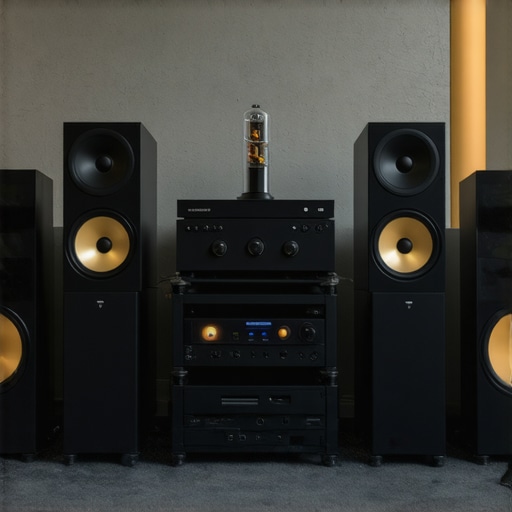
It’s easy to get cynical when you see $1,000 power cables. While I believe in quality shielding, don’t let the marketing machine trick you into ignoring the basics. A common ‘oops’ factor I see is people trying to ‘beautify’ their gear with modern cleaning methods. Please, why you should never use compressed air to clean a silk dome tweeter is a lesson you don’t want to learn the hard way—one blast can literally shred the delicate fabric. Similarly, when buying gear, don’t get blinded by a low price tag on the used market. You might realize why you should never buy a used receiver without the remote after discovering that critical calibration menus are locked behind a specific physical button. Instead of buying expensive snake oil, focus on the electrical health and usability of your system. If you’re looking at exotic gear, remember the hidden cost of buying a cheap tube amplifier, which often involves high maintenance and heat issues that the glossy ads forget to mention. Audio is a journey of refinement, not just consumption. Have you ever fallen into this trap? Let me know in the comments.
Your Signal Path Needs a Periodic Deep Clean
We often treat our audio gear like appliances—set them up once and forget about them until something breaks. But the reality is that home audio is a physical, mechanical system. I’ve seen $2,000 systems sound like $50 radios simply because the owner ignored a layer of oxidation on their RCA plugs. I personally keep a digital multimeter in my desk drawer at all times. It might seem overkill, but knowing how to use a multimeter to find a short in your speaker wires is the fastest way to stop guessing if your receiver is dying or if you just have a frayed copper strand touching the chassis. In fact, a study published in the Journal of the Audio Engineering Society (AES) highlights that even minor variations in contact resistance can lead to measurable harmonic distortion in low-voltage signals. This is why I religiously use DeoxIT D5 on every connection once a year; it’s not snake oil, it’s chemistry.
How do I maintain my high-end audio setup over time?
Maintenance isn’t just about the electronics; it’s about the soft goods too. If you’ve noticed your favorite cans feel a bit ‘darker’ or less airy than they used to, check the foam. Learning the 7 signs your headphone pads need replacing today can save you from buying a whole new set of headphones. Compressed foam changes the distance between the driver and your ear canal, which completely rewrites the frequency response the designer intended. For my analog fans, you don’t need a huge budget to keep the vinyl dream alive. Often, the 20 upgrade that makes an old turntable sound like new is as simple as a fresh drive belt or a properly aligned stylus. If you start hearing a ‘leaning’ soundstage, you might need to investigate how to fix channel imbalance on a vintage stereo amplifier, which is usually just a matter of cleaning the internal potentiometers with a bit of contact spray.
The Hidden Physics of Wireless Reliability
As we move toward a more wireless world, the ‘maintenance’ of your system shifts from cleaning plugs to managing invisible traffic. I’ve had readers complain that their high-res streaming keeps stuttering the second they walk into the kitchen. Usually, it’s not the hardware; it’s the environment. Understanding why your bluetooth range drops the moment you close the door can help you decide where to place your transmitter to avoid the signal-killing properties of drywall and metal studs. I predict that in the next five years, we will see a massive shift toward ‘AI-Acoustics,’ where your gear doesn’t just play music, but uses onboard microphones to constantly recalibrate its output based on the humidity, temperature, and even the number of people in the room.
Try This Pro Calibration Step Today
Before you spend another dime on a ‘better’ amplifier or a DAC with a higher sampling rate, I want you to perform a simple phase test. It costs zero dollars and takes two minutes. If you’ve ever felt like your bass is present but ‘hollow,’ your speakers might be fighting each other. I challenge you to swap the positive and negative wires on just one speaker and listen to a track with a strong center vocal. If the voice suddenly centers itself between the speakers instead of sounding like it’s coming from the walls, you’ve just fixed a wiring error that no amount of money could have solved. This kind of hands-on refinement is what separates a true enthusiast from someone who just buys boxes. Have you checked your phase lately?
Three Audio Lies That Kept My System Sounding Cheap
Looking back at my years of trial and error, the biggest hurdle wasn’t my budget; it was the misinformation I treated as gospel. First, I used to think digital meant perfect. I ignored the fact that radio frequency interference can still choke a digital stream, which is often why your bluetooth headphones skip when you put your phone in your pocket. Second, I realized that the price tag on a speaker is irrelevant if you don’t respect the break-in period. I almost returned my favorite pair of towers because they sounded stiff on day one, failing to realize why your new speakers sound better after 20 hours of use as the surrounds finally loosen up. Finally, I learned that a dirty signal is usually just a physical problem. Instead of buying new cables, I started learning how to clean gold-plated connectors without ruining the finish, and that five-minute habit saved me hundreds of dollars in unnecessary upgrades.
My Secret Weapons for Crystal Clear Sound
If you want to move beyond the marketing hype, you need a few reliable resources in your corner. I swear by Room EQ Wizard (REW); it’s a free software that lets you actually see what your room is doing to your sound. For a deep dive into the physics of your listening space, The Master Handbook of Acoustics by F. Alton Everest is the only book you’ll ever need. On the hardware side, don’t just guess when a channel goes quiet. I keep a multimeter handy because knowing how to use a multimeter to find a short in your speaker wires is the ultimate way to troubleshoot like a pro. These tools shift you from a passive consumer to an active curator of your own sound experience.
Your Journey to Audio Bliss Starts Today
At the end of the day, all the gear in the world is just a vehicle to get you closer to the music you love. Don’t let the technical jargon or the audiophile elitism intimidate you. High-fidelity audio is a deeply personal pursuit, and your ears are the final judge. Start with the small, free tweaks—like adjusting your speaker placement or checking your phase—and build from there. You’ve already taken the biggest step by realizing that there is more to hear than what a standard headset provides. Now, go put on your favorite record, close your eyes, and really listen. What was the one piece of gear or the specific moment that changed your perspective on music forever? Let me know in the comments below!