
I still remember the smell. It was a Tuesday night, and I had just dragged home a second massive bass box I found while hunting for high-end receivers at estate sales for pennies. I was impatient. I twisted the wires together, shoved them into the single ‘Sub Out’ port on my aging Pioneer, and cranked the volume to see if the floor would shake. It did—for about thirty seconds. Then came the ‘click’ of death and a wisp of acrid smoke. I hadn’t just added more bass; I had effectively turned my receiver into an expensive space heater. It was a classic rookie mistake that I don’t want you to repeat. Today, I’m going to walk you through how to double up your low-end without seeing that dreaded ‘Protect’ mode light. We’re going to look at impedance, the right way to daisy-chain, and why your receiver might actually be begging for mercy right now. Have you ever seen that ‘Protect’ mode light blink on your receiver right before the party went silent? Tell me about it in the comments below.
Is adding a second sub really worth the hassle?
You might be thinking one sub is enough, or maybe you’re worried about the technical headache. But here is the thing: according to extensive research by Dr. Todd Welti at Harman International, using multiple subwoofers is the single most effective way to eliminate ‘bass dead zones’ and ensure every seat in the room feels the same impact. It isn’t just about being louder; it’s about being smoother. If you’ve ever wondered the mistake you are making when positioning your subwoofer, adding a second one often fixes the physics problems that a single box simply can’t solve. [image_placeholder_1]
Parallel vs Series is where most folks get into trouble
The biggest reason people fry their gear is a simple misunderstanding of physics. When you wire two subs in parallel (connecting both positive leads to the same terminal), you drop the resistance. If you have two 4-ohm subs and wire them in parallel, your receiver sees a 2-ohm load. Most home receivers are not built for that; they expect 6 or 8 ohms. This is precisely why your receiver shuts off when you turn the volume up. It is trying to pull more current than it can handle, and the internal components start to cook. On the flip side, wiring them in series increases resistance, which is much safer but might leave you wondering why the output feels a bit weak. If you are working with a dedicated amplifier rather than a receiver, you might want to check out how to wire two subwoofers to a single mono amp for a more technical deep dive. For our home theater setups, though, we have to be smarter about how we distribute that load so we don’t end up with a dead amp and a silent room.
Grab an RCA Splitter and Do it Right
Most home receivers only have a single ‘Sub Out’ or ‘LFE’ port, which leaves you wondering how to bridge the gap to a second unit. The most effective method is using a high-quality RCA Y-splitter. This small adapter takes that single signal and clones it for two different subwoofers. I learned the hard way that ‘cheap’ isn’t your friend here. Back in my first apartment, I used a dollar-store splitter that lacked proper shielding. Every time my old refrigerator kicked on, the subwoofers would emit a low-frequency hum that sounded like a jet engine warming up in my living room. Investing in a shielded, gold-plated splitter is the first step toward clean sound. Once you have the cables in hand, make sure you know the best way to label your messy home theater cables because once you double the hardware, you double the wire-clutter behind your console, and troubleshooting a loose connection becomes a nightmare without labels.
Don’t Let Your Gear Suffocate
Even though active subwoofers have their own internal amplifiers, adding more components to your setup increases the overall heat signature in your media cabinet. If your receiver is crammed into a tight space, the increased signal processing can cause it to run hotter than usual. I once lost a beautiful vintage unit because I stacked it directly on top of another hot component without thinking. You need to know how to tell if your amp is running too hot before you smell burning dust. Feel the top of the casing; if you can’t comfortably leave your hand there for five seconds, you have a ventilation problem that will eventually trigger ‘Protect’ mode. 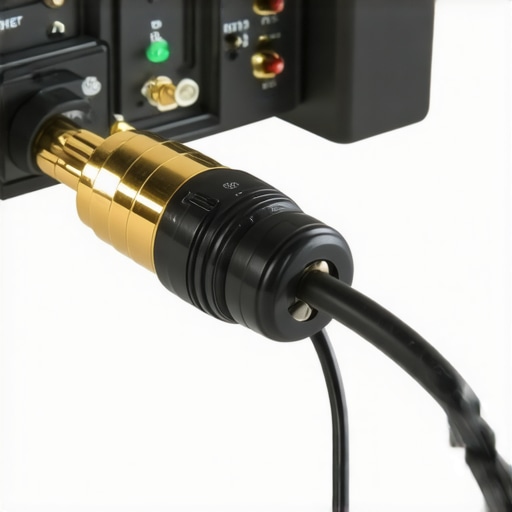
The Flip Switch that Fixes Muffled Sound
One of the most frustrating things that happens when you add a second sub is the ‘disappearing bass’ phenomenon. You plug both in, expecting twice the boom, but it actually sounds thinner than a single unit. This is almost always a phase issue. If one subwoofer cone is pushing out while the other is pulling in, the sound waves cancel each other out. It is essential to learn the easy way to test if your speakers are out of phase. Most subwoofers feature a 0/180-degree phase switch on the back panel. Flip it on just one sub and listen to a bass-heavy track; if the low end suddenly gets punchier and fills the room, you’ve fixed the cancellation.
Keep the Power Direct and Clean
When you are drawing power for two massive subwoofers plus a receiver, you are putting a significant load on your wall outlet. This is exactly why you should never use a power strip for your high-end amplifier or your powered subs. Cheap strips cannot handle the instantaneous current draw required for deep, cinematic bass hits. This power starvation can lead to clipping, which ruins your sound quality and can damage the sub’s internal circuitry. Plug your subs directly into the wall or a high-quality power conditioner. Finally, avoid the temptation to tuck your new gear inside a wooden box. You should never place your subwoofer inside a cabinet. It turns the furniture into a rattling mess. Instead, research how to hide a subwoofer in plain sight without muffled bass by using it as a side table or placing it strategically behind a couch where it can still move air freely.
The mistake I see most often is the ‘more is better’ fallacy. People assume that adding a second subwoofer simply doubles the volume, like adding a second engine to a boat. But in high-end audio, that is rarely how the physics work. If you just throw a second box into the corner without a plan, you are actually creating a chaotic environment of standing waves. While everyone says you need more power to get deeper hits, I’ve found that two smaller, well-placed subs will almost always outperform one massive unit that is struggling to overcome room acoustics. This is the same logic as the real reason your floorstanding speakers sound hollow in large rooms; it’s rarely about the speaker’s potential and almost always about how it interacts with the air around it.
Can you actually calibrate dual subs without an engineering degree?
The answer is yes, but you have to stop trusting your receiver’s ‘Auto-EQ’ to do the heavy lifting. The most sophisticated trap you’ll encounter is the ‘Double Filter’ or cascaded crossover. Most people leave the ‘Low Pass’ dial on the back of their subwoofer turned to 80Hz while also setting the receiver’s internal crossover to 80Hz. This creates a phase-shifting mess that kills the punch of your kick drums. Turn the dial on the sub all the way up (or set it to ‘LFE’ mode) and let the receiver handle the math. If you don’t, you’re essentially strangling your signal before it even has a chance to breathe. Even if you have the real difference between gold and silver-plated connectors on your cables, it won’t save a signal that is being filtered twice.
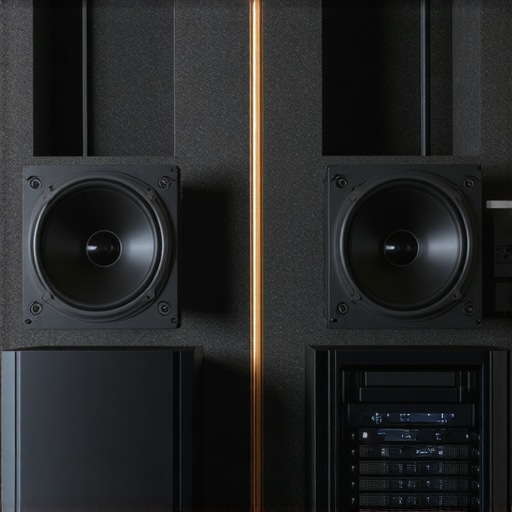
As Dr. Floyd Toole points out in his seminal work, Sound Reproduction, the goal of multiple subwoofers isn’t just loudness—it’s the reduction of variance between seats. However, an ‘oops’ factor that kills many setups is the ‘Gain Trap.’ I’ve seen enthusiasts crank the gain on their subwoofers to 100% thinking it provides more ‘headroom,’ but all it really does is force the receiver’s pre-amp to work in a non-linear range, often leading to clipping or early hardware failure. You need to keep an eye on your equipment’s health; just as you should know how to tell if your amps capacitors are failing, you should listen for the subtle grit in the bass that suggests your gain structure is out of whack. Sometimes, the gear just needs to reach its operating temperature to sound its best, much like why your tube amp actually sounds better after an hour of use.
Why mixing brands is a recipe for disaster
Don’t fall into the trap of using two different brands or sizes of subwoofers. Every driver has a different ‘group delay’—the time it takes for the cone to move and return. If you pair a fast 10-inch sub with a heavy, slow 15-inch sub, they will never be perfectly in sync across the entire frequency range. You’ll get ‘smearing,’ where the bass feels muddy and lacks that chest-thumping snap. It is a bit like why your gaming headset is bad for listening to music; it’s designed for one specific frequency response that doesn’t play well with others. Stick to identical twins for your low-end for the smoothest integration. Have you ever fallen into this trap of mixing and matching gear only to be disappointed? Let me know in the comments.
Scaling up your low-end is a rush, but if you don’t keep an eye on the health of your system, that rush will end with a puff of smoke. I’ve seen too many people build these massive 2.2 or 7.2 systems only to have them fail because they ignored the thermal load. You have to be proactive. If you’re pushing two subs through a single receiver, you absolutely need to know how to tell if your amp is running too hot because heat is the silent killer of silicon. I’ve started using external cooling fans for my stack, especially when I’m running them at theater levels for a three-hour marathon.
How do I keep my dual-sub setup healthy for years?
Consistency is key. Every few months, I go behind my console and physically check the connections. Vibrations from a dual-sub setup are intense—literally enough to rattle screws loose over time. I once had a rattle I thought was a blown driver, but it turned out to be the simple fix for a rattling rear deck that I’d applied to my home baseboards instead. Also, keep an eye on your power delivery. If your lights flicker when the bass hits, you’re starving your equipment. This is why you should never use a power strip for your high-end amplifier or your active subs. They need a direct line to the wall to handle those massive transients. If you notice the sound becoming ‘mushy’ after a year or two, it might not be your ears; you should check how to tell if your amps capacitors are failing, as the extra stress of driving a dual-load can accelerate wear on older units.
Tools that turn a hobbyist into a pro
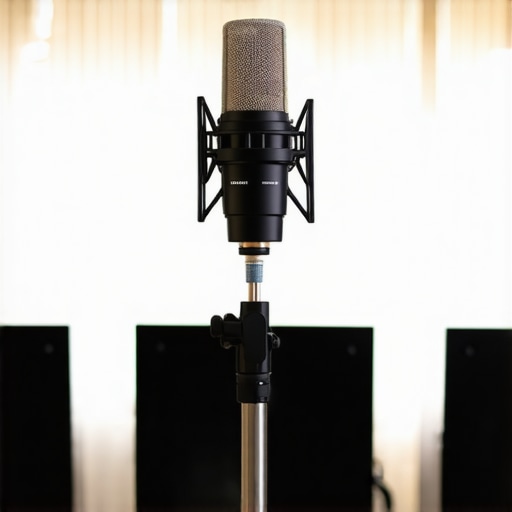
If you want to move beyond just ‘feeling’ the bass and start ‘measuring’ it, you need a calibrated microphone like the MiniDSP UMIK-1. I don’t set up a room without it anymore. Using it with Room EQ Wizard (REW) allows you to see exactly where your room is eating your frequencies. As noted in the miniDSP Subwoofer Integration technical documentation, achieving a seamless blend requires more than just volume matching; it requires precise time-alignment down to the millisecond. This level of detail is how you get that ‘disappearing’ subwoofer effect where the bass feels like it’s coming from your main speakers. If your room still feels ‘boomy’ even after calibration, you might need to use a rug to stop your speakers from sounding harsh and to soak up some of those secondary reflections that muddy the low-end.
The future of your living room floor
I predict that in the next five years, the manual calibration I love will be replaced by AI-driven active room correction built directly into the subwoofers themselves. We are already seeing wireless kits that promise zero latency, but we still see why your bluetooth audio lags while watching movies when using cheap transmitters. The future is high-bandwidth, proprietary wireless links that will make the RCA splitter a relic of the past. For now, stick to the cables. My challenge for you today: Go to your receiver settings, find the distance setting for your subwoofers, and try adjusting the ‘second’ sub’s distance by just one-foot increments while listening to a steady bass loop. You might be surprised at how much punch you find just by tweaking the timing. Don’t settle for loud when you can have perfect.
Hard-Earned Realities of the Dual-Sub Life
Reflecting on my own journey, there are three things that fundamentally changed how I approach audio. First, the gain knob is not a volume control; it is a sensitivity adjustment. Over-cranking it is the fastest way to blow a driver or stress your electronics. Second, your room is a living, breathing thing—sometimes you have to use a rug to fix the echo in your home theater room before the bass actually sounds clear and punchy. Lastly, don’t ignore the thermal limits of your gear. I make it a habit to check how to tell if your amp is running too hot after a heavy listening session, especially when I am pushing two active units at theater levels.
The Resource Kit for Serious Low-End
You do not need a professional studio, but a few tools go a long way. I personally swear by the MiniDSP UMIK-1 microphone paired with Room EQ Wizard (REW) software. It takes the guesswork out of frequency response; if you are seeing a massive dip at 40Hz, no amount of volume will fix it—you need to move the sub. Also, keep an eye on your power delivery. Understanding why you should never use a power strip for your high-end amplifier applies doubly to subwoofers; they need that raw wall-outlet current for those cinematic explosions. Finally, if you are using older equipment, periodically check how to tell if your amps capacitors are failing to avoid a catastrophic failure mid-movie.
Stop Dreaming and Start Shaking the Floor
Adding a second subwoofer is not just a technical upgrade; it is the moment your home theater truly starts to feel like a commercial cinema. It is about that effortless, smooth low-end that you feel in your chest without it being boomy or distracting. Do not be afraid of the setup process—it is a hands-on learning experience that pays off every single time you hit play on your favorite soundtrack. Go ahead, plug that second unit in and experience the depth yourself. Have you ever felt that incredible moment when the bass finally ‘disappears’ and blends perfectly with your main speakers? Share your setup wins with me in the comments below!