
I remember the exact moment I realized my trunk had become a slow-cooker. It was a 98-degree Tuesday, stuck in grueling stop-and-go traffic, and I was pushing my subwoofers way harder than I should have. Suddenly, the low-end vanished. I thought I had blown a fuse, but the reality was much more painful—my amp was so hot I could actually smell the toasted dust on the aluminum heat sinks. I had to sit in 45 minutes of heavy silence because the thermal protection circuit refused to let the music back on until the temperature dropped. If you have been searching for how to fix a car amplifier that keeps shutting off in summer, you know that sinking feeling of a dead stereo on a hot day. My early mistake was pure hubris; I tucked my amp into a tiny, unventilated corner of the spare tire well because I wanted a “stealth” look. I wanted a clean install, but all I got was a broken one. Today, I am going to show you how to avoid my mistakes and keep your tunes blasting without that dreaded “Protect” light ever flickering on again.
Your Trunk is a Greenhouse for Sensitive Electronics
Driving in July is hard enough on your car’s engine, but your audio gear is taking a silent, brutal beating. We often forget that amplifiers are inherently inefficient devices; they turn a significant chunk of electricity into raw heat rather than sound. When you consider that car interiors can hit 172°F according to the CDC, you realize your gear is starting at a massive disadvantage. If you decided to how to properly bridge a car amplifier for more power, you are essentially asking those internal components to work at their absolute thermal limit. Without a strategy to move that stagnant air, your amp is going to choke. It is not just about the sun; it is about the physics of energy transfer in a cramped space.
Is Rearranging Your Entire System Truly Necessary?
You might be skeptical. You likely spent a whole weekend hiding wires under the carpet and you really do not want to rip them out to relocate the rig. I hear you. It feels like a massive amount of work for a problem that only pops up during the summer months. But consider the long-term cost: every time your amp hits that thermal shutdown point, you are effectively baking the internal capacitors and shortening the lifespan of your investment. It is like redlining your engine every single day. Sometimes, the solution isn’t a full relocation, but simply ensuring you aren’t making the amp work harder than it has to. I have seen enthusiasts think their amp was dying when, in reality, their car speakers sound like they are under a blanket because the amp was already throttling itself to stay alive. Even perfecting how to properly ground a car amplifier to eliminate engine hum can reduce resistance and help the unit run just a few degrees cooler. Have you ever touched your amp after a long drive and been genuinely shocked by the temperature? Let’s look at how we fix that.The first rule of thermal management is simple: stop mounting your amp flush to the floor. Most enthusiasts screw their gear directly into the trunk carpet because it is easy, but you are essentially putting your amplifier on a heating pad. The metal casing of your amp acts as a massive heat sink designed to radiate energy away from the internal circuit board. If that sink is pressed tight against thick fabric or a seat back, the heat has nowhere to go. I once spent a frantic weekend in Florida troubleshooting what I thought was a dead capacitor in my old sedan. It turned out the amp was simply suffocating on a plush floor mat. I solved the issue by using 1/2-inch rubber spacers at each screw point. That tiny gap allowed air to flow underneath the unit, creating a natural convection current that kept the chassis significantly cooler even during long drives. 
The Secret to Fighting Internal Friction
If your gain is set too high, your amp is working twice as hard to produce half the quality. Gain is not a volume knob; it is a sensitivity match between your radio and your amplifier. When you push a budget unit past its clean output limits, it starts clipping, which sends a jagged, distorted square wave to your speakers. This isn’t just a sound quality issue; it is a thermal disaster. Clipping generates massive amounts of waste heat within the output transistors because they are being forced to stay ‘on’ longer than they were designed for. If you have been researching how to get rid of the annoying hiss in your budget car amp, you might find that backing off the gain actually cleans up the signal and drops the operating temperature simultaneously. It is the same fundamental logic behind why your receivers protection mode keeps triggering at high volume—the system is trying to save itself from your settings.
Fans Aren’t Only for Your Desktop
Sometimes, passive cooling isn’t enough, especially in a trunk that is basically a sealed metal box baking in the sun. I remember my first high-power competition build. I was terrified of the heat, so I wired a pair of 120mm silent computer fans to my remote turn-on lead. I positioned one fan to push fresh air across the heat sinks and another to pull the hot air away. It looked a bit like a high school science experiment with zip ties everywhere, but it worked flawlessly during a three-hour drive through the Mojave Desert. If you have already had to deal with how to fix a car subwoofer that smells like it is burning, you know that heat is a parasite that travels through the wires. Keeping the amp cool protects the delicate voice coils in your subwoofers too.
Check Your Voltage at the Source
Think of your power wire like a garden hose. If you try to force high-pressure water through a tiny straw, the friction creates heat. Your amplifier does the same thing with electricity. If your wire gauge is too thin for the current you are drawing, the resistance will spike, and your amp will get scorching hot just trying to stay powered. You need to verify how to tell if your amplifier has enough headroom for your speakers by measuring the voltage at the amp terminals while the music is playing. If that number drops significantly below 12.5 volts, your electrical system is struggling. Ensure your ground cable is the same gauge as your power cable and attached to a bare metal surface. A weak ground is like a clogged drain; it causes a backup of energy that manifests as pure heat. If you haven’t yet mastered how to properly ground a car amplifier to eliminate engine hum, fix it now. This serves as both a noise filter and a thermal safeguard, which is essential when learning how to fix a car amplifier that keeps shutting off in summer because it ensures the hardware isn’t fighting itself.Most people assume the ‘Bass Boost’ knob on their amp is a shortcut to better low-end, but I view it as a ‘Self-Destruct’ button in disguise. In my experience, relying on that dial is the fastest way to cook your transistors. When you crank that +12dB boost, you are asking for sixteen times the power at that specific frequency. If you have wondered why your car speakers sound thin when you turn up the treble or muddy when you boost the bass, it is because the amp is clipping before you even get to 50% volume. It is much better to use a properly designed enclosure or learn how to get better bass from a sealed subwoofer box than to force your amp to do the heavy lifting via EQ. One hidden mistake I see all the time is the ‘CCA’ trap. Enthusiasts buy 4-gauge wire because it looks thick, but it is often Copper Clad Aluminum (CCA), which has about 40% more resistance than Oxygen-Free Copper (OFC). On a 95-degree day, that extra resistance turns your power cable into a literal space heater. This is why you need to know how to tell if your amplifier has enough headroom for your speakers; if your wiring is choking the current, your headroom vanishes and the heat takes over. Even if you have mastered how to properly ground a car amplifier to eliminate engine hum, poor quality wire will still cause a thermal bottleneck.
Why Does Your Amp Still Shut Down When the Case Feels Cool?
This is a common frustration for advanced tuners. You touch the amp and it feels lukewarm, yet the red light is on. The secret is that internal components like the MOSFETs can reach critical temperatures long before the heavy aluminum heat sink manages to pull that heat to the surface. According to research from the Electronics Cooling journal, for every 10°C increase in operating temperature, the reliability of a semiconductor device is cut in half. This is why learning how to fix a car amplifier that keeps shutting off in summer is not just about fans—it is about managing internal component health. Another nuance people miss is speaker impedance. If you are running a 2-ohm load on an amp only rated for 4 ohms, you are essentially doubling the current and the heat. Always check how to match your car subs impedance to your amplifiers output before upgrading. Have you ever fallen into this trap of thinking your amp was safe just because the case wasn’t hot yet? Let me know in the comments. 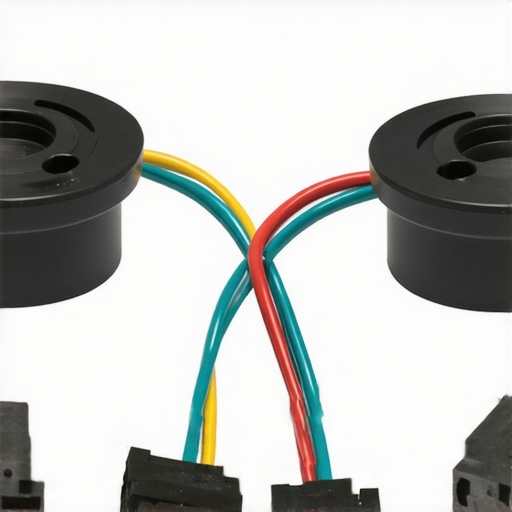 To bridge the gap between ‘it works for now’ and ‘it works forever,’ you need to stop relying on your fingertips to gauge temperature. I personally swear by a handheld infrared thermometer. It changed everything for me. Instead of guessing if the chassis is getting too warm, I can pinpoint exactly which MOSFET is radiating the most heat. If you are serious about your build, you should also own a basic digital multimeter. This is the only way to accurately verify how to tell if your amplifier has enough headroom for your speakers. I use mine to check for voltage drops at the power terminals every time I add a new component. If the voltage at your amp is significantly lower than at the battery, your wiring is the bottleneck, and that resistance is creating the very heat that is shutting you down.
Grab a Multimeter Before You Burn a Fuse
I have spent years helping friends troubleshoot systems where the owner was convinced they had a ‘lemon’ amplifier. Usually, the culprit is a loose ground or a corroded fuse holder under the hood. As noted in technical papers from SAE International regarding the J1113/11 standard, the automotive electrical environment is notoriously unstable, and transient voltage spikes can easily push an already-hot amplifier into a permanent failure state. This is why I suggest checking your main power connections every six months. Road vibrations are constant, and a slightly loose nut on your battery terminal can lead to arcing, which is often why your car alternator is making your speakers whine. When that connection gets flaky, the amp draws more current to compensate for the lower voltage, skyrocketing the internal temperature in seconds. 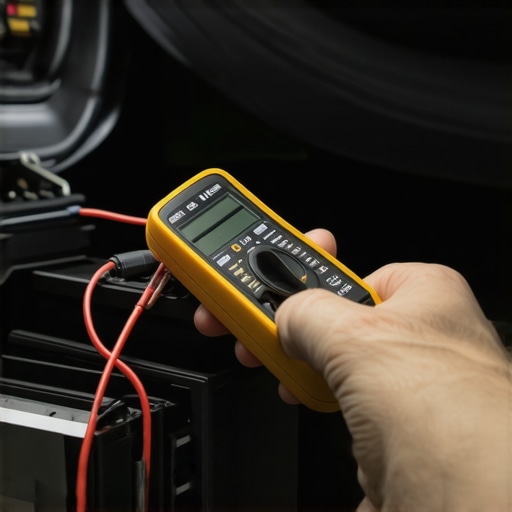
How do I keep my gear running for a decade?
Maintenance is not just about heat; it is about physical integrity. Every spring, I pull my amp rack and use a can of compressed air to blow out the heat sink fins. Dust acts as an insulator, and even a thin layer can raise operating temperatures by 5 to 10 degrees. While you are back there, tug on every wire. If you find yourself wondering why your car speakers cut out when you hit a bump, it is almost always a physical connection that has vibrated loose over time. I also recommend using a dab of dielectric grease on your ground point to prevent the metal-on-metal oxidation that leads to resistance. If you have a complex setup, learning the easiest way to hide power wires in your trunk can actually help with cooling too, because a clean, organized wire tuck allows for much better airflow around the amp’s chassis.
Expect Smarter Hardware in the Next Generation
I predict that within the next few years, the ‘Protect’ light will become a relic of the past. We are already seeing a shift toward Class-D amplifiers with integrated DSPs that can ‘thermal throttle’—meaning they will automatically lower the volume by a few decibels rather than shutting off entirely when they get hot. This tech is already common in high-end home gear, and it is the logical next step for car audio. For now, though, you have to be the brain of the system. If you hear distortion, or if you are worried about how to tell if your speaker is actually blown or just rattling, back off the volume immediately. Check how to tell if your speakers capacitor is starting to fail if you notice the amp struggling during heavy bass hits, as a failing cap can put immense strain on the power supply. My challenge to you: buy a cheap $20 infrared thermometer today and measure your amp’s temperature after your next long drive—you might be surprised by what you find.
The Expensive Lesson My Melted Wiring Taught Me
After years of tinkering, I realized that heat isn’t just an annoyance; it’s a symptom of deeper system inefficiencies. One lightbulb moment for me was discovering that even a perfectly tuned amp can fail if the ground connection is just a tiny bit loose. I used to ignore the small stuff, but now I know that mastering how to properly ground a car amplifier to eliminate engine hum is actually a double win—it cleans up your signal and keeps your resistance low enough to prevent thermal spikes. Another hard truth? Your trunk’s ‘dead air’ is your biggest enemy. If you don’t move that air, you’re essentially running your gear in a vacuum. I’ve also learned to stop trusting my fingers to check temperature because the outer casing of an amp is often much cooler than the internal components that are actually suffering. 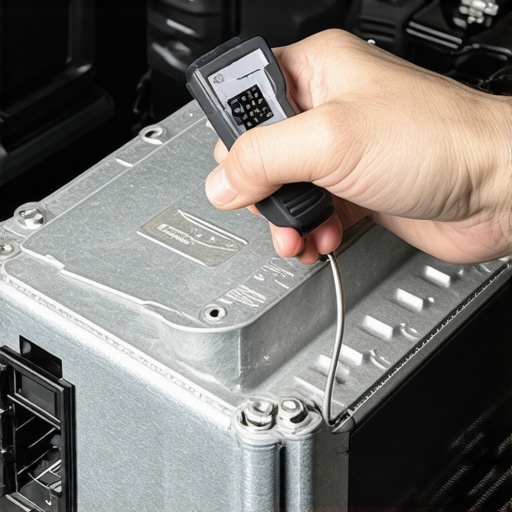
My Go-To Kit for a Heat-Proof System
If you want to stop guessing and start fixing, there are three things you need in your toolkit. First, a cheap infrared thermometer is non-negotiable; it lets you find hot spots on your amp before they trigger the protection circuit. Second, a digital multimeter is essential to verify if your amplifier has enough headroom for your speakers or if it’s struggling due to voltage drops. Finally, always opt for Oxygen-Free Copper wiring. It’s more expensive than aluminum, but it handles summer heat without turning your power cables into heating elements. If you ever notice that your car alternator is making your speakers whine, it’s usually a sign that your electrical foundation is weak, which almost always leads to overheating.
Take Control Before the Next Heatwave Hits
You don’t have to be a professional installer to have a reliable system. By simply lifting your amp off the carpet and double-checking your connections, you’re already ahead of most car audio owners. Now that you know how to fix a car amplifier that keeps shutting off in summer, you can focus on the music rather than the ‘Protect’ light. If your car’s electrical system is still acting up, make sure your aftermarket radio isn’t draining your battery, as low resting voltage makes everything work harder. Have you ever tried adding external fans to your setup, or do you prefer keeping it passive? Let me know your cooling hacks below.