
It was about 104 degrees in the shade when my trunk decided it had seen enough. I was halfway through a six-hour road trip, the bass was hitting just right, and then—nothing. Total silence. That dreaded red “Protect” light on my amplifier was staring at me like an angry eye. I pulled over, popped the trunk, and the heat radiating off that metal casing was enough to singe my eyebrows. If you have ever been cruising with your windows down only to have your music cut out at the best part of the song, I know that frustration deep in my bones. It is not just about the lost tunes; it is about the fear that you are cooking your expensive investment. Today, I am going to share exactly why this happens and the simple tweaks I used to keep my system pounding even in the dead of July.
[IMAGE_PLACEHOLDER]
Stop Your Trunk From Becoming a Practical Oven
Most of us tuck our amps into corners or under seats to keep things tidy. I made the classic mistake of mounting mine upside down against the rear deck, thinking I was being clever with space. In reality, I was trapping all the rising heat inside the unit. According to the thermal experts at Electronics Cooling, ambient temperatures in a closed vehicle can easily exceed 130 degrees Fahrenheit, which is often the limit for many consumer-grade transistors. When your amp is already struggling with poor airflow, the summer sun acts like a magnifying glass on a bug. Before you go out and buy a new unit, you need to look at how you have managed your install. Sometimes the fix is as simple as changing how you mount the amp to allow for better natural convection. Have you ever touched your amp after a long drive and felt like you could fry an egg on it?
Is my expensive amplifier just a piece of junk?
It is easy to get cynical and think your gear is low-quality when it shuts down, but even the best equipment has a thermal ceiling. High temperatures increase electrical resistance throughout your wiring, which makes your amplifier work twice as hard to produce the same amount of power. If your electrical foundation is weak, you are just adding fuel to the fire. I found that ensuring I knew how to properly ground a car amplifier significantly reduced the strain on my system, which in turn helped it run a few degrees cooler. We also have to be careful about how we push our gear; for instance, learning how to bridge your car amp correctly is vital because improper impedance is a one-way ticket to a thermal meltdown. Even something as basic as the way you hide power wires can impact how much air circulates around the cooling fins of your heat sink.
Clean Up Your Electrical Foundation
Before you blame the weather, you have to look at the electricity. High resistance is the primary silent killer of amplifiers. Think of your power wire like a garden hose; if it is too thin or kinked, the pump (your alternator) has to work significantly harder to push water through. This extra effort generates heat inside the amp’s power supply before the music even starts. I always recommend that you use a multimeter to find a short in your speaker wires or any excessive resistance in your ground. If your wires are getting hot to the touch, you are likely using a gauge that is too small for the current draw. 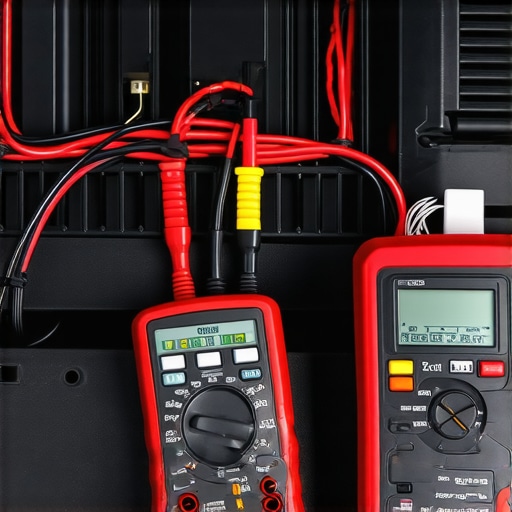
Stop Forcing Too Much Power Through the Wrong Load
One of the most common mistakes is chasing maximum wattage at the expense of stability. Impedance is essentially the ‘pushback’ your speakers give the amp. If you drop that resistance too low, the amp tries to dump massive amounts of current, which generates exponential heat. Learning the secret to choosing the right ohm rating for your amp is crucial during the summer months. I once had a budget monoblock that claimed it was ‘1-ohm stable.’ On a blistering 95-degree day, I pushed it to that limit, and within twenty minutes, the smell of toasted silicon filled my cabin. By simply re-wiring my subs to a 2-ohm load, I lost a few decibels but gained a system that could play for hours without a single hiccup. If you are pushing your gear, make sure you know how to bridge a two-channel amp without blowing a fuse, as improper bridging effectively halves the impedance the amp ‘sees,’ doubling the heat output.
Kill the Clipping to Save the Circuit
Distortion is not just a sound quality issue; it is a thermal issue. When you set your gains too high, the amplifier ‘clips’ the audio signal, turning smooth sine waves into flat-topped square waves. These flat tops force the output transistors to stay wide open for longer periods, essentially short-circuiting them for fractions of a second. This is why you might have a car subwoofer that smells like it is burning even if the volume doesn’t seem that high. Use your ears; if the music starts to sound crunchy or compressed, you are cooking your internals. You need to be able to tell if your speaker is actually blown or just rattling because a damaged voice coil can actually create a variable short that sends your amp into protection mode repeatedly.
Get the Air Moving with a Simple Fan Mod
If you have checked your wires and your gain is set correctly, but the trunk is still too hot, you need active cooling. Natural convection often fails in the stagnant air of a trunk. I solved my own overheating issue by tapping into the 12v remote turn-on wire to power two small 80mm computer fans. I mounted one to blow cool air across the fins and another to pull the hot air away. It is a night-and-day difference. It is the same principle used in home setups to give floorstanding speakers more breathing room from the wall; air must circulate for the heat sinks to do their job. Without airflow, those metal fins are just heat sponges that eventually reach a saturation point where they can no longer protect the delicate transistors inside.
The biggest lie we have been told in car audio is that more power always equals better sound. In my experience, people often chase a specific wattage number, thinking it is the holy grail of performance. The reality is that chasing high output without respecting the thermal limits of your electrical system is a recipe for a dead amp. We often talk about speaker break-in periods as if they are some magical ritual, but the truth about speaker break-in periods is mostly about the mechanical suspension loosening up, not the electronics surviving a thermal onslaught. If you are pushing a massive 15-inch sub on a budget amp, you are likely creating more heat than bass. I have actually found that why two small subwoofers are better than one massive driver often comes down to better heat dissipation across multiple voice coils and surfaces. 
The Idle Current Trap You Never See Coming
A common ‘oops’ moment happens when you think your gear is safe just because the volume is turned down. If you are running older equipment, you might notice the chassis is still warm to the touch. It is crucial to understand why your vintage amp gets hot even when you aren’t playing music because a high bias setting can cook internal components while the car is just idling in your driveway. This is the ‘silent’ heat that causes long-term fatigue on your capacitors and transistors. According to a study by the Audio Engineering Society on power compression, as voice coils heat up, their resistance increases, which can reduce your actual output by 3dB or more. This means your amp works twice as hard just to maintain the same volume.
Why does my vintage amp get hot even when I am not playing music?
Many older Class-AB designs rely on a constant flow of current, known as bias, to minimize distortion. Over time, components age and this bias can drift, causing the amplifier to pull excessive current even at zero volume. This constant thermal stress is often why you need to know how to tell if your speaker capacitors are starting to leak before they fail and take the whole board with them. Even the trick to making cheap bookshelf speakers sound expensive relies on maintaining a stable thermal environment where the drivers can perform without heat-induced distortion. If you do not manage this, you end up wasting power on cancellations, which is why you must learn how to match your subwoofer phase with your main speakers to ensure every watt goes toward sound rather than just generating wasted heat. Have you ever fallen into this trap of chasing watts over efficiency? Let me know in the comments.One tool I never leave home without is a can of high-quality contact cleaner. I have lost count of how many times a ‘dead’ channel was actually just a tiny bit of oxidation on a gold-plated terminal. While gold does not rust like iron, the base metals underneath can actually migrate to the surface over time. According to technical documentation from Caig Laboratories, the creators of DeoxIT, even noble metals like gold can suffer from ‘pore-corrosion’ where the base metal leaches through, creating a microscopic layer of resistance that eats your signal before it even hits the wire. Knowing how to clean gold-plated connectors without ruining the finish is the difference between a crisp high-end and a muffled mess. I personally use a lint-free swab and a light application of a high-end conditioner; it does not just strip the grime, it leaves a molecular bond that prevents future oxygen from reaching the metal. 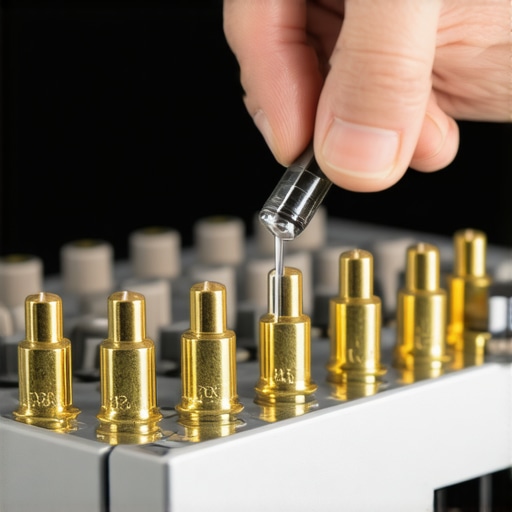
How do I keep my car audio performing like day one?
The secret is a biannual ‘electrical physical.’ I take a Saturday every six months to check my battery terminals and ground points. Vibrations from the road can slowly loosen even the tightest bolts, and once that connection is compromised, you start seeing the symptoms of a failing system. If you start hearing a high-pitched noise that rises with your engine RPM, you need to investigate the real reason your cars alternator makes your speakers whine. Often, it is just a ground cable that has wiggled a fraction of an inch loose. I also check for parasitic draws because nothing kills a performance battery faster than a slow leak. If your system seems sluggish to start, it is worth investigating why your car audio system drains the battery while the engine is off. Keeping your voltage stable is not just for the subwoofers; it protects the delicate ICs in your head unit from brownouts and logic errors.
AI and DSP will fix your messy room acoustics
I truly believe we are moving toward a future where ‘dumb’ speakers are a thing of the past. In the next few years, I expect AI-driven Digital Signal Processing (DSP) to become standard even in budget gear. We are already seeing apps that allow you how to use your phone to measure your rooms frequency response, and soon, your amp will likely use that data to real-time adjust for the specific acoustic ‘fingerprint’ of your car or living room. It is about moving from raw power to intelligent placement and timing.
Protect your speakers from the physical elements
Finally, do not ignore the physical materials. If you have vintage gear, the rubber and foam parts are literally evaporating as the plasticizers break down. I have saved dozens of classic drivers by learning how to revive old speakers with new foam surrounds before the voice coil starts rubbing and causes an electrical short. A little bit of preventative maintenance, like learning how to revive a vintage speaker cone with simple rubber treatment, can add a decade to the life of your favorite drivers. Go grab a bottle of contact cleaner and hit every RCA connection in your car today—you will be shocked at the clarity you have been missing.
The Hardest Lessons I Learned Managing My System’s Heat
Over the years, I have realized that thermal protection isn’t just a safety feature; it is a symptom of an imbalanced system. I used to think that as long as my amp was ‘rated’ for a certain power, it should just work. I was wrong. I eventually learned that keeping things cool starts with the basics, like making sure your grounding points are solid. If that ground wire is loose, the resistance builds up, and that energy has to go somewhere—usually turning into heat. Another lightbulb moment was realizing that two smaller subwoofers often stay cooler than one massive driver because they have more surface area to shed heat. Finally, never ignore the signs of a ‘dirty’ signal; a little bit of distortion is the fast track to a toasted voice coil.
The Tools I Trust to Keep the Music Playing
I never start a summer road trip without a few specific items in my glove box. First is a reliable digital multimeter—essential for when you need to find a short in your speaker wires before it triggers protection mode. I also swear by contact cleaner for those humid days when oxidation starts creeping in. It is one of the easiest ways to keep your gold-plated connectors performing at their peak. Lastly, if you are running an older setup, keep an eye on your battery health, as low voltage is a primary cause for draining your power resources and forcing the amp to work harder.
#IMAGE_PLACE_HOLDER_E#
Don’t Let a Little Heat Kill Your Drive
There is nothing quite like the feeling of a perfectly tuned system that can handle hours of heavy bass without breaking a sweat. It takes a little bit of extra work to stop your car amp from overheating in the summer, but the peace of mind is worth every second of install time. You have invested your hard-earned money into this gear—treat it with a little respect, give it some breathing room, and it will reward you with crystal-clear audio for years to come. Now get out there, tidy up those wires, and turn it up. Have you ever had your music cut out right at the best part of the song due to heat? Let me know how you fixed it in the comments!