
I turned the key, the engine groaned to life, and there it was again. 12:00. Flashing like a neon sign of failure. It didn’t matter that I’d set it perfectly the night before or that I’d spent three hours making sure the dashboard looked pristine. My car radio had amnesia. For three weeks, I lived in a time-loop where every commute began at midnight, and honestly, I was ready to rip the head unit out with my bare hands. If you’ve ever felt that spike of annoyance when your favorite presets vanish into thin air, you aren’t alone. Today, we are going to track down that ghost in the machine and make sure your settings actually stick.
Stop Watching Your Dashboard Clock Flash Twelve O’Clock
This isn’t just about knowing if you’re late for work. When your radio resets, it’s telling you that your car’s electrical ‘handshake’ is broken. I used to think it was just a quirk of older cars, but even newer setups can fall victim to a loose connection or a dying cell. It’s a symptom of a deeper electrical hiccup. One of the biggest mistakes I made early on was assuming the radio itself was broken. I spent nearly $200 on a new Sony head unit only to find the same blinking 12:00 greeting me the next day. Talk about a punch to the gut. The truth is, your radio needs a tiny, constant sip of power to keep its memory alive—sort of like a brain on life support while the rest of the body sleeps. If that sip gets interrupted, everything from your EQ settings to your clock gets wiped clean. It’s often linked to why your car audio system drains the battery while the engine is off because the wiring that should be ‘always on’ might be drawing too much or, in our case, nothing at all.
Is my car battery actually dying?
This is the fear that keeps us up at night, right? We assume the radio reset is just the first domino before the car won’t start at all. According to electrical experts at Battery Council International, a car battery’s voltage can drop significantly during the cranking phase if the battery is over three years old, often falling below the threshold required to maintain digital memory. But before you go out and drop a fortune on a new Lead-Acid block, we need to look at the wiring. I realized my issue was actually a ‘constant’ power wire that I’d accidentally crimped too hard. It was barely hanging on. I was so focused on how to balance your car audio for the drivers seat and making things look pretty that I neglected the basic plumbing of the system. We’re going to look at the ‘Yellow vs. Red’ wire dilemma and why your ignition switch might be the hidden culprit. Have you ever spent an hour tuning your bass settings only to have them disappear the next time you went to the grocery store? Tell me I’m not the only one who has yelled at a dashboard in a parking lot. Sometimes these resets are accompanied by other weird noises, like why your car speakers pop when you turn the engine on, which usually points straight back to the grounding or the ignition trigger. Today, we are going to trace that wire and stop the amnesia for good.
Stop the Memory Wipe by Swapping These Two Wires
The most common reason a car radio forgets your favorite stations is a simple mix-up between the yellow and red wires. In the standard aftermarket harness, the yellow wire is your ‘constant’ power. It acts as the radio’s life support, drawing a tiny bit of current from the battery at all times. The red wire is ‘switched’ or ‘accessory’ power, which only wakes up when you turn the key. If these are reversed, your radio receives its ‘brain’ power only when the engine is running and gets a lobotomy the moment you park. I remember a grueling weekend where I tore apart my center console twice before realizing the previous owner had used mismatched crimp connectors. It’s a frustrating cycle, similar to why your portable speaker won’t charge with your phone cable if the voltage delivery is incorrect; the hardware simply isn’t getting the specific signal it needs to stay functional. Check your manual and ensure yellow goes to a 12V constant source.
Hunt the Ghost with a Multimeter
If your wiring looks correct but the clock still blinks 12:00, you need to verify the voltage. Set your digital multimeter to DC voltage and ground the black probe to a clean, unpainted piece of the car’s metal frame. With the car completely off, touch the red probe to the yellow wire. You should see a steady 12.4 to 12.6 volts. If you see zero, there is a break in the line or a blown fuse under the hood. You can use a multimeter to find a short in your speaker wires or power lines by checking for continuity where there shouldn’t be any. I once found a tiny nick in a power cable that was touching the steering column, causing a ‘soft short’ that didn’t pop the fuse but dropped the voltage enough to reset the memory.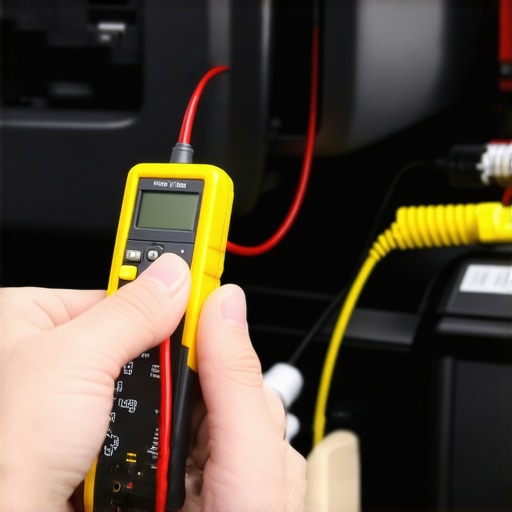
Tighten the Physical Connections That Kill Your Settings
A loose ground wire is like a shaky table; everything might look fine until you hit a pothole. In a car, vibration is your primary enemy. If your radio resets only while driving or after hitting a bump, your ground wire (usually black) is likely loose or attached to a rusted surface. I spent hours chasing a reset issue that turned out to be a slightly loose bolt on the firewall. It is a fundamental fix, much like how you need to fix a loose speaker terminal on your cabinet to keep the sound from cutting out; without a solid physical path, the electrical circuit remains unstable. Clean the contact point with a wire brush and ensure the terminal is clamped tight.
When Your Car Battery Is the Real Villain
Sometimes the problem isn’t the radio or the wires, but a battery that is on its last legs. When you turn the key to start the car, the starter motor draws a massive amount of current. If your battery is weak, the system voltage can momentarily dip below 10 volts. This ‘brownout’ is enough to wipe the digital memory of many head units. If you’re running a massive sound system, you might even need to add a second battery for your high power car amp to provide a buffer for these high-draw moments. I saw this frequently when I worked in a shop; a customer would blame the radio, but a simple load test on the battery revealed it was three years past its prime and couldn’t handle the startup surge anymore.People often tell me that ‘breaking in’ speakers is a placebo effect dreamed up by audiophiles to justify their latest shopping spree. But if you’ve ever noticed why your new speakers sound better after 20 hours of use, you aren’t just imagining things; you are experiencing physics in real-time. The mechanical suspension of a speaker, specifically the spider and the surround, is physically stiff right out of the box. According to research by Dr. Floyd Toole of Harman International, the resonant frequency of a driver can shift significantly as these components reach their intended mechanical compliance. The ‘trap’ most beginners fall into is babying their equipment for months or, conversely, thinking their system is defective because the bass feels tight and restricted on day one. You don’t need magic files or pink noise; you just need to play your music at a moderate volume to let the hardware settle.
Don’t Buy Into the High-End Digital Cable Lie
Another area where I see people throwing money away is on ‘premium’ digital interconnects. When you are hunting for home audio deals, you’ll inevitably see ‘high-speed’ optical cables with gold-plated tips priced at $80 or more. Please, stop wasting money on expensive optical cables. In a digital system, the signal is a series of light pulses representing ones and zeros. It either reaches the destination or it doesn’t. You aren’t getting ‘warmer’ light or ‘faster’ binary from a fancy plastic connector. While there is a real difference between gold and silver plated connectors in analog circuits where oxidation and conductivity matter, it is a total waste in the digital optical realm.
Is thermal compression ruining your long road trips?
This is an advanced nuance that many car audio enthusiasts overlook. If you’ve ever noticed your system losing its ‘punch’ after two hours of heavy listening on a summer day, you are likely experiencing thermal compression. Heat increases the electrical resistance in the voice coils of your speakers and the circuitry of your amp. Knowing how to tell if your amp is running too hot is vital because modern amplifiers will often throttle their power output to prevent a total meltdown. It’s a subtle shift—the music stays on, but the dynamics feel flat and lifeless. This is why proper ventilation is non-negotiable, and why I always tell people that a hidden amp under a pile of floor mats is a recipe for terrible sound.
The Dangerous Cleaning Mistake That Ruins Tweeters
While we are on the subject of ‘expert’ mistakes, let’s talk about maintenance. It’s tempting to grab a can of air to blast away dust from your dashboard or home speakers. However, you should never use compressed air to clean a silk dome tweeter. These components are incredibly delicate and specifically weighted; one blast of high-pressure air can permanently deform the dome or even displace the voice coil from its gap. I’ve seen $500 speakers turned into paperweights because of one ‘quick clean.’ If you notice a sonic drift in your older gear, it’s much more likely you need to learn how to fix channel imbalance on a vintage stereo amplifier by cleaning the internal potentiometers with the right contact cleaner, rather than attacking the exterior with air.  Have you ever fallen into one of these ‘audiophile’ traps or spent a fortune on a ‘fix’ that turned out to be a complete myth? Let me know in the comments.One of the most expensive ‘traps’ I fell into early on was the ‘replace instead of repair’ mindset. When a channel started crackling on my old Marantz, I assumed it was dead. In reality, it just needed five minutes of attention.
Don’t Let Earwax Muffle Your High End
If you’ve noticed your music sounds distant or muddy lately, the hardware might be fine while the hygiene is the problem. It sounds unglamorous, but learning the best way to clean earwax out of mesh earbuds is the single most effective ‘free’ upgrade you can give your portable setup. That buildup creates a physical barrier that kills frequency response faster than a cheap cable ever could. For those of you rocking over-ear cans, remember that comfort affects sound too. If they feel like a vice grip, you should learn how to stretch a tight headphone headband without snapping it to ensure the seal around your ears remains consistent.
Heat Is the Silent Killer of Vintage Amps
When we talk about scaling a system, we often focus on adding more power, but we rarely talk about the longevity of that power. According to the technical endurance specifications from Nichicon, a leading manufacturer of electrolytic capacitors, the operational life of a capacitor is halved for every 10-degree Celsius increase in temperature. This is why keeping your gear cool isn’t just about performance; it’s about survival. You need to know how to tell if your amps capacitors are failing because a leaking cap can take out your entire output stage. If you hear a persistent hum or see a ‘bulge’ on the top of those internal cylinders, it’s time for a service. Before you take it to a pro, try to fix a scratchy fader on a vintage audio mixer or receiver yourself with a bit of DeoxIT; it’s often just oxidized dust causing that horrific static. 
Check Your Phase Before You Buy New Gear
I’ve seen people spend thousands on new subwoofers because they thought their current ones lacked ‘punch.’ Half the time, the speakers were simply wired backwards. When one speaker pushes out while the other pulls in, they cancel each other out, leaving you with a hollow, lifeless sound. Use the easy way to test if your speakers are out of phase by using a simple 9V battery test or a dedicated polarity app. It’s a five-minute check that can save you a fortune in unnecessary ‘upgrades.’
How do I maintain my audio investment over time?
Consistency is key. I recommend a ‘quarterly audit’ of your entire signal chain. Check your terminations for oxidation, especially if you live in a humid climate. In the future, I expect we will see more AI-integrated DSP built into even budget-friendly amplifiers that will automatically alert you to component degradation or phase issues before you even hear them. For now, we have to rely on our tools and our ears. My challenge for you this week: Grab a multimeter or even just a flashlight and inspect every physical connection in your primary listening room. You might be surprised at what’s hanging by a thread.
Hard-Won Truths from Years of Dashboard Surgery
I spent years thinking that a car radio resetting was just a ‘ghost in the machine’ or a software bug that I had to live with. What I eventually learned is that automotive electronics are brutally logical. If your memory is wiping, there is a physical break in the chain of command. I used to rush the process, skipping the boring task of securing wires because I was too excited to hear the music. That led to countless hours of re-doing work. Now, I never close a dashboard until I’ve performed a tug-test on every crimp. It’s also taught me that heat is a massive factor; just as you need to know why your car amp is overheating during long summer drives, you should realize that heat can expand metal connectors just enough to break a weak circuit for a split second, triggering a reset. Reliability isn’t about expensive gear; it’s about the integrity of the connection.
The Tiny Tools That Saved My Sound System
When you’re knee-deep in a wiring harness, organization is your best friend. I swear by a quality digital multimeter and a pack of heat-shrink tubing—electrical tape is a temporary band-aid that eventually turns into a sticky mess. I also learned that the best way to label your messy home theater cables applies perfectly to the bird’s nest behind your head unit; use small colored tags to identify the ‘constant’ and ‘switched’ wires so you never mix them up again. If you’re running a heavy setup, keep an eye on airflow, perhaps even learning how to stop your car subwoofer from overheating in the trunk, because a stable temperature leads to stable voltage. I personally trust the Fluke 101 for basic car diagnostics and the ‘Crutchfield MasterSheet’ for vehicle-specific wiring diagrams.#IMAGE_PLACEHOLDER_E#
Reclaim Your Commute with a Radio That Remembers
There is a specific kind of peace that comes with turning your key and hearing your favorite station exactly where you left it. Fixing your car radio memory loss isn’t just a technical chore; it’s about making your vehicle feel like a curated space rather than a source of frustration. Don’t be intimidated by the wires. Most electrical issues are just loose bolts or swapped leads waiting for ten minutes of your attention. Once you’ve secured that constant 12V line, you can finally stop staring at the blinking 12:00 and start enjoying the drive again. What was the weirdest electrical gremlin you ever found hidden inside your dashboard? Let me know in the comments below.