
I remember sitting on my living room floor three years ago, surrounded by a stack of my dad’s old Led Zeppelin records and feeling completely defeated. I had this beautiful, heavy Technics turntable from 1978 and a brand-new, sleek soundbar that cost more than my first car. I looked at the red and white RCA cables dangling from the record player, then at the single HDMI and optical ports on the soundbar, and realized I was trying to make two different centuries talk to each other. I actually made the rookie mistake of buying a five-dollar passive adapter, thinking it would magically work. Instead, I got a sound so quiet I had to press my ear against the speaker just to hear a whisper. It was a classic case of ignoring the technical ‘why’ behind audio signals. Today, I’m going to save you that frustration and show you exactly how to bridge that gap so you can finally hear that warm vinyl crackle through your modern setup.
The Missing Link in Your Audio Chain
Most people don’t realize that a vintage turntable puts out a signal about 1000 times weaker than a CD player or a streaming box. Back in the day, every receiver had a ‘Phono’ input to boost that tiny signal, but modern soundbars just aren’t built that way. If you just plug it in directly (if you even can), you’re going to run into issues. I once spent an entire afternoon wondering how to get rid of ground loop hum because I forgot that old turntables need a dedicated ground wire. Without a phono preamp, you aren’t just losing volume; you’re losing the bass and the soul of the music. According to the 2023 Luminate Midyear Music Report, vinyl sales have grown for 17 consecutive years, yet many new listeners are plugging them into digital systems incorrectly and missing out on the actual fidelity. You need a way to convert that weak analog signal into something your digital soundbar can understand and amplify.
Is it even worth the effort for a soundbar?
You might be thinking that a soundbar, designed for movies, will strip away the ‘analog’ warmth of your records. It’s a fair concern. While a soundbar won’t perfectly mimic a pair of high-end tube-driven tower speakers, it can still sound phenomenal if you handle the conversion right. The key is making sure you don’t introduce lag. I’ve seen people try to run their turntable through a PC first, which leads to a nightmare where you have to fix the audio delay on your soundbar just to get the needle drop to line up with what you’re hearing. We want a direct, clean path. Have you ever tried to hook up your old gear only to be met with total silence or a buzzing mess? Let me know in the comments, because I’ve likely broken the same thing you have.
Getting the Right Hardware for the Job
To make this work, you need a phono preamplifier. This little box sits between your turntable and your soundbar. It takes that tiny signal, applies the RIAA equalization (which adds the bass back in), and brings it up to ‘Line Level.’ From there, if your soundbar has an ‘Aux’ or ‘3.5mm’ input, you’re golden. If your soundbar is digital-only (only HDMI or Optical), you’ll need one more tiny box: an Analog-to-Digital Converter (ADC). It sounds complicated, but it’s really just a ‘handshake’ between your old-school records and your new-school tech. Just make sure you stop your turntable from picking up vibrations by placing it on a separate surface from your soundbar, or the bass will cause the needle to skip and ruin the experience.
Level Up Your Signal with a Phono Preamp
The first thing you have to tackle is the ‘Phono’ problem. Your record player’s needle generates a tiny electrical pulse that’s practically a whisper. If you plug that directly into a line-level input on a soundbar, you’ll get almost no volume and zero bass. It’s the same basic principle behind why your headphones sound quiet on your laptop but loud on your phone; the source just doesn’t have the electrical muscle to drive the speakers. You need a phono preamplifier to act as the heavy lifter. You will take the RCA cables coming out of your turntable and plug them into the ‘Input’ side of the preamp. Use a quality set of cables for this; I remember trying to save money once by using some paper-thin wires I found in a junk drawer, and my speakers started picking up a local AM radio station. Even for short runs, knowing how to choose the right gauge of wire and ensuring good shielding will keep your signal clean. 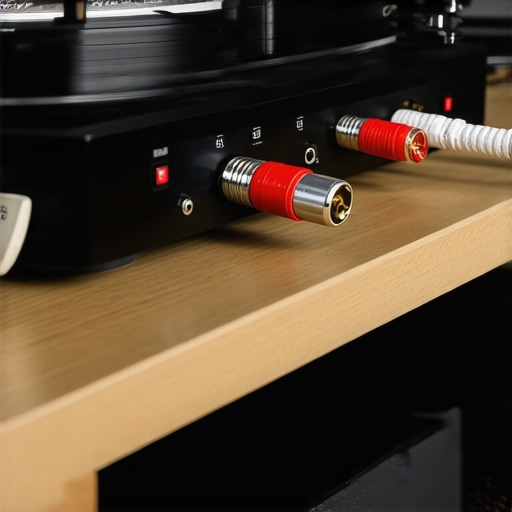
What to Do if Your Soundbar is Digital Only
Many modern soundbars, especially those sleek Atmos models, have ditched analog inputs entirely. If you look at the back and only see HDMI and Optical ports, you just need one more bridge: an Analog-to-Digital Converter (ADC). You run RCA cables from your preamp into the ADC, and then run a Toslink optical cable from the ADC into your soundbar. It’s essentially a translator. I once tried to bypass the preamp and go straight into a cheap ADC, thinking the digital side would handle the gain. Big mistake. The result was a thin, hollow sound that reminded me of why your laptop speakers sound tinny and how to fix it. Always keep the order: Turntable to Preamp, then Preamp to ADC. This chain ensures the signal is healthy before it becomes digital. Just be aware that these extra ‘handshakes’ can sometimes cause a tiny bit of latency. If the sound feels slightly off-sync with the physical spinning of the record, you might need to check how to fix the lip-sync delay on your soundbar using HDMI settings to get the audio perfectly aligned.
Stop the Buzz Before it Starts
Grounding is the part everyone skips until they hear that soul-crushing ‘BUZZZZ’ through their speakers. Most vintage turntables have a third, thin wire with a little metal spade on the end. This is your ground wire. It MUST be attached to the grounding screw on your preamp. I learned this the hard way during a New Year’s Eve party. I had just finished a DIY project and had to learn how to fix a scratchy volume fader on a professional mixer I was using as a temporary amp, only to realize the ground hum was so loud it drowned out the music. I hadn’t tightened the ground screw properly. Secure that wire first, and you’ll save yourself from the most common headache in analog audio.I used to think that as long as I had a signal, I had ‘the sound.’ I was wrong. People often assume that once you convert that analog record into a digital signal for your soundbar, the job is done. But here’s the contrarian truth: most modern digital processing actually ‘flattens’ the very warmth you bought the record for. If you’re pushing a hot signal from a cheap preamp into a mid-range soundbar, you aren’t getting high fidelity; you’re just getting loud noise. I’ve seen enthusiasts drop $500 on a preamp only to find that why your high-end dac sounds exactly like your laptops headphone jack is a real phenomenon when the rest of the chain is the bottleneck.
Does an expensive DAC really matter for a soundbar?
The short answer is: probably not as much as you think. While a good DAC helps, the ‘Oops’ factor most people fall for is ignoring the room itself. You can have the perfect signal chain, but if your soundbar is crammed into a hollow TV stand, it’s going to sound like garbage. This is why Dr. Floyd Toole, a legend in the audio engineering world and author of ‘Sound Reproduction,’ argues that the room and speaker placement account for roughly 30% of what we actually hear. If you don’t address reflections, even the best vinyl setup will sound thin. I once spent weeks tweaking my preamp settings only to realize that why you should use a rug to fix a bright sounding room was the actual solution to my harsh high-end. 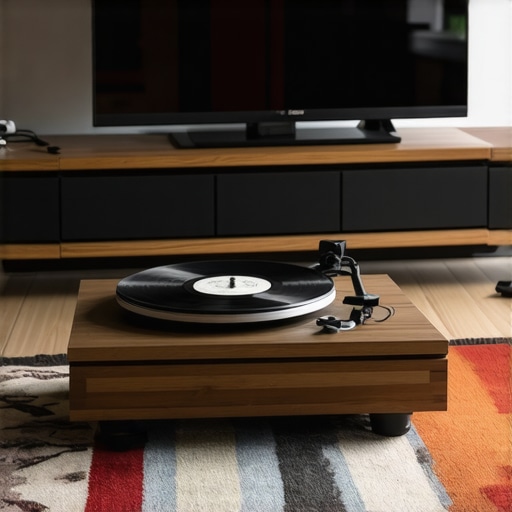
The Trap of Misplaced Gear
Another nuance people miss is the interaction between the turntable’s physical vibrations and the soundbar’s output. If your soundbar has a built-in ‘subwoofer’ or even just decent bass drivers, and it’s sitting on the same shelf as your record player, you’re creating a feedback loop. This isn’t just about skips; it’s about ‘mud.’ You also need to be careful with the physical layout. For instance, why your speakers bass port should never be pushed against a wall applies to soundbars with rear-firing ports too. When you crowd the port, the bass becomes boomy and masks the delicate mid-range of your vinyl. If you’ve added a separate sub to the mix, you’ve likely ignored the phase. If you don’t know how to match your subwoofer phase with your main speakers, your bass might actually be cancelling itself out, leaving your Led Zeppelin records sounding like they were recorded in a tin can. Have you ever set everything up only to feel like the sound was ‘hollow’ or missing its punch? Let me know in the comments, because that’s usually the sign of a phase or placement issue, not a hardware failure.
Keep Your Analog Gear From Turning Into a Paperweight
Dealing with older hardware means you have to become part-time technician. If you start hearing static when you adjust the gain on your preamp, you need to know how to fix a scratchy volume dial with electrical contact cleaner before the part fails completely. I personally keep a can of DeoxIT D5 in my drawer at all times because generic lubricants can actually attract more gunk. This isn’t just about the preamp; if you’re using an older integrated unit, learning how to fix a scratchy volume knob on an old amp can save you a $200 repair bill. Maintenance isn’t just for the electronics, either. If you’re also a headphone listener, you know the struggle of wear and tear. You should regularly check how to clean your headphone ear pads without ruining the leather to keep them from degrading. Ignoring this is why your headphone pads are flaking and how to prevent it becomes a search term you’ll regret later.
The Precision Tools I Actually Keep on My Shelf
You cannot eyeball a turntable setup. To get that ‘perfect’ sound through your soundbar, you need a digital tracking force scale. Most people rely on the markings on the counterweight, but those are notoriously inaccurate. As noted in the Ortofon technical support guidelines, a diamond stylus typically begins to show audible degradation after about 1,000 hours of play, and improper tracking weight accelerates this wear significantly. If the weight is too light, the needle bounces and carves up your grooves; too heavy, and you’re crushing the cantilever. 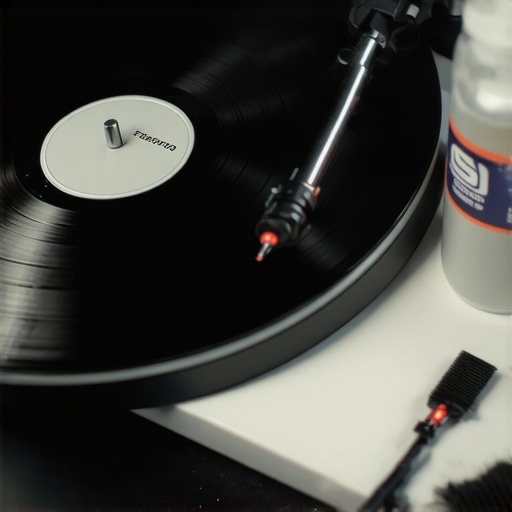
How do I maintain my turntable and soundbar setup over time?
Consistency is the secret to great audio. Every six months, I do a ‘cable audit.’ I unplug and replug every RCA and HDMI cable to break up any oxidation. For the turntable, check your belt; if it’s getting slack, your pitch will warble. For the soundbar, ensure the firmware is updated, especially if you’re using HDMI ARC, or you’ll find yourself searching how to fix the lip-sync delay on your soundbar using HDMI settings after every TV update. Also, keep an eye on your speakers. A common reason why your vintage speakers are losing their punch over time is the drying out of internal components. You might even need to learn how to tell if your speakers capacitor is starting to fail if you notice a sudden drop in clarity. I predict that in the next five years, we will see soundbars with ‘AI-Phono’ ports that automatically calibrate the digital EQ to match the specific cartridge you’re using, making this whole manual process obsolete. But until then, the manual work is what makes it a hobby. My challenge to you: buy a digital tracking force scale this week and check if your needle is actually pressing down at the manufacturer’s recommended weight—you might be surprised how far off you are.
The Hard Truth About My Failed Analog-to-Digital Experiments
Looking back, the biggest mistake I made was assuming that digital processing would fix a poor analog signal. It won’t. If you start with a noisy source, you’re just amplifying the noise through your speakers. I spent a full week thinking my preamp was broken when I really just needed the 5 dollar fix for humming speakers and ground loops. Another lesson: cables matter, but not in the way high-end brands want you to think. You don’t need silver-plated gold; you just need decent shielding to prevent why your vintage receiver makes a loud hum with no music playing from becoming your new reality. Finally, always trust your ears—if the sound lacks ‘center’ or punch, take a minute to learn how to tell if your speakers are out of phase in 30 seconds before you start buying new gear.
The Only Tools I Use to Keep My Vinyl Setup Clean
I’m a minimalist at heart, but three specific items are non-negotiable for my hybrid audio system. First, a digital tracking force scale is the only way to ensure my stylus isn’t digging a trench in my favorite records. Second, a can of contact cleaner—knowing how to fix a scratchy volume dial with electrical contact cleaner has saved my vintage preamp from the scrap heap more than once. #IMAGE_PLACEHOLDER_E# Third, a simple carbon fiber brush for the records themselves. These tools keep the signal chain healthy without costing a fortune and ensure the soundbar receives the purest signal possible.
It’s Time to Hear Your Records the Way They Were Meant to Be
Setting up an analog source with a digital soundbar might seem like a contradiction, but when done right, it’s the ultimate bridge between convenience and soul. You get the tactile experience of vinyl with the space-saving power of modern technology. Don’t let the technical ‘handshakes’ intimidate you; once the ground is secure and the preamp is dialed in, the music takes over. Your soundbar is more capable than you think, and with these tweaks, you’ll finally hear the depth you’ve been missing. Have you run into any weird buzzing or unexpected silence while connecting your turntable? Let me know in the comments below!