
I remember sitting in my basement with a $500 pair of headphones plugged directly into my laptop’s headphone jack. I had spent weeks saving up every spare cent, but when I finally pressed play, the music felt… thin. It was like a watered-down cup of coffee. I actually thought I had been scammed. Then, a buddy lent me his dedicated external DAC. Suddenly, the drums had a physical ‘thump,’ and I could hear the singer’s breath between verses. It was a total lightbulb moment. I spent years thinking that a ‘DAC is a DAC’ because, theoretically, if it converts ones and zeros into sound, it’s doing its job. My early mistake was assuming that the tiny, pennies-on-the-dollar chip inside my phone or laptop was ‘good enough’ for high-quality audio. It is a common trap. You might be trying the trick to making cheap headphones feel like studio monitors, but if the source signal is muddy, you’re essentially just polishing a pebble. Today, we are going to cut through the marketing fluff and figure out exactly where your money goes when you upgrade from a $20 dongle to a serious desktop unit. [image_placeholder_1]
Why that cheap little chip is holding your speakers back
The problem isn’t usually the ‘math’ of the conversion; even cheap chips are surprisingly competent at that. The real issue is the noise floor and the analog output stage. When I first started out, I noticed a faint hiss during the quietest parts of my favorite acoustic tracks. I originally thought it was my cables, so I wondered if I should stop wasting money on expensive optical cables and look for a different culprit. It turns out, the cheap built-in DAC was leaking electrical noise from the motherboard directly into the audio signal. Expensive DACs invest heavily in power filtration and shielding. They ensure that when there is silence in the music, there is actual silence in your ears. Have you ever felt like your speakers were ‘flat’ even though you tried to get better bass without a sub? Often, a higher-quality DAC provides a cleaner, more robust signal that allows your speakers to breathe. It’s about the ‘soundstage’—the ability to close your eyes and point to exactly where the drummer is standing. If you have ever wondered how to tell if your headphones need an external amp, you should know that a better DAC is often the first step in providing that amp with a signal worth amplifying.
Can your ears even tell the difference?
This is where the skepticism kicks in, and honestly, it is healthy to be a bit wary. If you are listening to low-bitrate streams on $10 earbuds, an expensive DAC is a total waste of your hard-earned cash. It is like putting premium racing fuel into a lawnmower. According to research published by the Audio Engineering Society (AES), many listeners actually struggle to differentiate between high-end DACs in blind tests once certain performance benchmarks are met. The ‘magic’ usually happens when you move away from the poorly shielded, bottom-of-the-barrel components found in standard consumer electronics. I want to hear from you—have you ever plugged in a new piece of gear and felt like your music finally ‘woke up,’ or did it just sound exactly the same as the cheap stuff? We aren’t just looking for better numbers on a spec sheet here; we’re looking for the point where the cost actually matches the joy in your ears.
How to spot the weak link in your signal chain
Before you drop hundreds of dollars on a new box, you need to make sure your current gear isn’t the problem. I once spent an entire Saturday morning tearing apart my living room because my left speaker kept cutting out. I blamed the DAC, then the amp, and eventually the speaker itself. It turned out to be nothing more than a frayed wire hidden behind a bookshelf. If you are getting static or intermittent signal loss, you should learn how to use a multimeter to find a short in your speaker wires before blaming the digital conversion. Once you are certain the physical wires are solid, listen for what I call ‘digititus’—that harsh, metallic sheen on high notes that makes your ears tired after twenty minutes. That is usually the signature of a cheap, poorly filtered DAC chip oversampling the life out of your music.
Pick the right connection for your setup
Your DAC is only as good as the digital data it receives. Most people default to USB because it is convenient, but depending on your computer’s internal power supply, it can be incredibly noisy. If you have an older motherboard or a laptop with a cheap power brick, you might find that the simplest way to connect your PC to a vintage hi-fi is actually via an optical cable (Toslink). Optical has one massive advantage: it provides total electrical isolation. Since the signal travels via light, there is no physical wire to carry electrical interference from your buzzing PC fans or GPU directly into your audio path.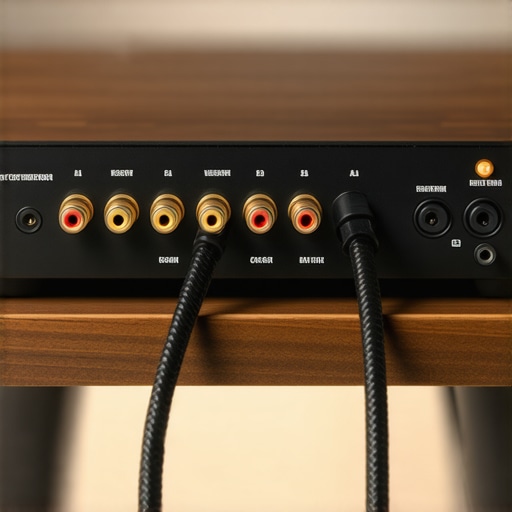
Stop the hum before it hits your ears
If you hear a low-frequency buzz that stays at the same volume regardless of your music’s level, you have likely encountered a ground loop. I dealt with this nightmare when I first added a powered subwoofer to my desktop setup. The loop was created because my PC and my DAC were plugged into different wall outlets on different circuits. Learning how to find the source of a ground loop in home theater setups saved my sanity. Often, just moving all your audio gear to a single high-quality power strip solves the problem instantly. Also, keep your signal cables away from power bricks. If they have to cross, do it at a 90-degree angle to minimize electromagnetic interference.
Maintain your connections for long-term clarity
Even the best gear fails if the physical interface is dirty. Oxygen is the enemy of metal, and over time, a thin layer of oxidation builds up on your RCA jacks, leading to crackling or signal degradation. If you hear a noise when you nudge the cables, you should know how to clean gold-plated connectors without ruining the finish. I use a little isopropyl alcohol on a lint-free cloth once every six months. It sounds like overkill until you realize that half of the ‘upgrades’ people hear after buying new gear is actually just the act of plugging and unplugging cables, which scrapes off some of that oxidation. This is often the same culprit behind why your old receiver pops when you switch inputs; those internal mechanical contacts are just dirty and need a bit of friction or cleaner to restore the bridge.
Let’s dig deeper into the psychology of the ‘upgrade itch.’ Everyone in the audio world says that higher sample rates—think 192kHz or DSD—are the holy grail of fidelity. In my experience, this is the biggest distraction in the hobby. Most of those ultra-high frequencies are physically impossible for the human ear to hear, and often, they just introduce ultrasonic noise that stresses out your amplifier. The real nuance isn’t the number on the file; it is the reconstruction filter used by the hardware. I have seen enthusiasts buy into the hidden cost of buying a cheap tube amplifier just to get ‘warmth,’ when the real issue was a low-quality digital filter ringing like a bell in their DAC. You do not need more bits; you need a better implementation of the bits you already have.
Why does an expensive setup still sound harsh or thin?
I once visited a friend who had spent a literal fortune on a balanced DAC and monoblock amps. He was frustrated because the high notes felt like needles in his ears. He thought he needed a new DAC, but the problem was his room. Hardwood floors and bare glass windows were bouncing the sound around so much that even the cleanest signal turned into a chaotic mess. It is a classic ‘oops’ factor: ignoring the physical environment. Before you swap gear, you might just need to learn how to use a rug to stop your speakers from sounding harsh. Dr. Floyd Toole, a pioneer in audio research, famously noted in his book ‘Sound Reproduction’ that the room and the speaker’s off-axis response contribute far more to the final sound quality than the microscopic differences between two high-performance DACs. If your room is a ‘sonic mirror,’ no amount of digital-to-analog magic will save you.
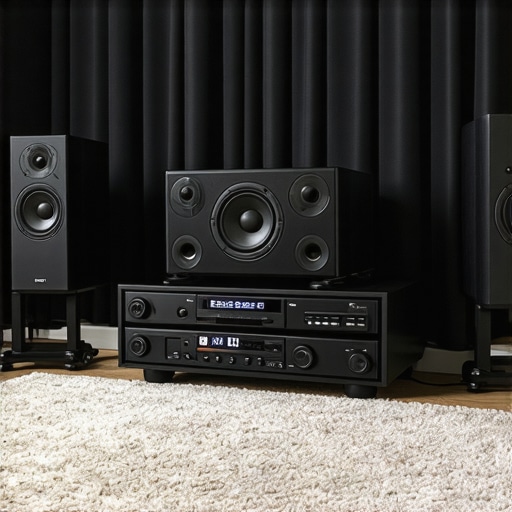
Another common trap is the ‘burn-in’ period. You will hear people claim you need 500 hours of playback for a DAC to ‘open up.’ While there is some truth to why your new speakers sound better after 20 hours of use due to mechanical stretching of the surrounds, solid-state electronics like DACs reach thermal equilibrium in minutes. If a piece of gear sounds terrible out of the box, it’s probably just a bad match for your system. Also, before you blame the hardware for a lack of bass or a weird center image, check your wiring. It sounds basic, but use the easy way to test if your speakers are out of phase. If one speaker is pushing while the other is pulling, they cancel each other out, making even a $10,000 DAC sound like a tinny radio. Even high-end headphones aren’t immune to strange quirks; for instance, many users don’t realize why your noise-canceling headphones hiss in quiet rooms—it’s often the active circuitry, not the source file. Have you ever fallen into this trap of chasing specs only to realize the fix was something simple? Let me know in the comments.
Maintaining a high-end signal chain isn’t just about the initial setup; it’s about preventing the slow creep of degradation. I’ve seen beautiful systems fall apart because owners ignored the small stuff. For example, if you are using vintage equipment or even high-end modern gear, you have to watch out for the internal components. I always keep a close eye on my older power amps and crossovers because knowing how to tell if your speaker capacitors are starting to leak can save you from a catastrophic board failure that eventually fries your delicate voice coils. It is the difference between a five-minute fix and a five-hundred-dollar repair bill.
The three tools I actually keep in my desk drawer
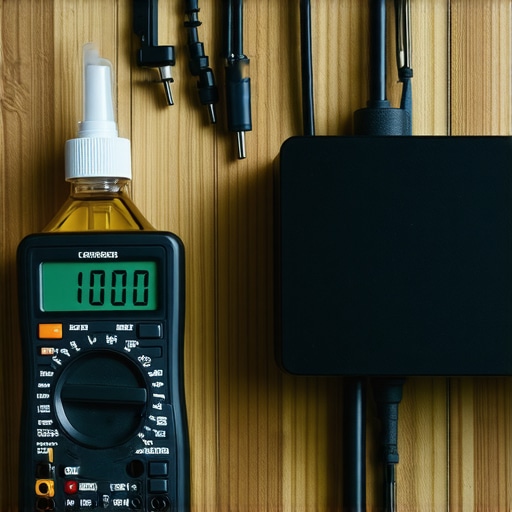
I do not recommend ‘audiophile rocks’ or expensive cable lifters that claim to align electrons. I recommend practical tools. First is a basic digital multimeter. If your sound starts to crackle or drop out, do not just buy a new DAC. Instead, use the meter to find a short in your speaker wires or verify that your power supply is actually delivering the rated voltage. Second, keep a bottle of DeoxIT or high-purity isopropyl alcohol on hand. You should learn to clean gold-plated connectors without ruining the finish because even microscopic oils from your skin can cause high-frequency impedance issues over a few years. Finally, keep a small set of precision drivers to fix a loose speaker terminal on your cabinet, which is a surprisingly common cause of intermittent signal loss that people mistake for ‘digital jitter.’
How do I maintain my digital audio gear over time?
Consistency is your best friend here. Beyond cleaning contacts, I perform a ‘re-seating’ ritual every six months. I unplug every single interconnect and plug it back in. This physical action scrapes off any micro-oxidation that has formed. If you have an older integrated amp, this is also a great time to address why your old receiver pops when you switch inputs by using a burst of compressed air or specialized cleaner on the internal selector switches. For your speakers, check the rubber or foam surrounds. If you catch a small crack early, you can repair a tear in your speaker surround with rubber glue before it becomes a massive hole that ruins the driver’s excursion.
The shift toward smarter sound correction
As we look toward the next few years, the ‘DAC’ as a standalone box is changing. We are moving away from simple conversion and toward integrated Digital Signal Processing (DSP). According to Amir Majidimehr of Audio Science Review, the transparency of modern DAC chips has largely surpassed the limits of human hearing, meaning the next frontier isn’t ‘more bits’—it’s room correction. I predict we will see more DACs that come with calibrated microphones to automatically adjust for your room’s acoustics in real-time. This is essentially the logical evolution of the hobby: if we can’t make the room perfect, we make the DAC smart enough to fix the room’s mistakes. If you want to experience this today, I highly suggest trying a simple software-based EQ like Equalizer APO on your PC to see just how much a small 3dB dip in the muddy mid-bass frequencies can clarify your entire system.
The Brutal Truth About Chasing the Perfect Signal
After years of swapping boxes and cables, I have realized that the perfect DAC is often a myth manufactured by marketing teams. The biggest jump in quality you will ever experience is moving from a noisy motherboard to almost any dedicated unit. Past the $200 mark, you are paying for features, build quality, and aesthetic, rather than a massive leap in resolution. One of the hardest lessons I learned was that gear synergy matters more than price tags. If you are buying on the used market, you must be careful to identify a fake pair of premium headphones before assuming your DAC is the problem. Also, remember that even high-end units age; knowing how to tell if your amps capacitors are failing is vital for anyone running vintage or high-end desktop gear. A failing capacitor can introduce noise that no amount of digital filtering can fix.
Resources I Use to Keep My Gear Honest
I do not rely on marketing brochures. My first stop for any new purchase is Audio Science Review, where you can see actual measurements of how a device handles jitter and noise. For managing my physical library, I use MusicBrainz Picard to ensure my metadata is clean. When it comes to finding hidden gems, I have found that the trick to buying high-end audio at estate sales is the best way to get elite performance on a budget. Finally, for those who still love the ritual of vinyl alongside their digital files, knowing how to fix a scratching noise in your turntable ensures your analog side stays just as clean as your digital one.
Stop Measuring and Start Listening
It is easy to get buried in charts, bitrates, and SINAD scores. But at the end of the day, your audio system exists for one reason: to move you. High-quality audio should make your hair stand up, not just make you reach for a calculator. If you find yourself spending more time looking at the bitrate than closing your eyes and feeling the rhythm, take a step back. Your ears are the ultimate judge, and no spec sheet can replace the visceral joy of a well-produced track. Have you ever found a ‘cheap’ piece of gear that actually sounded better to you than an expensive ‘audiophile’ model? Let me know your story in the comments below!