
I remember it like it was yesterday. I had just scored a pair of pristine thrift-store speakers—thick wood cabinets, silky dome tweeters, the works. I was nineteen, broke, and my car’s factory paper cones sounded like a wet blanket. I thought I was a genius. I spent an entire Saturday afternoon wedging those heavy cabinets onto my rear deck, secured only by a few bungee cords and blind hope. When I first turned the key, the bass felt rich and the vocals were clear. For exactly forty-eight hours, I was the king of the parking lot. Then, the summer sun started baking the glue, the humidity warped the paper cones, and the constant vibration of the road began to literally shake the internal crossovers apart. I didn’t just lose my sound; I ruined a perfectly good set of hi-fi gear because I ignored the basic laws of physics and engineering.
Your Living Room Gear Doesn’t Belong in Your Trunk
It is a tempting shortcut. We see a great deal on a set of bookshelf speakers and think, ‘Hey, a speaker is just a speaker, right?’ Wrong. Home audio is designed for a stable, climate-controlled environment with 8-ohm impedance standards. Car audio is a different beast entirely. Between the extreme temperature swings and the constant jostling, home speakers simply aren’t built to survive the commute. I learned the hard way that stopping your rear deck from rattling is much harder when you have a five-pound wooden box bouncing around back there. Today, we are going to look at why this ‘hack’ almost always ends in heartbreak and how you can actually get that high-end sound in your vehicle without destroying your equipment.
Is it really that bad to use home speakers in a car?
The short answer is yes, and the long answer involves your car’s electrical system. Most home speakers are rated at 6 or 8 ohms, while car head units and amplifiers are typically designed for 4-ohm loads. When you mismatch these, your amp has to work significantly harder to push the same volume, which can lead to clipping or even hardware failure. I have seen enthusiasts fry perfectly good receivers because they didn’t know how to use a multimeter to find a short or check their impedance properly. According to technical standards from the IEEE regarding automotive electronics, interior vehicle temperatures can swing by over 100 degrees in a single day, which is far beyond the operating specs of most residential speaker adhesives and foam surrounds. Have you ever tried to save a few bucks by repurposing home gear for your car and ended up regretting it? If you are struggling to get the stage right, it is better to learn how to balance your car audio for the drivers seat using equipment meant for the road. Let’s break down the technical reasons why that living room soundstage falls apart the moment you shift into drive.
Protect Your Amp from Resistance Issues
Think of your car’s amplifier as a high-pressure pump and the speaker as a nozzle. When you connect an 8-ohm home speaker to a 4-ohm car system, it is like trying to force water through a nozzle that is way too small. The pressure builds up, the heat rises, and eventually, the pump (your amp) burns out. If you notice your audio cutting out during a heavy bass track, you need to learn how to tell if your amp is running too hot before it becomes a permanent paperweight. I learned this the hard way when I tried to run a set of vintage Bose cubes off a cheap head unit; the unit became so hot I could have fried an egg on the dashboard. Always use a tool to check your loads. Mastering how to use a multimeter to find a short or verify your impedance is the first step in ensuring you aren’t killing your gear by accident.
The Humidity and Heat Problem
Home speakers are often built with paper cones and organic adhesives designed for climate-controlled living rooms. In a vehicle, the greenhouse effect turns your cabin into a sauna. I once spent an entire Saturday afternoon custom-mounting a set of thrift-store bookshelf speakers only to find the paper cones sagging and distorted after a single rainy week. If you insist on using older gear, you must know how to clean your speaker cones without ruining the paper, though no amount of cleaning saves a cone that has turned into mush from humidity. 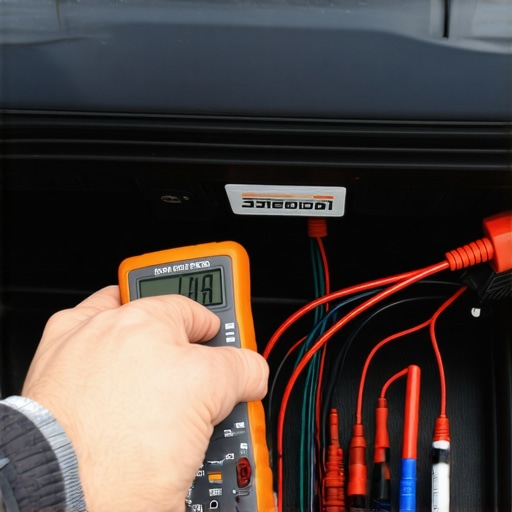
Choose Automotive-Grade Mounting Instead
Rather than lugging heavy wooden boxes into your trunk, look at proper car components that can withstand G-forces. If you are worried about aesthetics or trunk space, you can learn how to hide a car amp under the passenger seat safely to keep the install clean and professional. I once tried to bolt a heavy home subwoofer cabinet directly to my chassis using hardware store brackets. The vibration was so intense it actually loosened the fuel line brackets nearby and sounded like a bag of nails in a dryer. Modern automotive enclosures use specialized plastics and resins that don’t rattle or warp under stress.
Fix Your Bass by Checking Speaker Phase
One of the most common mistakes with DIY car installs is accidentally wiring one speaker backward. It happens easily when you are twisting wires in a dark trunk or cramped footwell. If your bass sounds thin, hollow, or seems to disappear when you turn the volume up, it is time to learn the easy way to test if your speakers are out of phase. I remember finishing a full weekend install and feeling absolutely crushed because it sounded like a tin can. I spent hours troubleshooting before realizing I’d swapped the positive and negative leads on just one channel. Fixing that single wire took two minutes and instantly doubled the impact of the sound. This phase cancellation is a silent killer of car audio quality, but it is one of the easiest technical hurdles to overcome once you know what to listen for.
Keep Your Physical Connections Solid
The constant vibration of a moving car will shake loose even the tightest connections meant for a stationary home theater. While gold-plated banana plugs look great on a bookshelf, they are a liability in a trunk. You want crimped or soldered connections that won’t budge when you hit a pothole or speed bump. I’ve seen enthusiasts waste hundreds of dollars on premium drivers only to have them fail because a cheap wire nut vibrated off and grounded against the car frame. Focus on the physical integrity of your wiring as much as the quality of the speakers themselves to ensure your system lasts longer than a single road trip.
Most enthusiasts believe that the more money they spend on a speaker, the better it will sound regardless of the environment. I used to think a $500 set of drivers would automatically outperform a $100 set, even if I just threw them in a box. In reality, the most expensive speakers in the world will sound mediocre if they aren’t properly broken in or if the power supply is sagging. You might notice why your new speakers sound better after 20 hours of use, which isn’t some audiophile superstition—it is the mechanical suspension of the spider and surround reaching its designed flexibility through physical use.
Stop Chasing Brand Names and Start Measuring Your Room
Everyone says you need ‘audiophile’ cables to get the best out of your gear, but in my experience, the room layout and the source quality are far more important factors. I have seen people spend $200 on speaker wire while the difference between cheap and expensive DACs was the actual bottleneck in their system. If your digital-to-analog converter is introducing jitter or noise, a better cable just carries that noise more efficiently to your ears. A massive trap to avoid is falling for the ‘high-power’ digital amp marketing without looking at the specs. Often, the reason your passive speakers sound quiet with a digital amp is because these compact units often lack the current headroom to handle low-impedance dips in the music, leaving your audio sounding thin and lifeless despite the advertised wattage. 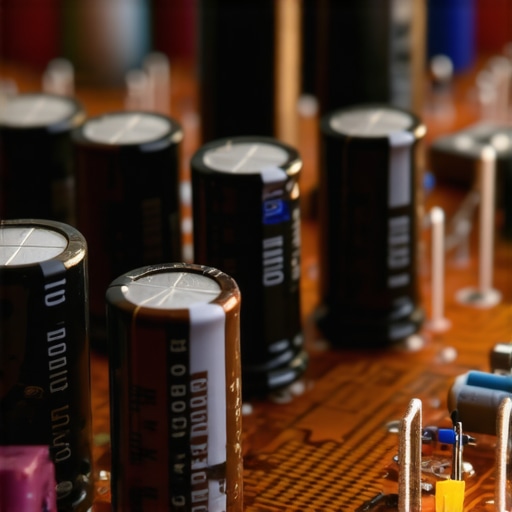
Does your amplifier actually have enough juice for those low-impedance peaks?
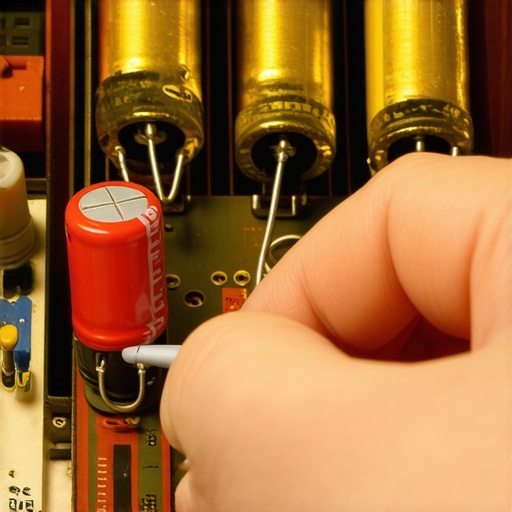
This is the advanced question every serious audio enthusiast eventually has to answer. According to research by the Audio Engineering Society (AES), power compression is a silent killer of high-fidelity sound. When an amplifier struggles to maintain voltage under a heavy load, it generates excess heat instead of pushing the speaker cone. This is exactly why your car amp is overheating during long summer drives or why a home receiver might clip during a loud movie sequence. If you are refurbishing older gear, you also need to know how to tell if your amps capacitors are failing, as dried-out electrolytic caps will not provide the instantaneous current needed for those deep bass hits.
The Truth About High-End Cables and Your Ears
Another common myth is that gold-plated connectors improve signal speed or clarity. While we all love the premium look, you should understand the real difference between gold and silver plated connectors—it is primarily about preventing oxidation in humid environments, not about making the electrons move ‘faster’ or ‘cleaner.’ If you are predominantly a headphone listener, you might wonder how to tell if your headphones need an external amp; if they sound muffled or lack dynamic punch even at high volumes, you are likely suffering from a voltage mismatch rather than poor driver quality. Many beginners also confuse sensitivity with quality. A speaker with high sensitivity requires far less power to reach the same volume as a low-sensitivity model. If you pair a demanding home speaker with a weak head unit, it is frequently why your receiver shuts off when you turn the volume up. Have you ever fallen into this trap of buying ‘better’ gear only to have it sound worse because of a mismatch? Let me know in the comments.
Fix the Physical Weak Points First
Maintenance isn’t just about cleaning dust off the cabinet; it is about preventing the mechanical failures that lead to ‘dead air’ on a Friday night. I have seen more systems ruined by vibration than by actual power surges. If you notice a buzzing that doesn’t go away, you should prioritize learning how to fix a rattling speaker grill without using messy glue. Most people reach for the Super Glue immediately, but that just creates a permanent mess that will eventually crack under the pressure of low-frequency waves. For the internals, especially on vintage gear, oxidation is your worst enemy. I personally keep a can of DeoxIT D5 handy at all times. It is the only way I have found to effectively fix the crackling sound in old potentiometers without tearing the whole unit apart. If you are dealing with a stereo that seems to lean to one side, knowing how to fix channel imbalance on a vintage stereo amplifier can save you a $200 trip to a repair shop. Often, it is just a dirty contact or a slightly loose wire inside.
How do I maintain my high-end system over time?
Consistency is key when dealing with materials like rubber, foam, and fine electronics. For speakers, check the surrounds every six months. If you find a small crack early, you can learn how to repair a tear in your speaker surround with rubber glue before the whole cone becomes detached. According to the Audio Engineering Society (AES) Preprint 4118, the thermal behavior of voice coils shows that consistent over-excursion doesn’t just tear the cone—it permanently changes the coil’s resistance through excessive heat cycles, which eventually kills your fidelity. For headphone enthusiasts, the maintenance is even more personal. You need to recognize the 7 signs your headphone pads need replacing today because compressed pads don’t just feel bad—they change the acoustic seal and ruin the bass response. Similarly, if your portable gear is acting up, don’t throw it away until you’ve checked how to fix a loose charging port on your favorite bluetooth speaker, as this is the leading cause of ‘dead’ devices that are actually perfectly functional.
One Tool to Rule Your Troubleshooting
If you take one piece of advice from my years of blowing things up, let it be this: Buy a digital multimeter. It is the only way to move from guessing to knowing. I use mine to verify that every connection is solid, especially if I have had to learn how to fix a loose speaker terminal on your cabinet after a move. Without a meter, you are just crossing your fingers and hoping your amp doesn’t see a short. This precision also applies to your source gear. If you are a vinyl fan, you will eventually realize that the built-in stages on modern turntables are often an afterthought. That is why you should use a phono preamp instead of the built-in one to actually hear the dynamic range your records are capable of. Even small maintenance tasks like the best way to clean earwax out of mesh earbuds can restore the high-end sparkle you thought you had lost to ‘old age.’
Room Correction Is the Next Big Frontier
Looking ahead, I predict that the biggest shift in audio won’t be in speaker materials, but in DSP (Digital Signal Processing) and AI-driven room correction. We are moving toward a world where your speakers will automatically calibrate themselves to the specific physics of your room. Until that is standard in every budget amp, you have to be the ‘smart’ component in the chain. My challenge to you: tonight, go grab your screwdriver and check every terminal on the back of your speakers. A quarter-turn of tightening could be the difference between a muddy soundstage and the crisp, punchy audio you originally paid for. Don’t wait for a total failure to start caring for your signal path.
Hard Truths My Blown Amplifiers Taught Me
Looking back, the biggest mistake I made wasn’t buying the wrong gear, but assuming I could outsmart the laws of physics with a bit of electrical tape. I realized that even if you find incredible home audio deals, they only pay off if you respect the environmental limits of the equipment. One lightbulb moment was discovering that car audio isn’t just about volume; it is about managing heat and humidity. I spent years wondering how to stop your car subwoofer from overheating in the trunk, only to find that proper airflow and impedance matching were the boring, yet effective, answers.
Another shift in my thinking happened when I stopped chasing ‘more power’ and started focusing on the environment. I used to think my speakers were failing me, but I didn’t realize why your car speakers sound better with the windows up—it is all about the cabin pressure and acoustic seal. This taught me that the room (or the car interior) is just as much a component as the amp itself. Finally, I learned that maintenance beats replacement every time. A quick fix for a loose wire or a bit of cleaning often restores that ‘new’ sound without costing a dime.
#IMAGE_PLACEHOLDER_E#
Gear That Never Leaves My Toolbag
If you want to move beyond basic troubleshooting, you need a few reliable staples. First, never underestimate the power of a digital multimeter; it is the only way to verify your electrical path without guessing. For vintage lovers, a can of DeoxIT is worth its weight in gold for cleaning scratchy pots and connections. If you are more into personal audio, I recommend having a set of replacement pads and a gentle stretching technique to ensure comfort. I once had to learn how to stretch a tight headphone headband without snapping it, and it turned a painful pair of monitors into my favorite daily drivers. For the vinyl enthusiasts, the move to an external stage is non-negotiable. I can’t emphasize enough why you should use a phono preamp instead of the built-in one if you want to hear the actual depth of your records.
Trust Your Ears and Start Tweaking
Building the perfect sound system is a journey, not a destination. Whether you are hunting for home audio deals at a thrift store or wiring a high-end subwoofer in your trunk, the joy comes from that moment when the music finally ‘clicks’ and the stage opens up. Don’t be afraid to experiment, even if you start small. We once took a gamble and documented how we made a 20 thrift store speaker sound like a pro monitor, proving that knowledge and placement often trump a massive budget. Your ears are the best judge, so trust them, keep your connections tight, and never stop tweaking your setup for that perfect hit of bass. Have you ever tried an audio ‘hack’ that ended up backfiring? Let me know in the comments below!