
I sat at my desk staring at the “Order Confirmed” screen, feeling like I’d just won the audio lottery. A pair of Sony flagship earbuds for eighty bucks. I told myself it was just a clearance sale or an open-box miracle. Fast forward three weeks: the plastic felt like a cheap toy, the noise canceling was non-existent, and the companion app wouldn’t even recognize they existed. I felt like an idiot. I’ve spent twenty years obsessing over gear, yet I still fell for a polished listing. It was a painful lesson, but it taught me exactly where the counterfeiters cut corners. Today, I am going to show you how to peel back the curtain so you never have to feel that “I’ve been had” pit in your stomach again.
Stop Letting High-End Knockoffs Trash Your Wallet
The problem is that scammers have moved way beyond the obvious typos and blurry photos of the past. They are mimics now. They buy the same packaging machines and use the same high-resolution marketing assets as the big brands. If you are not careful, you end up with a product that looks 95% correct but performs like a 1990s airplane headset. I made the mistake of thinking the physical box was enough proof, but the real truth lies in the firmware and the weight. Even little details like the reason your wireless earbuds sound different after changing the tips can be a giveaway; fakes often use non-standard nozzles that won’t even take a real silicone tip properly. We are going to break down the technical red flags, from the serial number verification tricks to the tell-tale signs in the charging case hinge that the factories always get wrong.
Is it actually possible to tell a fake from a picture?
You might think you need to hold them to know, but the digital trail usually gives them away first. According to a report by the OECD, counterfeit electronics represent a massive chunk of global trade, and they thrive on the “too good to be true” impulse. I ignored the fact that the seller had no history and the price was 60% below MSRP. If you are wondering why your headphones sound quiet on your laptop but fine on your phone, you might be dealing with a power draw issue, but with fakes, the internal DAC is often so poor it can’t handle a standard signal at all. Have you ever opened a package and felt that immediate wave of regret? I want to hear about it. Before you try to properly break in new headphones, you need to make sure they are actually made by the company on the box. Let’s look at the specific visual cues that should make you close that browser tab immediately.
Don’t Trust the Box Until You Verify the Data
The simple truth is that the external packaging is the easiest part for a counterfeiter to get right. High-resolution scanners and cheap cardboard are everywhere. To find the truth, you have to dig into the data that the factory can’t easily replicate. I learned this the hard way with a pair of supposed studio monitors that hissed like a bag of snakes the moment I plugged them in. I realized that if I had just taken five minutes to check the digital handshake, I would have saved a hundred bucks and a lot of frustration.
Cross-Reference the Serial Number with Official Records
Every high-end manufacturer maintains a registration database. Before you hand over cash or click ‘buy’ on a used listing, ask for a photo of the serial number on the unit itself—not just the box. Scammers often print the same legitimate serial number on five thousand fake boxes. When you enter that number into the manufacturer’s portal, it should show as ‘valid’ and often list the correct color or purchase date. If the site tells you the number is already registered or, worse, doesn’t exist, you are looking at a clone.
Why Your Kitchen Scale is a Secret Audio Tool
Quality audio components are heavy. High-end drivers require substantial magnets, and flagship wireless earbuds need dense, high-capacity batteries. Counterfeiters save money by using tiny, low-grade magnets and hollower plastics. I once bought a ‘vintage’ receiver that felt suspiciously light. When I opened it up, it was mostly empty space with a tiny circuit board that looked like it came from a calculator. If the manufacturer’s spec sheet says a pair of headphones weighs 250 grams and yours weigh 210, you’ve found the shortcut. This lack of density often leads to poor performance; for example, why your noise-canceling headphones struggle with high-pitched voices is often down to the cheap, lightweight microphones used in fakes that can’t sample audio fast enough. 
The App Connectivity Kill-Shot
This is the single most effective way to expose a modern fake. Companies like Sony, Bose, and Sennheiser invest millions in their proprietary apps. A counterfeit pair of earbuds might connect to your phone via Bluetooth, but the official app will almost never recognize them. The ‘handshake’ requires a specific chip and encrypted firmware that most knockoff factories can’t be bothered to crack. If you can’t toggle the EQ settings or update the firmware through the official software, pack them up and send them back. Even if you tried to use a DAC to improve your desktop computer’s audio, it wouldn’t fix the underlying garbage firmware inside a fake unit.
Look for These Tiny Manufacturing Fails
Authentic brands have incredible quality control. Look at the charging pins on the earbuds or the hinge on the case. On a real product, these are perfectly aligned and finished with gold or high-grade nickel. On fakes, the pins are often slightly crooked or have ‘burrs’ of excess plastic around the edges. If the sound quality is already off, you should test your headphones for a blown driver at home, but usually, with fakes, the issue isn’t damage—it’s just a bottom-tier component that was never good to begin with. You might also notice the hidden reason your wireless headphones lag during gaming is that fakes use outdated Bluetooth 4.2 chips while claiming to be the latest version. Double-check the font on the ‘CE’ or ‘FCC’ logos; counterfeiters frequently use the wrong typeface or spacing, a subtle hint that their legal compliance is just as fake as their hardware.I’ve seen enthusiasts spend days hunting for the perfect ‘burn-in’ track, firmly believing that the truth about speaker break-in periods will eventually transform a harsh-sounding clone into a Hi-Fi masterpiece. It is a comforting lie. The reality is that the physical limitations of cheap materials—like copper-clad aluminum wiring instead of high-purity oxygen-free copper—cannot be ‘fixed’ by playtime. In my twenty years of testing gear, I have found that if a unit sounds like sandpaper on day one, it’s usually because the components are garbage, not because they are ‘stiff.’ A study by the Audio Engineering Society (AES) on listener preference suggests that while mechanical changes in a driver’s suspension are measurable, they are rarely audible to the human ear. Counterfeiters rely on you waiting out a ‘break-in period’ until your return window slams shut. Have you ever fallen into this trap? Let me know in the comments.
Why do high-end clones sound surprisingly good for the first ten minutes?
Scammers have mastered the art of the ‘first impression.’ They intentionally tune their fake drivers with massive bass boosts and piercing highs to mimic a ‘V-shape’ sound signature that many people associate with high-end gear. It’s a psychoacoustic trick. While the trick to making cheap bookshelf speakers sound expensive involves proper placement and room treatment, fakes use cheap DSP (Digital Signal Processing) to mask their flaws. However, after about thirty minutes, you’ll notice ‘listener fatigue’—that physical urge to turn the music off because the distortion is actually straining your ears. 
The Internal Hardware Trap You Won’t See Coming
The most dangerous fakes aren’t the ones you find on street corners; they are the ones hiding inside legitimate-looking used chassis. I’ve seen ‘vintage’ receivers sold on secondary markets that were actually gutted and replaced with cheap Class-D amp boards from a generic tablet. One major red flag is if the unit is surprisingly light or if why your receivers protection mode keeps triggering at high volume becomes a daily mystery. Fake output transistors have almost zero thermal headroom, meaning they will overheat and shut down the moment you try to drive them properly. This is also a huge reason why you should never buy a used receiver without the remote; the remote is often a proprietary piece of tech that counterfeiters find too expensive to replicate perfectly. If the original remote works all the internal menus, you’re usually in the clear. Finally, always verify the internal wiring. If you find sloppy solder or how to match your subwoofer phase with your main speakers feels impossible because the internal leads are swapped, you are looking at a rush job from a knockoff factory. Quality audio is about precision, and scammers simply don’t have the time for that.Once you have confirmed your gear is the real deal and not a clever knockoff, the battle shifts from detection to longevity. I have seen five-thousand-dollar systems sound like fifty-dollar thrift store finds simply because the owner let oxidation take over the signal path. I personally swear by DeoxIT D5 for any mechanical connection. It is not just a cleaner; it is a deoxidizer that leaves a microscopic protective layer. If you have noticed a crackle when you adjust the gain, knowing how to fix a scratchy volume dial with electrical contact cleaner can save a legacy piece of gear from the landfill. I have revived countless supposedly broken units just by cleaning the internal potentiometers and knowing how to fix a scratchy fader on a vintage audio mixer without flooding the delicate circuitry with generic, oily lubricants that actually attract more dust.
How do I maintain my high-end audio gear over time?
The maintenance cycle for vintage and high-performance gear is non-negotiable. According to technical documentation from Vishay Intertechnology regarding aluminum electrolytic capacitor endurance, components are often rated for specific hourly lifespans at their maximum operating temperatures. In a hot-running Class-A amplifier, that is not a lifetime—it is a deadline. You need to learn how to tell if your speakers capacitor is starting to fail before it leaks electrolyte onto the PCB. If you ignore the physical signs, such as bulging tops or a sticky residue at the base, you will eventually find yourself wondering why your vintage receiver makes a loud hum with no music playing. Beyond electronics, keep an eye on your drivers; knowing how to revive old speakers with new foam surrounds can bring back the low-end punch that literally evaporated as the original foam turned to dust. 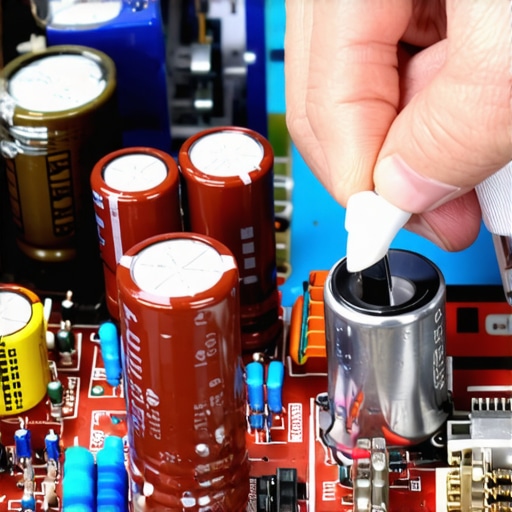
Precision Tools That Actually Make a Difference
You do not need a laboratory-grade oscilloscope to keep your system in peak condition, but you do need to stop guessing. I use a dedicated SPL meter and a calibrated microphone, but you can start much smaller. For example, learning how to use your phone to measure your rooms frequency response is the single most important skill for modern audiophiles. It allows you to see the invisible acoustic ‘nulls’ and ‘peaks’ that are stealing your bass or making your tweeters sound harsh. In the next few years, I predict we will see a massive shift toward AI-integrated speakers that use built-in LIDAR and microphones to self-calibrate in real-time, effectively ending the era of the ‘bad sounding room.’ Until then, the burden of precision is on us. I want you to download a free RTA (Real Time Analyzer) app today and walk around your listening chair while playing pink noise. You will be shocked to see how moving your head six inches can change your frequency response by 10dB. Stop chasing new gear and start mastering the gear you already own.
Hard Truths from the Repair Bench
After decades of tinkering with everything from tube amps to wireless IEMs, the most painful lesson I’ve learned is that price is rarely the only thing being discounted; you’re usually trading away safety and longevity too. Authentic gear is built to a rigorous standard, while clones are built to a price point. If you find yourself wondering why your vintage speakers are losing their punch over time, it’s usually a sign of aging components like capacitors or foam, which can be fixed with a little effort. Fakes, however, are often unfixable because their core architecture is a shortcut. I’ve realized that the “miracle find” is almost always a mirage, and the real value lies in buying once and maintaining forever.
Another lightbulb moment for me was realizing how much we let marketing jargon cloud our judgment. We want to believe in a shortcut, like thinking the truth about speaker break-in periods will somehow turn a ten-dollar counterfeit into a high-end masterpiece. It won’t. Real quality is felt in the weight of the transformer and the smoothness of the controls. If the deal feels too good to be true, it’s because the manufacturer skipped the parts that actually make the music happen.
The Gear I Use to Audit My Audio
If you want to move beyond guessing, you need a few reliable resources in your back pocket. I never start a session without a high-quality electrical contact cleaner. Learning how to fix a scratchy volume dial with electrical contact cleaner is a rite of passage for any serious listener. It’s the difference between a system that crackles and one that disappears into the room. For technical specifications, I rely heavily on the HiFi Engine database for vintage manuals and the Audio Science Review forums for objective measurements that cut through the noise. These tools help you verify if a piece of gear is performing to its original standard or if it’s a hollowed-out shell of its former self. #IMAGE_PLACEHOLDER_E#
Trust Your Ears But Verify the Specs
Building a high-end audio system is a marathon, not a sprint. Don’t let the fear of a bad deal stop you from exploring the world of high-fidelity sound. By focusing on the data, verifying serial numbers, and keeping your connections clean, you can build a collection that lasts a lifetime. The music sounds better when you know every component is the real deal and functioning exactly as the engineer intended. Have you ever discovered a piece of gear in your setup was actually a clever counterfeit? Let me know in the comments below!