
I remember the day I finally dragged that 100-pound, 15-inch monolith into my living room. I expected my windows to shatter with precision; instead, my couch rattled like a cheap tin can while my chair just three feet away felt like a bass-free zone. It was a localized earthquake in the corner and a desert in the center. I had spent a fortune on raw power, but I had completely ignored how physics actually works in a small room. This is the classic mistake. We assume a bigger driver equals better bass, but in reality, a single massive subwoofer is often its own worst enemy. Today, we are going to fix that. I am going to show you why doubling up on smaller subs is the smartest move you can make for your ears and your wallet.
Have you ever sat on your sofa and felt like the bass just disappeared the moment you leaned to the left?
Stop Fighting Your Room and Start Dominating It
The problem isn’t your sub; it is your room. Every room has ‘standing waves’—peaks and dips where bass frequencies either pile up and get boomy or cancel each other out entirely. When you have one giant driver, you are stuck with whatever mess that single point of origin creates. I used to think I could just shove my sub in a corner and call it a day, but that only made the peaks louder and the dips deeper. By switching to two smaller subwoofers, you are essentially attacking those room modes from two different directions. One sub fills in the ‘dead spots’ created by the other. According to extensive research by Todd Welti at Harman International, using two subwoofers (or even four) significantly reduces the seat-to-seat variation in bass response, ensuring everyone on the couch gets the same punch. You get smoother, more musical low end because you aren’t trying to force one driver to do the impossible.
But won’t two subs just double my technical headaches?
It is a fair question. Many people fear that adding a second unit means more wires and more chances for things to go wrong. Early in my journey, I made the mistake of thinking I could just plug them both in and be done. I ended up with a muddy mess because I didn’t know how to match my subwoofer phase correctly. If they aren’t in sync, they actually fight each other, and you lose even more bass than you started with. However, once you get that sorted, the effort pays off tenfold. Two 10-inch subs often have a faster ‘transient response’ than one massive 18-inch beast, meaning the bass stops and starts exactly when the music does. Plus, you don’t have to push two subs nearly as hard to get the same volume, which helps you avoid the dreaded situation where you have to fix a subwoofer that smells like it is burning from overexertion. Smaller subs are easier to place, easier to hide, and significantly more effective at making your house feel like a high-end cinema rather than a vibrating rattle-trap. If you’ve been struggling with floor-shaking vibrations that lack clarity, you might need to fix a subwoofer that is vibrating your furniture by decoupling it or, better yet, balancing the load across two units. Trust me, your ears will thank you for the upgrade to a dual-sub setup.
Think of dual subwoofers like sprinkler heads in a garden. A single massive one in the middle might soak the nearby plants while leaving the corners bone dry. Two smaller ones, strategically placed, ensure the entire lawn stays green without creating a muddy swamp in the center. To get this right, you have to move past just plugging them in and actually manage the physics of your space.
Find the Sweet Spot for Both Units Instead of Guessing
The most common mistake is placing both subs in the front corners and hoping for the best. While you might think this looks symmetrical, it often creates massive ‘nulls’ at your seating position. I once spent four hours dragging a 50-pound sub six inches at a time across my hardwood floor, sweating through my shirt, only to realize that the best spot was actually behind my recliner. To save your back, use the ‘subwoofer crawl.’ Place one sub exactly where you sit, play a bass-heavy track, and crawl around the perimeter of the room. Where the bass sounds tightest and cleanest is where that sub should live. Repeat this for the second unit to find the sweet spot for your speakers in a rectangular room or any living space.
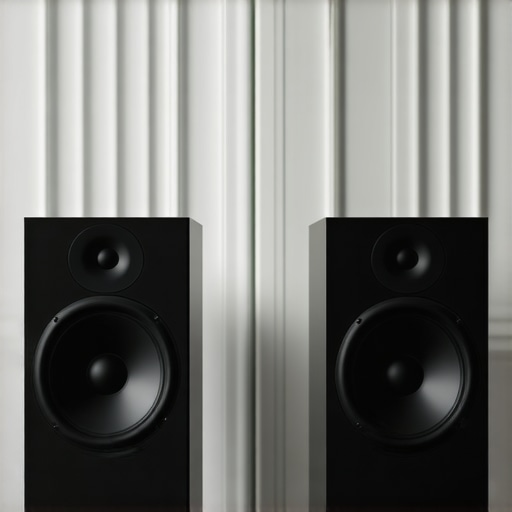
Stop Your Subwoofers From Cancelling Each Other Out
Once you have them placed, the biggest hurdle is phase alignment. If one sub is pushing out while the other is pulling in, they will literally delete the sound waves before they reach your ears. This is why many people think their upgrade didn’t work. You can how to tell if your speakers are out of phase in 30 seconds by flipping the phase switch on the back of one unit. If the bass suddenly gets louder and fuller, you found the right setting. I remember a setup where I thought my new drivers were defective because the kick drums sounded like wet cardboard. It turned out they were fighting each other for dominance. Don’t assume the ‘0’ setting is always correct; trust your ears or use a measurement tool.
Level the Playing Field With Precise Calibration
You don’t want one sub doing 90% of the heavy lifting. This causes localized bass, where you can ‘point’ to where the sound is coming from, which ruins the immersion. You want the bass to feel like it is just ‘there’ in the air. Use your receiver’s auto-calibration, but don’t treat it as gospel. I always recommend you how to use your phone to measure your rooms frequency response with a simple SPL meter app. This helps you ensure both units are contributing equally to the soundstage. Also, check your cabinets for any issues that could ruin the clarity. You can use the simple paper test for finding air leaks in your speaker cabinet to make sure the air is only coming out of the port and not through a loose screw or a poorly sealed seam.
Balance Your Power Consumption and Impedance
When running two subs, especially if you are using external amplification, you have to be mindful of the load you are putting on your system. While most active home subs have their own internal amps, if you are building a custom passive setup, you need to know how to match your car subs impedance to your amplifiers output to prevent overheating your receiver. Think of it like a plumbing system; if you try to force too much water through a narrow pipe, something is going to burst. Keeping your levels matched and your phase in sync ensures that neither sub has to work too hard, giving you that effortless, cinematic ‘punch’ that a single large driver simply can’t replicate in a standard room.
One of the biggest lies in the audiophile world is that you need ‘stereo’ subwoofers to maintain an accurate soundstage. I have seen enthusiasts spend thousands to ensure their left sub only plays the left channel and the right sub handles the right. In reality, low-frequency sound waves are so long that your brain physically cannot localize them below about 80Hz. Dr. Earl Geddes, a pioneer in acoustics and a proponent of the ‘Multiple Subwoofer’ theory, proved that distributing multiple subs as a mono group is far more effective at smoothing out room resonances than trying to maintain a stereo image that simply does not exist at those frequencies. When you run them in mono, you are using the collective power of the drivers to overwhelm the room’s natural acoustic flaws. 
Stop Chasing High-End DACs Until Your Room is Treated
Many people fall into the trap of thinking a $1,000 converter is the missing link to ‘clean’ bass. However, why your high-end DAC sounds exactly like your laptops headphone jack often comes down to the fact that your room’s acoustic distortion is 100 times more significant than any electronic jitter. If your seating position is stuck in a 15dB null at 40Hz, no amount of digital-to-analog wizardry will bring that kick drum back to life. You are essentially trying to paint a masterpiece on a crumbling wall. Focus on placement and phase before you start swapping out your electronics.
Should you worry about the ‘break-in’ period for your new dual setup?
You will often hear people swear that you need to play pink noise for 100 hours before the spider and surround of a sub loosen up enough to sound ‘right.’ While there is a slight measurable change in the mechanical compliance of the driver, the truth about speaker break-in periods is that the change is usually subtle and happens within the first few minutes of use. Most of what people perceive as ‘breaking in’ is actually their own ears and brain adapting to the new frequency response. Don’t waste days of electricity; just start enjoying your movies.
The Dangerous Temptation of Over-Equalization
The most common ‘oops’ factor for advanced users is trying to use EQ to fix a physical room null. If you are sitting in a spot where sound waves are cancelling each other out, you can feed the sub 1,000 watts of boost and you still won’t hear that note—but you might quickly find out why your receivers protection mode keeps triggering at high volume. Forcing an amplifier to work ten times harder to fill a hole created by physics is the fastest way to fry your gear. Instead of boosting the quiet spots, use your EQ to pull down the ‘boomy’ peaks. This gives your amp more headroom and keeps your bass sounding tight and controlled.
Kill Cabinet Resonance with Simple Mass
Even with a perfect dual setup, if your cabinets are vibrating against a hollow floor, you are losing the battle for clarity. Just as the reason your speaker stands need to be filled with sand is to add mass and dampen vibrations, your subwoofers benefit from being decoupled or strategically weighted. If the cabinet is moving, that is energy that isn’t being converted into sound waves. Have you ever fallen into this trap of trying to fix a room problem by just buying a more expensive amp or cable? Let me know in the comments.
Get Pro Results Without a Pro Budget
I have spent years guessing, but the real breakthrough came when I stopped using my ears as the primary measurement tool. Your brain is incredibly good at ‘filling in the blanks,’ which is exactly what we do not want when calibrating dual subs. I highly recommend picking up a UMIK-1 calibrated microphone and downloading Room EQ Wizard (REW). It is free software that gives you a literal map of your room’s acoustic problems. While you can how to use your phone to measure your rooms frequency response for a quick check, REW is what the pros use to see exactly where phase cancellations are happening. According to Dr. Floyd Toole in his seminal work ‘Sound Reproduction: The Acoustics and Psychoacoustics of Loudspeakers and Rooms,’ the interaction between the speaker and the room is the single most influential factor in sound quality. You can have the world’s most expensive sub, but if it is sitting in a room mode null, it will sound like a budget box from the 90s.#IMAGE_PLACE_HOLDER_D#
How do I maintain my home audio gear over time?
Maintenance is not just about dusting; it is about preventing the slow degradation of mechanical parts. For example, if you find that your audio levels are jumping or you hear a crackle when you adjust the gain, you should learn how to fix a scratchy volume knob on an old amp before the component fails entirely. Similarly, do not ignore the physical health of your drivers. Over time, the rubber or foam surrounding the cone can dry out. Knowing how to revive old speakers with new foam surrounds can save you thousands in replacement costs. If you are a headphone user, you have likely seen why your headphone pads are flaking and how to prevent it—keep them away from direct sunlight and wipe them down after long sessions to prevent skin oils from eating the synthetic leather. Also, keep an eye on your electronics. A subtle loss of punch often means internal components are reaching their end of life, and learning how to tell if your speakers capacitor is starting to fail is the difference between a simple repair and a blown power supply.
Prepare for the Era of AI-Driven Calibration
Looking ahead, the next decade of home audio is going to be dominated by active, real-time room correction. We are already seeing receivers that can use ‘cloud-based’ processing to analyze your room’s acoustics and adjust the DSP on the fly. This means the days of manually dragging subwoofers around might be coming to an end, as internal algorithms compensate for room modes in ways that passive treatments never could. However, for now, the physics of air and mass still rule. If things sound off, you need to know how to tell if your speaker is actually blown or just rattling. Do not let a loose screw convince you that your driver is dead. My best advice? Stop obsessing over the ‘next’ purchase and spend this weekend with a measuring tape and a calibration mic. You will find more performance in your current gear than you ever thought possible.
Hard Lessons from My Years Chasing the Perfect Low End
After years of trial and error, I’ve realized that raw decibels are cheap, but balanced bass is earned. I spent far too much time thinking a bigger amp solved everything, when in reality, the room itself was the bottleneck. One of the biggest lightbulb moments for me was realizing that asymmetrical placement—putting one sub near the front and one behind the couch—often creates a much smoother response than ‘perfect’ front-corner symmetry. I also learned that what feels ‘powerful’ during a five-minute demo can actually be a massive frequency peak that causes listener fatigue over an hour. Truly great bass isn’t just about the chest-thump; it is about the silence and clarity between the notes.
The Toolkit That Actually Fixed My Soundstage
You don’t need a professional degree to get these results, just a few specific tools and a bit of patience. I always suggest starting with the basics before spending a fortune on new drivers. If your room feels too ‘alive’ or harsh, you can often use a rug to fix a bright sounding room, which helps tighten up the overall presentation. For keeping your hardware in top shape, a can of electronic contact cleaner is essential to fix a scratchy volume dial on vintage gear. Finally, never settle for background noise; most issues can be solved with the 5 dollar fix for humming speakers and ground loops that keeps your signal path pristine.
Give Your Ears the Cinematic Experience They Deserve
At the end of the day, the goal is to stop thinking about your equipment and start getting lost in the sound. Whether you’re watching an action blockbuster or a live concert recording, a properly calibrated dual-subwoofer system makes the walls of your room disappear. It is about that physical sensation of precision rather than just a muddy rattle. Just remember that placement is everything—ensure your speakers bass port should never be pushed against a wall so the air can flow freely. You have done the hard work of understanding the physics; now it is time to enjoy the results. Have you ever tried the subwoofer crawl, or did you just stick yours in the corner and hope for the best? Let me know below.