
I remember the day my dream subwoofer arrived. It was a massive, 15-inch beast that promised to rattle my teeth, but as soon as I unboxed it in my 12×12 living room, my heart sank. It didn’t look like high-end audio equipment; it looked like a piece of industrial machinery that had no business being anywhere near my mid-century modern coffee table. My wife’s first question wasn’t about the frequency response—it was, “Where on earth is that supposed to go?” I tried to play it cool, but the truth is, I’d overbought. I wanted that bone-shaking low end, but I hadn’t considered that a small room and a giant sub are often at war with each other. [image_placeholder]
The Subwoofer That Ate My Living Room
If you’re reading this, you’re likely staring at a black box the size of a mini-fridge and wondering how to keep your decor—and your relationship—intact. We all want that cinematic rumble, but we don’t necessarily want our homes to look like a Guitar Center clearance aisle. I spent months shuffling that heavy box around, and let me tell you, it’s a game of inches. The struggle is real because subwoofers are picky. You can’t just shove them into a closet and hope for the best. Today, I’m going to share the hard-won secrets of integrating a massive sub into a tight space without sacrificing the very performance you paid for.
Is it even possible to hide something this big without killing the sound?
Skepticism is healthy here. I used to think the only way to hide a sub was to bury it under a mountain of decorative pillows. Wrong. According to a study by the Audio Engineering Society (AES), low-frequency sound waves are omnidirectional, meaning they spread out in all directions, but their interaction with room boundaries can turn a great sub into a boomy, muddy mess. This is why the mistake you’re making when positioning your subwoofer usually involves prioritizing aesthetics over the laws of physics. I’ll be honest: my first attempt at camouflage was a total disaster. I tried to hide a massive subwoofer in a minimalist living room by placing it inside an antique wooden chest. I thought I was a genius. Then I turned it on. The chest rattled so loudly it sounded like a bag of marbles in a blender. Not only was the sound terrible, but I almost shook the hinges off a family heirloom. It taught me that hiding a sub requires more than just a physical barrier; it requires an understanding of air and vibration.
Think Beyond the Corner Placement
Most people instinctively head for the corner. It’s out of the way, right? But that is exactly why your floorstanding speakers sound boomy in the corner, and the same logic applies to your sub. Corner loading can bloat the bass, making it loud but indistinct. If you’re struggling with this, have you ever felt like your sub is more of a nuisance than a feature? I’d love to hear if you’ve ever had a decor versus decibels standoff in your house! Once you stop thinking of the sub as a box and start thinking of it as functional furniture, the possibilities open up. We need to look at end-table conversions, acoustically transparent fabrics, and even the subwoofer crawl to find that sweet spot where the eye can’t see it, but the ears certainly feel it. We also need to make sure you match your subwoofer phase with your main speakers so the sound stays punchy, no matter where you tuck it away.
Get on Your Hands and Knees for Better Bass
Put the Subwoofer Where You Sit
Imagine you are the subwoofer. It sounds ridiculous, but it works. The most effective way to find a hiding spot that actually sounds good is the “subwoofer crawl.” Instead of moving that 80-pound box fifty times, you place the sub exactly where your head goes when you are watching a movie—right on your sofa. Then, you play a bass-heavy track and literally crawl around the perimeter of the room. Where the bass sounds tightest and cleanest to your ears, that is where the sub belongs. This avoids the messy physics where why your floorstanding speakers need more breathing room from the wall, as it helps you identify the nulls and peaks in your specific room geometry. I once did this in a studio apartment and found the “sweet spot” was actually tucked behind a recliner at a 45-degree angle. It looked weird, but the bass felt like it was coming from everywhere at once. 
Stop the Floor from Joining the Band
Kill the Vibration Before It Kills the Sound
The biggest mistake people make when hiding a sub is letting it touch the floor directly. If your floor is hardwood or laminate, that sub is going to turn the entire room into a giant vibrating drum. I remember helping a friend who hid his sub inside a custom-built cabinet. Every time the kick drum hit, his dinner plates in the next room would rattle. We solved it by using “decoupling.” You need to separate the speaker from the physical structure of the room. You can use specialized isolation feet, but even a thick rubber mat or high-density foam can do wonders. It is the same logic used to stop your car trunk from rattling with this cheap foam trick; you are absorbing the energy before it transfers to the walls. Once the vibrations are isolated, the bass becomes “faster” and more precise because you aren’t hearing the house groaning under the pressure.
The Art of the Stealth Installation
Use Fabric Instead of Wood for Doors
If you are putting your sub inside a media console, do not use the solid wood doors. They will rattle, and they will trap the sound. Swap the center panels for acoustically transparent cloth. This lets the air move freely while keeping the “beast” out of sight. While you are at it, consider how to hide audio cables in a room with concrete walls if your ideal spot is far from your receiver. A sub that is hidden but poorly wired is just a trip hazard.
Dial in the Digital Integration
Even the best hiding spot won’t save you if the software settings are wrong. If your main speakers are small, you need to find the best crossover frequency for small satellite home theater speakers to ensure the sub isn’t trying to play voices. Most importantly, you must match your subwoofer phase with your main speakers. If the sub is firing “out of sync” with your main speakers, the bass waves will actually cancel each other out, leaving you with a huge box that makes a lot of noise but produces zero impact.
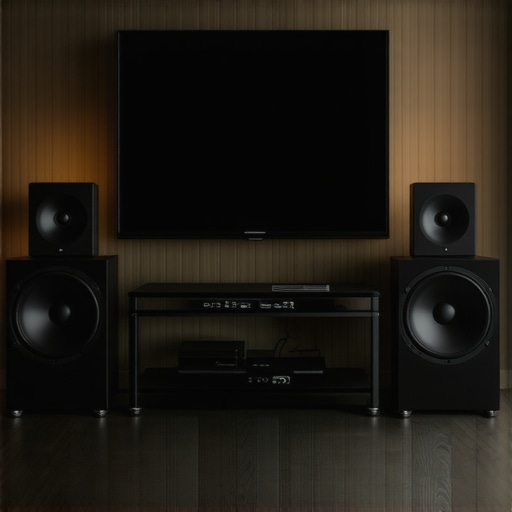
Wait, before you buy a second ‘beast’ to match the first, let’s talk about the biggest lie in home audio: the idea that more power solves poor acoustics. In my experience, throwing more wattage at a ‘dead’ room is like trying to fix a leaky bucket by pouring water in faster. Most enthusiasts believe that one massive 15-inch driver is the ultimate goal for home theater dominance. I used to be one of them until I realized that why two small subwoofers are better than one massive driver comes down to something called spatial averaging. A single sub creates ‘hot spots’ where the bass is overwhelming and ‘nulls’ where it’s non-existent. By using two, you effectively smooth out those standing waves, making every seat the best seat in the house.
Does Your Room’s Physics Negate That Expensive Spec Sheet?
It’s a sophisticated question that most beginners ignore. You might see a sub rated down to 18Hz, but in a small room, ‘room gain’ can boost those lows to the point of distortion, or worse, your room’s dimensions could cancel them out entirely. According to research by Dr. Floyd Toole of Harman International, the room is the single most influential component in your signal chain. This is why you should why you should use a rug to fix a bright sounding room; even if it doesn’t affect the deep bass, it cleans up the reflections that confuse your ears’ perception of timing. High-frequency reflections can mask the clarity of your sub’s upper-end crossover, making the bass feel sluggish even if the driver is world-class.
Avoid the Magic Break-In Trap
Another nuance that gets debated in audiophile circles is the ‘break-in period.’ You’ll hear people say you need 100 hours of play before a sub sounds right. While mechanical suspension does loosen slightly, the truth about speaker break-in periods is that your brain is doing more of the ‘breaking in’ than the rubber surround. If it sounds bad out of the box, it’s likely a placement or calibration issue, not a ‘stiff’ cone. However, don’t ignore the health of your gear. If you’re pulling a vintage amp out of storage to power your new setup, look for signs of age. Knowing how to tell if your speaker capacitors are starting to leak can save you from a catastrophic failure that takes your sub out with it. Also, if you’re hearing static when you adjust levels, learn how to fix a scratchy volume knob on an old amp before you assume the sub is blown. It’s usually the small things—the ‘oops’ factors—that ruin a $2,000 investment. Have you ever fallen into this trap where you blamed the speaker for a room or amp problem? Let me know in the comments!
Keep the Dust Away From Your Drivers
I learned the hard way that a subwoofer isn’t a ‘set it and forget it’ appliance. If you leave that massive driver to collect dust for three years, the physical components start to suffer. I make it a habit every six months to do a deep clean, but you have to be careful. You should definitely know how to clean your speaker cones without ruining the paper because one wrong move with a damp cloth can soften the material and change the tuning of the box entirely. While you’re at it, flip the unit over and check the connections. Over time, oxygen is the enemy of conductivity. I use a specialized contact cleaner once a year because knowing how to clean gold-plated connectors without ruining the finish ensures that your signal stays pure and free of that annoying intermittent crackle.
How do I keep my subwoofer performing like new for a decade?
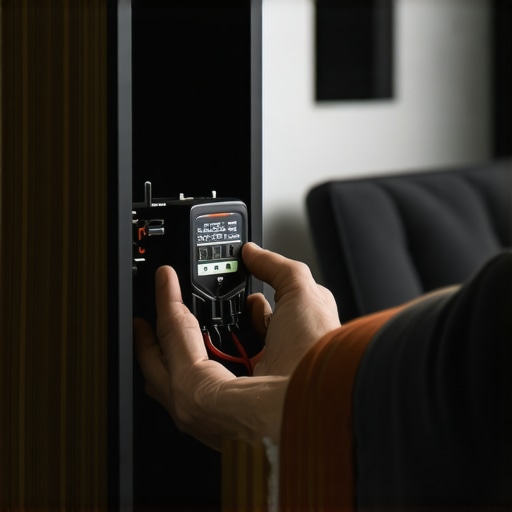
Consistency is the secret sauce. Beyond cleaning, you need to monitor the electrical health of your signal chain. I always keep a cheap digital multimeter in my drawer. It is the only way to be certain that your cables haven’t developed high resistance or internal breaks. If you suspect a problem, learning how to use a multimeter to find a short in your speaker wires can save your amplifier from a catastrophic failure. This is especially vital if you are running a complex setup where you had to figure out how to wire a subwoofer to a receiver with no sub out port, as those high-level connections put more stress on the wire integrity over time.
The Pro Tools I Actually Use
If you want to move beyond guesswork, you need to look at Room EQ Wizard (REW). It’s a free software, but it’s the gold standard for enthusiasts. According to technical documentation from the Audio Engineering Society (AES), human hearing is notoriously unreliable at detecting phase issues in the 40Hz to 80Hz range without visual aid. I use a UMIK-1 calibrated microphone with REW to see exactly where my room is ‘eating’ my bass. This tool helped me realize that a 60Hz hum I was hearing wasn’t a broken sub, but a simple electrical issue. Once I knew that, I could finally how to get rid of ground loop hum in your audio setup without buying unnecessary filters. If you’re serious about this hobby, stop guessing and start measuring.
Where the World of Bass is Heading
The future of home audio isn’t just bigger magnets; it’s smarter processing. We are moving toward a world where ‘Active Room Compensation’ will be built into even the most affordable subwoofers. Imagine a sub that uses internal microphones to ‘hear’ the room reflections and automatically adjusts its own DSP in real-time. We are already seeing the beginnings of this in high-end soundbars, and it’s only a matter of time before it becomes standard in standalone units. This will make the ‘subwoofer crawl’ a relic of the past, though I suspect purists like us will still prefer the manual touch. My advice? Grab your multimeter today and check your speaker terminal resistance—you might find a ‘hidden’ 2-ohm jump that’s been choking your amp’s headroom for months!
Lessons My Neighbors Wish I Learned Sooner
After years of tweaking, I’ve realized that the physical size of the driver is only half the battle. If you are using a vintage amplifier to push that extra low-end, you need to be vigilant about maintenance. I once nearly fried a gorgeous 1970s receiver because I didn’t know how to tell if your speaker capacitors are starting to leak, which caused a DC offset that my sub did not appreciate. Also, if you’re trying to squeeze more power out of a smaller amp to drive a passive beast, make sure you understand how to bridge a two-channel amp without blowing a fuse. The wrong wiring configuration can turn your high-end setup into an expensive paperweight in seconds.
The biggest lightbulb moment for me was accepting that bass is a physical force, not just a sound. You can’t just hide it; you have to manage its energy. If the floor is vibrating, you aren’t hearing the subwoofer—you’re hearing the house. It’s about a truce between aesthetics and acoustics.
The Only Gear That Actually Saved My Living Room
If you want to stop the trial-and-error cycle, there are three things I keep in my audio emergency kit. First is a calibrated microphone for Room EQ Wizard (REW) software to see the invisible waves. Second is a set of high-density Sorbothane isolation feet to decouple the box from the floor. Finally, I never touch my wiring without a multimeter. Knowing how to use a multimeter to find a short in your speaker wires is a lifesaver when you’ve hidden your cables behind baseboards or inside walls and something goes silent suddenly.
Stop Staring at the Box and Start Listening
Integrating a massive subwoofer isn’t about surrendering your home’s style to a piece of tech. It’s about the thrill of that first movie night where the room doesn’t just get loud—it breathes. Once you’ve decoupled the vibrations and dialed in the phase, the beast disappears, leaving only the music. Don’t be afraid to move things around one last time; the perfect sound is usually just four inches away from where you first put it. Have you ever had to choose between your room’s decor and your bass performance? Let me know in the comments below!