
I still remember the crisp autumn evening I finally brought home my dream tube amplifier. It was a heavyweight beast, glowing with that warm, amber promise of sonic perfection. I was so eager to hear it that I didn’t even think twice; I grabbed a dusty, beige power strip from behind the TV stand, plugged everything in, and hit the switch. For twenty minutes, it was heaven. Then, during a particularly heavy orchestral swell, the sound didn’t just distort—it felt like the life was sucked right out of the room before a sickening *click* signaled the protection circuit had kicked in. I panicked, thinking I’d blown a transformer. It turns out, I was just starving my gear through a five-dollar piece of plastic. We spend thousands on copper purity and DAC chips, but we often forget that the music starts at the wall outlet. Today, I’m going to show you why that cheap strip is the weakest link in your signal chain and how to finally let your amplifier breathe.
Your Amp is Gaping for Air and You Are Choking It
High-end amplifiers, especially Class A or heavy A/B designs, aren’t like your toaster or your floor lamp. They are dynamic animals. When a kick drum hits or a bass guitar growls, the amp needs a massive, instantaneous gulp of current to move those speaker cones. Most standard power strips are built with thin-gauge internal wiring and cheap contact points that create a bottleneck. This resistance causes a momentary voltage drop exactly when your music needs it most. I made the mistake of thinking ‘power is power’ for years, but the truth is much more physical. If you’ve noticed that your home theater receiver keeps shutting off randomly or the bass feels ‘soft,’ you might be looking at a current starvation issue rather than a hardware failure. According to research by the IEEE (Institute of Electrical and Electronics Engineers), the transient current demands of high-fidelity audio equipment can momentarily exceed the steady-state ratings of consumer-grade power taps, leading to significant voltage sag and increased total harmonic distortion.
Is a Dedicated Wall Outlet Actually Worth the Hassle?
You might be thinking that I’m just trying to sell you on expensive ‘audiophile’ jewelry, but this is about basic physics, not magic. When I finally ditched the strip and plugged my amp directly into the wall—or used a high-current power conditioner—the difference was visceral. The soundstage widened, and the low end regained a punch I didn’t know was missing. It’s a similar realization to when you first learn how to tell if your amp is running too hot; once you see the signs of stress, you can’t unsee them. Many people worry about surge protection, which is valid, but most cheap strips use MOVs (Metal Oxide Varistors) that actually degrade over time and can dump noise back into your sensitive audio components. Have you ever felt the back of your power strip after a long listening session and noticed it was warm to the touch? If so, you aren’t just losing sound quality—you’re wasting energy as heat. Have you ever experienced a mysterious loss in audio ‘oomph’ only to find out your wiring was the culprit? [image_placeholder_1] In the next section, we’ll dive into the specific ways these strips ruin your noise floor and what you should be using instead to protect your investment without sacrificing the soul of your music.
Stop Choking Your Power Supply with Plastic Bottlenecks
The first step in rehabilitating your sound is to treat your power source with as much respect as your speakers. Think of your amplifier as a professional athlete. If you force that athlete to breathe through a straw while running a marathon, they are going to collapse. A standard power strip is that straw. When you are driving demanding equipment, you need thick internal bus bars, not thin copper traces. Much like choosing the best gauge wire for a 500 watt car subwoofer, your home system requires substantial conductivity to handle sudden peaks in demand. I once spent three days trying to figure out why my system sounded ‘thin’ and suspected how to tell if your amps capacitors are failing, but as soon as I plugged my monoblocks directly into the wall, the low end gained three inches of depth. It was a face-palm moment that cost me zero dollars to fix.
Kill the Hum at the Source
If you hear a persistent buzz when no music is playing, you are not just dealing with ‘character.’ You are likely fighting a ground loop. These often occur when your amplifier and your source—like a PC or DAC—are plugged into different circuits or a noisy strip. Before you start questioning the difference between cheap and expensive DACs that actually matters, you need to isolate the power. Use a dedicated power conditioner that offers isolated banks for digital and analog gear. This prevents the high-frequency switching noise of a computer power supply from leaking into your delicate preamp stage. If the hum persists, you will need to learn how to find the source of a ground loop in home theater to systematically eliminate the culprit. This isolation is the difference between a ‘black’ background and a grainy, fatiguing mess.
Why Voltage Sag Makes Your Music Sound Hollow
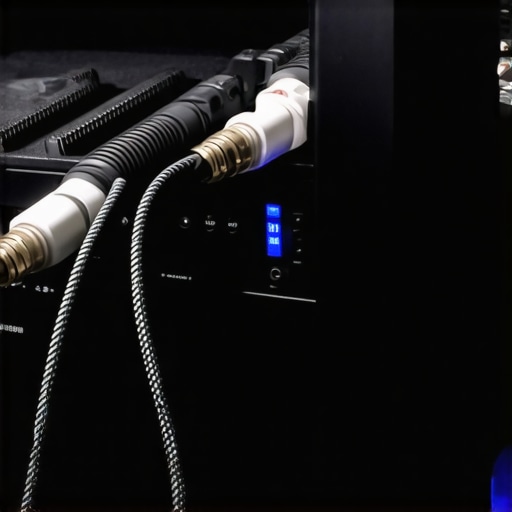
When your amp cannot pull current fast enough, the voltage drops. This is not enough to turn the lights off, but it is enough to flatten the soundstage. You might think the real reason your floorstanding speakers sound hollow in large rooms is just the acoustics, but often it is because the woofers are not getting the instantaneous kick required to fill that space. I remember helping a friend set up a massive surround system where the center channel sounded like a tin can despite the high-end drivers. We swapped the generic power tap for a high-current distributor, and suddenly the dialogue had weight and authority. It was not magic; we just stopped the power sag that was neutering the transients. By ensuring your power delivery can handle these micro-bursts, you let the amplifier control the speaker cones with grip and precision rather than letting them flop around due to lack of current.
The Last Six Feet are the Only Ones That Matter
You’ve probably heard the skeptics say, “Why spend money on a power cable when there are miles of cheap utility wire behind the wall?” It sounds logical, but it ignores how electricity actually behaves in a home environment. Most of the electromagnetic interference (EMI) and radio frequency interference (RFI) that plagues your system isn’t coming from the power plant; it is coming from your refrigerator, your LED dimmers, and your neighbor’s Wi-Fi. The power cable acts as an antenna, and that final stretch is where the signal is most vulnerable to local noise. While people focus on the difference between cheap and expensive DACs that actually matters, they often ignore that a noisy power floor can mask the very micro-detail they paid for. In my experience, a cable that offers high-speed current delivery and noise rejection isn’t ‘filtering’ the utility wire as much as it is preventing the house’s own noise from getting into the transformer.
Why does your system sound better at 2 AM?
It is a common phenomenon among audiophiles: the music seems more holographic and effortless late at night. This isn’t just because the world is quieter. Research presented at the Audio Engineering Society (AES) conventions has shown that the “power grid” is significantly cleaner during off-peak hours when industrial motors and household appliances are switched off. When you have less high-frequency noise riding on the 60Hz sine wave, your amplifier’s power supply doesn’t have to work as hard to filter out the junk, resulting in a lower noise floor. If you’re using a tube setup, you might even notice why your tube amp glows blue and if it is safe; while that glow is normal, the stability of that bias and the blackness of the background are directly linked to the quality of the incoming AC. It’s not magic—it’s less electronic friction.
Stop letting your computer ruin your preamp
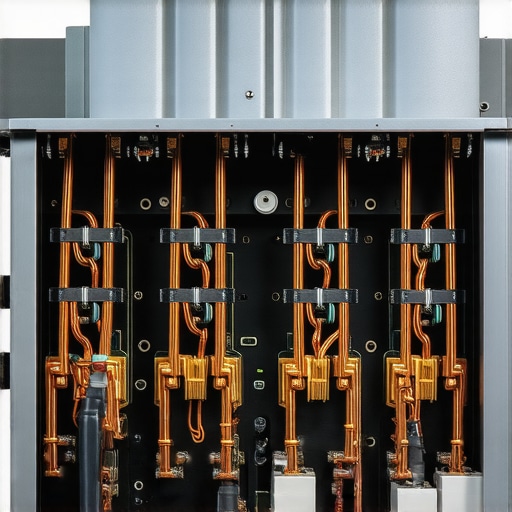
One of the biggest “traps” I see beginners fall into is the “One Strip to Rule Them All” mistake. They buy a decent power distributor and then plug their high-current amp right next to their noisy PC or streaming bridge. These digital devices use switching power supplies that “pollute” the common ground plane. If you don’t separate them, that high-frequency noise travels right back into the analog stages of your amp, flattening the dynamics. This is a primary reason people struggle with how to find the source of a ground loop in home theater setups. You should always use isolated banks—treat your digital gear like a hazardous waste zone and keep it away from your sensitive analog components. Have you ever fallen into this trap of plugging everything into one big daisy-chain? Let me know in the comments.
The hidden danger of over-shielded cables
Here is a nuance that even some veterans miss: more shielding isn’t always better. While you want to keep RFI out, a cable that is too heavily shielded can have high capacitance, which can actually “slow down” the transient response of a large amplifier. It’s a physical property similar to why your new speakers sound better after 20 hours of use—components and materials need to be optimized for their specific load. When you over-dampen the power delivery with excessive dielectric material, you lose that immediate “snap” in the percussion. Avoid the hidden cost of buying a cheap tube amplifier or a generic “heavy duty” cable that prioritizes insulation thickness over current delivery speed. Focus on low-impedance paths and high-quality contact points instead of just how thick the rubber jacket looks. The goal is transparency, not just protection.
Oxidation is the silent killer of your micro-dynamics
I’ve seen ten-thousand-dollar systems sound like entry-level setups simply because the owner hadn’t touched the cables in five years. Atmospheric moisture and airborne pollutants create a microscopic layer of non-conductive film on your terminals, slowly eroding the high-frequency detail you paid for. Even if you understand the real difference between gold and silver plated connectors, neither metal is entirely immune to the slow creep of environmental grime. This is where a high-quality contact cleaner like DeoxIT D5 becomes your best friend. I make it a rigid habit to ‘unplug and replug’ every connection in my system twice a year. This simple mechanical friction wipes the contact surfaces clean, but the chemical cleaner ensures they stay protected against future corrosion. If you ignore this basic hygiene, you might eventually find yourself wondering how to fix a loose speaker terminal on your cabinet because the heat generated by increased resistance has actually compromised the physical integrity of the connection.
How do I keep my gear sounding brand new for the next decade?
It starts with internal vigilance and a proactive stance toward maintenance. While many enthusiasts obsess over the external cables, the internal health of your amplifier is where the longevity battle is won or lost. Electrolytic capacitors are essentially chemical batteries with a finite lifespan, and they are sensitive to the heat cycles of your room. You need to know how to tell if your amps capacitors are failing—look for bulging tops or a faint hum that wasn’t there before—so you can service them before they leak and take out expensive output transistors. Similarly, for those of us who still cherish physical media, knowing how to clean the lens on an old cd player can save you from a ‘No Disc’ error that most repair shops would charge a premium to diagnose. Renowned amplifier designer Nelson Pass once noted that heat and dust are the primary enemies of longevity; keeping your gear well-ventilated and the contacts pristine accounts for ninety percent of the long-term performance battle.
Organize the chaos before a short circuit does it for you
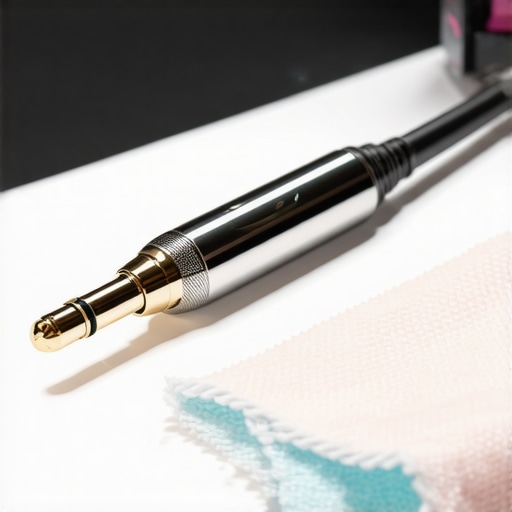
As you scale your system from a simple pair of speakers to a complex multi-channel home theater, the ‘spaghetti’ behind the equipment rack becomes a legitimate safety hazard. I once dealt with a system that kept entering protection mode, only to realize a single stray wire strand from a poorly stripped cable was touching the chassis. Finding the best way to label your messy home theater cables isn’t just about satisfying an aesthetic urge; it’s about being able to troubleshoot at midnight without a flashlight and a growing headache. In the coming years, I expect we will see ‘smart’ power centers that use machine learning to monitor the health of every connected device, alerting you to voltage spikes or capacitor drift before you can even hear a difference. For now, we rely on manual care. If you’ve ever wondered why your receiver clicks when you change the volume, it is often just the relays doing their job, but keeping those relays clean and the power stable is what prevents those clicks from turning into permanent silence. This weekend, I want you to take five minutes to unplug your speaker cables, apply a tiny drop of contact cleaner to the terminals, and plug them back in. You’ll be shocked at the transparency that’s been hiding behind a layer of invisible dust.
The Realizations That Changed My Listening Room Forever
Looking back at my years of tinkering, I realize that even the most exotic cable in the world can’t fix a fundamentally compromised power source. One major ‘lightbulb moment’ for me was realizing that noise doesn’t always sound like a loud hum; often, it presents as a lack of depth or a ‘gray’ quality to the music. It is much like the easy way to test if your speakers are out of phase—it is a simple mechanical check that costs nothing but can restore the entire soul of your performance. I also learned that even the best power delivery won’t save a poorly placed system, so make sure you aren’t making the mistake you’re making when positioning your subwoofer while you’re busy optimizing your AC outlets. High-fidelity audio is a game of cumulative gains, and the foundation is always the current coming from your wall.
My Personal Toolkit for Pure Sound
If you want to keep your system in top shape without spending a fortune on snake oil, I swear by a few specific habits. First, keep a high-quality contact cleaner on your shelf; atmospheric oxidation is a real enemy of micro-dynamics. Second, I highly recommend scouring local listings for hidden gems rather than just buying new; I have used the trick to finding high-end receivers at estate sales for pennies to find backup units and heavy-duty power distributors that the average buyer simply overlooks. Finally, your maintenance routine should include the physical components too—knowing how to clean your speaker cones without ruining the paper ensures that the end of your signal chain is as pristine as the power entering the front of it. These small acts of care prevent the ‘slow decay’ of sound quality that many owners mistake for aging gear.
Bring the Concert Home Today
Your journey toward audio perfection doesn’t have to be a race to spend the most money. It’s about being an advocate for your own music and understanding the physical requirements of your equipment. By cleaning your power delivery and respecting the physics of instantaneous current, you are finally letting your amplifier do exactly what it was designed for: recreating emotion. Don’t let a five-dollar plastic strip be the reason your favorite album sounds ‘just fine’ when it could sound life-changing. Reclaim that lost detail and give your system the clean, unrestricted path it deserves. Have you ever noticed a sudden jump in sound quality after simply rearranging your power cables or cleaning your terminals? Let me know in the comments below!