
I’ll never forget the first night I sat down in my new living room, staring up at those gorgeous 20-foot vaulted ceilings. I had my brand-new surround system ready to go. I cranked the volume on a Ridley Scott film, expecting a wall of sound that would make the floor shake. Instead? It felt like the audio was being swallowed by a giant, invisible sponge. The dialogue was ghostly, and the surround effects felt like they were coming from a different zip code entirely. It turns out, those “airy” architectural features we love are actually the natural enemy of a clean soundstage.
Ground Your Audio Before It Gets Lost in the Rafters
The problem with a big, tall room is that sound behaves like a bouncy ball. In my early days of tinkering, I made the classic mistake of thinking that since the room was tall, the speakers needed to be mounted high up to “fill the space.” I was dead wrong. All I did was create a massive delay between the screen and my ears. It’s a similar frustration to why your surround sound speakers should not be at ear level in some specific configurations, but with high ceilings, the “floor-to-ceiling” bounce becomes your biggest nightmare. If you don’t manage the verticality of your room, you’ll end up with a hollow mess. I’ve seen people spend five figures on gear only to have it sound worse than a basic soundbar because they didn’t account for the “cavern effect.” Today, I’m going to show you exactly where to place those rear channels and how to angle your setup so you actually hear the helicopters flying over you, not just echoing somewhere near the ceiling fan. We’ll also talk about why floorstanding speakers sound hollow in large rooms and how to fix that.
Is High-Ceiling Audio Just a Waste of Money?
You might be sitting there thinking your room is just “too big” or “too tall” for a real home theater experience. I get it. The skepticism is real when you feel like you’re fighting physics. But here’s a surprising fact: According to research from the Acoustical Society of America, the human ear is actually remarkably good at filtering out vertical reflections if the primary sound source is positioned correctly relative to the listener. You don’t need to lower your ceilings; you just need to change your strategy. Before we dive into the specific measurements, let me ask: have you ever felt like you’re constantly turning the volume up just to hear people talk, only to be blasted out of your seat by an explosion? That’s not a speaker problem; it’s a room problem. You might even find that you need to use a rug to fix the echo in your home theater room as a first step to taming those wild frequencies.
Angle Your Speakers Toward Your Ears Not the Air
The most common mistake I see in vaulted rooms is mounting speakers flat against the wall. When you have a 15-foot vertical gap above you, sound waves from flat-mounted speakers will bounce off the back wall and the ceiling before they ever hit your seat. This creates a smearing effect where the sound feels thin and distant. I once spent three hours drilling holes into my drywall to mount a pair of surrounds high up for an aesthetic look. The result was a disaster. I ended up having to buy adjustable brackets to tilt the tweeters directly toward the primary listening position. If your speakers are above ear level, they must be angled down. This simple adjustment ensures the direct sound hits you before the reflected sound turns into a muddy mess. 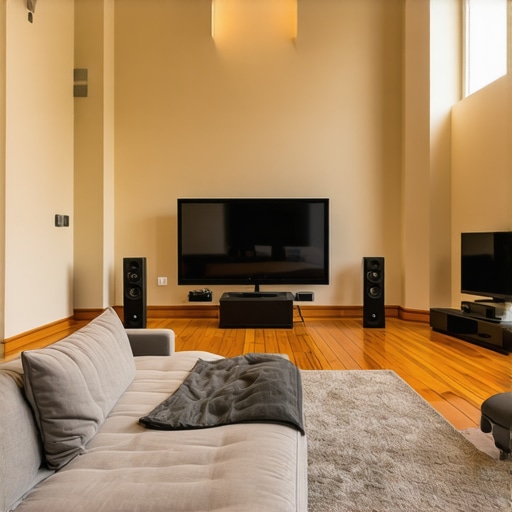
Keep Your Subwoofer Out of the Corners
In a massive room, you might feel tempted to tuck your subwoofer into a corner to boost the volume. Don’t do it. While this might make the floor shake more, it often results in one-note bass that sounds like a dull thud rather than a crisp kick drum. You will quickly notice why your floorstanding speakers sound boomy in the corner, and your sub will suffer the same fate. Instead, move the sub a few feet away from the walls. If you are worried about the look, there are ways to hide a subwoofer in plain sight without muffled bass. Also, it is vital to remember why you should never place your subwoofer inside a cabinet. In a high-ceiling room, the cabinet will just act as a secondary resonator, making the echo even harder to control.
Tame the First Reflection Points
Think of your room like a pool table. The sound is the cue ball, and it is going to hit the floor and the side walls before it gets to you. In a room with high ceilings, the floor is your most accessible correction zone. If you have hardwood or tile, you are basically listening to your speakers in a giant echo chamber. Adding a thick plush rug between your speakers and your couch is the single best acoustic hack available. This is also how to use a rug to stop your speakers from sounding harsh. When I added a 12×15 wool rug to my great room, the dialogue clarity improved more than it did when I upgraded my center channel. If you are still struggling with vocal clarity, you should investigate the truth about why your soundbar dialogue is still muddy to see if your hardware or your room is the culprit.
Clean Up the Cable Chaos
With large rooms and high ceilings, you often have to run wires much further than in a standard basement theater. Long cable runs across a vaulted living room can look like a construction site. I learned this the hard way when my wife almost tripped over a 25-foot spool of 14-gauge wire I had temporarily taped to the floor. To keep your sanity and the room aesthetic, you will want to learn how to hide wires for rear surround speakers in a carpeted room. Using the baseboards or specialized wire channels will keep the focus on the sound, not the clutter.Beyond the wiring, there is a nuance to high-end audio that many people miss: the break-in period. I have seen enthusiasts return perfectly good gear because it sounded thin out of the box. But the reality is that the physical components of a speaker—specifically the spider and the surround—require movement to soften up. This is not just audio folklore; it is exactly why your new speakers sound better after 20 hours of use. If you do not give them that window, you are not hearing the performance you actually paid for. Another massive oops I see is people upgrading their speakers while ignoring the source. You can buy the most expensive towers in the world, but if you are feeding them a compressed signal from a basic motherboard or a cheap receiver, you are hitting a bottleneck. This is where the difference between cheap and expensive DACs that actually matters. A good Digital-to-Analog Converter ensures the nuances of the recording are not lost before they ever reach the amplifier.
How Do You Know if Your Headphones are Actually Starving for Power?
This is the most common question I get from people moving into the prosumer space. They buy a pair of high-impedance headphones, plug them into a smartphone, and wonder why they sound quiet and tinny. The secret is knowing how to tell if your headphones need an external amp. High-impedance gear requires more voltage to drive the transducers effectively. According to Dr. Floyd Toole, a leading expert in acoustics and author of Sound Reproduction, the interaction between an amplifier’s output impedance and a speaker’s load can significantly alter frequency response. If your amp is underpowered for your room size or your gear’s requirements, you will lose all that punch you were looking for. 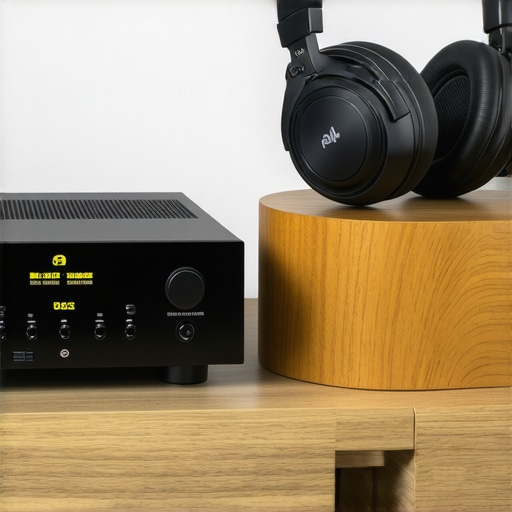 Do not fall for the snake oil trap either. You will see plenty of marketing about how gold connectors provide a warmer sound than silver. In reality, while gold resists corrosion better, silver is actually a slightly better conductor. It is important to understand the real difference between gold and silver plated connectors before you drop an extra hundred dollars on a single cable. Spend that money on a rug or acoustic panels instead—your ears will thank you. Lastly, if you are trying to simplify things with a soundbar because the room is too big for a full theater, remember that physics will not give you a pass. You should never buy a soundbar without a dedicated subwoofer in a high-ceiling environment. Without that dedicated low-end driver, the vast air volume of your room will simply dissipate the mid-bass, leaving your movies sounding like they are playing out of a tin can. Have you ever fallen into the trap of buying magic cables or returning gear too early? Let me know in the comments below!Maintaining that crisp sound isn’t just about the initial setup; it’s about preventing the inevitable decay of hardware. I’ve seen beautiful systems fall apart because owners ignored the basics. For instance, I always keep a can of high-quality contact cleaner and a soft-bristled brush handy. If you’ve ever wondered why your old receiver pops when you switch inputs, it’s usually just oxidized contacts. A quick spray can save you a $200 repair bill. Also, don’t ignore the physical health of your speakers. Learning how to clean your speaker cones without ruining the paper is a skill that separates the hobbyists from the pros. Dust is heavy; it actually adds mass to the cone and can dull your high-frequency response over time.
Stop Heat from Killing Your Components
In those large, vaulted rooms, we often hide our gear in cabinets to keep the aesthetic clean, but this is a silent killer. Heat is the number one enemy of electrolytic capacitors. You need to know how to tell if your amp is running too hot before the internal components start to bake. I personally use a small infrared thermometer to check the vents on my receiver during heavy use. If you are pushing over 120°F (49°C), you need better ventilation. This is also a major reason why you should never place your subwoofer inside a cabinet; the vibration combined with trapped heat will shorten the life of the plate amp significantly. 
How do I keep my audio gear running for decades?
Maintenance isn’t just about cleaning; it’s about monitoring. I recommend doing a ‘phase check’ every six months. Cables get bumped, and it is incredibly easy to accidentally wire a speaker out of phase during a deep clean. Use the easy way to test if your speakers are out of phase to ensure your soundstage hasn’t collapsed. Also, check your connections for ‘creeping’ wires. If you aren’t using banana plugs, bare wire can fray and cause a short, which is a common reason why your receiver shuts off when you turn the volume up. According to a technical study in the Journal of the Audio Engineering Society on ‘Electrical Signal Transmission,’ even a minor increase in contact resistance at the terminal can degrade the damping factor of your amplifier, leading to loose, muddy bass. If you notice your woofer acting strangely, check for physical damage and learn how to repair a tear in your speaker surround with rubber glue before the gap widens.
The Future of Large Room Audio Control
Looking ahead, I expect we’ll see much more integration of AI-driven beamforming in consumer speakers. This technology will allow a single unit to steer sound waves away from your high ceilings and directly to your ears in real-time, effectively ‘mapping’ the room’s acoustic flaws and correcting them on the fly. Until that becomes the standard, your best defense is high-quality power delivery. If you are running a high-end system, remember why you should never use a power strip for your high-end amplifier. Those cheap plastic strips can’t handle the current draw required for big peaks in music or movies. Go check your receiver right now—is it buried under a pile of other gear? Move it to a spot with at least three inches of clearance on all sides. Your transistors will thank you, and your system will sound better for it.
What I Had to Learn the Hard Way About Vaulted Audio
Over the years, I’ve realized that room correction software is a tool, not a savior. It can’t rewrite the laws of physics if your speakers are placed incorrectly. One of the most important habits I developed was performing regular checks. If you notice your stereo image feels shifted, use the easy way to test if your speakers are out of phase to ensure your soundstage is still locked in. I also discovered that mechanical noise is often the hidden culprit for poor performance; sometimes you just need to know how to fix a rattling speaker grill without using messy glue to restore that premium feel.
Another lesson? Don’t panic over every sound your hardware makes. For instance, if you hear a mechanical snap from your amp, it’s often normal protection circuitry, and knowing why your receiver clicks when you change the volume can save you a lot of unnecessary anxiety. Finally, if you are integrating wireless tech into a high-ceiling theater, remember that distance and interference can increase latency. You might find yourself searching for why your bluetooth audio lags while watching movies if your transmitter is blocked or too far from your seating position.
The Gear and Guides That Saved My Soundstage
If you want to go deeper into the science of sound, I highly recommend Dr. Floyd Toole’s book Sound Reproduction. It transformed how I looked at room acoustics and psychoacoustics. For hardware, I always keep a U-MIK-1 measurement microphone handy to see what those vertical reflections are actually doing. I also suggest keeping a set of Sorbothane isolation pads in your toolkit; they are a game-changer for preventing bookshelf speakers from vibrating on stands. Lastly, trust your ears over the marketing—if a simple room tweak sounds better than an expensive cable “upgrade,” stick with the tweak.
Take Control of Your Soundstage Today
Setting up audio in a challenging room is a journey of discovery. Don’t let the height of your walls intimidate you from building the home theater you deserve. Whether you are hunting for the best home audio deals or fine-tuning speakers and amplifiers, the effort you put into placement and maintenance will pay dividends every time you hit play. Your space is unique, and with a little patience, it can sound incredible. What is the biggest challenge you have faced with your high ceilings? Let me know in the comments below!