
I sat there in my dimly lit basement, staring at a small silver box that promised me the sonic equivalent of a warm hug. It was labeled ‘Class A,’ but after three hours of spinning my favorite records, the casing was barely lukewarm. I’d been duped. Early in my audio journey, I made the classic mistake of thinking ‘Class A’ was just a quality rating, like an ‘A’ on a report card, rather than a specific (and very hungry) electrical circuit. I’ve spent years since then poking around the back panels of vintage gear and burning my fingers on heat sinks to learn the difference. Today, I’m going to help you avoid that same buyer’s remorse and show you exactly how to verify if your amp is the real deal or just a clever Class AB or D pretender.
Your Amp Should Probably Be a Space Heater
Most of us are used to modern electronics staying cool. We want our phones and laptops to run chilled, but Class A audio is the total opposite. If your ‘Class A’ amp isn’t radiating enough heat to keep a cup of coffee warm, you might have a problem. According to engineering standards, Class A amplifiers have a maximum theoretical efficiency of only about 25%, meaning the rest of that power is dumped straight into the room as heat. You can learn more about amplifier efficiency classes at ScienceDirect. This is why knowing how to tell if your amp is running too hot becomes a vital skill—usually, if it’s truly Class A, ‘too hot’ is just ‘normal operation.’ When an amp is biased into Class A, the transistors are conducting full current all the time, regardless of whether music is playing. It’s like idling your car at 5,000 RPM while sitting at a red light.
Is that expensive ‘Class A’ label actually worth the hype?
I get it. You see a massive price tag on a 20-watt amp and think, ‘Why would I pay more for less power?’ The skepticism is healthy. I used to think the same until I realized that those 20 watts are ‘pure’—the transistors are always on, always ready, and never switching. It eliminates the crossover distortion that plagues cheaper designs. However, there’s a hidden cost of buying a cheap tube amplifier or solid-state ‘bargain’ that claims the Class A title without the heavy-duty power supply to back it up. If your amp is lightweight and runs cold, it’s likely a fake. Have you ever bought a piece of gear that didn’t live up to the sticker on the front? Let me know! When you push a fake amp, you’ll often find that your receiver shuts off when you turn the volume up because the power supply just can’t handle the real demand. [image_placeholder_1] Let’s dive into the physical reality of these machines.I remember picking up a “Class A” integrated amp at a swap meet five years ago. The faceplate was half an inch thick, gleaming with brushed aluminum. But when I went to heave it into my trunk, I almost threw it over my shoulder because it weighed less than my lunch. That was my first red flag. Real Class A circuitry requires massive, heavy transformers to handle the constant current. If you can lift a 50-watt amp with two fingers, you’re likely looking at a Class D or a biased AB unit disguised in a fancy box.
The Heavy Metal Rule for High-End Power
Weight isn’t just about build quality; it’s about the physics of the power supply. A true Class A amp needs a transformer that can provide full power 100% of the time. This means huge copper windings and massive “reservoir” capacitors. When these components are undersized or of poor quality, you’ll notice issues like your receiver shuts off when you turn the volume up because the rail voltage collapses under the sudden demand for current.
Look for Massive Cooling Fins
Because of that 25% efficiency I mentioned earlier, 75% of the energy consumed becomes heat. This heat has to go somewhere, or the transistors will literally melt. A real Class A amp will have external heat sinks that look like the cooling fins on a vintage motorcycle engine. If the amp is enclosed in a sealed box with no ventilation, it cannot be a high-power Class A unit. I’ve seen people try to hide these in cabinets for aesthetic reasons, but the logic in why you should never place your subwoofer inside a cabinet applies even more strictly here. These machines need air to breathe, or they will cook themselves from the inside out. 
Verify the Bias with a Kill-A-Watt
The most scientific way to catch a pretender is to measure the power draw from the wall. Since the transistors are always “on,” a Class A amp draws almost the same amount of power when it’s silent as it does when it’s blasting music. If you plug your amp into a power meter and the wattage jumps significantly when you turn the volume up, it’s an AB design. This constant draw is a massive strain on your home’s wiring, which is exactly why you should never use a power strip for your high-end amplifier. The thin internal wiring of a cheap strip can’t handle the sustained current, leading to compressed dynamics or even melted plastic.
Identify the Smell of Failing Components
If you’re buying vintage gear to get that Class A sound, you have to be careful about age. These amps run so hot for so long that the internal parts eventually dry out. If you notice a faint, sweet chemical smell or a “burnt” odor, you need to know how to tell if your amp’s capacitors are failing before they leak and ruin the circuit board.
Listen for the Absence of Switching Noise
Finally, use your ears. Class AB amps switch between the positive and negative halves of the signal, which creates “crossover distortion.” It’s a tiny bit of grit on the edges of a vocal or a violin. A Class A amp is smooth because there is no switching. It’s like the difference between a car shifting gears versus an electric motor’s continuous pull. If you’re testing this with a pair of high-end cans, how to tell if your headphones need an external amp is a good starting point to ensure you’re hearing the amp’s true character and not just the limitations of your source device.
Once you’ve successfully identified a true Class A monster, you’re officially in the deep end of the hobby. But this is exactly where most people start falling for ‘audiophile voodoo.’ I’ve seen enthusiasts spend thousands on cables while their speakers are out of phase. Let’s cut through the noise and talk about what actually changes your sound versus what just drains your wallet.
The 200-Hour Break-In Is Mostly in Your Head
Everyone in the forums will tell you that you need 200 hours of ‘burn-in’ before a speaker sounds right. I used to believe this religiously, setting up rigs to play pink noise for a week straight. While it is true that you should learn how to properly break-in a new set of high-end floor speakers, the physical reality is much faster than the myth suggests. Research presented to the Audio Engineering Society (AES) has shown that the mechanical suspension of a driver (the spider and surround) reaches its stable state within minutes or, at most, a few hours of use. The rest of that ‘improvement’ you hear is actually your brain’s psychoacoustic adaptation. Understanding why your new speakers sound better after 20 hours of use is often more about your ears getting used to a new frequency response than the hardware changing its physical properties.
Why does my ultra-resolving system feel fatiguing?
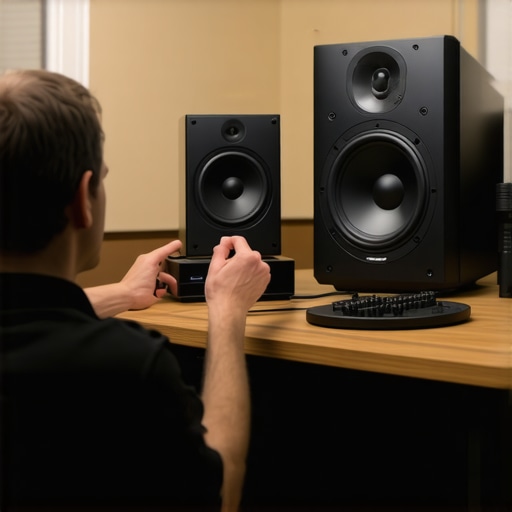
If you’ve just upgraded to high-end gear and find yourself reaching for the volume knob to turn it down after twenty minutes, you’ve hit the ‘transparency trap.’ This happens when your system is so revealing that it exposes every flaw in a poor recording or every harsh reflection in your room. Instead of buying new gear, look at your environment. For instance, how to use a rug to fix the echo in your home theater room is a far more effective (and cheaper) solution than swapping out a power cable. If you’re using near-field speakers, why your studio monitors sound flat and how to add some life often comes down to positioning and taming desk reflections rather than an inherent flaw in the monitor itself.
Stop Chasing the Perfect Digital Signal
One of the most expensive ‘oops’ factors in modern audio is the DAC obsession. Many people assume that a $3,000 digital-to-analog converter will sound ten times better than a $300 one. In reality, the difference between cheap and expensive DACs that actually matters is often found in the analog output stage and the power supply filtering, not the ‘magic’ of the chip itself. If your current DAC is transparent and has a low noise floor, spending more is likely hitting the point of diminishing returns. The same logic applies to headphones; people often think their cans are broken when they hear a slight buzz, but the mistake that makes your noise-canceling headphones hiss in quiet rooms is often just the nature of the active circuitry, not a hardware failure. Have you ever fallen into this trap of overspending on a ‘miracle’ component only to realize it didn’t change a thing? Let me know in the comments.
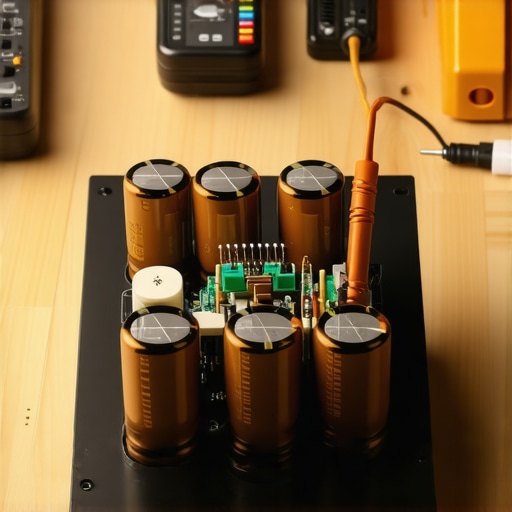
Once you’ve identified a true Class A monster, you’re managing more than just a piece of electronics; you’re managing a thermal ecosystem. Maintenance isn’t just for vintage car owners. If you’ve invested in a heavy-duty amplifier, you are essentially responsible for a high-precision furnace. I keep a dedicated workbench with a digital multimeter and a can of DeoxIT D5 at all times. Using a high-quality contact cleaner is essential when you need to know how to clean a sticky volume knob on a vintage amp. This isn’t just about the tactile feel; it’s about preventing DC offsets that can send a dangerous pop through your speakers. For those running older gear, you must also keep an eye on the internal health of the power supply. Learning how to tell if your amp’s capacitors are failing is the difference between a simple $30 part swap and a catastrophic board failure that ruins the entire unit.
Clean Electricity is Cheaper than a New Transformer
Don’t neglect the mechanical components of your source gear either. I’ve seen enthusiasts lose sleep over a perceived motor failure on their turntable when the fix was a simple five-dollar rubber band. If you’re into vinyl, double-check why your record player belt keeps slipping off before you go hunting for a new player. The same attention should be paid to your speakers. Dust is a physical weight that changes the mass of your driver; knowing how to clean your speaker cones without ruining the paper ensures that your transients stay sharp and the frequency response remains as the manufacturer intended.
How do I maintain my high-end audio system over time?
Consistency is the secret to long-term performance. Every six months, I pull my rack away from the wall and check every single termination for oxidation. This is critical regardless of your stance on the real difference between gold and silver plated connectors. I also advocate for ‘smart scaling’—you don’t always need to buy new hardware to improve your signal chain. For instance, I’ve found that learning how to use an old smartphone as a dedicated music streamer is a brilliant way to isolate your digital source from your noisy main computer, providing a cleaner feed to your DAC for zero extra dollars.
The DIY Toolkit Every Audiophile Needs
If you want to move beyond being a consumer and start being a curator of sound, you need specific tools. Beyond a multimeter, a low-wattage soldering iron and a set of non-conductive adjustment tools are vital. Nelson Pass, a legendary figure in Class A design, notes in his technical documentation at Pass DIY that “Heat is the primary factor in component aging.” Since Class A produces immense heat by design, these amps are on a faster aging clock than their Class D counterparts. Monitoring the bias current once a year ensures the amp isn’t drifting into a range that could bake the internal resistors.
Smart Bias and the Future of Pure Sound
The industry is currently shifting toward ‘Intelligent Bias’ systems. We are seeing a trend where amplifiers use microprocessors to monitor the incoming signal and adjust the bias in real-time. This offers the sonic purity of Class A during quiet passages without the massive power waste and heat when the music gets complex. It’s a promising middle ground, but until it becomes the standard, the heat is part of the charm. My challenge to you this weekend is simple: unplug your main amplifier, safely open the chassis, and inspect the capacitors for any sign of bulging or leaking. If you catch it early, you’ve just saved your most prized possession. Let me know what you find under the hood!
Lessons from a Life Spent Chasing the Perfect Sine Wave
One thing I’ve learned is that patience is a literal requirement for high-end sound. Just like a professional athlete needs to warm up, your gear needs time to reach thermal stability. This is exactly why your tube amp actually sounds better after an hour of use; the electrons need a stable environment to flow perfectly. Another hard truth? Price doesn’t always equal performance. I’ve found that the trick to finding high-end receivers at estate sales for pennies often yields better results than buying the latest shiny box from a big-box store. Finally, remember that your room is the most important component. Before you buy another power conditioner, learn how to use a rug to stop your speakers from sounding harsh. It’s the simplest way to tame a Class A system’s revealing nature.
[image_placeholder_E]
My Secret Weapons for Audio Preservation
If you’re serious about this hobby, you need more than just a pair of ears. I never go a week without using DeoxIT D5 to keep my connections clean; it’s the only way to prevent the scenario where your vintage receiver makes a loud pop when switching inputs. I also highly recommend picking up a Kill-A-Watt meter to verify those power draw claims we discussed earlier. For deep technical dives, Nelson Pass’s articles are the gold standard for understanding solid-state topology. Lastly, keep a digital multimeter handy—knowing your bias voltage is the difference between an amp that lasts forty years and one that fails in four.
Your Next Step into Sonic Bliss
Don’t let the technical jargon or the fear of “doing it wrong” keep you from experiencing a true Class A amplifier. Yes, they are heavy, inefficient, and run hot enough to worry your roommates, but the first time you hear a vocal float in 3D space between your speakers, you’ll understand why we put up with the hassle. Audio is a journey, not a destination. Take it one upgrade at a time, trust your ears over the marketing brochures, and never stop experimenting with your setup.
Have you ever owned an amp that ran so hot you were worried about the furniture? Let me know in the comments below!