
I still remember the first time I finished a big audio install in my old hatchback. I turned the key, expecting a symphony, and instead, I got a ‘THUD-POP’ so loud it felt like a physical punch to the chest. My dog jumped, I cursed, and I immediately ripped the key out of the ignition. It is that visceral fear that you have just fried hundreds of dollars worth of gear in a split second. But here is the thing: most of the time, your gear is perfectly fine—it is just your wiring that is acting like a nervous wreck. Today, I am going to show you how to settle those nerves and get a silent, professional startup every single time.
That Heart-Stopping Sound Every Time You Turn the Key
There is nothing quite like the embarrassment of picking up a friend, starting your car, and having your stereo announce its presence with a gunshot-like blast. It makes a high-end system feel like a high-school science project gone wrong. Early on, I spent weeks chasing my tail because I did not understand how power sequences worked. I even went as far as wondering how to tell if your amps capacitors are failing because I was sure my hardware was defective. It was not. It was just my sloppy grounding and a lack of timing.
Is that sudden pop actually going to ruin my speakers?
It is the question that keeps every enthusiast up at night. The short answer is: eventually, yes. While a few pops might not shred the cone immediately, that DC spike is basically like hitting your speaker with a hammer. The technical term for this is a ‘turn-on transient.’ Research from electrical component experts at Texas Instruments explains that this happens when DC voltage reaches the speaker before the amplifier circuit has fully stabilized. You can actually learn more about the specifics of why your car speakers pop when you turn the engine on if you want to geek out on the physics, but for now, let’s focus on the practical side of the fix.
Why Your Car Is Throwing an Electrical Tantrum
Most of these issues come down to simple timing. Your head unit and your amplifier are like two people trying to walk through a narrow door at the same moment. If the amp wakes up before the radio has finished its ‘startup chores,’ you get noise. I have seen people make some wild errors in the quest for better sound, including the mistake of using home speakers in a car audio setup, which just adds more impedance variables to an already noisy electrical environment. I remember one specific Saturday where I spent six hours rewiring a trunk only to realize I had used a remote turn-on lead that was shared with the fuel pump. It was a total rookie move. It is similar to how stopping your car battery from draining with a high-powered amp requires a very specific wiring strategy. If you do not respect the flow of electricity, it will bite back. Have you ever felt that mini heart attack when your speakers pop, or is it just me? Let me know, because I have definitely been there. Before we tear the dash apart, let us look at the most common culprit: the sequence of power. [image]
Master the Remote Turn-On Sequence
The most common reason for that nasty pop is that your amplifier is waking up before your head unit has had a chance to stabilize its output signals. Think of your amplifier as a megaphone and your head unit as a singer. If the megaphone is turned on while the singer is still clearing their throat and plugging in the mic, everyone in the front row is going to jump. To fix this, you need to ensure the ‘Remote’ lead—usually a blue or blue/white wire—is connected to a source that only goes live *after* the stereo is fully powered. I once spent an entire afternoon troubleshooting a trunk setup where the owner had wired the remote lead directly to the ignition fuse. Every time he turned the key, the amp slammed on instantly while the radio was still booting up. By simply using a 12V delay relay or properly pinning into the head unit’s actual remote-out wire, we achieved a smooth, silent transition. I have seen enthusiasts go through the trouble of learning how to wire a subwoofer to a receiver with no sub out port only to realize their startup pop was caused by this exact timing mismatch.
Scrape the Paint for a Perfect Ground
A bad ground is the root of all evil in car audio. If your amplifier doesn’t have a clean, low-resistance path back to the battery, it will try to find ground through your RCA cables or, worse, through your speakers. This creates a DC offset that manifests as a loud ‘thump.’ Many installers make the mistake of bolting a ground wire directly onto a painted surface. Metal-to-metal contact is non-negotiable. I remember a project where the owner used the best gauge wire for a 500-watt car subwoofer but left the factory primer on the chassis. The amp was gasping for current, and every time it turned on, the voltage drop caused a massive transient spike. To fix this, take a wire brush or a sanding bit and clear a spot down to the bare, shiny steel before bolting your terminal down. 
Why Your Gain Setting Is Probably Ruining Everything
Stop treating the gain knob on your amp like a volume control. It is a sensitivity adjustment designed to match the output voltage of your head unit to the input stage of the amplifier. If your gain is cranked too high, the amplifier is essentially ‘shouting’ at the speakers, picking up every tiny bit of electrical noise and amplification artifacts during the startup phase. I have seen people crank the gain because their music felt quiet, not realizing their source was the issue. This makes the system extremely sensitive to turn-on transients. Once you have sorted your grounds, use the easy way to test if your speakers are out of phase to ensure your wiring is correct, then reset your gains using a digital multimeter or an oscilloscope. Keeping your gain at a conservative level not only stops the popping but also ensures you aren’t constantly wondering how to tell if your amp is running too hot during long drives. A balanced system is a quiet system.
Stop Chasing Expensive Cables to Fix Cheap Noise
Most enthusiasts think that if their system pops, they need to run out and buy the thickest, most shielded cables on the market. I have seen people obsess over the real difference between gold and silver plated connectors as if a micron of gold is going to block a massive electrical surge. Spoiler alert: it won’t. In my years of troubleshooting, I have found that a five-dollar cable routed properly beats a fifty-dollar cable routed next to a fuel pump every single time. The real nuance here is EMI (Electromagnetic Interference) and ground loops. If you are getting a pop, it is rarely because your cable is ‘cheap’; it is because your cable is acting as an antenna for the car’s dirty electrical system. This is the same logic why you should never use a power strip for your high-end amplifier in a home setup—it introduces a shared path for noise that ruins the signal-to-noise ratio.
Why does my stereo only pop on cold winter mornings?
This is a question I get from more advanced builders who have already ‘fixed’ their grounds. If your system is silent in the summer but pops in the winter, you are likely dealing with a physical hardware limitation. Electrolytic capacitors inside your amp rely on a liquid or gel electrolyte to function. Research from experts at Illinois Capacitor indicates that low temperatures significantly increase the Equivalent Series Resistance (ESR) of these components. When the ESR is high, the capacitor cannot filter out the initial power-on spike as effectively. If this is happening to you, it is a sign that you might need to learn how to tell if your amps capacitors are failing before the cold weather turns a small annoyance into a total circuit failure. 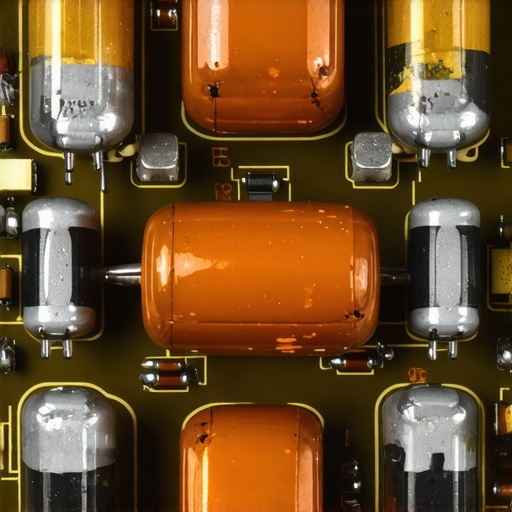
The Ground Loop Trap You Never Saw Coming
Here is the mistake that breaks even the best installs: the ‘Daisy Chain’ ground. People think grounding everything to the same spot is always better, but if the resistance between those components varies even slightly, you create a ground loop. I once helped a guy who spent a fortune on adding a second battery for his high power car amp, yet his speakers still popped like popcorn. The issue? His head unit was grounded under the dash while his amp was grounded in the trunk. That difference in chassis potential meant the RCA cables became the easiest path for current to flow. It is a similar logic to why your car radio resets its clock every morning—if the voltage is not consistent and the path is not clean, the hardware behaves erratically. Always try to find a single, high-quality grounding point for your entire signal chain if possible. Have you ever fallen into this trap of over-complicating a simple wiring fix? Let me know in the comments, because we have all been there.
Stop Guessing and Start Measuring with a Real Multimeter
If you are serious about this hobby, you need to stop relying on ‘feel’ and start relying on data. I never step into a garage without my Fluke digital multimeter. Why? Because voltage drop is a silent killer that ruins amplifiers before you even smell the smoke. I have seen guys spend three grand on components and then use a cheap crimp tool that leaves the connection loose. That is a recipe for disaster. If you want to scale up your system later, you need to know how to wire two subwoofers to a single mono amp without creating a fire hazard. I always use my meter to check the final impedance at the amp terminals before I ever turn the key. A difference of just half an ohm can be the difference between a hard-hitting bassline and a protection light. Checking your electrical health is just as important as knowing how to tell if your amp is running too hot during a summer cruise. Monitoring these variables ensures your gear survives the ‘stress tests’ of daily driving. 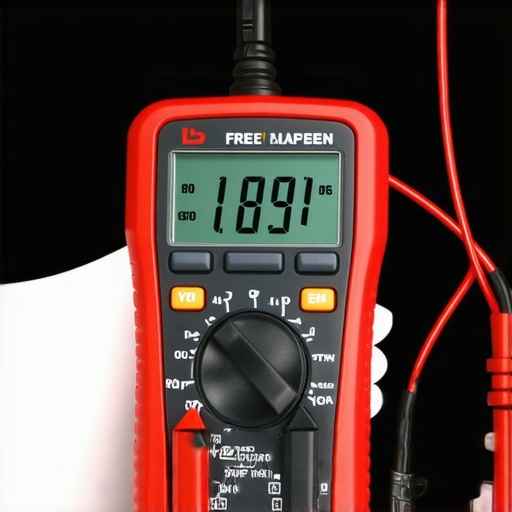
How can I make sure my audio gear lasts a decade?
Maintenance is not just about cleaning; it is about inspection. Every six months, I pull my amp rack and tighten the terminals. Vibrations from the road and the subwoofers themselves will naturally loosen screws over time. If a wire is loose, it creates resistance, and resistance creates heat. You should also take the time to learn how to clean your speaker cones without ruining the paper or the surround. Dust might seem harmless, but in a car environment, it can mix with humidity to form a sticky residue that adds weight to the cone and affects the frequency response. I also recommend checking your physical connections for signs of wear. If you find a connection that feels wobbly, knowing how to fix a loose speaker terminal on your cabinet or amp rack can prevent a short circuit that could fry your output stage.
Oxidation is the Silent Killer of Great Sound
Even if your wiring was perfect on day one, the environment is working against you. According to technical bulletins from the Copper Development Association (CDA), even a microscopic layer of oxidation on copper terminals can significantly increase contact resistance. This is why I use a tiny bit of dielectric grease on my ground points and battery terminals. It seals out oxygen and moisture, keeping that metal-to-metal contact fresh. This is the same reason why your vinyl records sound scratchy even after a deep clean—the smallest amount of debris or surface degradation ruins the signal. In a car, this manifests as ‘alternator whine’ or that annoying pop we talked about earlier.
Wait for the Magic to Happen During Break-In
I see so many people get frustrated because their expensive new subwoofers sound ‘stiff’ or ‘thin’ right out of the box. They immediately start cranking the gain, which is how you blow a brand-new coil. You have to understand why your new speakers sound better after 20 hours of use. The spiders and surrounds need time to reach their intended mechanical compliance. I predict that in the next few years, we will see more amplifiers with ‘Break-in Modes’ built into their DSP, which automatically limit output for the first few dozen hours to protect your investment. For now, just be patient. My parting advice? Grab a multimeter tonight and check the voltage at your amp while the system is at a moderate volume. If you see it dipping below 12.5 volts, your battery or alternator is screaming for help. Address it now before you lose a component.
What the Wiring Diagrams Won’t Tell You
I’ve learned the hard way that a silent system is built in the details, not the brochure. After burning out my fair share of fuses, I realized that chasing noise is more about physics than prestige.
- Current follows the path of least resistance: If your ground isn’t perfect, your RCA cables become the fuse, and that is where the ‘pop’ begins.
- Gain is not a volume knob: Treating it like one is the fastest way to amplify floor noise and transients.
- Patience is a tool: Understanding why your new speakers sound better after 20 hours of use will stop you from over-adjusting a system that just needs to settle in.
The Go-Bag for a Professional Install
If you want to move past the ‘high school science project’ phase of car audio, you need to stop guessing. My toolkit always includes a digital multimeter to check for ground resistance—anything over 0.5 ohms means you haven’t sanded enough paint. I also keep a guide handy on the easy way to test if your speakers are out of phase because even a silent startup won’t save a system that cancels itself out. For those dealing with physical rattles that mimic electrical noise, knowing how to fix a loose speaker terminal on your cabinet or amp rack can prevent intermittent arcing. These aren’t just accessories; they are the difference between a system that lasts a summer and one that lasts a decade.
Claim Your Silence Today
There is no reason to dread turning your key in the ignition. By mastering your turn-on sequence and ensuring your grounds are bare-metal clean, you eliminate the ‘turn-on transient’ at its source. Once you’ve silenced the beast, you can finally enjoy the nuance of your music and learn how to balance your car audio for the drivers seat to create the perfect soundstage. Don’t let a small electrical glitch ruin the joy of your drive. Grab your sandpaper and your multimeter, and fix that pop once and for all. Have you ever spent days troubleshooting a noise only to find it was a single loose screw or a painted ground? Let me know in the comments below!