
I’m sitting on a long-haul flight, three hours in, and I’ve finally found my rhythm. I’ve got my expensive active noise-canceling (ANC) headphones clamped onto my head, creating what I thought was a silent fortress. Then, it happens. A toddler three rows back lets out a high-pitched squeal and it hits my eardrums like I’m not wearing anything at all. It’s maddening. I remember when I first started getting into high-end audio, I made the classic mistake of thinking that noise-canceling meant a literal mute button for the universe. I spent a small fortune thinking I was buying total silence, specifically to drown out the shrill voices in my open-plan office. I even spent hours learning how to properly break in new headphones without using white noise, thinking that would somehow sharpen the noise-canceling capabilities. Spoiler alert: it didn’t help with the high-frequency chatter one bit. Today, I’m going to explain exactly why those shrill sounds keep winning and how you can actually deal with them.
High Frequency Sounds Move Too Fast for Your Tech
Active noise canceling is essentially a predictable-math game. Your headphones use tiny microphones to listen to the world around you, and then they create an anti-wave to cancel it out. This works like a charm for the low, droning hum of an airplane engine or a distant lawnmower. However, high-pitched voices have incredibly short, erratic wavelengths. According to sound engineering principles explained by Audio-Technica, ANC technology is most effective on sounds below 1,000Hz because the processor has enough time to recognize the wave and flip it. When a high-pitched voice spikes, it often hits your ear before the headphone’s brain can even finish the calculation. If you’ve been wondering if your gear is broken, you might want to test your headphones for a blown driver at home, but more often than not, it’s just the physics of sound working against you.
Is active noise canceling actually worth the premium price?
If it doesn’t block out my boss or the person yelling on their phone at the gym, you might feel like you’ve been sold a bill of goods. But don’t throw your gear in the trash just yet. While ANC struggles with those sharp peaks, the passive isolation from a good seal still handles a lot of the heavy lifting. I’ve found that if your headphones feel heavy on your head, you might be over-tightening them to force a better seal, which actually makes the experience worse. Have you ever felt cheated when a high-pitched noise broke through your silent bubble? I’d love to hear about the specific sound that your headphones just can’t seem to kill. The reality is that we are fighting the speed of sound itself, but there are ways to augment your hardware to get closer to that blissful silence we all crave.
Focus on the Physical Barrier First
If you want to stop that toddler’s scream, you have to stop thinking about the software and start thinking about the seal. Most people stick with the factory-installed silicone tips that come in the box. That’s a mistake. I remember sitting in a crowded coffee shop once, trying to write while a commercial grinder was screaming just a few feet away. The ANC on my earbuds was struggling hard, letting those sharp, mechanical screeches through. I swapped my standard tips for a pair of high-density memory foam ones, and the difference was night and day. It’s like the difference between a screen door and a solid oak one. This is why the reason your wireless earbuds sound different after changing the tips is so critical—you aren’t just changing the comfort, you are effectively changing the acoustic chamber of your ear canal.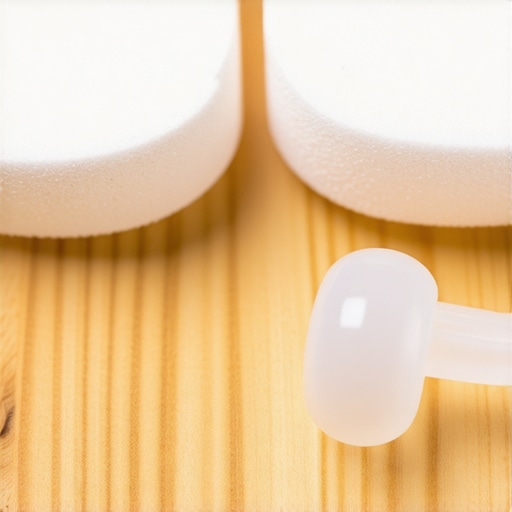
Upgrade to Memory Foam for Better Isolation
Silicone is great for the gym because it’s easy to clean, but it’s often too thin to block high-frequency noise because it can easily lose its shape when you move your jaw or smile. High-quality foam expands to fill every tiny ridge of your ear canal. This ‘passive isolation’ acts as a filter that catches the high-pitched sounds that active processing misses. If you are currently using budget gear, the trick to making cheap iems sound like high-end monitors almost always begins with this simple hardware upgrade. It provides a consistent noise floor that allows your ANC to focus on the low-end drone without being overwhelmed by erratic spikes.
Clean Up the Signal Path with Better Hardware
Sometimes the perceived ‘failure’ of your noise canceling comes from a weak or noisy audio source. If you are plugging high-end headphones directly into a cheap laptop jack, you are starving the drivers of the power they need to maintain a clean signal. I’ve found that using an external converter makes a massive difference in how ‘fast’ the audio feels. You can learn how to use a dac to improve your desktop computers audio to ensure that your hardware has the headroom to handle complex audio signals. When I first added a portable DAC to my travel rig, the increased clarity of the music itself helped mask the outside world much more effectively than the ANC ever did on its own.
Can You Measure the Leak?
If you really want to be scientific about how your gear is performing, you should see what frequencies are actually making it through your headset. You can how to use your phone to measure your rooms frequency response while wearing your headphones. Simply play a frequency sweep on an external speaker and see what your phone’s mic picks up inside the ear cup (if you can fit it) or just outside the seal. This experiment showed me that my ‘perfect’ headphones had a massive leak at 3kHz—exactly where human voices are most piercing. Once you know where the physical leak is, you can adjust the headband tension or the angle of the cups to close that gap and finally win the war against high-frequency chatter.Let’s dig deeper into why throwing money at the problem rarely results in the sonic perfection we’re promised. Most enthusiasts will tell you that you need more power to get more detail, but that’s a dangerous oversimplification. In my years of testing rigs, I’ve found that chasing raw wattage is a fool’s errand compared to finding the secret to choosing the right ohm rating for your amp. If your amplifier isn’t a precise match for the electrical resistance of your speakers, you aren’t creating clarity—you are creating heat and distortion. I’ve seen people fry beautiful drivers because they thought a bigger amp was inherently safer. It’s the first trap of the high-end world: thinking quantity equals quality. High-end audio is about control, not just volume.
High-Resolution Audio Can Be a Double-Edged Sword
There is a common myth that high-res files automatically sound better, but the reality is more complex. If your room is full of hard surfaces, why your speakers sound harsh when you play high-res files becomes painfully obvious. The extra treble energy and extended frequency range can actually fatigue your ears faster than a standard CD-quality file. According to research by acoustic expert Dr. Floyd Toole in his book ‘Sound Reproduction,’ the room’s interaction with the speaker accounts for nearly 50% of the overall sound quality. If you haven’t treated your space, you’re essentially listening to your walls more than your music. This is exactly why your floorstanding speakers need more breathing room from the wall; without that physical space, the low-end frequencies will muddy up the very details you paid for. 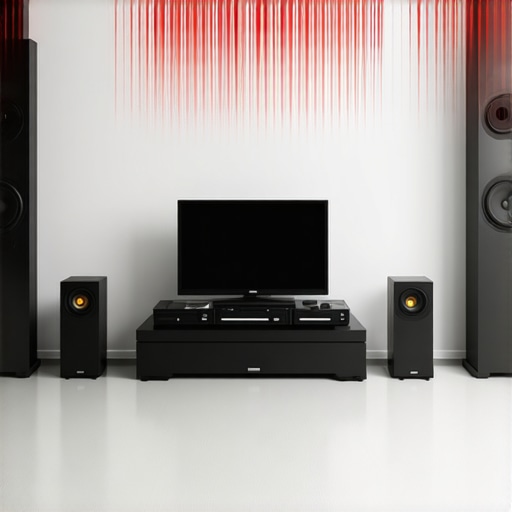
Why does my $1,000 setup sound just like my laptop jack?
This is the ultimate frustration for many. If you’ve upgraded every component but the music still feels flat, there is a good chance you are experiencing a ‘signal bottleneck.’ You might discover why your high-end dac sounds exactly like your laptops headphone jack if your cables are picking up interference or if your computer’s software is downsampling the audio before it even leaves the port. Another common ‘oops’ factor is the phase. If your cables were crossed during setup, the speakers will fight each other, canceling out the bass and ruining the stereo image. Learning how to tell if your speakers are out of phase in 30 seconds is a fundamental skill that every listener needs. I once spent an entire afternoon troubleshooting a muffled soundstage only to realize I had one speaker wire backward. It happens to the best of us. Have you ever fallen into this trap or spent way too much on a cable that didn’t change a thing? Let me know in the comments. I want to hear about the gear that didn’t live up to the hype.Once you’ve tackled the phase issues and cable mess, the real work of longevity begins. I’ve seen more high-end rigs ruined by neglect than by actual hardware failure. If you are hearing a gritty, static-filled sound when you adjust the volume, don’t panic and start shopping for a new unit. You likely just have oxidation on your potentiometers. I always keep a can of electrical contact cleaner on hand because learning how to fix a scratchy volume knob on an old amp can save you hundreds in professional repair fees. It’s the same story with studio gear; knowing how to fix a scratchy volume fader on a professional mixer is a mandatory skill if you want to keep your signal path transparent. This isn’t just about aesthetics; it’s about maintaining the electrical integrity that audiophile-grade gear demands.
Stop the Snap Crackle and Pop in Your Amp
The enemy of every solid-state and tube amp is heat and dust. Over time, the internal components, especially the capacitors, begin to dry out. This is a slow death that robs your music of its punch. If you notice your low end feeling ‘flabby’ or a strange hum that wasn’t there last year, you should learn how to tell if your speakers capacitor is starting to fail before the whole circuit board goes up in smoke. I once ignored a slight flickering in my vintage receiver’s lights, only to find out later it was a sign of a failing power supply section. Regular maintenance is the difference between a system that lasts thirty years and one that dies in five. 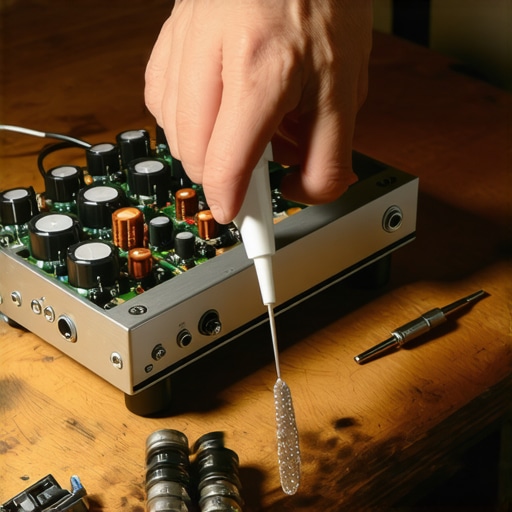
How do I keep my high-end gear sounding fresh for years?
Maintenance isn’t just internal; it’s also about the surfaces that touch your body. For headphone users, the leather or protein-leather pads are the first things to go. Sweat and skin oils are surprisingly corrosive. I make it a habit to wipe down my gear after every long session. If yours are looking a bit crusty, check out how to clean your headphone ear pads without ruining the leather to extend their life. John Siau, Director of Engineering at Benchmark Media Systems, often emphasizes in their technical whitepapers that even the most expensive DACs and amps are ultimately at the mercy of contact resistance. Even something as simple as unplugging and replugging your RCA cables once a year can ‘wipe’ the contacts and maintain a low-impedance connection.
Tune Your Space with Data Not Just Ears
In the future, I expect AI-driven room correction to be standard in every amplifier, but for now, we have to do the manual labor. You can’t just trust your ears because human hearing is notoriously easy to fool with ‘loudness bias.’ Instead, use tools that don’t have feelings. I frequently use my smartphone to run basic sweeps. You can learn how to use your phone to measure your rooms frequency response to find the literal holes in your soundstage. This data-driven approach allowed me to realize that my favorite chair was actually creating a massive bass null at 80Hz. If you really want to level up, try measuring the frequency response today and moving your speakers just three inches—you’ll be shocked at the graph change. Grab a frequency generator app and a measurement tool, and find out what your room is actually doing to your music before you spend another dime on hardware.
The Hard Truth About My Search for Silence
If there is one thing a decade of high-end audio has taught me, it is that technology cannot override physics. I used to think a higher price tag meant a better filter for the world, but it is often the simplest fixes that provide the most relief. For instance, I spent years ignoring the environment around me, but I finally realized why you should use a rug to fix a bright sounding room to stop those high-frequency reflections from bouncing off my hardwood floors. It was not my gear; it was my floor. Another lesson? Don’t let your bookshelf speakers stay on your desktop if you can help it. There is a specific reason why your bookshelf speakers sound better when you move them off the desk—it decouples the vibration from your work surface, cleaning up the very frequencies that interfere with your focus.
The Tools I Use to Keep My Audio Pristine
You do not need a massive workshop to maintain a high-end system, but you do need the right chemicals and knowledge. If I hear a pop or a crackle, I do not reach for my wallet; I reach for a can of DeoxIT. Learning how to fix a scratchy volume dial with electrical contact cleaner is a rite of passage for any true audiophile. Beyond maintenance, if your system is showing its age, you might be dealing with internal ground issues. Understanding why your vintage receiver makes a loud hum with no music playing can help you decide if it is a simple ground loop or a sign that those old capacitors are finally giving up the ghost. I personally trust tools like Room EQ Wizard and the technical forums at AudioScienceReview for deep dives into hardware performance.
Your Path to Better Sounding Days
Audio is a journey of discovery, not a destination you reach by checking off a list of features. Whether you are fighting a toddler’s squeal on a plane or trying to get the perfect imaging in your living room, remember that the goal is to enjoy the music. Do not get so caught up in the math of noise-canceling that you forget to breathe and just listen. High-frequency sounds might still break through occasionally, but with the right seal, a clean signal path, and a bit of room treatment, you will find that blissful silence is much closer than you think. Have you ever been disappointed by a pair of expensive headphones that could not block out a simple conversation? Let me know in the comments below.