
I remember standing in my living room three years ago, staring at a brand-new 12-inch ported subwoofer that looked less like a premium audio component and more like a small, ugly refrigerator. My wife just gave me ‘the look.’ You know the one. It said, ‘That thing is not staying there.’ In a moment of panic, I shoved it behind a heavy armchair and turned on a movie. The result was heartbreaking. The floor vibrated, but the actual bass was a muddy, bloated mess that felt like it was trapped underwater. I had sacrificed performance for aesthetics, and my ears knew it. Since then, I have spent countless weekends experimenting with ways to hide a massive subwoofer without losing that punchy, visceral impact we all crave. Today, I am going to show you how to blend your gear into your decor so seamlessly that your guests won’t even know where the bass is coming from until it hits them in the chest. Have you ever tried to hide a piece of gear only to have it sound completely different than you expected?
Stop Treating Your Subwoofer Like a Piece of Trash
One of the biggest blunders I made early on was treating my sub like a piece of luggage I could just stow away. I actually once made the mistake of thinking placing a subwoofer inside a wooden cabinet would be a genius move. It wasn’t. Within ten minutes, the cabinet doors were rattling like a haunted house, and the heat buildup nearly fried the plate amp. The truth is, subwoofers need to breathe and interact with your room’s boundaries to function. According to the acoustic experts at SVS, low-frequency sound waves are omnidirectional, which gives us a huge advantage when it comes to stealth. We can tuck them away, but we have to be smart about air displacement and reflection. If you are struggling with poor sound quality right now, you might just be making a common mistake when positioning your subwoofer that no amount of ‘hiding’ will fix.
Will Hiding the Box Kill My Sound Quality?
This is the number one fear I hear from fellow audio enthusiasts. They worry that if the sub isn’t visible, the ‘soul’ of the music disappears. I am here to tell you that as long as you aren’t physically blocking the driver with dense, non-porous material, the bass waves will find a way. The secret isn’t just about covering it up; it is about choosing furniture and locations that act as acoustically transparent shields. We are going to look at everything from custom end-tables to strategic plant placement that keeps your living room looking like a home, not a recording studio.
Let the Bass Tell You Where to Hide It
Before you even think about buying a decorative screen or a custom cabinet, you have to do the ‘subwoofer crawl.’ This sounds ridiculous—you literally put the subwoofer in your favorite chair, play a bass-heavy track, and crawl around the room on your hands and knees. Wherever the bass sounds the tightest and most defined is where the subwoofer actually wants to live. I once ignored this and shoved my sub into a corner because it looked ‘clean.’ Big mistake. The result was exactly why your floorstanding speakers sound boomy in the corner; the walls reinforced the wrong frequencies, and I lost all the detail in my music. Once you find that sweet spot, you can start the camouflage process. Think of your subwoofer like a garden hose; the low-frequency energy flows out and wraps around objects, but if you ‘kink’ the hose by sealing it in an airtight box, the pressure builds up and the performance dies.
Turn Your Sub into a Functional End Table
One of the most effective ways to hide a massive box is to make it disappear into the furniture. You can buy or DIY an ‘acoustically transparent’ end table. This is basically a wooden frame with no solid sides, wrapped in speaker grille cloth. I remember my first attempt at this; I used a thick, heavy velvet to match the curtains. It looked great, but the bass felt muffled, like the sub was trying to scream through a pillow. I eventually swapped the velvet for a breathable polyester knit, and the ‘punch’ came right back. If you are handy, you can even modify an existing IKEA cabinet by cutting out the side panels and replacing them with mesh. Just make sure the loose speaker terminal on your cabinet is secured tightly, or the vibrations will turn your new furniture into a giant rattle.
Stop the Rattle Before the Neighbors Complain
Physical camouflage is only half the battle. If your sub is touching the floor or a piece of furniture, it’s going to transfer energy into the structure of your house. This is what causes that annoying ‘buzzing’ sound in the kitchen when you’re watching a movie in the living room. Much like why your desktop speakers need isolation pads to stop desk vibration, your sub needs a barrier. Use high-density foam risers or rubber ‘iso-feet.’ I once used a thick shag rug to try and dampen the noise, but while it helped with the high-end reflections, it didn’t stop the floor from shaking. You can actually use a rug to stop your speakers from sounding harsh, but for a sub, you need actual mechanical isolation to keep the ‘stealth’ aspect from becoming a structural nuisance.
Keep the Air Moving and the Wires Hidden
If you are tucking the sub behind a sofa or inside a ventilated nook, you have to consider the ‘port.’ If your sub has a hole in the back or bottom, that’s where the air moves. Don’t press that port directly against a wall. Give it at least three to four inches of breathing room. While you’re back there, you might realize you don’t have a dedicated LFE jack. Don’t panic; learning how to wire a subwoofer to a receiver with no sub out port is a simple weekend project that involves using the high-level speaker inputs. This allows you to hide the sub further away from the main stack without needing specialized long-run RCA cables that are prone to picking up interference.Most enthusiasts spend 90% of their budget on the speakers and only 10% on what feeds them, which is where the hidden problems usually begin. You have probably heard the argument that digital amplifiers are inherently inferior to traditional Class A/B designs, but that is a massive oversimplification. The real issue is current delivery rather than the circuit topology itself. In my experience, the reason your passive speakers sound quiet with a digital amp is rarely the wattage—it is the power supply’s inability to handle low-impedance dips in your speakers. If your subwoofer is tucked away or using a high-level input, the demand on your signal path is even higher.
Is speaker break-in actually a real thing or just a psychological trick?
It is a bit of both, but the physics are undeniable. While some critics claim it is a myth designed to get you past your return window, mechanical suspension parts like the spider and surround do physically soften with initial use. You will find why your new speakers sound better after 20 hours of use is largely due to the resonant frequency (Fs) shifting slightly lower as the factory-stiff materials reach their intended elasticity. Expert researchers at Klippel have documented this change through laser-based transducer measurements, proving that out-of-the-box performance is not the final sound profile. 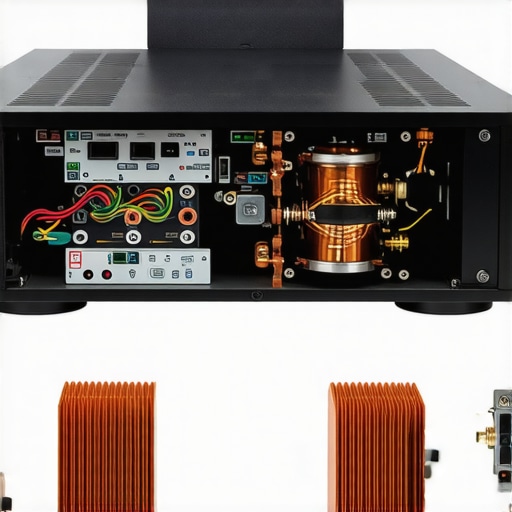
Stop Wasting Your Budget on Overpriced Cables
I have seen people drop $500 on ‘audiophile’ interconnects while their receiver is literally gasping for air in a closed cabinet. Please, stop wasting money on expensive optical cables or gold-plated connectors that offer zero measurable improvement to a digital bitstream. Instead, spend that money on room treatment or a better digital-to-analog converter. Understanding the difference between cheap and expensive DACs that actually matters comes down to the clocking precision and the analog output stage, not the fancy branding on the wire. Another common ‘oops’ moment occurs when the system just dies during a movie climax. If you haven’t checked your speaker’s ohm rating against your amp’s capabilities, why your receiver shuts off when you turn the volume up is likely a triggered protection circuit caused by a current mismatch. You also need to keep an eye on thermals in those hidden spots; knowing how to tell if your amp is running too hot can save you from a permanent hardware failure during a summer heatwave. Have you ever fallen into this trap where you blamed the speaker but it was actually the power source? Let me know in the comments.Maintenance isn’t just about a quick feather duster every six months; it is about preventing the slow degradation of your signal path. One of the most overlooked aspects of a stealthy setup is the build-up of oxidation on your connections. I personally swear by a can of DeoxIT D5 for every vintage and modern rig I own. If you have an older setup, you might notice a scratchy sound when turning knobs, and knowing how to fix channel imbalance on a vintage stereo amplifier usually starts with a deep clean of the internal potentiometers. I have seen countless enthusiasts assume their speakers were dying when they actually just had dirty contacts. You also need to be gentle with the hardware itself; for instance, learning how to clean your speaker cones without ruining the paper is a vital skill if you want that hidden gear to last decades instead of years. Small tears can happen during cleaning, but you can usually repair a tear in your speaker surround with rubber glue if you catch it early enough.
How do I maintain my hidden audio gear over time?
The biggest threat to hidden equipment is heat and moisture. Because your gear is likely tucked behind furniture or inside custom enclosures, airflow is your best friend. Every few months, I pull my subwoofer out of its ‘hiding spot’ to check for dust clogs in the amp plate or any signs of thermal stress. If you are running high-performance gear, how to tell if your amp is running too hot becomes a daily concern. You should also listen for subtle changes in the low-end; if the bass starts sounding flabby or inconsistent, it might be time to learn how to tell if your amps capacitors are failing. According to the research of Dr. Floyd Toole in his seminal work ‘Sound Reproduction: The Acoustics and Psychoacoustics of Loudspeakers and Rooms,’ the interaction between the room and the speaker is the dominant factor in sound quality. Maintaining that physical relationship means ensuring your ‘stealth’ materials haven’t sagged or shifted. 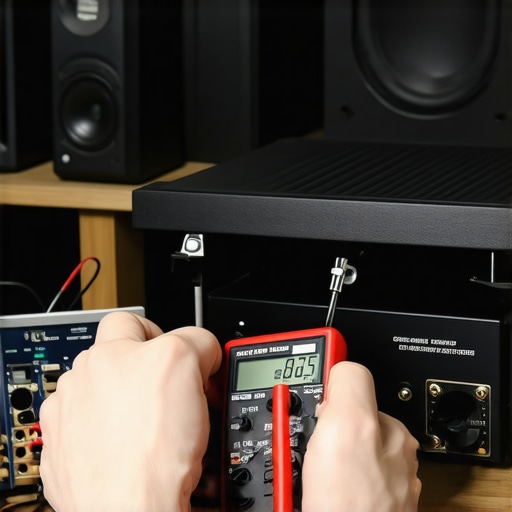
The Professional Tool Kit You Actually Need
Forget the fancy $1,000 mahogany cable lifters. If you want to take your hobby seriously, buy a digital multimeter and a calibrated microphone like the UMIK-1. I use my multimeter to check for ground loops and to ensure my speaker terminals are making a solid connection. If you ever find yourself struggling with a dead setup, a quick continuity test can save you hours of frustration. This is especially true if you are trying to fix a loose speaker terminal on your cabinet that has been rattled loose by heavy bass. I also recommend keeping a small bottle of rubber-safe adhesive and a laser distance measurer. Precision matters—even a two-inch shift in placement can move your seat into a ‘null’ zone where the bass disappears entirely. If you have moved things around and the sound feels off, remember the easy way to test if your speakers are out of phase just to be sure you didn’t swap a wire during your maintenance routine. Looking ahead, I predict we are moving toward a world where AI-driven room correction will be built into even the cheapest soundbars, making the ‘hiding’ process even easier as software compensates for our poor placement choices. For now, take ten minutes this weekend to pull your gear out, check the cables for tightness, and blow out the dust—your ears (and your amplifier’s lifespan) will thank you.
The Reality of Making High-End Audio Invisible
One of the hardest truths I had to accept during my journey is that your ears do not care about your Pinterest board. You can spend thousands on a setup, but if you prioritize the ‘look’ over the physical laws of sound, you are just buying expensive furniture. I have learned that small technical adjustments, like checking the easy way to test if your speakers are out of phase, can fix a thin-sounding hidden sub faster than any expensive cable ever could. Furthermore, if you are using a wireless kit to hide the box in a far corner, keep an eye on signal interference; why your wireless sub keeps disconnecting from the soundbar is usually a result of signal crowding rather than a hardware defect. Remember that stealth is a compromise, not a magic trick.
Building Your Stealth Audio Toolbelt
I never start a concealment project without my trusted ‘Stealth Kit.’ First, a calibrated microphone is non-negotiable for seeing the frequency response that your ears might miss when a sub is tucked behind a sofa. Second, I always keep a bottle of DeoxIT D5 handy for cleaning contacts. Third, high-density isolation pads are the only way to stop your floor from becoming a vibrating part of the speaker. If you are digging into a DIY cabinet build to hide your gear, knowing how to fix a loose speaker terminal on your cabinet will save you from having to disassemble your beautiful furniture later. Finally, keep a digital thermometer nearby to monitor the air inside those enclosures, especially since knowing how to tell if your amp is running too hot is the difference between a movie marathon and a permanent hardware failure. #IMAGE_PLACE_HOLDER_E#
Let Your Room Breathe While the Bass Hits
Don’t let the sheer size of your gear intimidate you into settling for mediocre, hollow sound. With a bit of patience and some clever furniture choices, you can effectively hide a massive subwoofer while maintaining every ounce of that cinematic impact you invested in. Your home should reflect your personal style, but it should also sound like a world-class theater. As you fine-tune your setup, remember that how to properly break in a new set of high end floor speakers can take time, so don’t be discouraged if the sound evolves over the first few weeks. Go ahead and move that sub—your ears will thank you for the effort. Have you ever tried a ‘subwoofer crawl’ only to find the best spot was right in the middle of the room? Let me know your placement struggles in the comments below.