
I remember sitting on my living room floor, surrounded by cardboard and discarded zip ties, feeling absolutely defeated. I had just finished using the best way to label your messy home theater cables, yet my brand-new towers sounded like they were playing from inside a cardboard box. The center image—that ‘ghost’ singer standing right between the speakers—was nowhere to be found. Instead, the sound seemed to cling to the walls, refusing to meet in the middle. I had spent hours obsessing over how to properly break in a new set of high-end floor speakers, only to realize I had committed the ultimate rookie sin: I wired one speaker backward. This is the ‘out of phase’ trap, and it happens to the best of us. Today, I am going to show you how to identify this sonic nightmare in seconds and fix it without spending a dime. Have you ever set up a new system only to feel like the bass was actually weaker than your old, smaller speakers? Let me know in the comments if you’ve felt that specific ‘something is wrong’ frustration.
That Weird Feeling When Your Bass Just Vanishes
When speakers are in phase, the cones move in and out together, pushing air toward you in a unified wave. When they are out of phase, one cone pushes while the other pulls. They essentially cancel each other out. It is a physical tug-of-war where your ears are the losers. Early in my hobby, I assumed the color-coding on my wires was foolproof. I didn’t realize that some budget cables have the stripe on the ‘positive’ side while others put it on the ‘negative.’ I’ve even spent hours troubleshooting the reason your home theater receiver keeps shutting off randomly, thinking it was a power issue, only to find out my phase was so messy I was overworking the internal amp to get any volume. According to acoustic research from Audioholics, phase cancellation can drop your low-frequency output by as much as 10 decibels in certain rooms, making a high-end setup sound like a tinny radio.
Is it actually possible for a human to hear this?
You might be skeptical and think you need ‘golden ears’ to catch a phase issue, but it is actually one of the most obvious mistakes once you know what to look for. If you sit in your ‘sweet spot’ and the lead singer sounds like they are coming from behind your head or from the far left and right simultaneously, your phase is likely flipped. It’s the same hollow sensation people complain about when they discover the real reason your floorstanding speakers sound hollow in large rooms. If you’ve been wondering the easy way to test if your speakers are out of phase, you don’t need a lab. You just need a specific type of track and a little bit of focus. We are going to fix that ’empty’ sound right now.
Look Beyond the Colors on the Insulation
The most common reason for phase issues is assuming that the cable markings are universal. They aren’t. I’ve seen cables where the white stripe indicates the positive lead, and others where a literal tiny ridge on the plastic signifies the negative. If you are mixing and matching leftovers from your junk drawer, you are playing a dangerous game with your soundstage. Start by tracing every single wire from the back of the receiver to the speaker. Ensure the ‘plus’ terminal on your amp—usually red—connects to the ‘plus’ terminal on the speaker. If you find a loose speaker terminal on your cabinet, fix it now, as a vibrating connection can mimic the sound of a failing driver. Even if the colors match, don’t trust them blindly. I once spent an entire Saturday morning troubleshooting a high-end setup only to find that the internal wiring of one speaker was actually soldered backward at the factory. If you’ve been learning how to wire a subwoofer to a receiver with no sub out port, you already know that one wrong splice can kill your low-end impact instantly.
The 9-Volt Battery Test That Unmasks Liars
If you want a definitive answer without guessing at wire colors, use the battery trick. Grab a standard 9-volt battery and disconnect your speaker wires from the receiver. Briefly touch the positive wire to the positive battery terminal and the negative wire to the negative terminal. Watch the speaker cone. If the cone moves outward toward you, the speaker is in phase. If it sucks inward, your wiring is reversed. I used this trick on a neighbor’s truck after he complained that his expensive upgrade sounded ‘thin.’ We discovered he had used the best gauge wire for a 500 watt car subwoofer but had accidentally flipped the polarity at the amp rack where the wires were bundled tightly. Seeing the cone jump the wrong way was the ‘aha’ moment he needed. It takes five seconds and removes all the guesswork.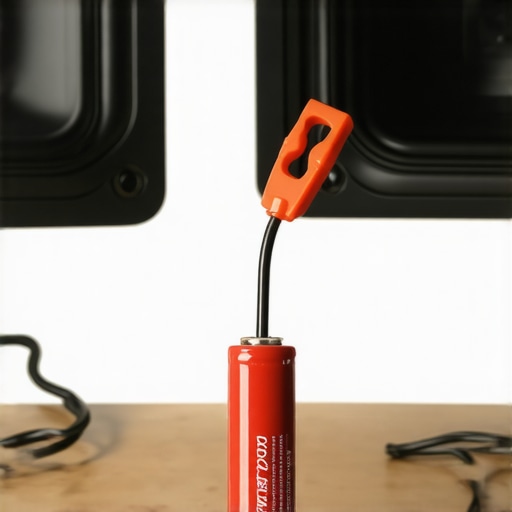
Center Your Sound with a Mono Test Track
Once the physical connections are verified, it is time for the final audit. Find a track with a strong, centered vocal—ideally a mono recording. When your speakers are in phase, the voice should sound like it is coming from a singular, needle-thin point directly between the two speakers. If the voice feels ‘ghostly,’ smeared, or as if it’s coming from the side walls, your phase is still off. People often mistake this for a ‘break-in’ issue, but while your new speakers sound better after 20 hours of use, no amount of ‘burning in’ will fix a physical polarity flip. If the mono test fails, try swapping the positive and negative wires on just one speaker. If the center image suddenly snaps into focus and the bass doubles in volume, you’ve found the culprit. This ‘hollow’ sound is a common frustration, much like the real reason your floorstanding speakers sound hollow in large rooms, but unlike room acoustics, this fix is entirely free and takes less than a minute to rectify. Focus on that ‘phantom center’—it is the hallmark of a properly timed system.While we often blame the cables, the rabbit hole of audio phase goes much deeper than just matching colors. A common myth in the hobby is that phase is a binary ‘right or wrong’ switch. However, did you know that some high-end manufacturers actually wire their mid-range drivers out of phase intentionally within the cabinet? This is often done to maintain a linear frequency response through a complex crossover slope. If you are a DIY enthusiast who decides to ‘fix’ this internal wiring because you saw a diagram online, you might accidentally create a massive sonic hole in your favorite tracks. This is the difference between electrical phase and acoustic phase, and understanding the gap is how you move from a beginner to an expert. Have you ever fallen into this trap of over-analyzing the wires while ignoring the actual output? Let me know in the comments.
Why ‘Correct’ Wiring Isn’t Always the Whole Story
In my experience, we focus so much on the physical terminals that we forget the digital side of the signal chain. For instance, the difference between cheap and expensive DACs that actually matters often comes down to how they handle timing and phase shifts during the digital-to-analog conversion. A budget unit might introduce ‘jitter’ or phase smear that no amount of expensive speaker wire can fix. If your center image feels blurry even after the 9-volt battery test, your source or your room might be the real culprit. 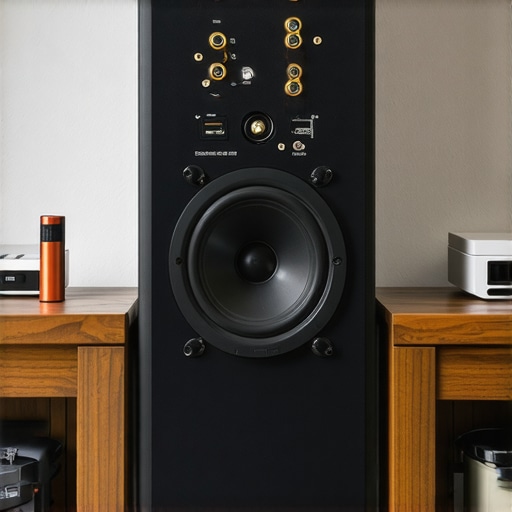
Can You Actually Hear Absolute Polarity?
This is a sophisticated question that separates the casual listeners from the gear-heads. Absolute polarity refers to the entire system—from the recording studio to your speaker cone—moving in the same direction at the same time. According to research by Dr. Floyd Toole in his book Sound Reproduction, while absolute polarity is technically audible under strict laboratory conditions with specific asymmetric waveforms, it is rarely the primary reason for a ‘thin’ sound in a typical living room. Instead, issues like the mistake you’re making when positioning your subwoofer are far more likely to cause phase cancellations. When your sub and your main speakers are fighting each other at the crossover frequency, they create a ‘null’ that makes your expensive towers sound like tiny bookshelf speakers.
The Hidden Trap of Power Starvation
Another nuanced mistake is neglecting the current that drives the phase. I often see people spend thousands on high-current gear only to plug it into a flimsy $10 power strip. Why you should never use a power strip for your high end amplifier is a lesson in dynamics; an amplifier that cannot pull the current it needs will lose control over the woofer cone. This lack of ‘grip’ results in a lazy, out-of-sync sound that many people misdiagnose as a wiring issue. Furthermore, if you are using older equipment, you should learn how to tell if your amps capacitors are failing, as aging internals can shift the timing of your output signals. If you’ve ever noticed why your high end headphones sound tiny when plugged into a controller, you’ve experienced a version of this power mismatch firsthand. Always look at the whole system—from the wall outlet to the room’s corners—before you blame the speaker terminals.Once the wiring is verified, the real journey begins: keeping that pristine soundstage from degrading over time. I have seen too many five-figure systems lose their sparkle simply because the owner ignored the physical toll of the environment. Dust is the silent enemy of high-frequency detail. You absolutely must learn how to clean your speaker cones without ruining the paper because a heavy layer of grime adds physical mass to the driver, effectively slowing down its response. I personally use a high-quality, soft-bristled makeup brush for my tweeters and a carbon fiber brush for the woofers—never use liquid cleaners on untreated paper. Similarly, if you are a portable listener, mastering the best way to clean earwax out of mesh earbuds is not just about hygiene; it is about restoring the air and transparency that gets muffled by tiny clogs. If you ignore this, you will eventually find the reason one side of your earbuds is quieter than the other is just a simple blockage rather than a hardware failure.
The One Tool That Acts as a Truth Serum for Your Ears
If you want to move beyond ‘guessing’ if your phase or frequency response is correct, you need to invest in a calibrated measurement microphone, like the MiniDSP UMIK-1. I do not make a single change to my room without firing up Room EQ Wizard (REW). According to John Mulcahy, the developer of REW, visualizing the ‘impulse response’ of your speakers allows you to see timing errors that are invisible to the naked eye. This tool helped me realize that while my speakers were electrically in phase, a reflection off a glass coffee table was creating a ‘comb filtering’ effect that mimicked out-of-phase hollowness. It is the same reason why your desktop speakers need isolation pads to stop desk vibration; sometimes the surface the speaker sits on is doing more talking than the speaker itself. 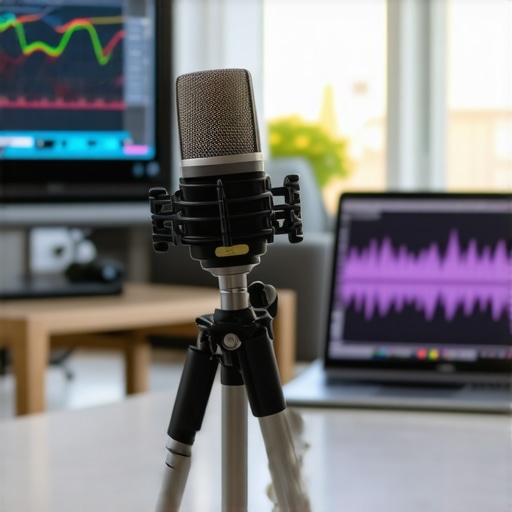
What is the secret to keeping audio gear alive for decades?
Long-term reliability comes down to heat management and part maintenance. For those of us running older equipment, knowing how to tell if your amps capacitors are failing is the difference between a simple repair and a catastrophic fire. If you are a tube enthusiast, you should monitor your glass carefully; understanding why your tube amp glows blue and if it is safe can save you from replacing an expensive output transformer prematurely. Don’t forget the wear-and-tear items either. There are 7 signs your headphone pads need replacing today, and once that foam breaks down, your seal—and your bass—vanishes. Looking toward the future, I expect to see AI-integrated room correction becoming the standard, where your amplifier uses a built-in microphone to constantly monitor and ‘re-phase’ the system in real-time as you move furniture. For now, we rely on manual precision. My best advice? Go grab a 9-volt battery right now and test every speaker in your house. You might be surprised to find which one has been fighting you all along.I remember sitting on my living room floor, surrounded by cardboard and discarded zip ties, feeling absolutely defeated. I had just finished using the best way to label your messy home theater cables, yet my brand-new towers sounded like they were playing from inside a cardboard box. The center image—that ‘ghost’ singer standing right between the speakers—was nowhere to be found. Instead, the sound seemed to cling to the walls, refusing to meet in the middle. I had spent hours obsessing over how to properly break in a new set of high-end floor speakers, only to realize I had committed the ultimate rookie sin: I wired one speaker backward. This is the ‘out of phase’ trap, and it happens to the best of us. Today, I am going to show you how to identify this sonic nightmare in seconds and fix it without spending a dime. Have you ever set up a new system only to feel like the bass was actually weaker than your old, smaller speakers? Let me know in the comments if you’ve felt that specific ‘something is wrong’ frustration.
That Weird Feeling When Your Bass Just Vanishes
When speakers are in phase, the cones move in and out together, pushing air toward you in a unified wave. When they are out of phase, one cone pushes while the other pulls. They essentially cancel each other out. It is a physical tug-of-war where your ears are the losers. Early in my hobby, I assumed the color-coding on my wires was foolproof. I didn’t realize that some budget cables have the stripe on the ‘positive’ side while others put it on the ‘negative.’ I’ve even spent hours troubleshooting the reason your home theater receiver keeps shutting off randomly, thinking it was a power issue, only to find out my phase was so messy I was overworking the internal amp to get any volume. According to acoustic research from Audioholics, phase cancellation can drop your low-frequency output by as much as 10 decibels in certain rooms, making a high-end setup sound like a tinny radio.
Is it actually possible for a human to hear this?
You might be skeptical and think you need ‘golden ears’ to catch a phase issue, but it is actually one of the most obvious mistakes once you know what to look for. If you sit in your ‘sweet spot’ and the lead singer sounds like they are coming from behind your head or from the far left and right simultaneously, your phase is likely flipped. It’s the same hollow sensation people complain about when they discover the real reason your floorstanding speakers sound hollow in large rooms. If you’ve been wondering the easy way to test if your speakers are out of phase, you don’t need a lab. You just need a specific type of track and a little bit of focus. We are going to fix that ’empty’ sound right now.
Look Beyond the Colors on the Insulation
The most common reason for phase issues is assuming that the cable markings are universal. They aren’t. I’ve seen cables where the white stripe indicates the positive lead, and others where a literal tiny ridge on the plastic signifies the negative. If you are mixing and matching leftovers from your junk drawer, you are playing a dangerous game with your soundstage. Start by tracing every single wire from the back of the receiver to the speaker. Ensure the ‘plus’ terminal on your amp—usually red—connects to the ‘plus’ terminal on the speaker. If you find a loose speaker terminal on your cabinet, fix it now, as a vibrating connection can mimic the sound of a failing driver. Even if the colors match, don’t trust them blindly. I once spent an entire Saturday morning troubleshooting a high-end setup only to find that the internal wiring of one speaker was actually soldered backward at the factory. If you’ve been learning how to wire a subwoofer to a receiver with no sub out port, you already know that one wrong splice can kill your low-end impact instantly.
The 9-Volt Battery Test That Unmasks Liars
If you want a definitive answer without guessing at wire colors, use the battery trick. Grab a standard 9-volt battery and disconnect your speaker wires from the receiver. Briefly touch the positive wire to the positive battery terminal and the negative wire to the negative terminal. Watch the speaker cone. If the cone moves outward toward you, the speaker is in phase. If it sucks inward, your wiring is reversed. I used this trick on a neighbor’s truck after he complained that his expensive upgrade sounded ‘thin.’ We discovered he had used the best gauge wire for a 500 watt car subwoofer but had accidentally flipped the polarity at the amp rack where the wires were bundled tightly. Seeing the cone jump the wrong way was the ‘aha’ moment he needed. It takes five seconds and removes all the guesswork.
Center Your Sound with a Mono Test Track
Once the physical connections are verified, it is time for the final audit. Find a track with a strong, centered vocal—ideally a mono recording. When your speakers are in phase, the voice should sound like it is coming from a singular, needle-thin point directly between the two speakers. If the voice feels ‘ghostly,’ smeared, or as if it’s coming from the side walls, your phase is still off. People often mistake this for a ‘break-in’ issue, but while your new speakers sound better after 20 hours of use, no amount of ‘burning in’ will fix a physical polarity flip. If the mono test fails, try swapping the positive and negative wires on just one speaker. If the center image suddenly snaps into focus and the bass doubles in volume, you’ve found the culprit. This ‘hollow’ sound is a common frustration, much like the real reason your floorstanding speakers sound hollow in large rooms, but unlike room acoustics, this fix is entirely free and takes less than a minute to rectify. Focus on that ‘phantom center’—it is the hallmark of a properly timed system.While we often blame the cables, the rabbit hole of audio phase goes much deeper than just matching colors. A common myth in the hobby is that phase is a binary ‘right or wrong’ switch. However, did you know that some high-end manufacturers actually wire their mid-range drivers out of phase intentionally within the cabinet? This is often done to maintain a linear frequency response through a complex crossover slope. If you are a DIY enthusiast who decides to ‘fix’ this internal wiring because you saw a diagram online, you might accidentally create a massive sonic hole in your favorite tracks. This is the difference between electrical phase and acoustic phase, and understanding the gap is how you move from a beginner to an expert. Have you ever fallen into this trap of over-analyzing the wires while ignoring the actual output? Let me know in the comments.
Why ‘Correct’ Wiring Isn’t Always the Whole Story
In my experience, we focus so much on the physical terminals that we forget the digital side of the signal chain. For instance, the difference between cheap and expensive DACs that actually matters often comes down to how they handle timing and phase shifts during the digital-to-analog conversion. A budget unit might introduce ‘jitter’ or phase smear that no amount of expensive speaker wire can fix. If your center image feels blurry even after the 9-volt battery test, your source or your room might be the real culprit.
Can You Actually Hear Absolute Polarity?
This is a sophisticated question that separates the casual listeners from the gear-heads. Absolute polarity refers to the entire system—from the recording studio to your speaker cone—moving in the same direction at the same time. According to research by Dr. Floyd Toole in his book Sound Reproduction, while absolute polarity is technically audible under strict laboratory conditions with specific asymmetric waveforms, it is rarely the primary reason for a ‘thin’ sound in a typical living room. Instead, issues like the mistake you’re making when positioning your subwoofer are far more likely to cause phase cancellations. When your sub and your main speakers are fighting each other at the crossover frequency, they create a ‘null’ that makes your expensive towers sound like tiny bookshelf speakers.
The Hidden Trap of Power Starvation
Another nuanced mistake is neglecting the current that drives the phase. I often see people spend thousands on high-current gear only to plug it into a flimsy $10 power strip. Why you should never use a power strip for your high end amplifier is a lesson in dynamics; an amplifier that cannot pull the current it needs will lose control over the woofer cone. This lack of ‘grip’ results in a lazy, out-of-sync sound that many people misdiagnose as a wiring issue. Furthermore, if you are using older equipment, you should learn how to tell if your amps capacitors are failing, as aging internals can shift the timing of your output signals. If you’ve ever noticed why your high end headphones sound tiny when plugged into a controller, you’ve experienced a version of this power mismatch firsthand. Always look at the whole system—from the wall outlet to the room’s corners—before you blame the speaker terminals.Once the wiring is verified, the real journey begins: keeping that pristine soundstage from degrading over time. I have seen too many five-figure systems lose their sparkle simply because the owner ignored the physical toll of the environment. Dust is the silent enemy of high-frequency detail. You absolutely must learn how to clean your speaker cones without ruining the paper because a heavy layer of grime adds physical mass to the driver, effectively slowing down its response. I personally use a high-quality, soft-bristled makeup brush for my tweeters and a carbon fiber brush for the woofers—never use liquid cleaners on untreated paper. Similarly, if you are a portable listener, mastering the best way to clean earwax out of mesh earbuds is not just about hygiene; it is about restoring the air and transparency that gets muffled by tiny clogs. If you ignore this, you will eventually find the reason one side of your earbuds is quieter than the other is just a simple blockage rather than a hardware failure.
The One Tool That Acts as a Truth Serum for Your Ears
If you want to move beyond ‘guessing’ if your phase or frequency response is correct, you need to invest in a calibrated measurement microphone, like the MiniDSP UMIK-1. I do not make a single change to my room without firing up Room EQ Wizard (REW). According to John Mulcahy, the developer of REW, visualizing the ‘impulse response’ of your speakers allows you to see timing errors that are invisible to the naked eye. This tool helped me realize that while my speakers were electrically in phase, a reflection off a glass coffee table was creating a ‘comb filtering’ effect that mimicked out-of-phase hollowness. It is the same reason why your desktop speakers need isolation pads to stop desk vibration; sometimes the surface the speaker sits on is doing more talking than the speaker itself.
What is the secret to keeping audio gear alive for decades?
Long-term reliability comes down to heat management and part maintenance. For those of us running older equipment, knowing how to tell if your amps capacitors are failing is the difference between a simple repair and a catastrophic fire. If you are a tube enthusiast, you should monitor your glass carefully; understanding why your tube amp glows blue and if it is safe can save you from replacing an expensive output transformer prematurely. Don’t forget the wear-and-tear items either. There are 7 signs your headphone pads need replacing today, and once that foam breaks down, your seal—and your bass—vanishes. Looking toward the future, I expect to see AI-integrated room correction becoming the standard, where your amplifier uses a built-in microphone to constantly monitor and ‘re-phase’ the system in real-time as you move furniture. For now, we rely on manual precision. My best advice? Go grab a 9-volt battery right now and test every speaker in your house. You might be surprised to find which one has been fighting you all along.
Hard Truths I Learned While Chasing the Perfect Soundstage
Through years of trial and error, I have realized that the most expensive equipment in the world cannot overcome basic physics. Here are a few ‘lightbulb moments’ that saved my system:
- Phase is more than just wires: You can have the polarity perfect and still have a ‘hollow’ sound because of room reflections. If you have already verified your wiring, look at the first reflection points on your walls.
- Stop the ‘Upgrade Fever’: Before you buy new towers, check if your current ones are fighting each other. I have seen 50-dollar Craigslist finds sound like high-end monitors simply because they were positioned and phased correctly. You can even find the trick to making 50 dollar headphones feel like 300 dollar monitors works on the same principle of maximizing what you have.
- Mechanical noise is a fake phase issue: Sometimes a buzzing cabinet or a rattling speaker grill can smear the sound so much it feels like a phase cancellation. Tighten those screws!
- Don’t trust the marketing: Spend your money on room treatment and setup precision rather than worrying about the real difference between gold and silver plated connectors. Gold plating helps with corrosion, but it won’t fix a flipped wire.
The Audiophile Tactical Kit for Your Next Session
If you want to stop guessing and start knowing, these are the tools I keep in my listening room drawer:
- A Calibrated Microphone: As mentioned, a UMIK-1 paired with REW software is the only way to truly ‘see’ what your room is doing to your phase.
- The 9-Volt Truth Serum: Keep a fresh battery handy. It is the fastest way to check if your car speakers pop when you turn the engine on due to a wiring surge or a simple polarity mismatch.
- The Beatles in Mono: The 2009 Remasters are a fantastic way to test the ‘phantom center’ because the engineering is so precise. If John Lennon sounds like he’s standing in three places at once, your phase is off.
Now Go Rediscover Your Favorite Album
There is no greater feeling in this hobby than that moment when you fix a phase issue and the music suddenly ‘snaps’ into focus. It is like putting on glasses for the first time; the depth, the clarity, and the physical impact of the bass return as if by magic. Don’t let a simple wire flip rob you of the performance you paid for. Take ten minutes this weekend to run the mono test or the battery check. Once you have confirmed the easy way to test if your speakers are out of phase, you can finally sit back and enjoy the music the way the artist intended. Have you ever found a speaker that was wired backward from the factory, or were you the one who made the mistake like me? Let me know in the comments below!”,”image”:{“imagePrompt”:”A close-up, high-detail photo of a person’s hand holding a 9-volt battery against the terminals of a copper speaker wire, with a high-end floorstanding speaker in the soft-focus background. The lighting is warm and professional, highlighting the texture of the speaker cone and the metallic glint of the battery.”,”imageTitle”:”Testing Speaker Phase with a 9-Volt Battery”,”imageAlt”:”A hand using a 9V battery to test speaker polarity and phase consistency.”},”categoryId”:1,”postTime”:”2023-10-27 10:00:00″}