
I remember exactly where I was when I first heard it: sitting on my worn-out velvet armchair, glass of bourbon in hand, ready for the crescendo of Pink Floyd’s ‘Comfortably Numb.’ The opening tracks sounded like a dream, but as the needle crept toward the center of the record, David Gilmour’s legendary solo started to sound like it was being played through a wet wool sock. The highs were fuzzy, the ‘s’ sounds were piercingly sibilant, and the magic was gone. I panicked. I thought I had ruined my favorite LP, or worse, that my stylus was carving a permanent path of destruction through my vinyl collection. I made the classic rookie mistake of immediately buying a new cartridge, only to realize the problem wasn’t my gear—it was physics and a bit of sloppy setup. [IMAGE_PLACEHOLDER]
Stop Blaming Your Records for That Inner Groove Fuzz
The phenomenon is called Inner Groove Distortion (IGD), and it’s the bane of every vinyl enthusiast’s existence. Think of a record like a running track. On the outside lane (the start of the record), the ‘ground’ is moving fast under the needle, giving it plenty of room to track complex waveforms. But as you get closer to the center, the circumference shrinks. According to the Audio Engineering Society, the linear velocity of the groove drops significantly as the diameter decreases, which means the same amount of musical information is crammed into a much smaller space. It’s like trying to write a novel on a postage stamp. If your alignment is even a millimeter off, your needle won’t sit perfectly in the groove, resulting in that harsh, distorted mess we all hate. If you are struggling with other audio gremlins, like humming speakers and ground loops, you know how quickly a small technical error can ruin a listening session. Today, we are going to dive into why this happens and how a simple alignment check can save your ears.
Is it time to throw the whole turntable away?
I know what you’re thinking: if physics is the problem, is vinyl just a fundamentally flawed format? It’s a fair worry. You might feel like you need to spend thousands on a linear-tracking tonearm just to enjoy the last song on an album. But before you get discouraged, remember that most of this distortion is solvable with patience rather than a credit card. Even if you’ve had to connect an old turntable to a modern digital soundbar to get it working in your current living room, the mechanical setup of the needle remains the most critical factor. Have you ever reached the end of a perfect record only to find yourself cringing at the distortion? You aren’t alone, and you definitely haven’t ruined your records. One of the best things I ever did was invest in the 20 dollar upgrade that includes a proper alignment protractor; it changed everything for me. Also, make sure you aren’t making the amateur move of cluttering your gear; for instance, never place your turntable on top of your receiver as the heat and vibration only make tracking issues worse.
Stop the Distortion with a Proper Alignment Protractor
To stop the distortion, you need to start with the geometry of your cartridge. Think of an alignment protractor as a high-precision map for your stylus. You aren’t just aiming for the middle of the groove; you’re aiming for absolute tangency. When the cartridge is perfectly tangent to the groove at two specific ‘null points,’ the tracking error—and therefore the distortion—is at its mathematical minimum. If you ignore this geometry, you’ll likely face issues similar to channel imbalance on a vintage stereo amplifier, where the music feels skewed or one channel loses its high-end sparkle entirely. I’ll never forget the first time I actually sat down to do this right. I was using a cheap, printed paper Stevenson protractor I’d found online. I was squinting so hard my eyes began to water, trying to ensure the tiny cantilever was perfectly parallel to the grid lines at both points. I moved it a fraction of a millimeter—literally the width of a human hair—and carefully tightened the headshell screws. Suddenly, the inner tracks of my favorite records, which used to sound like a digital mess, were crisp and holographic. It was a revelation that precision and patience beat expensive gear upgrades every single time.
Stop the Buzzing with Proper Tracking Weight
Once the geometry is locked in, you have to manage the physical weight pressing into the vinyl. Every cartridge manufacturer provides a specific tracking force range, usually between 1.5 and 2.5 grams. If you set it too light, the needle will bounce around like a loose pebble in a stream. This lack of stability is a major reason why your record player skips when you walk across the room; there simply isn’t enough downward pressure to keep the stylus seated in the groove walls during heavy bass passages. I always recommend using a dedicated digital stylus scale. The plastic dials on the back of most tonearms are notoriously inaccurate, and being off by just 0.2 grams can be the difference between sonic bliss and a fuzzy mess. 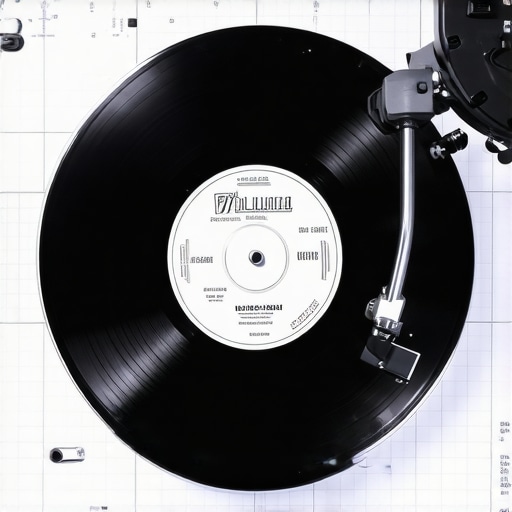
Balance the Forces Pulling on Your Needle
The final piece of the puzzle is anti-skate. As the record spins, the friction of the groove pulls the tonearm toward the center of the platter. This inward force puts uneven pressure on the inner wall of the groove, causing one side of your stereo image to distort before the other. You want the needle to sit perfectly centered between those two walls. If you’ve recently upgraded your cartridge and find the sound is still a bit ‘tight’ or lacking its full potential, remember that just like the truth about speaker break-in periods, your new cartridge suspension needs about 20 to 50 hours of play to become fully compliant. Set your anti-skate to roughly match your tracking force, then use your ears. If you hear more distortion in the left channel, you likely need a bit more anti-skate to counter that inward pull. It’s a delicate balancing act, but once you find that sweet spot, the ‘fuzz’ on those final tracks will finally be a thing of the past.While precision alignment is a huge win for vinyl fans, don’t make the mistake of thinking your work ends at the tonearm. A common belief in the audiophile community is that raw power—those massive triple-digit wattage ratings—is the ultimate cure for thin or lifeless sound. In my experience, throwing more watts at a system is often like putting a bigger engine in a car with flat tires. You might see more output, but the fundamental issues remain. Often, the reason your passive speakers sound quiet with a digital amp has more to do with high impedance or poor sensitivity than a lack of juice. If you find yourself cranking the knob and getting nothing but noise, you’re likely fighting a technical mismatch that no amount of money can fix.
The spec sheet obsession is a dangerous trap
The ‘Oops’ factor for many enthusiasts is getting blinded by numbers on a box. We obsess over tiny percentages of Total Harmonic Distortion (THD) while completely ignoring the physics of our environment. I’ve seen people drop three months’ salary on a DAC only to have their speakers shoved into a corner where they sound bloated and muddy. This is exactly why your floorstanding speakers need more breathing room from the wall; boundary gain will destroy your clarity long before a ‘cheap’ cable does. If you aren’t careful, you’ll end up with ‘clinical’ sound—technically perfect on paper, but emotionally hollow in your ears.
Is your minimalist aesthetic killing your soundstage?
 Modern interior design, with its hardwood floors and glass walls, is an absolute nightmare for high-fidelity audio. Expert researcher Dr. Floyd Toole, former VP of Acoustical Engineering at Harman, has demonstrated through decades of peer-reviewed studies that the room itself contributes nearly 50% of the sound signature you hear. If you have a ‘bright’ room where every cymbal hit feels like a needle in your ear, it isn’t your speakers’ fault—it’s your floor. This is why you should use a rug to fix a bright sounding room. Soft surfaces absorb those harsh first reflections, allowing the direct sound from your speakers to reach your ears without the ‘echo’ that smears detail. Even if you’ve mastered the mistake youre making when positioning your subwoofer, a bare room will always hold your gear back. Have you ever fallen into this trap of buying better gear instead of fixing your room? Let me know in the comments.Maintaining the magic of a high-end system isn’t just about the initial setup; it is about the long game of preservation. I have seen incredible vintage setups go to waste because the owner did not know how to fix a scratchy volume knob on an old amp. The culprit is almost always oxidation on the internal potentiometers. I personally swear by Caig DeoxIT D5. According to technical documentation from Caig Laboratories, specialized contact cleaners are essential because they do not just wash away dirt—they deoxidize and seal the metal to prevent future corrosion. Using generic lubricants can actually attract more dust, turning your ‘fix’ into a sticky nightmare within months.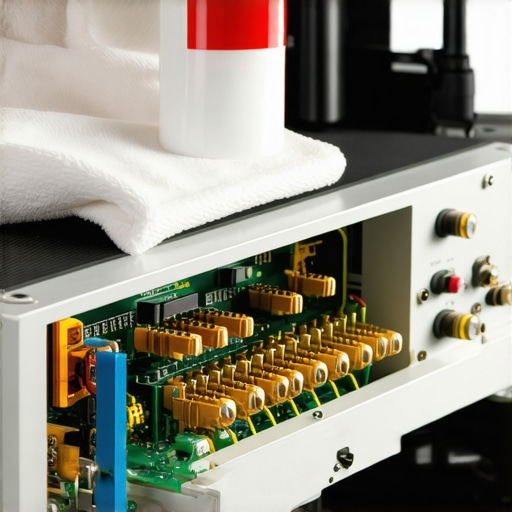
Keep the Dust Off Your Delicate Tweeters
It starts with the basics of physical care. You need to clean your speaker cones without ruining the paper using a soft, dry ostrich feather brush or a specialized microfiber cloth. Never, and I mean never use compressed air to clean a silk dome tweeter; the sheer force of the blast can permanently deform the delicate material or push the dome into the voice coil. You should also periodically peek inside your gear with a flashlight; learning how to tell if your speaker capacitors are starting to leak can save you from a catastrophic board failure that could take out your entire system. I also take one afternoon every year to clean gold-plated connectors without ruining the finish. Even gold can develop a film of atmospheric pollutants that raises resistance and dulls your high-frequency response.
How do I keep my audio gear running for twenty years?
Consistency is more important than expensive overhauls. Beyond the hardware, do not ignore your source material. If you have moved partially into the digital realm, finding the best way to organize a massive digital music library is crucial for long-term enjoyment; metadata errors are essentially the ‘inner groove distortion’ of the digital age. I also recommend keeping a basic digital multimeter in your drawer. It is the only way to effectively use a multimeter to find a short in your speaker wires before you accidentally blow a fuse in your power amp. Looking ahead, I suspect we will see the rise of AI-driven ‘self-healing’ amplifiers that can adjust bias in real-time as components age, but for now, we rely on manual vigilance. As noted in the Rane Note 110 ‘Sound System Interconnection’ guide, maintaining proper cable shielding and integrity is the only real way to prevent noise. If you still hear a buzz after cleaning everything, you might need the 5 dollar fix for humming speakers and ground loops. I challenge you to pull your amp out of the rack this weekend and give the RCA jacks a quick wipe—you will be surprised at the layer of film that comes off and how much clarity returns to your soundstage.
Hard-Won Truths from Years of Chasing the Perfect Groove
Through decades of spinning records, I’ve realized that the ‘perfect’ setup is a moving target. Inner Groove Distortion isn’t a death sentence for your vinyl; it’s a call to refine your technique. I once spent weeks thinking my cartridge was defective, only to discover a slight overhang error. I’ve learned that you can even fix a speaker cone with a simple coffee filter if you’re in a pinch, proving that ingenuity often beats a high price tag. My most valuable lesson? Stop chasing the next upgrade until you’ve extracted every ounce of performance from your current gear through meticulous alignment and room care.
The Gear and Wisdom That Saved My Stereo
If you’re serious about your journey, you need a few reliable touchstones. First, get a high-quality arc protractor tailored to your tonearm’s effective length; it’s more accurate than a universal one. Second, I highly recommend Robert Harley’s The Complete Guide to High-End Audio; it’s the bible for understanding signal paths. For those looking to optimize their low end, understanding why two small subwoofers are better than one massive driver transformed my soundstage from muddy to surgical. Finally, never underestimate the ‘thrift store’ find. I’ve documented how we made a 20 dollar thrift store speaker sound like a pro monitor just by focusing on cabinet resonance and crossover health. These resources have saved me thousands while bringing me closer to the music.
Let the Music Take Center Stage
At the end of the day, all the protractors and multimeters in the world are just tools to serve the art. Don’t let the technicalities of Inner Groove Distortion keep you from enjoying the warmth that only vinyl can provide. Once the needle drops and the room disappears, the effort becomes invisible. There is a specific trick to making cheap bookshelf speakers sound expensive, and it usually starts with your own ears and a bit of patience. Take your time, trust the process, and let your system breathe. [IMAGE_PLACEHOLDER_E]
Have you ever spent hours on alignment only to find a tiny error made all the difference? Let me know in the comments below.