
I remember sitting on an 11-hour flight to London, dreading the tinny, screechy sound of the seatback entertainment system. I reached into my bag, pulled out that little plastic two-prong adapter I usually toss aside, and plugged in my favorite pair of headphones. Suddenly, the audio wasn’t just louder—it felt richer. It was one of those moments where you stop mid-bite of your tiny pretzel bag and think, “Wait, why does this $5 piece of plastic make my $300 gear sound better?” It felt like I had finally discovered the trick to making $50 headphones feel like $300 monitors while sitting in coach.
The Day I Realized My Headphone Jack Was Lying to Me
For years, I made the classic rookie mistake of thinking that as long as the plug fit the hole, I was getting the best possible sound. I’d spent a fortune on high-end cans but ignored the “pipes” the music was traveling through. It’s a bit like wondering why your open-back headphones leak sound when you’re just trying to enjoy a quiet evening; sometimes the hardware behaves in ways we don’t expect until we understand the physics behind it. When I used that airplane adapter, I wasn’t just connecting two prongs; I was accidentally fixing an impedance mismatch that had been holding my audio back for years. The truth is, many airplane systems are built with high-output impedance. When you plug modern, low-impedance headphones directly into those systems, you often get a hissing mess or a flat, lifeless soundstage. Have you ever noticed why your noise-canceling headphones hiss in quiet rooms? It’s often a similar battle with the noise floor. That adapter adds a layer of resistance that can actually “tame” the signal, resulting in a cleaner, more controlled performance. Today, we are going to demystify why that airplane adapter changes the game and how you can replicate that “better sound” feeling at home without the jet lag.
Does This Cheap Little Plug Actually Improve the Quality?
I know what you’re thinking. “It’s a piece of plastic, how can it possibly help?” It sounds like snake oil. But in the world of audio engineering, impedance matching is everything. According to the Audio Engineering Society, the relationship between source impedance and load impedance can drastically shift the frequency response of your headphones. If the match is poor, your bass disappears and your highs get piercingly sharp. By using that adapter, you are essentially creating a makeshift buffer. I’ll admit, early on, I tried to fix “bad sound” by just turning the volume up until my ears rang. It’s like trying to figure out how to tell if your headphones need an external amp by just guessing. I ended up with distorted audio and a headache. The airplane adapter taught me that sometimes, less is more. Have you ever plugged your headphones into a random device and suddenly felt like you were hearing your favorite album for the first time? Let me know if you’ve experienced this weird audio phenomenon!
Stop Guessing and Start Matching Your Gear
Think of your audio signal like water flowing through a series of pipes. If you try to force a firehose-worth of pressure into a tiny garden hose, something is going to burst—or at the very least, spray everywhere in a messy, uncontrolled way. This is exactly what happens when you have a massive impedance mismatch. When I first started messing with home audio, I couldn’t understand the reason your passive speakers sound quiet with a digital amp until I realized my source was practically whispering while the amp was expecting a shout.
Check Your Ohms Before You Buy
The first step is always the math, but don’t let that scare you. You need to look for the output impedance of your source (the phone, the amp, or that airplane seat) and the rated impedance of your headphones. A good rule of thumb is the “Rule of Eighths.” Ideally, your headphone impedance should be at least eight times higher than the source’s output impedance. If it is lower, the source loses control over the drivers, and your bass becomes a muddy, bloated mess. This is often the real answer to how to tell if your headphones need an external amp; it is not just about volume, it is about grip.
Why a Simple Resistor Changes Everything
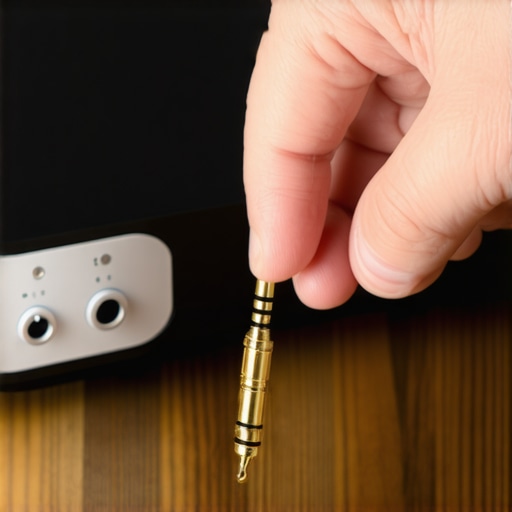
What that airplane adapter does is actually quite clever. It often includes a small resistor that artificially raises the impedance the airplane’s amplifier “sees.” This higher resistance forces the amplifier to work in a more stable range, lowering the noise floor and getting rid of that annoying hiss. It is the same reason why your noise-canceling headphones hiss in quiet rooms—the internal amp is fighting a low-impedance load and generating electronic noise. By adding that little bit of resistance, you are basically telling the amp to settle down.
Fixing the Hidden Hardware Issues
I learned this the hard way with a $15 thrift store find. I brought home a beautiful old receiver, but the left channel sounded like it was underwater. I initially thought I would need to learn how to fix channel imbalance on a vintage stereo amplifier by replacing every capacitor in the unit. I spent hours with a probe, even trying to figure out how to use a multimeter to find a short in your speaker wires, thinking the cable was the culprit. It turned out to be a simple dirty contact and a mismatched input gain. Once I leveled the playing field, the soundstage snapped into place. It was a stark reminder that even the trick to making $50 headphones feel like $300 monitors often comes down to just ensuring the signal path is clean and properly balanced for the gear you are actually using.
Everyone tells you to chase a ‘flat’ frequency response, but in my experience, that is often a recipe for a sterile and boring listening session. Professional studio monitors are designed to be brutally honest, yet many listeners find that why your studio monitors sound flat and how to add some life is the first thing they search for after a week of ownership. It is a common trap: buying gear meant for surgical analysis when you actually want a warm, inviting soundstage. In fact, Dr. Floyd Toole, a renowned expert in acoustics and author of ‘Sound Reproduction,’ has noted that most listeners actually prefer a slight bass boost and a smooth high-end roll-off rather than a perfectly straight line on a graph. If you are struggling with a sound that feels ‘too clinical,’ you are likely fighting the flat-response myth.
Stop Choking Your Bass with Poor Placement
Another massive mistake I see people make is the ‘set it and forget it’ mentality with subwoofers. You have probably seen someone tuck their expensive sub away into a TV stand to keep the room tidy, but this is a nightmare for your acoustics. You should never place your subwoofer inside a cabinet because the enclosure itself will start to vibrate and color the sound, turning a premium component into a rattling box of disappointment. This is often the mistake you’re making when positioning your subwoofer that ruins the impact of your favorite movies. Similarly, if you notice why your floorstanding speakers sound boomy in the corner, it is because the walls are artificially reinforcing the low frequencies, creating a muddy mess.
Is Gold Plating Really Worth the Extra Cash?
There is endless debate about whether those shiny plugs actually do anything for your sound. While gold is a superior conductor for preventing corrosion, the real difference between gold and silver plated connectors is often negligible in a standard home environment. If your signal path is already compromised or your room has terrible echoes, gold won’t save you. Instead of overpaying for boutique cables, focus on your physical environment first. I have found that how to use a rug to stop your speakers from sounding harsh is a way more effective (and significantly cheaper) upgrade than any fancy cable on the market.
The Critical ‘Oops’ That Can Ruin Your Gear
I also want to warn you about a cleaning mistake that has claimed many expensive drivers. I once tried to tidy up my setup with a quick blast of air and learned the hard way why you should never use compressed air to clean a silk dome tweeter. The intense pressure can literally deform the delicate material or blow it off its mount, ruining the frequency response instantly. High-end audio is about finesse, not force. Have you ever fallen into this trap or spent way too much on a ‘pro’ feature that didn’t actually improve your experience? Let me know in the comments!
After that disaster with the compressed air, I realized that keeping a high-end system running isn’t about being fancy—it’s about being methodical. I used to think ‘maintenance’ meant just dusting the tops of my speakers, but then I noticed the left channel on my favorite setup getting fuzzy. It wasn’t the driver; it was oxidation. Now, my go-to move is a bottle of DeoxIT D5 and a steady hand. If you want to know how to clean gold plated connectors without ruining the finish, the secret is avoiding anything abrasive. A quick chemical treatment can literally bring a ‘dead’ amplifier back to life by restoring the signal path. I’ve seen people throw away incredible gear because they didn’t know how to fix a scratchy fader on a vintage audio mixer with a simple squirt of contact cleaner.
The Tool Every Serious Audio Nerd Needs
If you are serious about this hobby, buy a multimeter today. I cannot tell you how many hours I wasted guessing where a problem was until I learned how to use a multimeter to find a short in your speaker wires. It’s the difference between a five-minute fix and a weekend of frustration. For instance, if your sound keeps cutting out, you might just need to learn how to fix a loose speaker terminal on your cabinet rather than replacing the whole unit. Authority in audio isn’t about how much you spend; it’s about knowing exactly why your system is behaving the way it is. 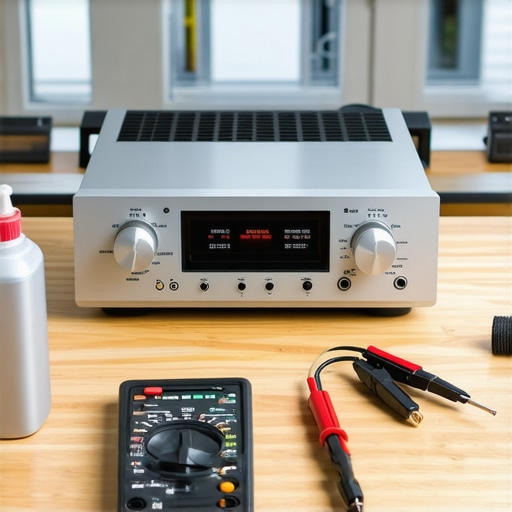
How do I maintain my audio gear over time?
Maintenance is a long game of monitoring heat and chemistry. Douglas Self, in his seminal work ‘Audio Power Amplifier Design,’ emphasizes that heat is the primary enemy of electrolytic capacitors. Over a decade or two, those ‘caps’ will dry out or leak. I’ve made it a habit to peek inside my vintage amps every year just to see how to tell if your amps capacitors are failing before they take the whole power supply down with them. Similarly, you should keep an eye on your speakers; learning how to tell if your speaker capacitors are starting to leak in the crossover network can save your tweeters from a sudden, nasty spike in power.
Where Audio Tech is Heading Next
I predict that the next five years will see a massive shift toward AI-driven room correction. We are already seeing soundbars that can map a room in seconds, but soon, this will be standard in every budget amplifier. We are moving away from ‘perfect’ hardware and toward ‘smart’ software that fixes our imperfect living rooms. But even the smartest AI can’t fix a hardware mistake. My challenge to you this week: take ten minutes to find the easy way to test if your speakers are out of phase. You might be surprised to find that your ‘weak bass’ was actually just a wiring error all along.
What I Learned After Nearly Blowing My Setup
The most important lesson I can share after years of tinkering is that gear is often more resilient—and more finicky—than we think. I realized that expensive price tags don’t guarantee performance if the basics are ignored. For instance, I spent weeks troubleshooting a ‘dead’ system only to find that a simple mechanical issue was the culprit; knowing how to fix a loose speaker terminal on your cabinet would have saved me a lot of stress. I also learned that patience is an audiophile’s best friend. Many people return gear far too early, but understanding why your new speakers sound better after 20 hours of use taught me that mechanical components need time to settle before they hit their sweet spot. Lastly, never assume a cheap component is trash; some of my favorite setups began when I discovered how we made a $20 thrift store speaker sound like a pro monitor through careful placement and minor repairs.
The Gear That Stays in My Go-Bag
If you want to move beyond being a casual listener, you need a few reliable resources in your corner. My first recommendation is the book ‘Sound Reproduction’ by Dr. Floyd Toole; it provides the scientific foundation that cuts through the marketing fluff of the audio industry. Second, I always keep a high-quality contact cleaner like DeoxIT D5 nearby to keep signals pure and noise-free. Third, I highly recommend sharpening your shopping skills; I’ve saved thousands by mastering the trick to buying high-end audio at estate sales, which allows me to test premium gear that would otherwise be out of my budget. These tools allow you to diagnose problems yourself rather than paying for ‘professional’ services that often do the same basic checks.
#IMAGE_PLACEHOLDER_E#
Take Control of Your Audio Future
You don’t need a professional studio to enjoy world-class sound. High-fidelity audio is a journey of small, incremental improvements that eventually add up to a breathtaking experience. Whether you are adjusting the bias on your amplifiers or finding the perfect pair of headphones, the joy comes from the process of discovery. Don’t be afraid to experiment with your speakers and move them around the room until the soundstage snaps into place. Your ears are the ultimate judge, and with the right maintenance habits, your gear will serve you for decades to come. Have you ever found a simple, low-cost fix that completely transformed the way your system sounds? Let me know in the comments below!