
I remember the first time I installed a pair of 12-inch subs in my old sedan. I was vibrating with excitement, literally. I sat in the driver’s seat, cranked the volume, and… it was okay. Solid, sure. But then I climbed into the back seat to grab my jacket while the music was still playing. My heart nearly skipped a beat. The bass didn’t just sound louder; it felt like a physical force hitting my chest. It was richer, deeper, and frankly, a lot more fun. I felt cheated. I spent $400 for my passengers to have the best seat in the house? If you have ever jumped in the back of your own car and realized your friends were getting a better concert than you, believe me, I know exactly how frustrating that feels.
Stop Blaming Your Gear for Weak Front Seat Bass
It is a common frustration. You have done everything right. You have learned how to properly ground a car amplifier to eliminate engine hum, you have matched your levels, and yet, the driver’s seat feels thin. This isn’t your imagination. It is physics. Specifically, it is about standing waves and cabin gain. In a small, metal box like a car, sound waves bounce off every surface. These waves can cancel each other out in some spots and double up in others. Unfortunately, for most car layouts, the ‘nodes’ where bass frequencies combine into a massive peak often happen right behind the front seats. When I was starting out, I wasted weeks thinking my car speakers sound like they are under a blanket because they were cheap. I replaced them twice before realizing the issue was where I was sitting, not what I was playing.
Is My Subwoofer Actually Failing Me?
You might be tempted to think your equipment is the problem, but throwing money at the issue rarely helps if the acoustics are against you. I once made the mistake of buying a massive ported enclosure to ‘fix’ the lack of punch up front. All I did was make the back seat even more unbearable while the driver’s seat still lacked that chest-thumping energy. Before you go trying how to get better bass from a sealed subwoofer box by adding more power, you need to understand that car interiors are acoustic nightmares. According to research from the Audio Engineering Society (AES), low-frequency pressure distribution in small enclosures is highly dependent on boundary interference, often creating ‘nulls’ at the front of the cabin. Today, we are going to fix that. We are going to look at phase alignment and positioning, much like how to find the sweet spot for your speakers in a rectangular room, so you can finally enjoy the bass you actually paid for.
Flip the Switch to Find Your Missing Bass
The most common thief of front-seat bass is something called phase cancellation. Think of it like two people trying to push a swing: if they both push at the same time, the swing goes higher; if one pushes while the other pulls, the swing stops moving. In your car, if your subwoofer is moving outward while your front door speakers are moving inward, they are fighting each other. The result? The bass literally vanishes at the driver’s seat. This is often why your car speakers sound thin when you turn up the treble or volume—the frequencies are clashing rather than combining. I once spent an entire afternoon helping a friend who had just finished a massive install in his truck. He was devastated because it sounded like a tinny radio. I reached behind his amp, flipped the ‘Phase’ switch to 180 degrees, and the entire cabin suddenly erupted with the depth he’d been missing. It was a ten-second fix that outperformed hours of rewiring. If your amp doesn’t have a switch, you can achieve the same thing by simply swapping the positive and negative speaker wires at the subwoofer terminal.
Why You Should Point Your Sub at the Taillights
It feels counterintuitive, but pointing your subwoofer toward the back of the vehicle often yields the best results in the front seat. This is because low-frequency sound waves are incredibly long. By firing the sub toward the rear hatch or trunk lid, you are effectively lengthening the path the sound travels, allowing the wave to fully develop before it hits your ears. Just as why your portable speaker sounds better when placed in a corner, your car’s trunk acts as a loading zone that amplifies the pressure. If you face the sub forward, the sound wave often hits the back of your seat and bounces back into the enclosure, creating a ‘null’ or a dead zone exactly where you are sitting.
Dial in Your Crossover for Maximum Punch
Your subwoofer is a specialist; it shouldn’t be trying to do the job of a midrange speaker. If your crossover (LPF) is set too high—say, 120Hz or above—your sub will sound ‘boomy’ and localized, meaning you can tell exactly where the box is in the trunk. To get that ‘bass in the dashboard’ feel, drop your LPF to around 80Hz. This ensures the sub handles only the deep heavy lifting while your door speakers take the rest. If you have recently learned how to properly bridge a car amplifier for more power, be extra careful with your gain settings. More power is great, but pushing a clipped signal into a sub will lead to heat. If you ever notice a weird mechanical odor, you need to know how to fix a car subwoofer that smells like it is burning before the voice coil melts. Lastly, verify every connection. Vibrations are the enemy of electronics. A loose wire won’t just stop the sound; it can cause intermittent drops similar to why your car speakers cut out when you hit a bump, which ruins the continuity of your listening experience.
Why Chasing Massive Wattage Is Often a Waste of Money
Most people in the car audio scene are obsessed with numbers. They think a 2,000-watt amplifier is twice as good as a 1,000-watt one. But here is the contrarian truth: doubling your power only gives you a theoretical 3-decibel increase in volume, which is barely noticeable to the human ear. I have seen enthusiasts spend a fortune on high-output gear only to realize they did not know how to tell if your amplifier has enough headroom for your speakers. If your speakers are inefficient or poorly matched, you are just turning that extra electricity into heat rather than sound. I once swapped a massive, cheap budget amp for a high-quality 500-watt unit, and the system sounded significantly punchier because the control over the woofer cone was so much tighter. Stop chasing the sticker-price wattage and start looking at the RMS ratings and signal-to-noise ratios.
Will a High-Output Alternator Actually Save Your Sound System?
A common mistake advanced hobbyists make is upgrading the alternator the moment their lights start dimming. Before you drop $500 on a high-output unit, check your impedance. Many people accidentally wire their subs too low, forcing the amp to draw more current than the vehicle’s electrical system can handle. You need to master how to match your car subs impedance to your amplifiers output first. If the impedance is correct and you are still seeing voltage drops, you might be dealing with a parasitic draw, similar to why your cars aftermarket radio is draining your battery overnight. Your electrical system is a closed loop; if the demand exceeds the supply, your amplifier will clip, and you will eventually need to know how to fix a car amplifier that keeps shutting off in summer when it inevitably enters protection mode.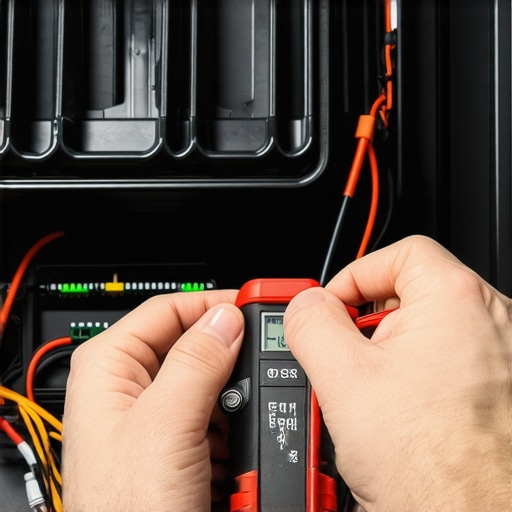
The Hidden Nuance of Cabin Transfer Functions
Let us dig deeper into the science most people ignore. According to the Audio Engineering Society (AES), every vehicle has a specific resonant frequency where the cabin naturally amplifies bass. This is known as the transfer function. If you build a box tuned to 40Hz but your car’s cabin peaks at 45Hz, you might end up with a messy, bloated sound that lacks clarity. This is the common trap of pre-fabricated boxes—they are not designed for your specific car’s acoustic environment. Even a perfectly tuned system can fail if the enclosure itself is not airtight. I always recommend performing the simple paper test for finding air leaks in your speaker cabinet. A tiny leak in a sealed box can destroy the pressure waves that create that physical kick in your chest, making your high-end setup sound like a budget kit. Have you ever fallen into the trap of buying more power instead of fixing the installation nuances? Let me know in the comments.I’ve spent years tinkering with high-end setups, and if there is one thing I’ve learned, it’s that your ears are liars. When you’re chasing that perfect front-seat response, you need data. This is where your mobile device becomes a literal lifesaver. You can actually use a mobile RTA app to see exactly where your cabin’s standing waves are killing your vibe. By following the logic of how to use your phone to measure your rooms frequency response, you can apply these same measurement techniques to your car’s interior. Look for the massive dips in the 40Hz to 60Hz range—that’s usually the culprit for that hollow feeling that makes your music sound empty despite having big subs.
Why I Still Trust a $20 Multimeter Over My Ears
Many people set their gains by turning the dial until it sounds loud without distorting. That is the fastest way to fry a voice coil. I personally never touch a gain knob without a digital multimeter in hand. By calculating the target voltage based on your speaker’s RMS rating and impedance, you ensure your signal stays clean. It is all about understanding the difference between peak and rms power explained simply; if you push for peak numbers, you are just inviting clipping and heat. I always follow the technical guidance from the Consumer Technology Association (specifically the CTA-2006 standard), which emphasizes that rated power must be measured at a specific voltage to be meaningful for the end-user. If you are just guessing the dial position, you are gambling with your gear’s lifespan. 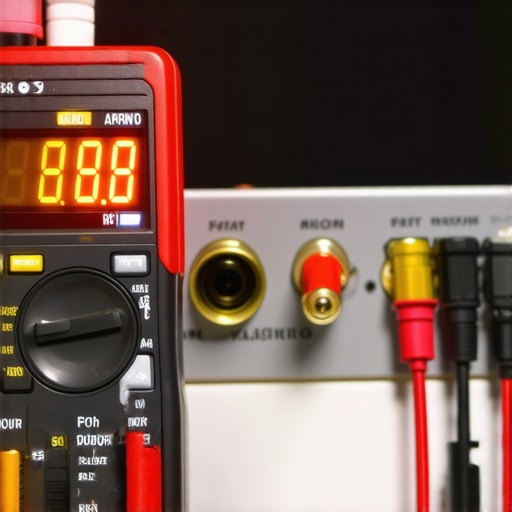
How do I keep my high-end system from losing its punch over time?
Maintenance is the most ignored part of this hobby. Over a few years, vibration and extreme temperature swings will take their toll on your hardware. You should regularly check and how to clean green oxidization off your copper speaker terminals to prevent resistance build-up that chokes your power. Even inside the cabinet, things can go south. I’ve seen systems lose their clarity because of aging components, so you need to know how to tell if your speakers capacitor is starting to fail. In a car environment, summer is your worst enemy. Make sure your amp has enough airflow, or you will be searching for how to fix a car amplifier that keeps shutting off in summer when the thermal protection inevitably kicks in. Even small things matter—periodically learning how to clean dust out of your headphone jack without damaging pins ensures your source signal stays pure from the very beginning of the chain.
The Future of Car Audio Is Smarter Than You Think
We are moving away from manual knobs and toward AI-driven DSPs. In the next few years, I predict that auto-tuning microphones will become standard in even entry-level amplifiers, automatically compensating for your specific vehicle’s cabin gain in real-time. Until then, you are the chief engineer of your own mobile concert hall. My challenge for you: stop guessing. Go grab a cheap multimeter from the hardware store this weekend and verify your gain settings. You might realize you’ve been leaving 20% of your performance on the table—or worse, you have been seconds away from a permanent meltdown.
The Hardest Bass Lessons I Learned the Expensive Way
After years of chasing the perfect low-end, I’ve realized that the most expensive equipment in the world won’t save a poorly tuned cabin. One major realization was that vibrations elsewhere in the car can trick your brain into thinking the bass is ‘muddy.’ If you find that your car’s structure is vibrating more than the air, you really need to learn how to stop your cars rear deck from rattling with heavy bass. I also spent way too much time testing my system with the doors open, forgetting why your car speakers sound better with the windows up—the cabin pressure is what actually creates that tactile sensation. Lastly, don’t ignore the small stuff; even moisture can ruin your day, so keep an eye on the 5 fix for car speakers that sound muffled after a car wash.
My Go-To Resources for Tuning Like a Pro
I don’t leave my driveway for a long trip without making sure my setup is dialed in. Beyond the RTA apps we discussed, I always keep a few basic physical tools handy. For instance, a simple shim or foam tape can be a lifesaver when you discover the easiest way to fix a rattling speaker grill for good. I also recommend following technical test tracks—they use specific frequencies that help you identify phase issues much faster than a standard pop song. Trusting these technical tools over your ‘gut feeling’ is what separates a loud car from a high-fidelity one.
Claim the Best Seat in the House
You’ve done the hard work of researching, wiring, and positioning. Now, it is time to enjoy the fruits of that labor. Stop being the guy who builds a system for the people outside the car or the passengers in the back. By focusing on phase alignment and the physics of your specific cabin, you can finally make the driver’s seat the ultimate listening position. Your car audio journey is about personal satisfaction, not just raw volume. Have you ever spent a fortune on gear only to realize the placement was the real problem? Let me know in the comments below.