
I was sitting on my living room floor, surrounded by a mountain of speaker wire and a sense of mounting frustration. I had just dropped a month’s rent on a beautiful set of floorstanding speakers, but every time the bass kicked in, there was this tiny, maddening crackle. I blamed the amp. I blamed the crossover. I even thought I had a blown driver. It turned out to be a five-dollar cable with a corroded tip that looked like it had been pulled from the bottom of the ocean. That’s the moment I realized that the tiny bit of metal on the end of your wire isn’t just for show—it’s the gatekeeper of your entire audio experience. We often obsess over the ‘big’ gear, but we ignore the actual points of contact where the magic happens. Today, I’m going to break down the gold versus silver debate so you can stop guessing and start listening.
Why I Stopped Buying Cheap Generic Cables
Early in my journey, I figured metal was metal. I thought those ‘premium’ gold connectors were just a marketing gimmick to separate audiophiles from their cash. I was wrong, but not for the reasons the packaging told me. I once ignored a slight hum in my system, only to discover a cheap connector had oxidized so badly it was basically acting like a resistor. If you’re struggling with similar noise, you might need to find the source of a ground loop in home theater setups before you go blaming the plating, but often, the physical connection is the culprit. The truth is, silver is technically the superior conductor. Scientific data from ASM International confirms that silver is roughly 7% more conductive than copper and significantly better than gold. However, silver tarnishes when it looks at a humid room the wrong way. That’s the trade-off. Gold isn’t there because it’s the fastest; it’s there because it’s the toughest against the elements. If you’ve already invested in high-end gear, you need to know how to clean gold plated connectors without ruining the finish so they actually last a decade.
Is the Extra Cost Actually Worth the Hype?
You might be wondering if you can actually hear the difference. Honestly? Most of us can’t in a blind test. But you can hear the difference between a clean signal and a corroded one over time. Whether you are dealing with balanced and unbalanced cables for home studios or just a simple RCA hookup, the plating is about reliability, not some magical ‘warmth’ in the high frequencies. Have you ever noticed your sound getting ‘fuzzy’ after a few years of using the same setup? I certainly have, and it usually starts at the plug.
Choose the Right Metal for Your Specific Environment
Think of your audio connectors like the tires on a car. Silver is the high-performance racing slick—it offers the absolute best grip (conductivity) but wears out the moment the conditions aren’t perfect. Gold is the rugged all-terrain tire. It might have slightly more rolling resistance, but it won’t fail you when things get messy. If you are setting up a permanent home theater in a room that isn’t climate-controlled, gold is your only real option. Silver reacts with sulfur in the air to create silver sulfide. This tarnish isn’t just ugly; it’s a literal wall that blocks your music. I learned this the hard way when I set up a 2.1 system in a converted garage. I used high-end silver-plated wires, thinking I was being a genius. Six months later, the left channel started dipping. I thought I had a blown capacitor, but after I learned how to fix channel imbalance on a vintage stereo amplifier, I realized the problem was much simpler: my silver tips had turned a charcoal grey. Switching to gold-plated connectors ended that headache forever. 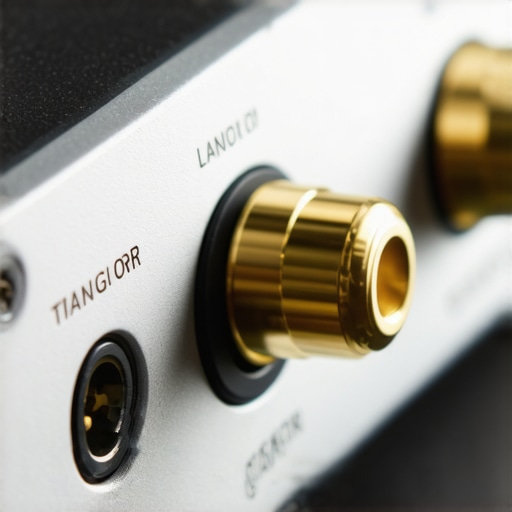
Maximize Conductivity with Proper Seating
No matter which metal you choose, the connection is only as good as the physical contact area. A loose-fitting ’boutique’ silver plug will always perform worse than a tight-fitting, generic gold one. When you plug in your gear, you should feel a distinct resistance. If the plug slides in like a hot knife through butter, you’re losing signal. This is especially critical when dealing with balanced and unbalanced cables for home studios where noise floor is everything. If your connection feels ‘wiggly,’ you can often gently crimp the outer ring of an RCA connector with pliers to ensure a snug fit. This ensures the electrons have a wide, clear path to travel instead of jumping through a tiny point of contact.
Find Every Hidden Short Using a Simple Multimeter
Before you blame the plating for a ‘thin’ sound, you need to verify the integrity of the wire itself. I’ve seen people spend hundreds on silver-core cables only to have a single stray strand of copper touching the chassis. This creates a partial short that kills your dynamics. You should always how to use a multimeter to find a short in your speaker wires before finalizing any installation. Set your meter to the continuity or ohms setting and touch the leads to the positive and negative tips of your cable while it’s unplugged. If you see anything other than an ‘Open’ or infinite reading, your fancy plating won’t save you.
Maintain Your Investment Without Damaging the Surface
If you do go the gold route, remember that the gold layer is often only a few microns thick. It is incredibly soft. If you scrub it with a harsh abrasive or a cheap wire brush, you will strip the gold right off, exposing the nickel or brass underneath—both of which corrode instantly. To keep the signal path clear, you must know how to clean gold plated connectors without ruining the finish by using specialized contact cleaners that dissolve oils without scratching the metal. A quick spray once a year is usually enough to keep the ‘gatekeeper’ of your audio system wide open.Now that we’ve looked at the science of silver and gold, let’s talk about where most people—myself included—completely miss the mark. We focus so much on the ‘flavor’ of the metal that we forget the basic physics of the room. I’ve seen enthusiasts drop $500 on silver-plated interconnects while their speakers are shoved into tight corners, creating a bloated, muddy mess. If you’ve ever wondered why your floorstanding speakers sound boomy in the corner, I can promise you it isn’t the lack of gold on your plugs; it’s the standing waves in your room reflecting off the walls.
Stop Blaming the Metal When Your Room Is the Real Villain
One of the biggest myths in our world is that premium plating can ‘fix’ a fundamental system flaw. I used to think a silver cable would bring back the ‘air’ in my jazz recordings, but the real issue was my speaker height relative to my ears. Most of the nuances we attribute to metal are actually psychoacoustic. For instance, you might notice why your new speakers sound better after 20 hours of use, but that’s a mechanical break-in of the physical surround and spider, not the ‘settling’ of electrons in a gold-plated tip. If your sound feels off, look at your speaker layout first. 
Can You Actually Hear the Difference in High-End Cables?
To answer this, we have to look at the ‘Oops’ factor of component placement. I once visited a guy who had $2,000 silver cables but his record player was vibrating like a leaf because he didn’t know why you should never place your turntable on top of your receiver. The heat from the amplifier was drying out the drive belt and the mechanical vibrations from the power transformer were being picked up by the sensitive stylus. No amount of gold plating can filter out that kind of mechanical noise. Expert research from Audioholics has repeatedly shown that in the audible frequency range (20Hz-20kHz), cable inductance and resistance matter significantly more than the specific type of metal plating, provided the connection remains clean and unoxidized.
Avoid This Common Trap with Your Vintage Gear
Another mistake I see constantly is over-cleaning. In an effort to keep those gold connectors ‘perfect,’ people get too aggressive. I’ve seen hobbyists use industrial solvents that eat right through the thin gold layer. Worse yet, some people try to ‘dust’ their sensitive components with high-pressure air. You should definitely learn why you should never use compressed air to clean a silk dome tweeter, as it can permanently deform the delicate dome and ruin your high-frequency response forever. Similarly, if you’re using high-end headphones and notice a background hiss, it’s rarely the plug’s fault. Often, the reason why your noise canceling headphones hiss in quiet rooms has more to do with the internal active electronics’ noise floor than the 3.5mm jack’s plating.
Fine-Tune the Setup Before Buying New Gear
Before you run out to buy silver-plated speaker wires to fix a ‘dull’ sound, check your subwoofer placement. Often, the mistake youre making when positioning your subwoofer is causing phase cancellation that sucks the life out of your mid-bass. That ‘thin’ sound isn’t because you chose gold over silver; it’s because your sound waves are literally fighting each other in the room. Even with soundbars, the truth about why your soundbar dialogue is still muddy is usually down to hard-surface reflections, not the HDMI cable quality. Have you ever fallen into this trap of over-spending on cables while ignoring the room? Let me know in the comments.
I’ve realized over the years that buying the gear is only 20% of the battle. The real work is keeping it from sounding like a bag of potato chips in five years. Even if you have the perfect room layout, hardware degrades. Oxygen, dust, and heat are the silent killers of high-end audio. When I’m not obsessing over cable plating, I’m usually deep in my ‘maintenance kit.’ If you want your system to last, you need more than just a microfiber cloth; you need a strategy for the components that actually wear out. No amount of gold plating will save you if you don’t know how to tell if your speaker capacitors are starting to leak, especially in those beautiful vintage receivers that get better with age. When those electrolytic caps go, they take your soundstage with them.
Stop letting dust and age kill your dynamic range
One of my absolute must-have tools is Caig DeoxIT D5. If you have any vintage gear, you’ve probably heard that ‘scratchy’ sound when you turn a volume knob. That isn’t just annoying; it’s a sign of micro-arcing and signal loss. I personally use DeoxIT because it doesn’t just flush out the dirt; it leaves a microscopic protective layer that prevents future oxidation. I recently had to learn how to fix a scratchy fader on a vintage audio mixer, and the difference a proper contact cleaner makes compared to just blowing it out with air is night and day. If you’re dealing with older speakers, you might also want to look at the surrounds. Rubber and foam dry out. I’ve had success using how to revive a vintage speaker cone with simple rubber treatment to keep them supple and prevent the dreaded ‘foam rot’ that ruins thousands of dollars of drivers every year.
How do I keep my high-end gear performing for decades?
The secret is a biannual ‘health check.’ I set a calendar reminder every six months to go through my entire signal chain. I start by checking the phase. It is incredibly easy to accidentally swap a wire when you’re cleaning behind a heavy cabinet. You should use the easy way to test if your speakers are out of phase—the ‘9V battery test’—to make sure your drivers are all pushing air in the same direction. According to the technical documentation from the Audio Engineering Society (AES) on system calibration, even a 5-degree phase shift can cause significant cancellations in the crossover region. While you’re at it, check your terminations. If you see even a hint of dullness on your copper tips, snip them and strip a fresh inch. Clean connections are the only way to ensure the resistance stays low enough to maintain the damping factor of your amplifier.
Prepare for a world where cables don’t even matter
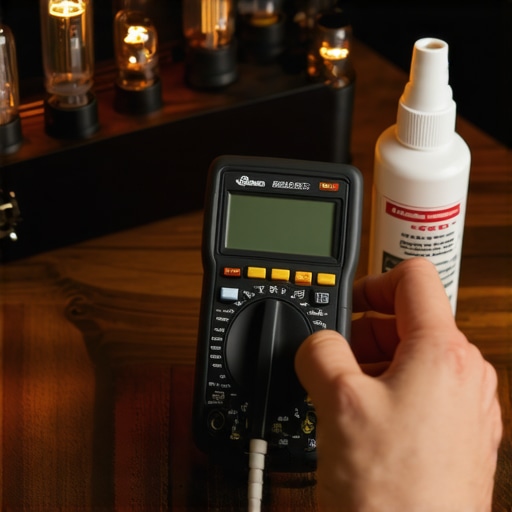
Looking ahead, I suspect the gold versus silver debate will eventually become a niche hobby for vintage enthusiasts. We are moving toward a world of ‘Active DSP’ where speakers are connected via high-bandwidth wireless or optical connections directly to the driver. In that world, the digital-to-analog conversion happens inside the speaker box itself. However, even with that shift, mechanical maintenance remains. Whether you’re trying to figure out why your wireless sub keeps disconnecting from the soundbar or dealing with radio frequency interference, the principles of keeping a clean signal path remain the same. My advice? Grab a basic multimeter and a bottle of contact cleaner tonight. Run a continuity test on your longest cable run just to see if it’s actually performing to spec. You might be surprised at how much ‘hidden’ resistance has crept into your system over the years.
The Reality Check Most Audiophiles Avoid
After years of swapping cables and chasing that perfect high-end shimmer, I’ve realized that the plating on your connector is just one small piece of a much larger puzzle. Here is the insider wisdom I wish someone had handed me when I started:
- Don’t overpay for the jewelry of audio. I’ve seen enthusiasts drop $200 on a cable while their headphones need an external amp just to reach their potential. Power and room acoustics will always have a bigger impact than 24k gold.
- Mechanical tension is king. A silver connector that sits loose in the jack will introduce more noise than a generic copper one that fits snugly. If the physical contact is weak, the metal type doesn’t matter.
- Oxidation is the only real enemy. The reason we use gold is to prevent the crackle. If you keep your gear in a climate-controlled room and clean it annually, the sonic difference between silver and gold is virtually invisible to the human ear.
The Maintenance Gear That Actually Lives in My Drawer
I don’t believe in magic stones or $1,000 power cords, but I do believe in having the right tools for signal integrity. If you want to keep your system humming perfectly, these are the items I personally trust:
First, a reliable digital multimeter is non-negotiable. You need it to find a short in your speaker wires before you fry an output stage. Second, stop buying into the hype and stop wasting money on expensive optical cables; digital signals either arrive or they don’t—the plating doesn’t change the 1s and 0s. Finally, keep a bottle of specialized contact cleaner and a set of non-abrasive swabs. When you clean gold plated connectors without ruining the finish, you’re ensuring the longevity of your investment for decades.
Focus on the Music Instead of the Metal
At the end of the day, your audio system is a tool for joy, not a laboratory experiment. Whether you choose the raw conductivity of silver or the timeless reliability of gold, the goal is to disappear into the soundstage. Don’t let the technical specs keep you from the melody. If your system sounds great today, it probably is great. Just keep those contacts clean, watch for speaker capacitors that are starting to leak, and let the music play. Have you ever noticed a real, audible difference after cleaning your connectors, or do you think it’s all in our heads? Let me know in the comments.