
I was halfway through the A-side of a vintage jazz record when it happened—the music slowed to a ghostly crawl and then just… died. My first thought was a power surge, but the motor was still humming. When I lifted the platter, the drive belt was dangling like a piece of overcooked spaghetti. It’s a moment every vinyl lover dreads, but if your record player belt keeps slipping off, you aren’t alone. It’s one of those “Helpful Neighbor” fixes I’ve helped a dozen people with over the years. We’re going to get that platter spinning at a perfect 33 RPM again without you needing a degree in mechanical engineering. [image_placeholder_1]
Stop the Slip and Get Your Music Back on Track
When a belt starts jumping ship, it’s usually telling you a story about its environment or its age. Most people assume the belt is just “bad,” but I’ve seen brand-new belts fly off because of a tiny bit of oil from a fingerprint. Our hands are naturally oily, and that slickness transfers to the rubber, making it lose its grip on the motor pulley. Early in my hobby, I made the classic mistake of trying to “revive” a slipping belt with a rubber band from the junk drawer. Trust me, that’s a recipe for disaster; it lacks the precision tension required and will likely make your turntable sound like it’s scratching its way through the track. The belt-drive system is a beautiful piece of simple physics, but it relies entirely on a delicate balance of friction and tension. If the belt gets stretched out by even a few millimeters, or if the motor pulley gets a bit of grime on it from years of dust, that friction disappears. This is especially common if you’ve recently moved your setup or tried to connect an old turntable to a modern digital soundbar. Even the slight jar of moving the unit to reach the back ports can knock a loose, aging belt out of alignment.
Is a belt-drive system actually worth the hassle?
You might be wondering if you should just chuck the whole thing and buy a direct-drive model. I get it; nobody wants to deal with maintenance when they just want to hear some tunes. However, belt-drives are beloved by audiophiles because the belt acts as a natural shock absorber. It keeps the motor’s mechanical vibrations far away from the sensitive stylus. In many ways, keeping your belt in top shape is the most important part of that $20 upgrade that makes an old turntable sound like new. According to research published by the Audio Engineering Society (AES), the decoupled nature of a belt-drive system is technically superior for reducing the noise floor in high-fidelity playback compared to many entry-level direct-drive motors. Have you ever opened your record player only to find the belt has turned into a sticky, black goo? Tell me in the comments, because that’s a whole different level of mess! Today, I’ll show you why this happens and how a simple cleaning might be all you need to keep your vinyl spinning smoothly without breaking the bank.
Clean the Pulley Before You Buy New Parts
First, you need to strip away the invisible enemy: skin oil. I remember a humid July evening where I was trying to fix a client’s Pro-Ject turntable that would only spin at about 20 RPM. I swapped the belt three times before I realized the previous owner had used a lubricant on the spindle thinking it would ‘help’ the motor. It was a greasy mess. Once I cleaned the contact points, the music snapped back to life instantly. This level of precision is just as critical as knowing how to clean gold-plated connectors without ruining the finish. Use 90% isopropyl alcohol and a lint-free swab to wipe the motor pulley—that small brass or silver peg—and the inner rim of the platter where the belt actually sits. If there is even a hint of black residue on your swab, you’ve found your culprit. 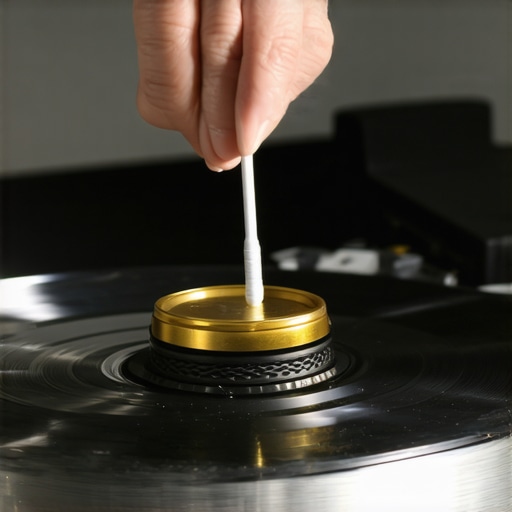
The Tension Test: Is Your Belt Actually Dead?
A belt should feel like a fresh hair tie, not a piece of limp pasta. If you pick it up and it doesn’t immediately spring back into a small circle, its physical integrity is compromised. This loss of elasticity is often the secret reason vinyl records sound distorted at the end of the side; as the needle moves closer to the center, the physics of tracking change, and a loose belt just can’t maintain the consistent torque needed for that final track. If the belt looks shiny or ‘glazed’ on the inside, it has lost its friction and will slide right off the pulley the moment the motor gains speed.
Master the Art of the Platter Reseat
Most modern turntables have a small access window built into the platter. Rotate that window until you can see the motor spindle clearly. Wrap the belt around the inner circle of the platter first, then use one finger to gently stretch it over the spindle. It’s a bit like trying to put a chain back on a bike; it requires a steady hand and zero grease. If the belt keeps slipping off during this process, check the motor’s physical alignment. Sometimes the rubber grommets holding the motor in place can perish or sag, causing the pulley to lean at an angle. This is a structural hardware failure, much like when you have to fix a loose speaker terminal on your cabinet; you need to ensure the foundation is square before the system can function.
Avoid the Talcum Powder Trap
You might see old forums suggesting you coat a belt in talcum powder to ‘smooth’ its rotation. I tried this once on a vintage Thorens, and it was a disaster. The powder eventually worked its way into the motor bearings, creating a gritty noise that was harder to fix than the original slip. Instead of hacks, focus on surface preparation. If your belt is stretched, no amount of powder or cleaning will save it. Replacing it is often the $20 upgrade that makes an old turntable sound like new, providing a stable foundation that even the most expensive stylus cannot fix on its own. Ensure the belt is sitting perfectly level in the center of the pulley’s ‘crowned’ surface to prevent it from walking upward and popping off during high-speed 45 RPM play.Wait, before you run out and buy the thickest ‘audiophile grade’ belt you can find, let me debunk a massive myth. Most people believe that a tighter, thicker belt provides more torque and better timing. In reality, an overly tight belt is a motor killer. It exerts lateral pressure on the motor’s delicate spindle bearings, leading to a slow, grinding death. I’ve seen beautiful vintage rigs ruined because someone thought ‘tighter is better.’ It’s a similar logic gap to when people wonder how to tell if your headphones need an external amp—throwing more ‘force’ at the problem rarely fixes the underlying physics. The ‘oops’ factor I see most often is the ‘WD-40 mistake.’ Someone hears a squeak or sees a slip and thinks the motor needs lubrication. If even a microscopic mist of oil hits that belt, it’s game over. You’ll be fighting speed fluctuations for weeks. This is as delicate as knowing how to clean gold-plated connectors without ruining the finish; you need the right solvent, not just whatever is under the sink. 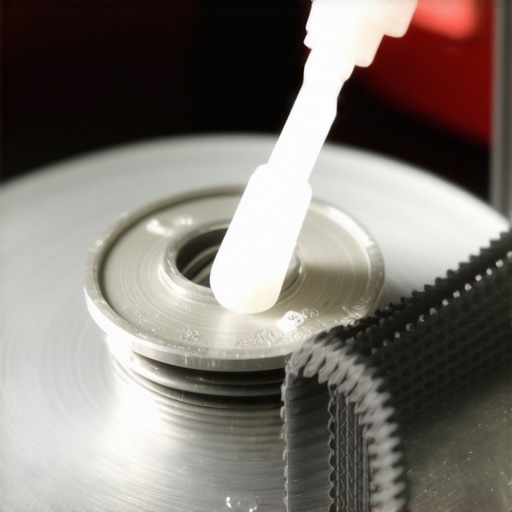
Can you actually hear the difference in belt material?
The short answer is yes, but not for the reasons you think. It isn’t about the ‘tone’ of the rubber, but the damping properties. A high-quality ground-rubber belt absorbs micro-vibrations from the motor. A cheap, molded plastic ‘universal’ belt has seams from the manufacturing process. Every time that seam hits the pulley, it creates a tiny ‘thump’ that the stylus picks up. This is why some systems suffer from why your record player skips when you walk across the room or just general muddy playback. According to data from the Vinyl Engine technical archives, the ‘stretch-recovery’ cycle of the belt is the primary factor in reducing flutter and maintaining pitch perfection. Don’t get lured in by those 20-packs of ‘assorted’ belts. It’s the hidden cost of buying a cheap tube amplifier all over again—you get plenty of options, but none of them actually work correctly. A belt that is even 0.5mm too wide can rub against the speed-change fork, creating a mechanical hum that ruins your noise floor. Much like the trick to making cheap bookshelf speakers sound expensive, the key is precision alignment and matching the specs exactly. If you’ve managed to get your speed stable, you might notice other issues, like how to fix channel imbalance on a vintage stereo amplifier, which often gets blamed on the turntable when it’s actually the preamp. Have you ever fallen into the ‘tighter is better’ trap or tried a DIY belt hack that went south? Let me know in the comments below!
Ditch the Guesswork with Strobe Discs
I’ve seen plenty of people try to ‘eyeball’ their platter speed, but if you want true pitch perfection, you need a strobe disc. I personally keep a KAB SpeedStrobe in my toolkit because it eliminates the drift you get with smartphone gyro-apps. You see, the extra weight of a phone sitting off-center on your platter actually changes the rotational mass, giving you a false reading. It’s a precision game. Just as you’d learn how to use a multimeter to find a short in your speaker wires when a channel goes dead, using a dedicated strobe light is the only way to verify your motor is actually hitting 33.3 RPM under a real load.
How do I keep my turntable speed consistent for years?
Maintenance isn’t a one-and-done deal. Every six months, I do a ‘deep grip’ cleaning. I don’t just wipe the belt; I submerge it in a bowl of warm water with a single drop of mild dish soap to strip away any deep-seated atmospheric oils. This is very similar to how to revive a vintage speaker cone with simple rubber treatment—it’s about restoring the material’s natural properties. According to technical white papers from Rega Research, even a variance of 0.1% in the belt’s cross-sectional thickness can introduce audible ‘flutter’ during sustained piano notes. If your speed still fluctuates after a cleaning, it might be time to look deeper and how to tell if your speaker capacitors are starting to leak in the power supply stage, which can cause the motor to receive inconsistent voltage.
#IMAGE_PLACE_HOLDER_D#
The Future of the Spinning Platter
We are seeing a shift in the hobby. High-end manufacturers are moving away from simple AC synchronous motors and toward DC motors with active optical feedback. This means a sensor actually watches the platter and adjusts the motor speed in real-time. It basically makes the belt’s condition less of a ‘life or death’ situation for your music. Until you upgrade to a five-figure deck, though, you’re the sensor. Remember that why your new speakers sound better after 20 hours of use is a real phenomenon, and a brand-new belt also needs a few hours of play to lose its ‘factory stiffness’ and find its groove. My advice? Grab a bottle of 90% isopropyl alcohol tonight and clean that pulley. It’s the $20 upgrade that makes an old turntable sound like new and the single most effective thing you can do for your setup right now.
Hard Lessons from a Decade of Spinning Wax
Over the years, I’ve learned that a record player belt is less like a machine part and more like a living thing—it reacts to temperature, humidity, and even the natural oils on your fingertips. One of the biggest mistakes I ever made was storing my spare belts in a hot attic; the heat caused them to lose their elasticity before they ever hit a platter. Always keep your spares in a cool, dry place. I also learned the hard way that you should never touch the inner surface of the belt with your bare hands. Use a pair of tweezers or a clean lint-free cloth to loop it around the motor. If you’re already under the hood, remember that placement matters; for instance, why you should never place your turntable on top of your receiver is a lesson in heat management that applies to your belt’s lifespan too. Excess heat from an amp can bake a rubber belt into a brittle mess in just one season.
My Essential Turntable Survival Kit
If you want to move beyond guesswork, I recommend a few specific items that have saved my sanity. First, skip the ‘universal’ packs and buy a belt specifically ground for your model. I trust brands like LP Gear or Thakker because their tolerances are tighter than the cheap generic stuff. For speed verification, I swear by a physical strobe disc; it’s much more reliable than phone apps. While you’re optimizing your signal path, stop wasting money on expensive optical cables and put that cash toward a high-quality carbon fiber brush or a fresh belt instead. Finally, always keep a dedicated bottle of 90% Isopropyl alcohol—it’s the only thing I trust for cleaning the motor spindle and the platter rim. Much like the trick to making cheap bookshelf speakers sound expensive, great vinyl sound is about the small, precise adjustments rather than the price tag.
Rediscover the Magic of Your Collection
There is nothing quite like the ritual of dropping the needle on a perfectly rotating platter. When your record player belt is healthy, the music has a weight and stability that digital files just can’t replicate. Don’t let a minor mechanical slip keep you from your favorite albums. Take ten minutes tonight, clean those contact points, and get back to the music. You’ve worked hard on your setup, and now it’s time for it to work for you.
Have you ever tried a ‘MacGyver’ fix for a slipping belt that actually worked, or did it end in a tangled mess? Let me know your best or worst DIY stories in the comments!